
The Sunday dozen
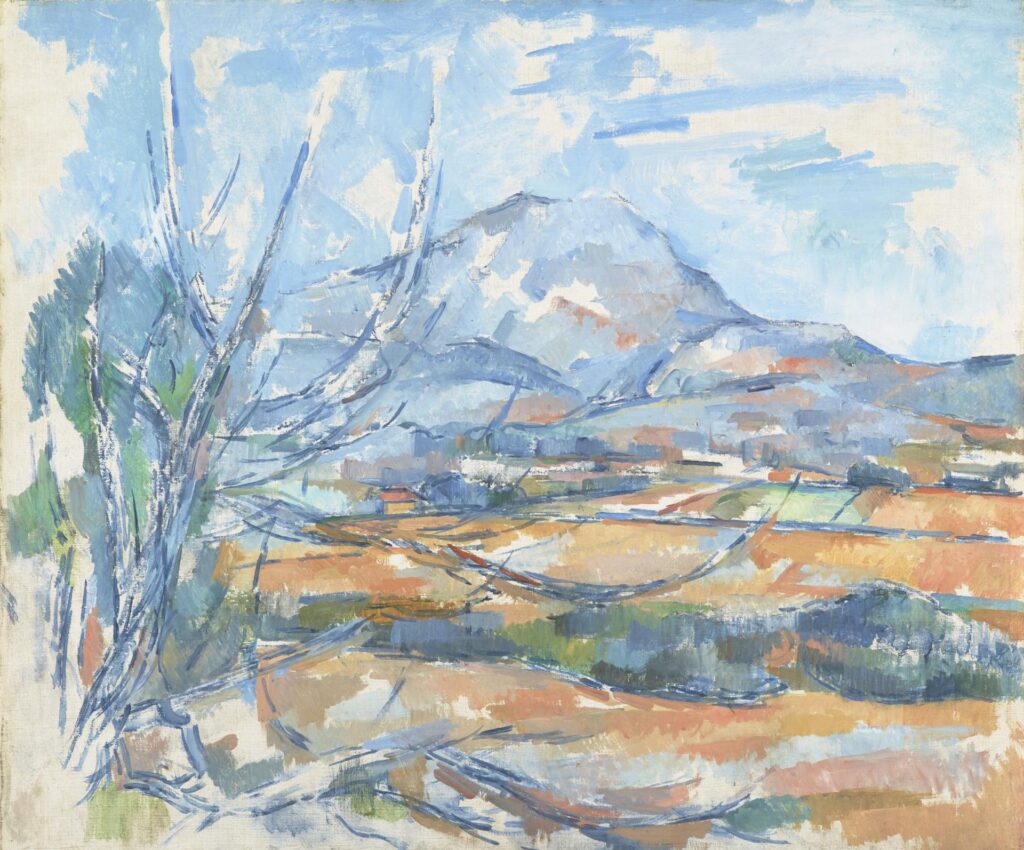
John Wyver writes: Just leaving Provence now, which is why there was no Sunday dozen last week. I loved the landscape, and was struck time and again by memories of the artworks of Paul Cezanne. So here is ‘Montagne Sainte-Victoire’, about 1890/95, from the collection of the National Galleries of Scotland. Remember too that there is a marvellous online free-to-access Catalogue Raisonné of all of Cezanne’s work here.
Back in London from Monday night, but meanwhile below is this week’s list of articles that caught my attention.
• Why the BBC matters: 5 minutes that are well worth your time, from the evidence given on 19 May by Sir Peter Bazalgette (former chair of ITV PLC), Dr Alex Mahon (former CEO of Channel 4 Television) and Pat Younge (former Chief Creative Officer, BBC Television) to the Culture, Media and Sport parliamentary Select Committee:
• Hollywood, Gaza and the invisible blacklist: urgent from Alex Press for LA Review of Books, with a story co-edited with The Key, and co-published and supported by the journalism nonprofit the Economic Hardship Reporting Project.
• Lumière, le cinéma!: a conversation with Thierry Frémaux: David Schwartz for Criterion talks with the director of a compilation 120 of the Lumière brothers films, ‘beautifully restored, into a coherent feature-length work that functions as a love letter to cinema and as an essay film’.
• Kazuo Ishiguro’s top ten train films: terrific list, courtesy of the BFI, of films set aboard trains, with a couple of titles I have never heard of; no space, sadly, for Caught on a Train, the Stephen Poliakoff/Peter Duffell/Kenith Trodd film for BBC2’s Playhouse strand, which apart from all else has an excellent Mike Westbrook score – it’s available on iPlayer now, in a recent and fine 4K restoration.
• The Finsbury Park Empire: a fascinating online presentation from The London Archives about the north London music hall, with some great images.
• August Sander’s enormous attempt to capture a lost world: Max Norman is very good for The New Yorker [£; limited free access], wonderfully well-illustrated, on the pre-war images of the great photographer, currently on display at Yale University Art Gallery:
Sander, who died in 1964, never recovered from the damage done by what he called ‘the subhumans of the Hitler band. ‘People of the 20th Century’ is his loving death mask for a world that vanished before his eyes.
• In Venice, the passion of life and the ghost of art: such a thoughtful and productive review of ‘In Minor Keys’, the central curated show in Venice by culture critic at The New York Times [gift link] Jason Farago.
• ‘How can nudity be so provocative?’ Florentina Holzinger on rocking Venice with naked jetskiers, human bells and urine divers: terrific Guardian profile by Hettie Judah of ‘dancer, artist, choreographer, leader of Europe’s coolest performance girl gang, and the woman most likely to rekindle childhood dreams of running away to join the circus.’
• Pop & pleasure & freedom: a wonderfully expansive essay for New York Review of Books [£; limited free access] by Jarett Earnest about the writings of Jon Savage, including his most recent book, The Secret Public: How Music Moved Queer Culture from the Margins to the Mainstream.
• The missing piece: as ever, Luke McKernan’s blog is a delight, with a new post on jigsaws, and on a great novel scandalously missing from the Guardian‘s Top 100, Georges Perec’s Life – A User’s Manual.
• Britain’s post-Brexit ungovernability: I really ought to link to Christ Grey’s acute analysis of British politics every fortnight, but his most recent post, after the month we’ve all lived through (even in France), is especially useful as a way of making sense of things.
• Squillions: as readable and as informative as ever, John Lanchester for LRB [£; limited free access] on the mystery of missing cash and international money laundering.
• And finally…: from The Late Show this week, with this intro, ‘I’m here to support Stephen Colbert, the first guy who lost his show because a president can’t take a joke – and the Ellisons feel they need to kiss his ass… small-minded people with no idea what freedoms of this beautiful country are supposed to be about.’
Leave a Reply