
The Sunday dozen
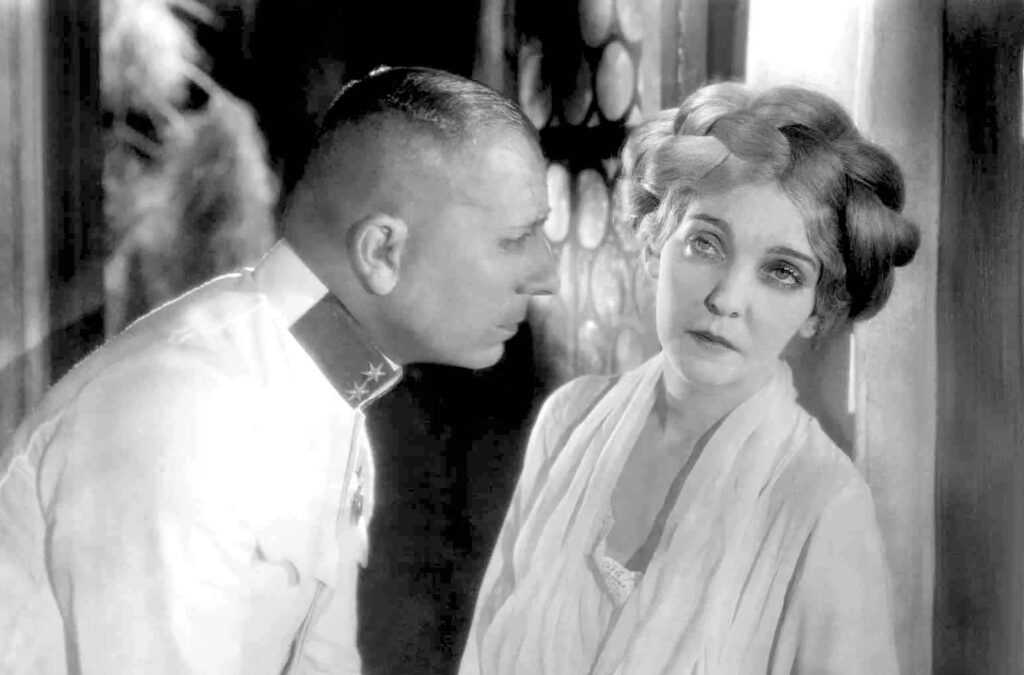
John Wyver writes: The usual weekly round-up of some of the stuff that has engaged and interested me over the past week; more literary than some weeks, and with much, mostly cultural, from across the Atlantic, but with some strong film and television links too.
• Erich von Stroheim’s spectacular art is back: cued by a reconstruction and restoration of Queen Kelly (above) by Milestone Films playing in New York, the estimable Richard Brody for The New Yorker [£; limited free access] reflects on the career of its curator; see also Nicholas Rapold’s review for The New York Times [gift link]
• 10 great filmmaker biopics: tied to the imminent release of Richard Linklater’s glorious Nouvelle Vague, this list by Miriam Balanescu has some strong, slightly off-the-wall suggestions.
• Fan letter culture in the silent film era: the Danish Silent Film site is one of the treasures of the web, with a wealth of wonderful, freely accessible films; they also write online essays, the latest of which Stephan Michael Schröder is a rich exploration of early fandom in Denmark.
• Our Friends in the North: Paul Hayes looks back thirty years to the genesis of and reactions to the ground-breaking BBC series; and here’s a rather wonderful BBC2 trail for the series thanks to VHS Video Vault, first broadcast on 3 February 1996.
• Seven Dials: Netflix series turns Agatha Christie’s country-house mystery into a study of empire and war: for The Conversation, a really interesting response by Catherine Wynne to Netflix’s latest:
This new adaptation uses Christie’s puzzle of the seven dials not just to entertain, but to confront the political and imperial world her novels often leave implicit.
• The art of Britain’s Windrush generation has never felt more relevant: I missed this before Christmas, but it’s well worth clicking through to Aatish Taseer’s piece for The New York Times [gift link] about painter Hurvin Anderson (whose work shows at Tate Britain from late March), multimedia artist Sonia Boyce, and sculptor Veronica Ryan.
• Yeats, Auden, Eliot: 1939, 1940, 1941: resonant close reading by Colm Tóibín for the LRB [£; limited free access] reflecting on poetry and the nation in wartime.
• And I never looked back: for the LA Review of Books, Joshua Bodwell writes beautifully on Charles Bukowski, his publisher Black Sparrow Press, and its founder, John Martin.
• Borges and “Borges”: Esther Allen at Nimrod with a remarkable tale about writing and translation, copyright and intellectual property, memory, biography, Adolfo Bioy Caseres and the great Argentine writer.
• Adam Tooze: Electrostates, petrostates and the new Cold War: also from the LRB, a video of the LRB Autumn Lecture at the New School, New York City, given on 27 October 2025 – an essential hour-plus of listening if yiou want to understand the world today, and tomorrow; see also Robert P Baird’s profile of Adam Tooze for the Guardian, The crisis whisperer: how Adam Tooze makes sense of our bewildering age.
• The wall looks permanent until it falls: Adam Bonica from Data and Democracy with an elegantly-written and optimistic analysis of where we are, and how things might unfold from here.
• New Music, New York – The Sunday Feature: an excellent BBC Radio 4 feature, with Richard King exploring musical creativity in New York in the 1970s, with a great cast including Eric Bogosian, Rhys Chatham, and Steve Reich.
• How WhatsApp took over the global conversation: Sam Knight’s essay for The New Yorker [£; limited free access] is a terrific read.
And finally: the world lost the Grateful Dead’s Bob Weir a week ago, and his significance is explored well by the Guardian‘s Alexis Petridis, Bob Weir was a songwriting powerhouse for the Grateful Dead – and the chief custodian of their legacy; Stevei Chick for the same paper contributed Truckin’ on: Bob Weir of the Grateful Dead’s 10 best recordings, of which this is one, from the Closing of Winterland on New Year’s Eve 1978:
Leave a Reply