
The Sunday dozen
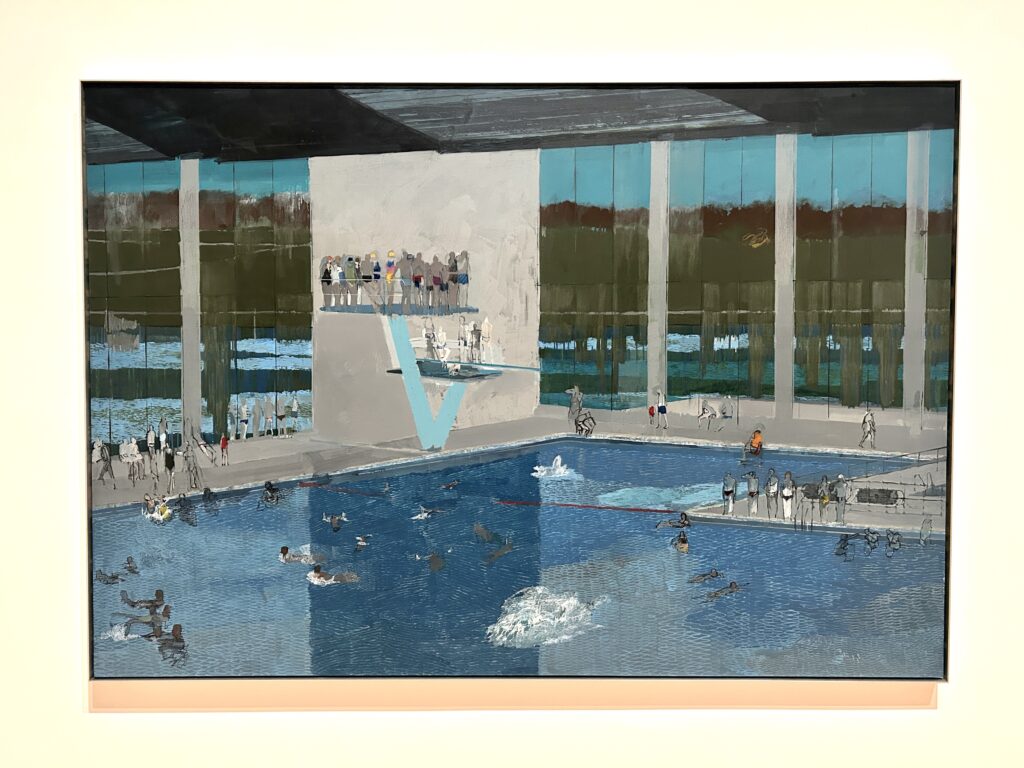
John Wyver writes: Welcome to this week’s collection of articles and more that I have found engaging and enriching over the past seven days. My header image is Hurvin Anderson’s ‘Audition’, 1999, seen at the artist’s really exceptional retrospective at Tate Britain, which closes today. If you’ve missed it, do take a look at Tate’s short video:
• Locarno Film Festival 2026: 17 urgent Hollywood Blacklist films: at RogerEbert.com, Marya E. Gates offers a very welcome round-up of the films in Locarno’s timely retrospective.
• Overlooked no more – Patricia Douglas, who challenged Hollywood’s culture of abuse: such an interesting and shocking tale from 1937, related by Nina Siegal for The New York Times [gift link].
• Wham! 10 Days in China: this is really good by Dion Georgiou on the documentary that is still in cinemas but will be on BBC2 next Saturday, 29 August.
• Questioning methodology: On the March 2026 issue of PROJECTIONS devoted to David Bordwell’s research. A guest post by Colin Burnett: not for everyone for sure, but for those who have followed, and share, my interest in, and enthusiasm for, the film writing of the late great scholar, this is a really good overview packed with provocations.
• Why are we so afraid of Cleansed?: Stella Green reflects productively on Sarah Kane’s ‘notoriously brutal… unvarnished, bestial and relentless’ play, currently on view at the Almeida Theatre (until 29 August).
• The flexy-theater experiment is mostly a dud: a really interesting argument about configurable cultural spaces, by Justin Davidson for New York [£; limited free access].
• Jennifer Jenkins, Music Copyright, Creativity, and Culture: a link to a free download, courtesy for the Center for the Study of the Public Domain, of the author’s ‘introduction to the fascinating story of the legal, economic, aesthetic, and technological forces that shape the music we love’; contrary to what you might think, this is a remarkable, innovative delight.
• A passage: Ledio Cakaj recalls an illegal channel crossing in 1999 in a compelling essay for The New Yorker [£; limited free access].
• Colonial Kenya and the politics of visibility: not an easy read, and with disturbing imagery, but a fine and thoughtful essay by Lauren Browne for History Workshop Journal.
• We need to be honest about the Hundred: it feels as real as Ted Lasso: so much to agree with in this anonymous Guardian contribution: ‘There is something almost like a reversal of cricket’s old journey around the world, although this time it isn’t colonialism, but commerce.’
• Democracy v the machine: the birth of the digital age and the warnings that were ignored: another substantial extract, this time from the Guardian, from Jill Lepore’s new book The Rise and Fall of the Artificial State.
• Climate change is rewriting England’s ‘green and pleasant’ story: for The Conversation, Catherine Clarke asks
Are we ready to let go of a formative national mythology? A verdant, pleasant, temperate and moderate land. A land that begets people of mildness and clemency, not extremes. A green and generative earth that brings forth flourishing and fruitfulness. Will these old emblems still hold? Without our green and pleasant land, do we know who we are?
• Philip Glass – Opening: I have tickets for Tao of Glass this coming week, so as a taster for myself here is the maestro playing ‘Opening’ on his 87th birthday in 2021.
Leave a Reply