
Willem I (in Amsterdam)
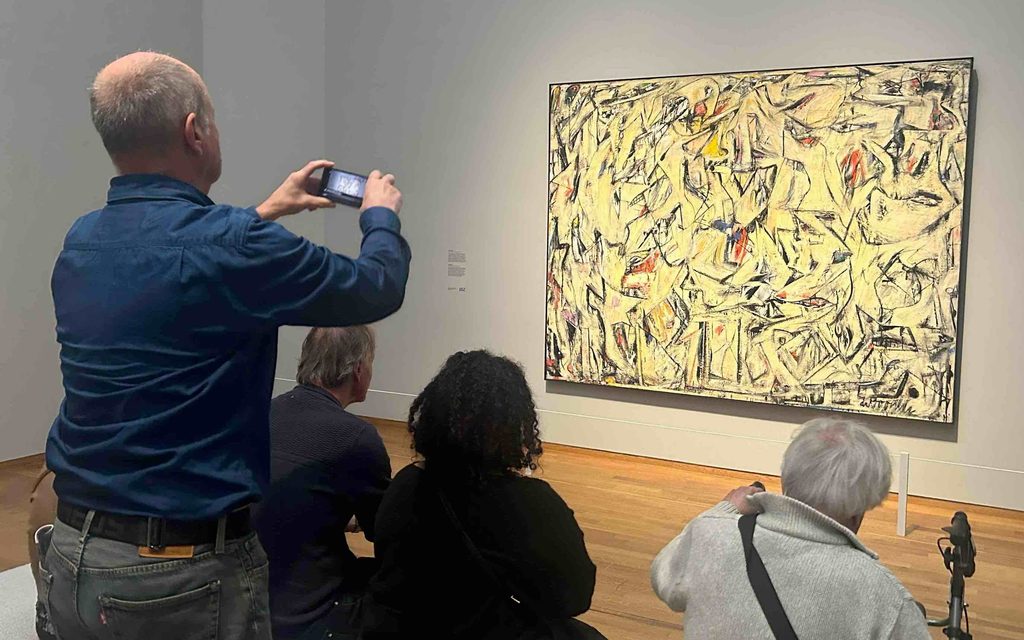
John Wyver writes: Over the past few days I have enjoyed a Eurostar trip to Hilversum, for the conference ‘Papering over the Audiovisual Archives‘ at the remarkable Netherlands Institute for Sound & Vision. A report on that valuable symposium will follow in a future post, but here I want to highlight a visit to Amsterdam’s Rijksmuseum. Taking time out from changing trains in the Dutch capital, I was able to visit the exhibition Willem de Kooning at Work.
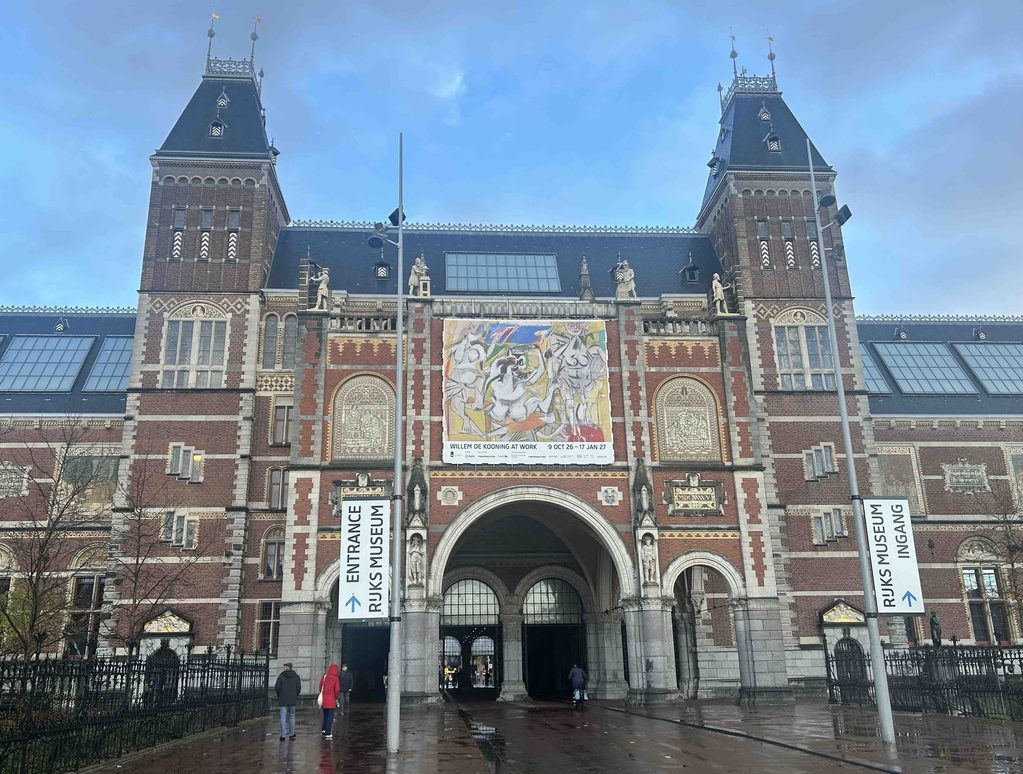
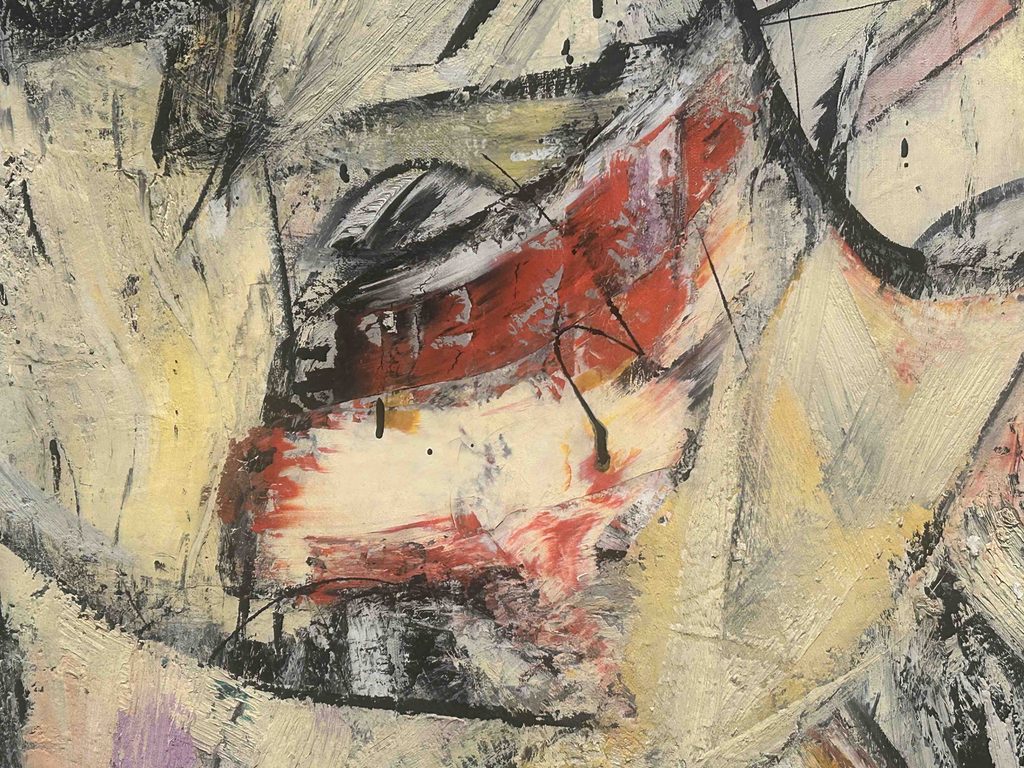
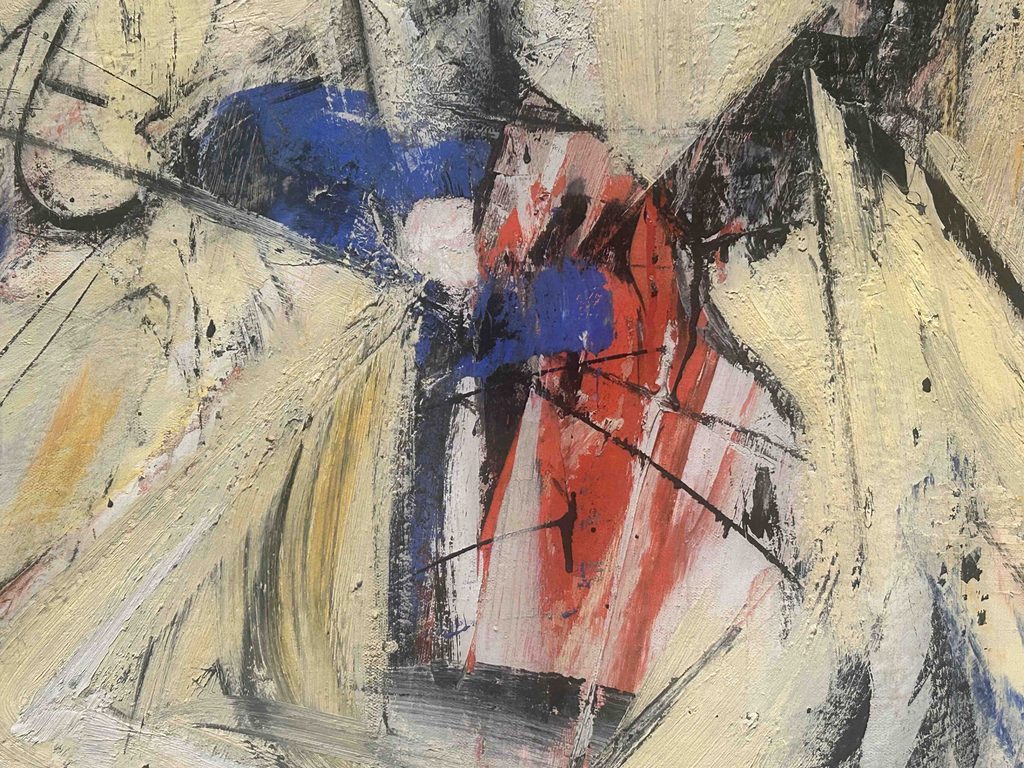
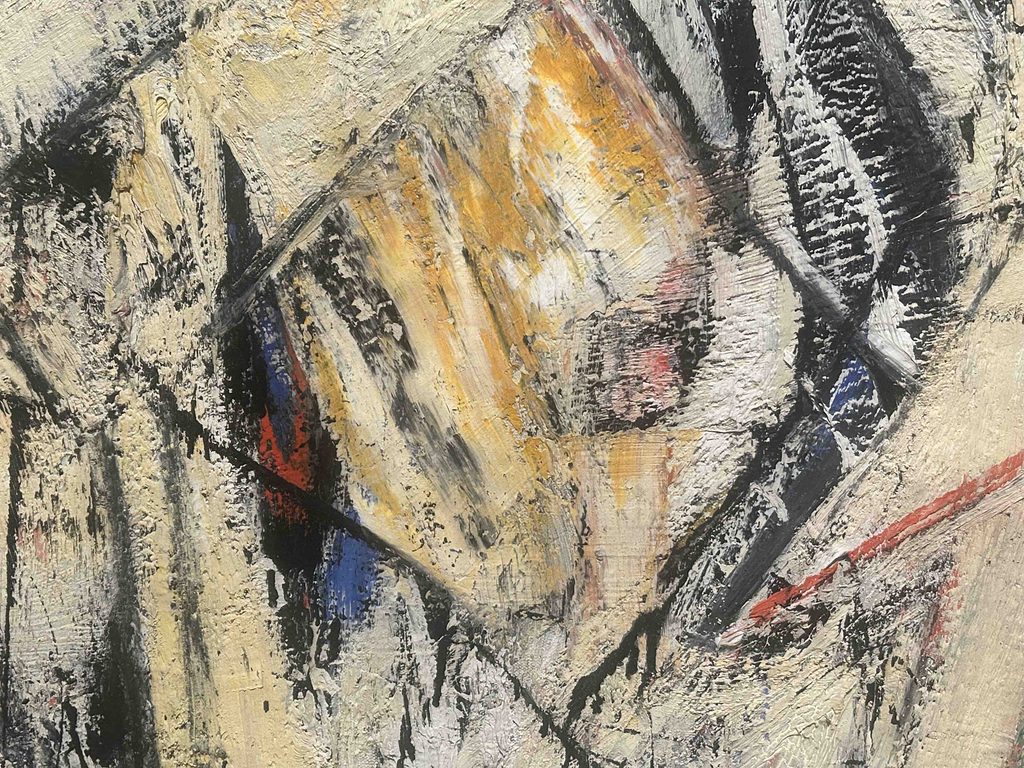
For anyone with an interest in modern American art, this is a great show. Compact and focussed, combining a handful of major paintings with a gathering of eclectic works on paper, it began life earlier this year in the more expansive form of Willem de Kooning Drawing at the Art Institute of Chicago. A goodly number of the exhibits, including the spectacular Excavation, 1950 (on show above), come from the Chicago museum. I’ve not seen much attention paid to the exhibition in Britain, although Ben Eastham’s 5-star Guardian review is insightful.
De Kooning is celebrated as an, and arguably the, abstract expressionist painter of mid-century America. But he was born in the Netherlands in 1904 and arrived in New York as a stowaway exactly a century back, in 1926. Trained as a commercial artist, and as the first room of this show demonstrates, with a remarkable facility for figurative drawing, he moved in the 1930s through splashy portraiture, a flirtation with Surrealism, and murals for the Works Progress Administration towards the abstract works of the later 1940s and 1950s for which he is mostly celebrated. There’s a smart primer from Chicago here.
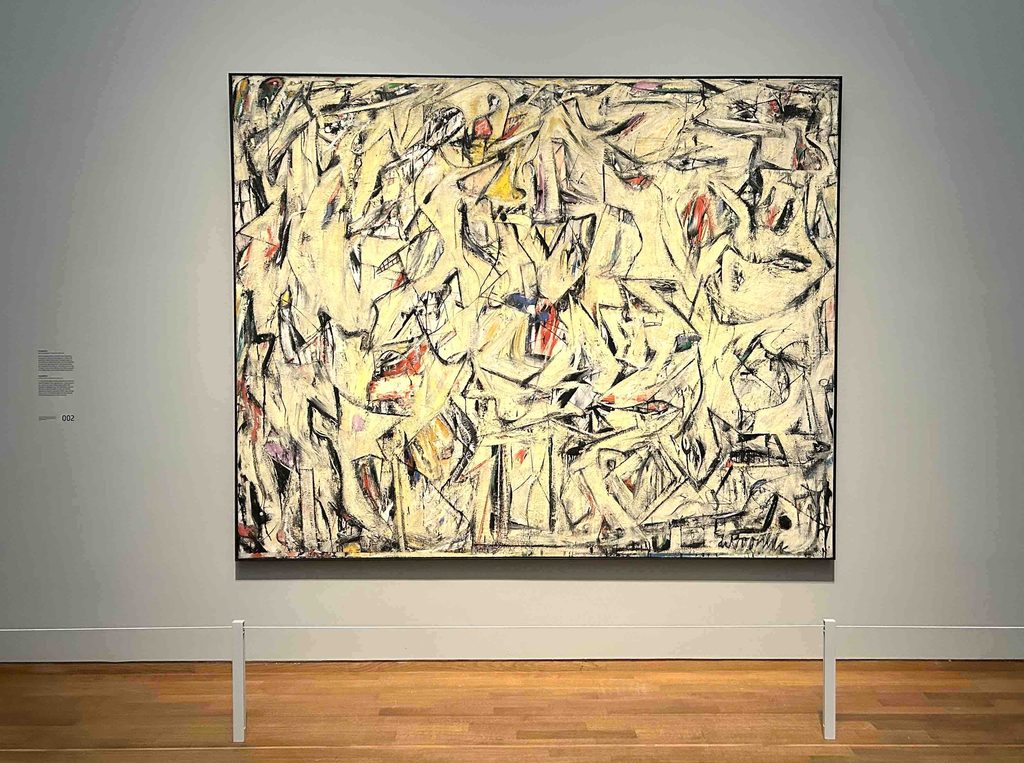
I’m a fan of de Kooning’s work, and for me a sustained encounter with Excavation was alone worth the trip. The Art Institute’s website offers a useful introduction:
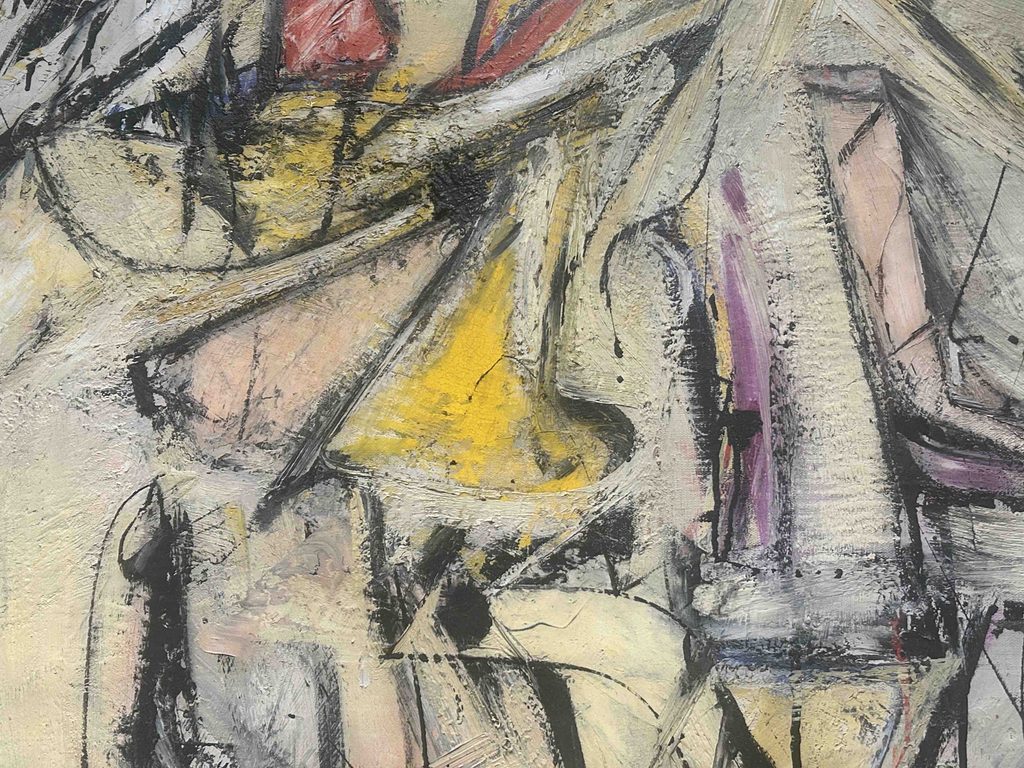
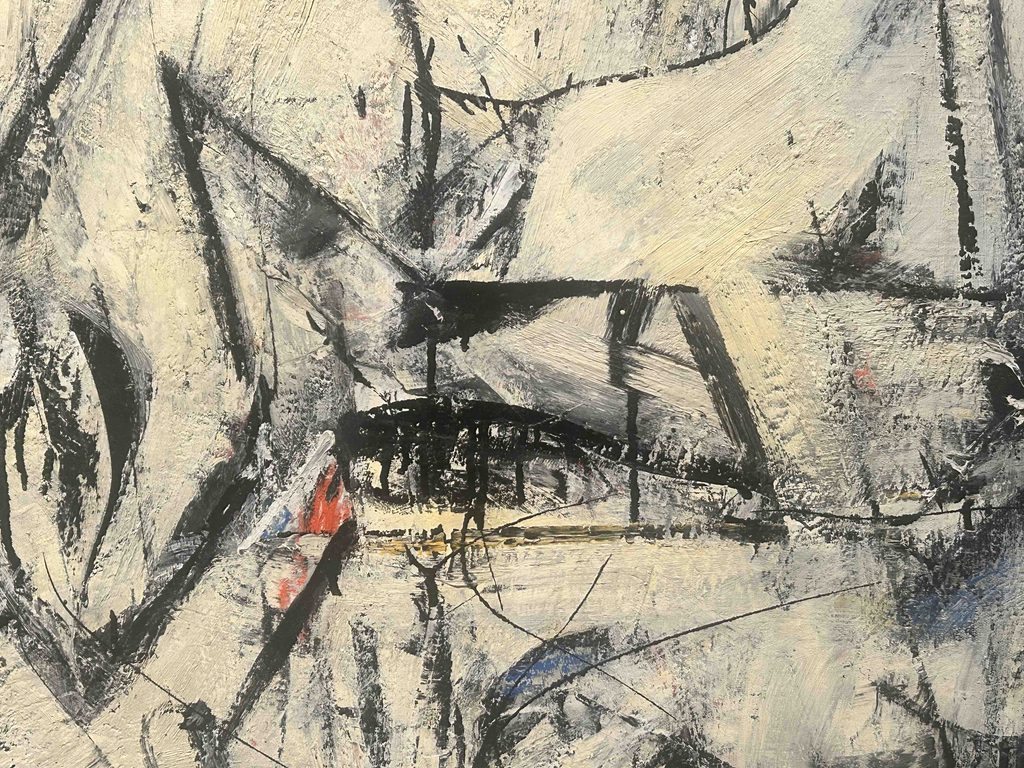
The mobile structure of hooked calligraphic lines defines anatomical parts—bird and fish shapes, human noses, eyes, teeth, necks, and jaws—that seem to dance across the painted surface, revealing the particular tension between abstraction and figuration that is inherent in de Kooning’s work. Aptly titled, the painting reflects de Kooning’s technically masterful painting process: an intensive building up of the surface and scraping down of its paint layers, often for months, until the desired effect was achieved.
My interest in de Kooning has recently been rekindled by reading Jed Perl’s landmark New Art City: Manhattan at Mid-century, originally published in 2005 and available here on Internet Archive. It’s a mammoth but compelling account of the various strands of art, literature, ideas and bohemian life between the Second World War and the early 1960s. Introduces de Kooning, Perl writes that he:
was, to many of the younger generation of the 1950s, a spellbinding kind of being. Downtown he rules, with the power of his brushstrokes softened by his smiling, genial presence, heated up by his movie star looks and drinking sprees, and then complicated by a conversational style that was at once quixotic and Socratic.
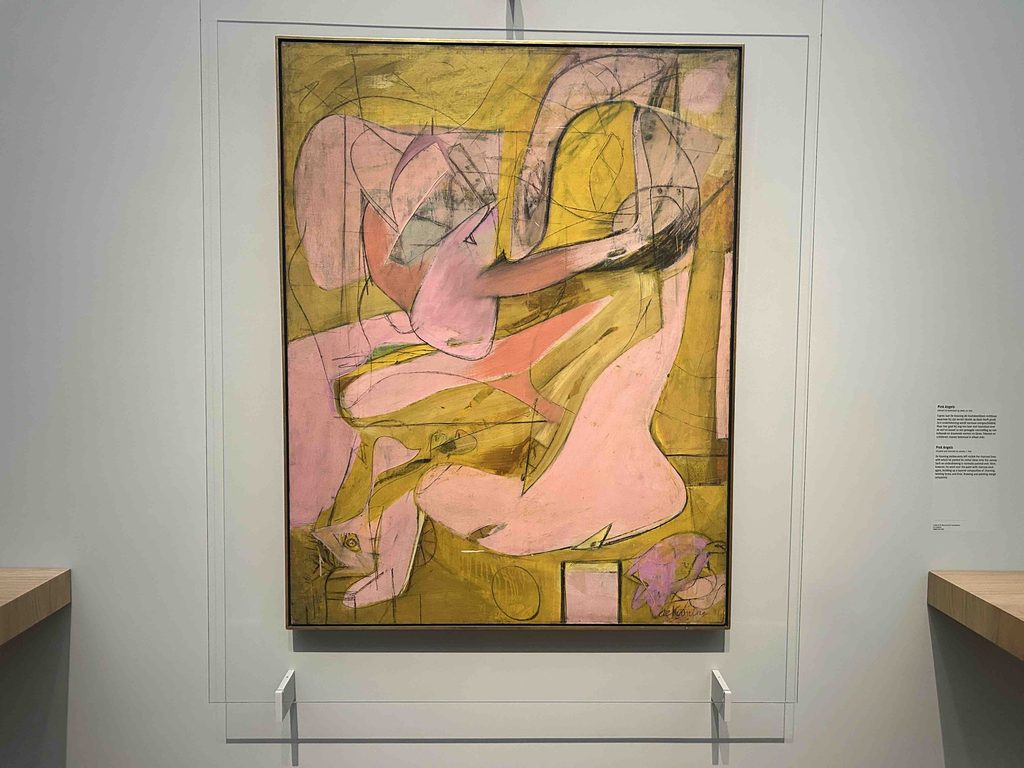
Among the other glorious works from de Kooning’s breakthrough years that are included in the exhibition is Pink Angels, c. 1945, from a collection in Los Angeles, and in which as the wall label observes, ‘Drawing and painting merge completely’.
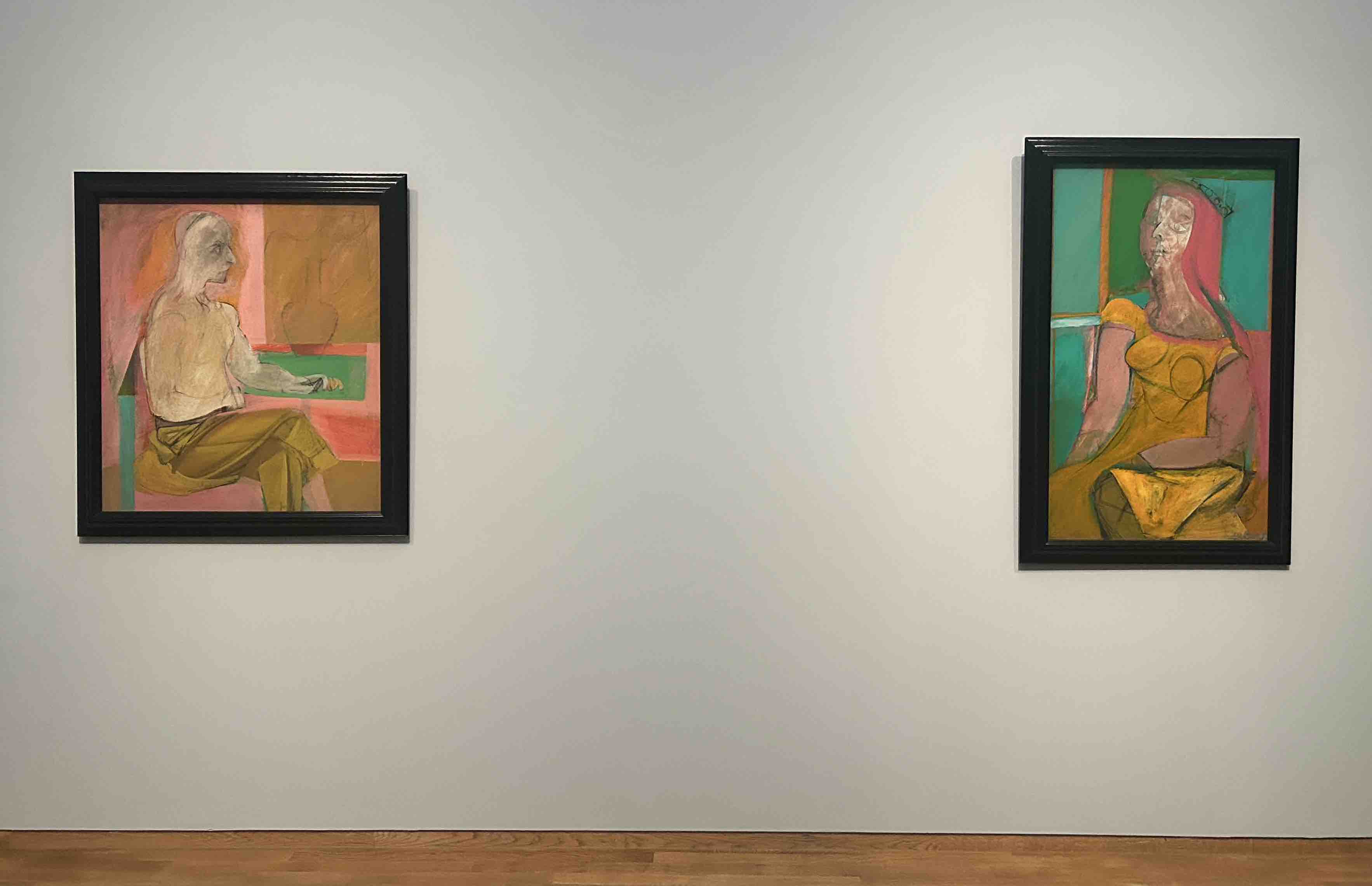
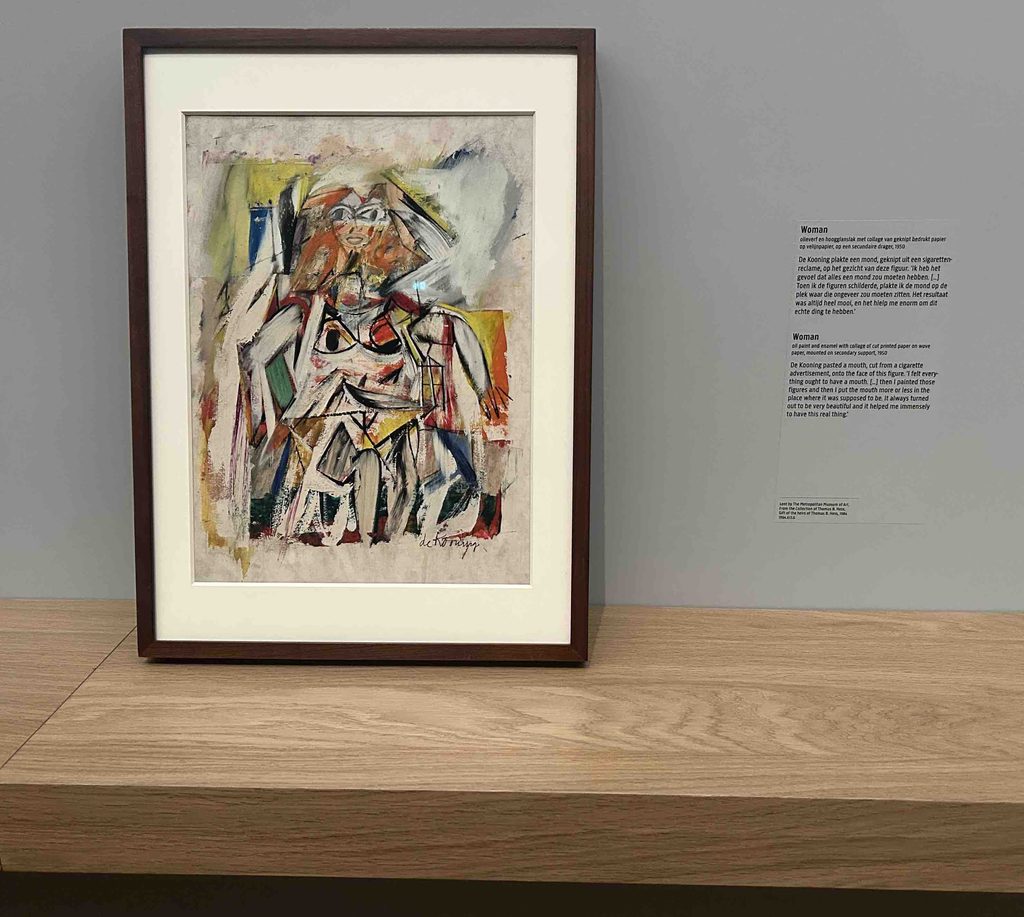
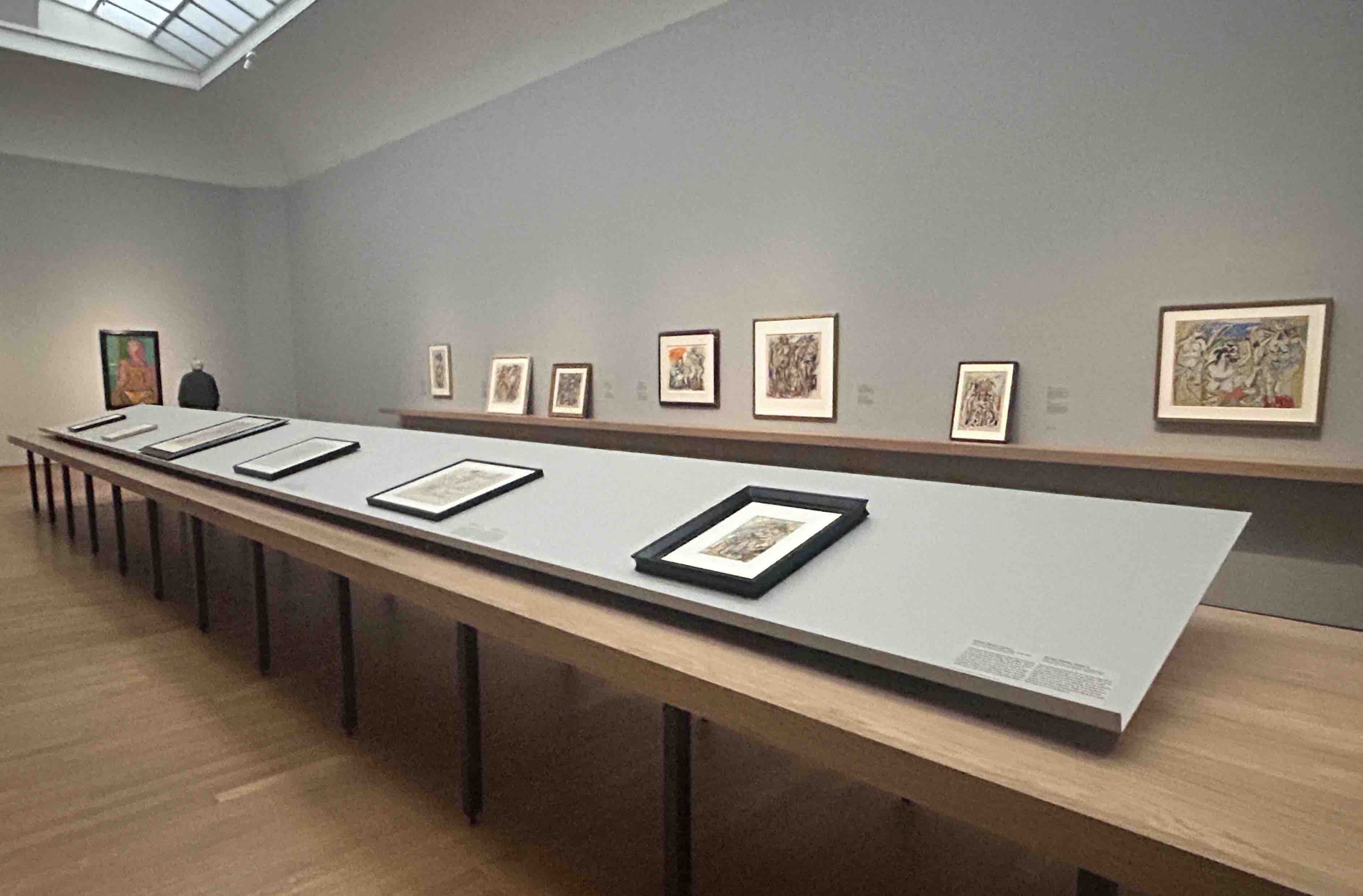
There are other wonders here too, including the paired Seated Man, c. 1939 (below left) and Queen of Hearts, 1943-46 (right), both from Washington’s Hirshhorn Museum. These sit on an end wall of the largest room in the show, which is dedicated to de Kooning’s studies of the human figure. Each of the drawings here repay close attention, and this is facilitated by the innovative display, which includes framed artworks propped on shelves and laid on a long display table; below is the propped Woman, 1950, and then the table.
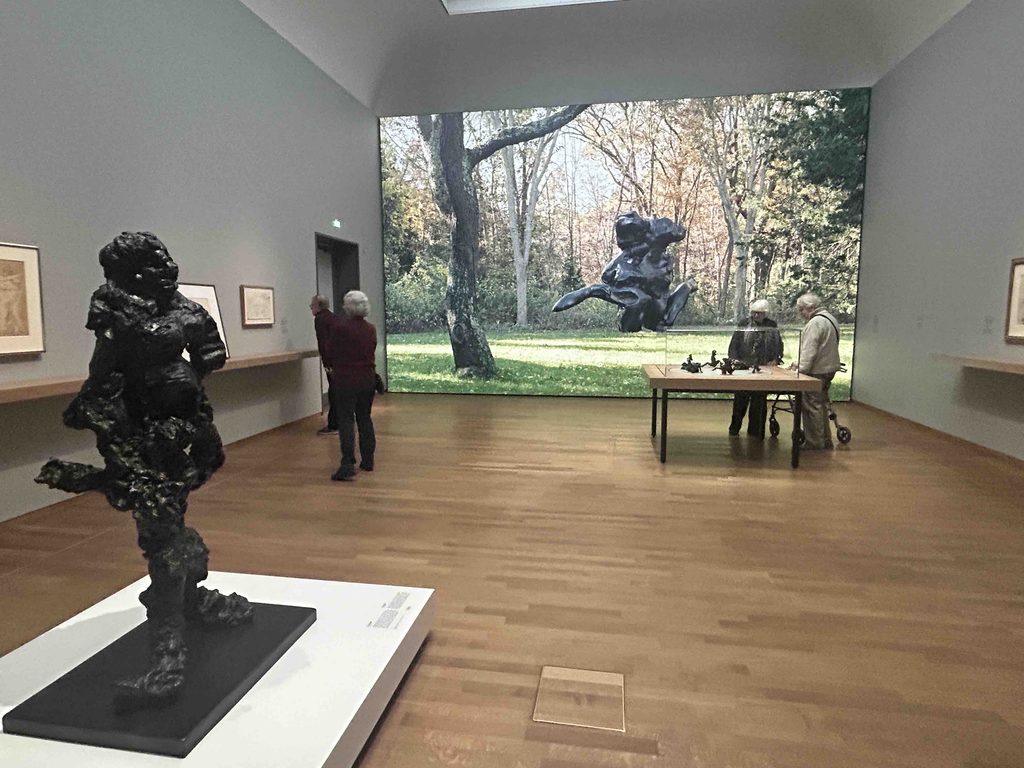
There are two further spaces after this, one of which is focussed on de Kooning’s sculptures, and which I find of far less interest than the paintings and drawings. But the display here is also distinctive, with a wall-size back-lit image of a sculpture in the landscape.
And then there is a final room, which feels more like a whimper than a bang, with some small-scale works from de Kooning’s time in Rome around 1960, although this space also features the luminous Untitled Pastel # 8, 1956-58 (below), which I would have very happily taken home.
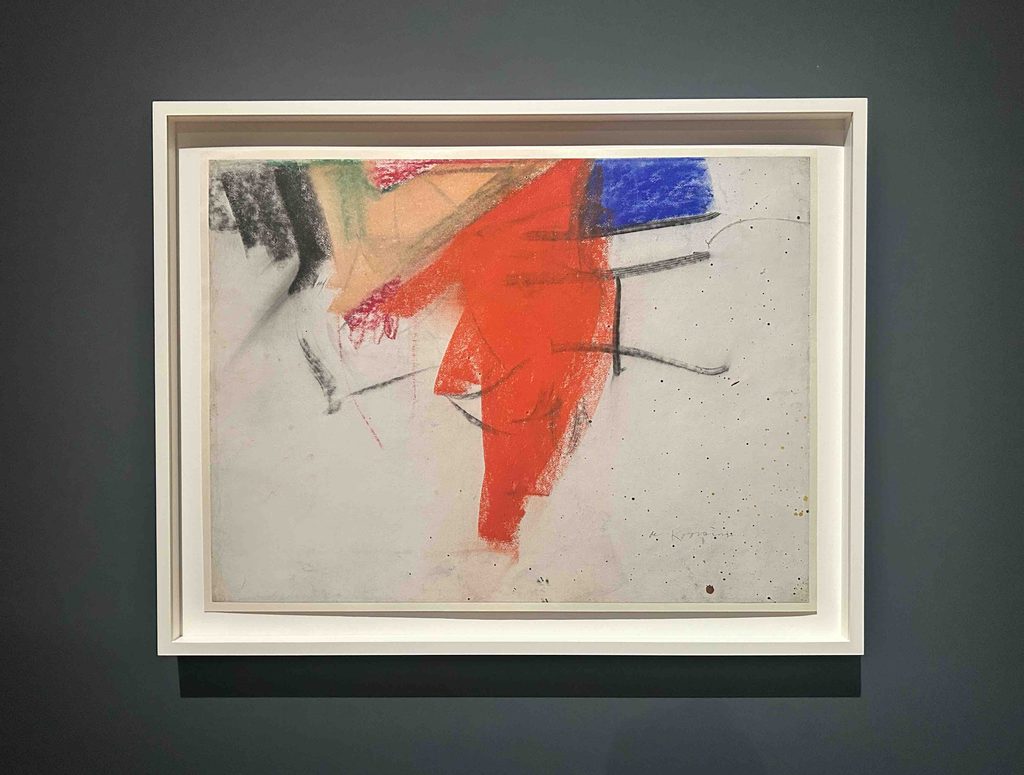
Instead of an attempt at a heist, I returned to sit with Excavation, from time to time getting up close to snap details of its energy and intensity and complexity and beauty. I reproduce a handful of these images to conclude. But a ‘Willem II’ post will follow, although after some thoughts about the conference, which was after all mostly why I travelled to the Netherlands.
Leave a Reply