14th December 2025
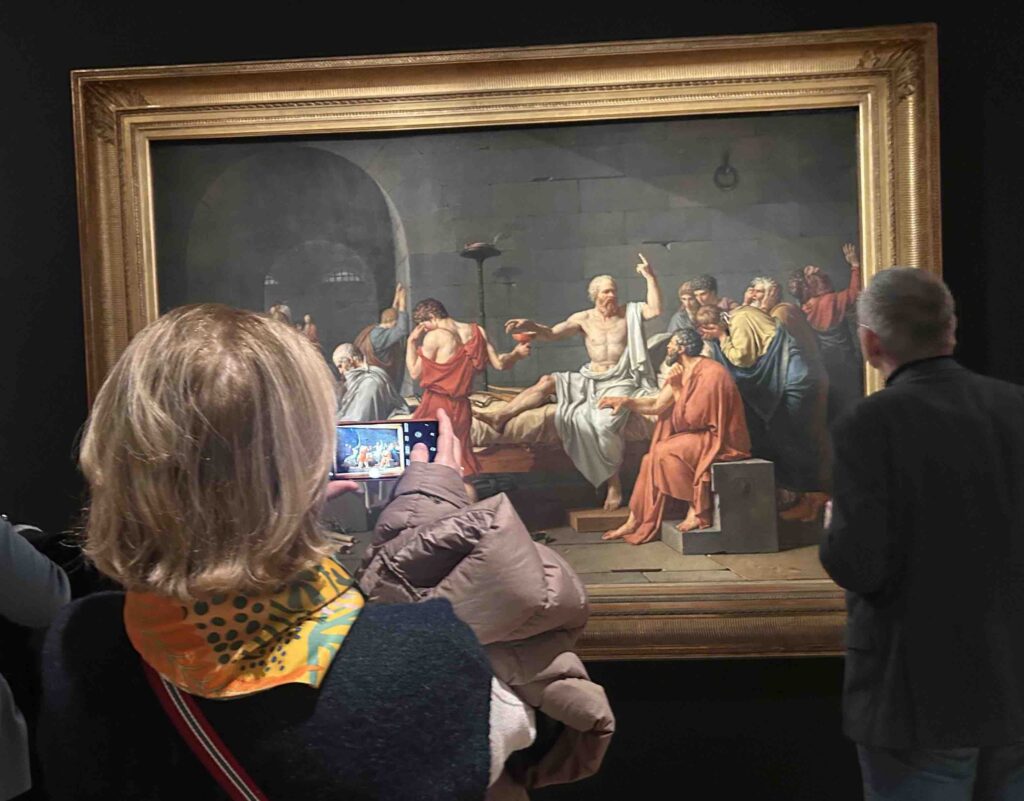
John Wyver writes: Television, photography, modern dance and the legacies of empire are among the topics of articles that engaged me this week. As for the image, it is another from my day trip to Paris on Friday, about which I posted here. I am currently much engaged by watching (and photographing) people photographing paintings in art galleries, and I want to write about this at some point. For the moment, however, enjoy this encounter with Jacques-Louis David’s The Death of Socrates, 1787.
• Public service media – funding and governance options: an important new report, co-edited by Professor Georgina Born and Professor Justin Lewis FBA, and published by The British Academy, free to download, with a range of comparative international case studies, and consideration of possible ways forward in the BBC Charter debate.
read more »
13th December 2025
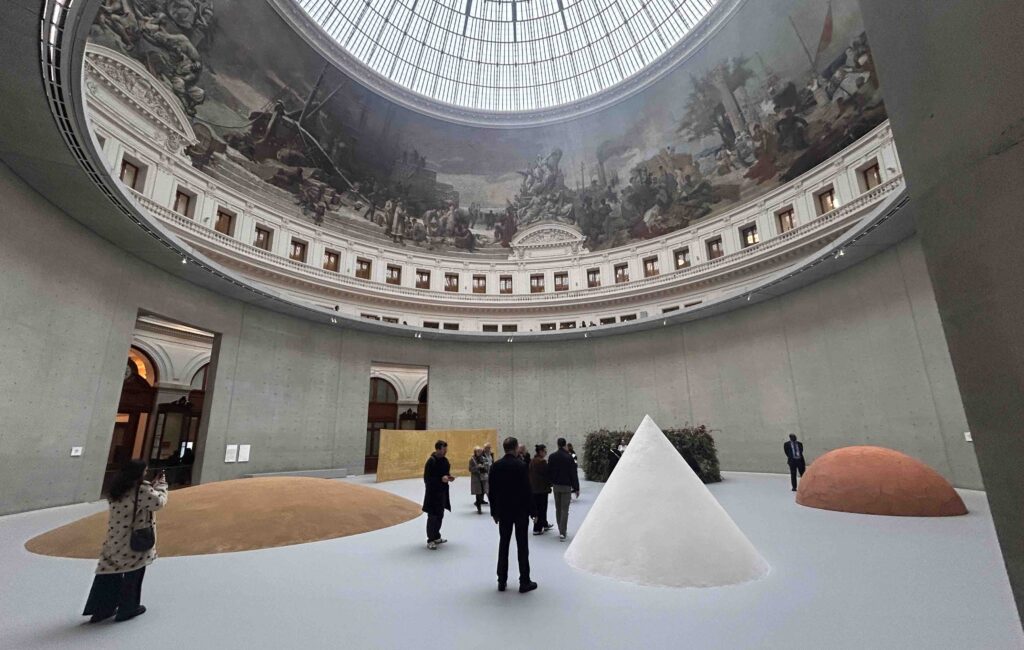
John Wyver writes: I have been going to Paris to see paintings for more than fifty years, and Friday was my most recent such trip. I took a break from prepping for the publication of Magic Rays of Light and the rest, and I had the pleasure and privilege of visiting Louvre’s glorious Jacques-Louis David exhibition. I also loved Minimal at the Bourse du Commerce, but I had a much harder time at the newly opened Fondation Cartier and at the Palais de Tokyo. More on all that, together with some pics, below.
read more »
10th December 2025
John Wyver writes: As I noted last week, since I have contributed here more than a year of near-daily posts recognising ‘on this day’ events in the first decade of British television, I am now proposing a weekly reprise round-up. All of this, of course, is part of the run-up to publication by Bloomsbury and the BFI on 8 January of my book Magic Rays of Light: The Early Years of Television in Britain. So for today and the coming week, here are links to the posts from a year back:
• OTD in early British television: 10 December 1937: Scenes from Macbeth broadcast in the afternoon from Alexandra Palace, with a transfer to the studio of part of Michel Saint-Denis’ production with Laurence Olivier and Judith Anderson.
• OTD in early British television: 11 December 1937: the evening schedule featured an ambitious half-hour of act 3 of Verdi’s Aida given by the Matania Operatic Society under producer Dallas Bower; this was one of television’s first presentations of ‘grand’ opera.
• OTD in early British television: 12 December 1936: just six weeks into the AP service, a spectacular demonstration on the studio terrace of the Territorial Army for the Battalion 61st (11th London) Anti-Aircraft Brigade, R.A., and the 36th Middlesex Anti-Aircraft, R.E., being put through their paces.
• OTD in early British television: 13 December 1937: the most ambitious television ballet to date, act 2 of Swan Lake by the Vic-Wells Ballet Company, from which chrysalis the Royal Ballet would emerge post-war; this was their production under D.H. Munro that had premiered in November 1934.
• OTD in early British television: 14 December 1936: no television broadcasts from Alexandra Palace on Monday 14 December 1936, and only an apologetic mid-evening sound announcement. A fierce gale had damaged the transmission mast and taken the service off-air.
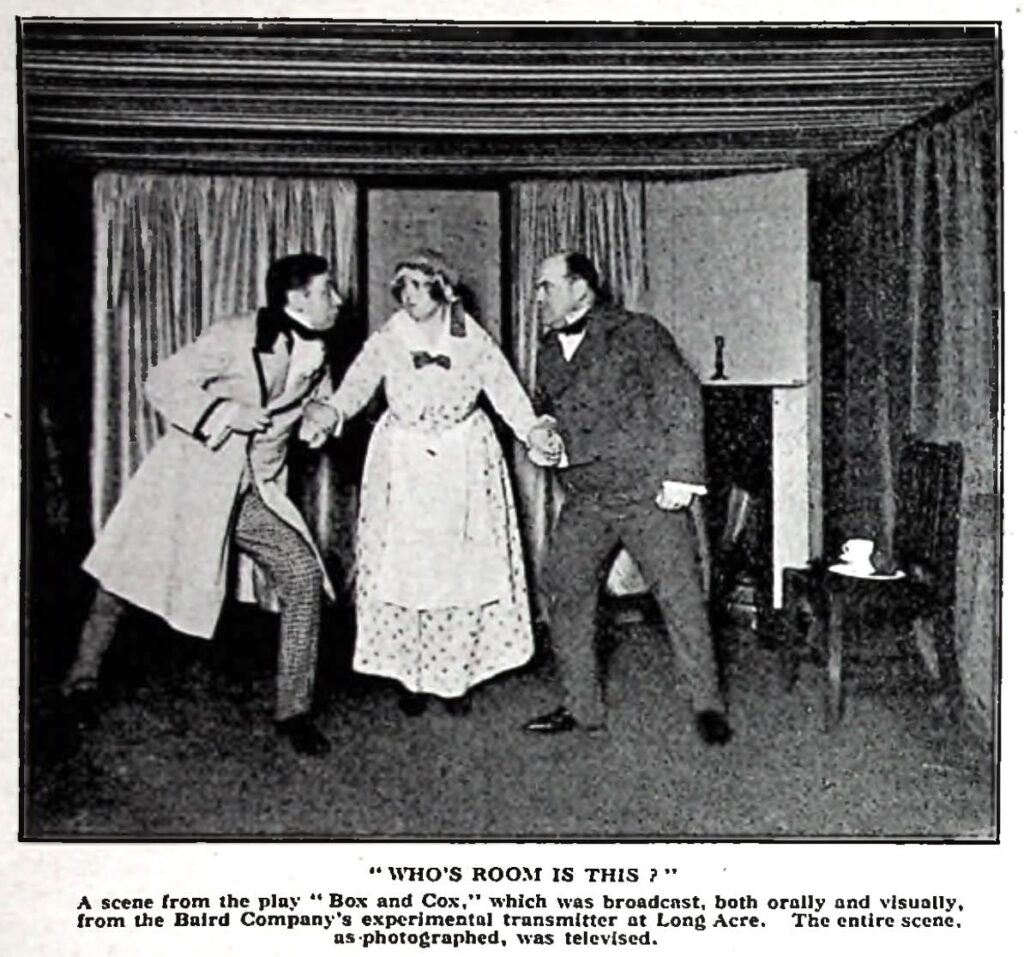
• OTD in early British television: 15 December 1928: Saturday 15 December 1928, 97 years ago today, is a milestone date in the history of early television in Britain, since the day saw the transmission of the first television drama in Britain, a version of John Maddison Morton’s Box and Cox (above).
• OTD in early British television: 16 December 1937: the sixth Experiments in Science, a 16-minute edition with the subtitle Reconstructing the Past, with Margot Eates of the Institute of Archaeology demonstrating the reconstruction of prehistoric fragments of pottery from Maiden Castle in Dorset.
9th December 2025
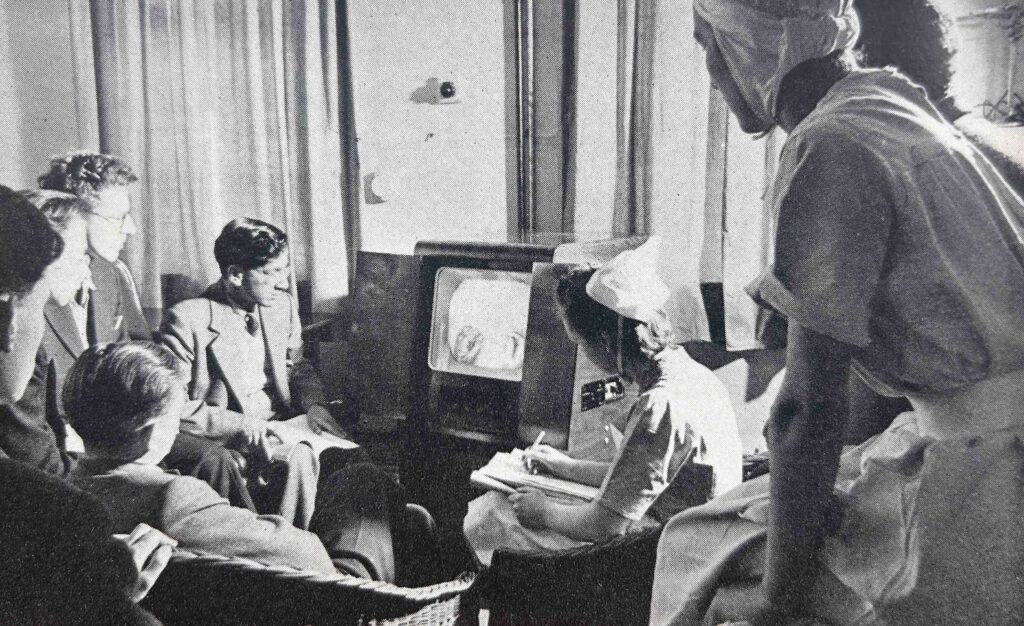
John Wyver writes: With Magic Rays of Light: The Early Years of Television in Britain still with the printers, and on course for publication by Bloomsbury on 8 January, my thoughts have turned to new projects.
I have a couple of spin-off ideas from that research, but I am more or less certain that my next substantial book will be a complementary volume, tentatively titled Switching On, exploring the cultural history of television from the war to the first night of ITV in September 1955. My aim is to have that published for the 75th anniversary of the commercial network on 22 September 2030.
I have started to dip into research for this, and one of the paths that I want to follow is that of television beyond broadcasting. One strand of this will consider the Rank Organisation’s commitment in the late 1940s to ‘cinema television’, the projection of live electronic images in picture houses. And another is the post-war development of television by the military, most especially the RAF.
read more »
8th December 2025
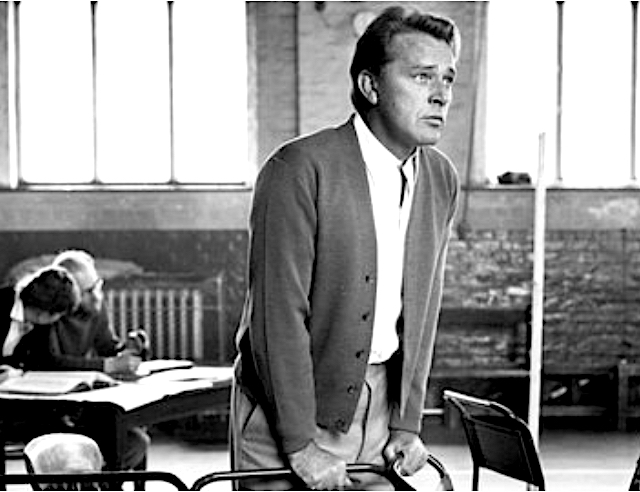
John Wyver writes: Yesterday, as part of the Richard Burton: Muse of Fire season at BFI Southbank I gave an ‘extended’ introduction (that was the request) to a rare screening of the BFI National Archive’s 35mm print of John Osborne’s 1960 television play A Subject of Scandal and Concern. Above is a rather fine BBC image from rehearsals.
The print looked really good and a decent crowd seemed to appreciate the Tony Richardson-produced drama, which stars Burton as the Victorian secularist George Holyoake. What follows is a lightly edited version of my notes – and if you missed the occasion, although I cannot condone this, you may be able to seek out the low-res version of the play that has been on a well-known streaming site for the past year.
read more »
7th December 2025
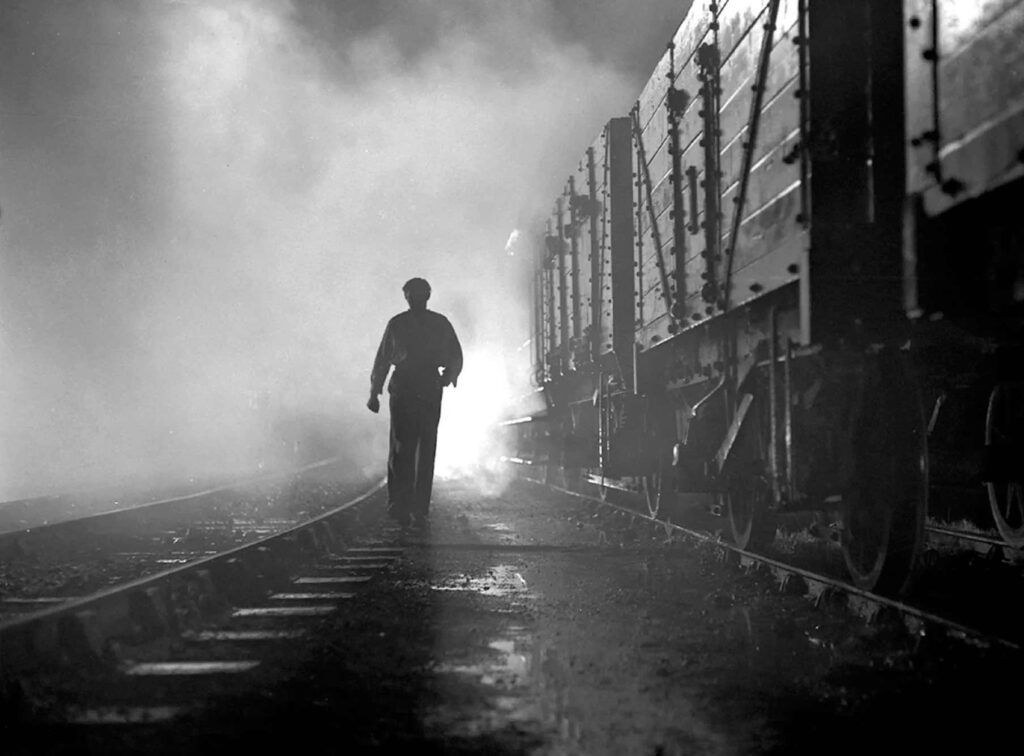
John Wyver writes: More politics than usual, perhaps, among things that have engaged my attention in the past seven days. There are several very good film reads too, and modern and contemporary music, along with a recommended podcast interview. The image above is from Robert Hamer’s remarkable It Always Rains on Sunday (1947) and is drawn from the first recommendation; look out for Lynda Nead’s BFI Classic about the film coming from Bloomsbury next year.
• Magic from elsewhere: Geoffrey O’Brien for The New York Review [£; limited free access] is terrific on post-war British cinema, responding to the Locarno retrospective this summer curated by Ehsan Khoshbakht, and the accompanying book Great Expectations: British Postwar Cinema, 1945–1960…
• The White Unicorn: a “tale of babies, boudoirs, lingerie, misunderstanding husbands”:.. and staying with post-war British cinema, this is Jo Botting’s very fine BFI ‘Inside the Archive’ column, about a 1947 melodrama with Margaret Lockwood which I realise now (although had completely forgotten) I wrote about in detail back in 2016 for this blog.
read more »
6th December 2025
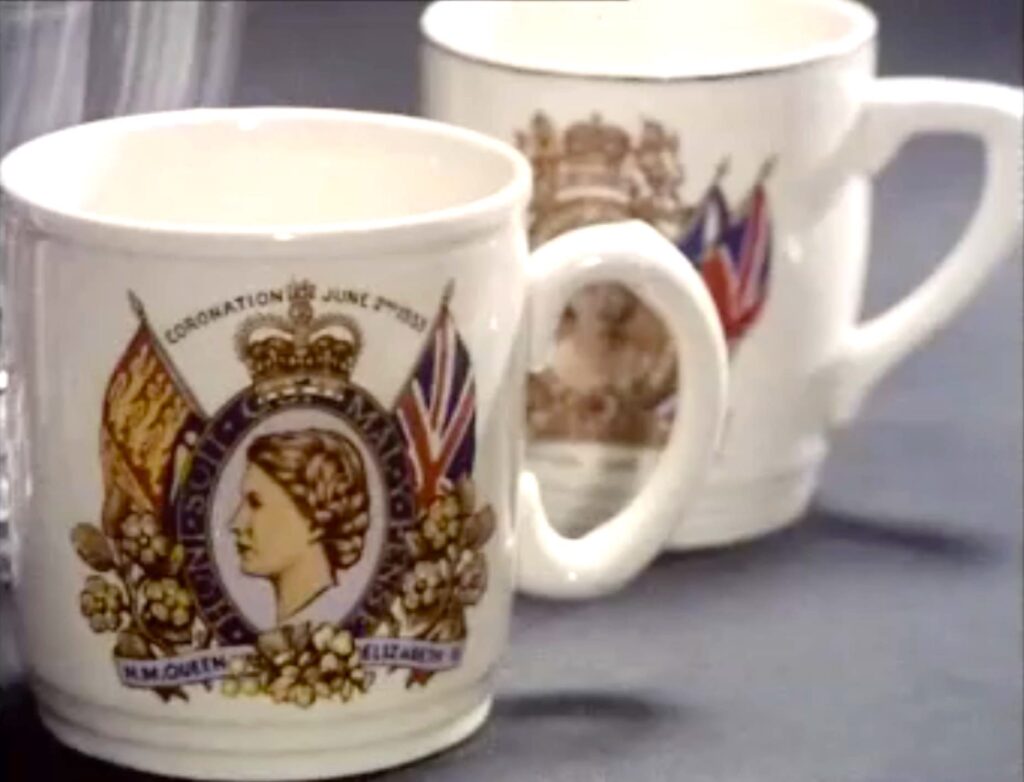
John Wyver writes: My colleagues James Jordan and Eleni Liarou and I are a week or so away from finalising the programme for the symposium about the filmmaker Robert Vas to be held at Birkbeck, University of London, on Friday 27 March. We feel we have a rich programme already, but if anyone wishes to propose a further contribution, there is just one more week to put that forward.
In preparation, I have been watching the final film by Robert Vas that was screened during his lifetime, the 85-minute documentary Silver Spoon, broadcast on BBC2 on 2 January 1978, just over three months before his death on 10 April, at the age of 47. (Two other partially realised projects were completed by colleagues and broadcast after he died.) The film was spottily received by the critics, it was not repeated, and has hardly been seen since.
read more »
4th December 2025
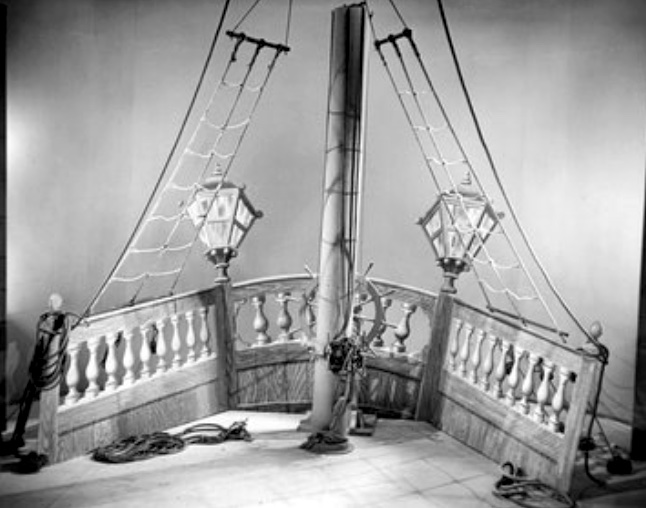
John Wyver writes: I have now been contributing ‘On this day in early British television’ posts for more than a year now. Which means that in addition to amassing a total of 282 original entries, I am now encountering the days that I wrote for twelve months back. So 4 December has a post from 2024 that details the masque that H.D.C. Pepler and producer Stephen Thomas mounted based on Coleridge’s poem The Rime of the Ancient Mariner. This time round I have a new header image, of what I believe to have been the set (above), but the fairly text stands up pretty well:
One of the true eccentricities of performance presented from Alexandra Palace in the later 1930s was the cycle of masques staged by H.D.C. Pepler. On this day, 4 December 1937, mime and mask artist Pepler, working with producer Stephen Thomas, with whom he regularly collaborated, presented a masque based on Coleridge’s poem The Rime of the Ancient Mariner.
Working with an original score by Cyril Clarke, and with the poem read by Dennis Arundell, a cast of ten, including Pepler himself, and some in masks that Pepler had made, mimed and danced with rhythmic movements for a half-hour afternoon show.
You can carry on reading here.
read more »
3rd December 2025
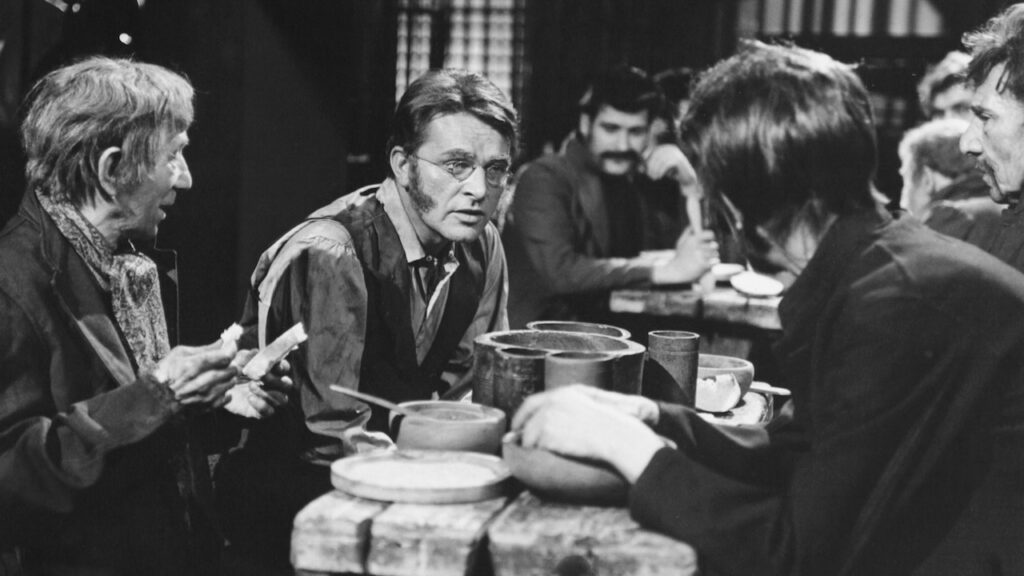
John Wyver writes: This coming Sunday, as part of BFI Southbank’s Muse of Fire: Richard Burton season, which kicked off last night, I am introducing a rare screening of John Osborne’s television play A Subject of Scandal and Concern, produced for the BBC in November 1960. This was recorded in April that year to 2-inch Ampex videotape and simultaneously tele-recorded to 16mm film, but we are projecting in NFT3 a very fine 35mm copy from the collection of the BFI National Archive.
Produced in the studio by Tony Richardson, this was made just a year or so after the release of the director’s film version of Osborne’s Look Back in Anger, in which Burton gave a compelling performance as Jimmy Porter. The television play, which was Osborne’s first for the medium, is a very different animal, being the true story of Victorian social reformer George Holyoake, was who was tried and sentenced to prison for blasphemy [correction made, as below].
I have been digging into the literature about Holyoake and Osborne, tracking down the press coverage of the production, and looking at the BBC production file in the Written Archives Centre at Caversham. Fortuitously it is one of those that has been previously vetted. So I think I have some interesting facts and reflections to share in my introduction, including a note about Burton’s fee of £1,000, which was regarded as astronomical at the time, and next week I plan to share some more of those here.
2nd December 2025
John Wyver writes: Just a reminder that BFI Members’ booking for the BFI Southbank Magic Rays of Light season opens today at midday. Booking for everyone else opens on Thursday at the same time.
You can book for the two programmes of documentaries (and a drama) about early television as well as for three screenings showcasing feature films that envisaged television in weird and wonderful ways before the BBC’s high definition service began at Alexandra Palace in November 1936. All of which is a celebration of the centenary of television and of the publication by Bloomsbury and the BFI on 8 January of my book, Magic Rays of Light: The Early Years of Television in Britain.
Tickets will also be available for the BFI Reuben Library Talk about the book on the evening of Monday 12 January. I’ll be in conversation with BFI curator Lisa Kerrigan, and I’m so pleased she agreed to take part. Here’s the blurb for that:
Magic Rays of Light (Bloomsbury) is a cultural history of television in Britain before the Second World War. John Wyver argues that, contrary to popular memory, this television was extensive, complex and innovative, as well as intimately entangled with the cinema, theatre, music and dance of the time. John Wyver will be in conversation with Lisa Kerrigan, Senior Curator Television, BFI National Archive.