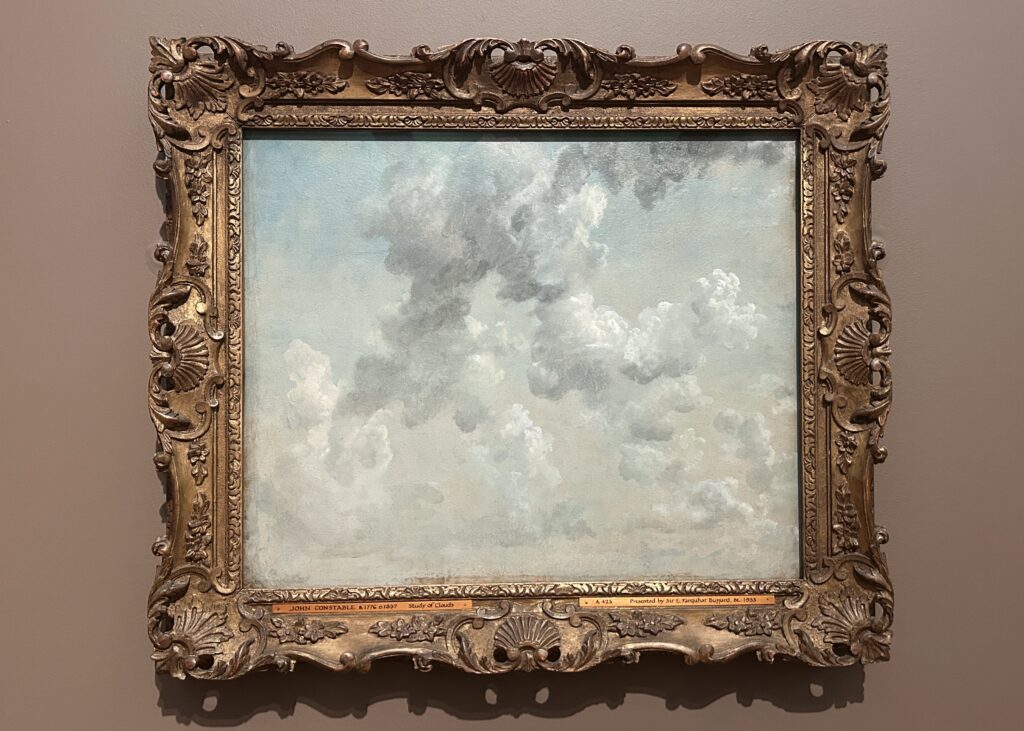
John Wyver writes: Technical troubles meant that I missed posting last weekend – apologies. But I’m back today with another group of articles that have engaged and interested me, along with — as a hommage to the changeable weather of the past few days — John Constable’s wondrous ‘Study of Clouds, 30 September 1822’, photographed at the recent Turner & Constable show at Tate Britain, but now presumably safely back with its guardians, The Ashmolean Museum, University of Oxford.
• Television returns: marking the reopening 80 years ago today of the BBC’s Television service from Alexandra Palace on 7 June 1946, Paul Hayes for the History of the BBC website reflects engagingly on the relaunch. This is a story that will also feature in my book about post-war television in Britain, but that is — well, at least four years away.
Back in London from Monday night, but meanwhile below is this week’s list of articles that caught my attention.
• Why the BBC matters: 5 minutes that are well worth your time, from the evidence given on 19 May by Sir Peter Bazalgette (former chair of ITV PLC), Dr Alex Mahon (former CEO of Channel 4 Television) and Pat Younge (former Chief Creative Officer, BBC Television) to the Culture, Media and Sport parliamentary Select Committee:
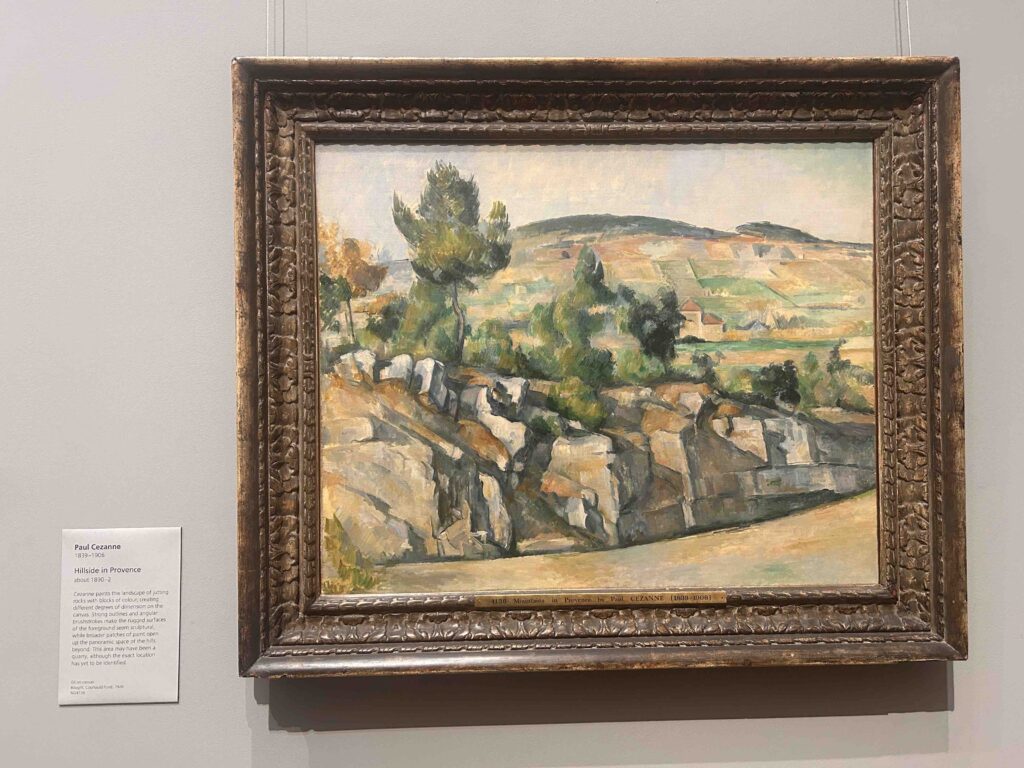
John Wyver writes: I am in Provence, deep in the Luberon, which makes me appreciate all the more the wondrous Cezanne above, Hillside in Provence, about 1890-2, hanging in the National Gallery in London. Everywhere I look there are views suggestive of the great artist’s work. It has rained here rather more than we had hoped, which at least has given me time to read a wide variety of bits and pieces, including the following that have attracted my interest and repaid my time.
• Why? Because… with Jean-Pierre Gorin: most of us will not get to the film season that one-time Godard collaborator Gorin has programmed for L’Alliance in New York, but we can all enjoy his idiosyncratic programme notes; as Richard Brody says, ‘he’s one of the greatest critics, or, more, cinema-thinkers’.
John Wyver writes: We are en vacances, having driven during three days from London to the small town of Simiane-la-Rotonde in the middle of the beautiful but rather remote landscapes of the Luberon. (Before the envy kicks in too strongly, this morning it’s raining. Hard.)
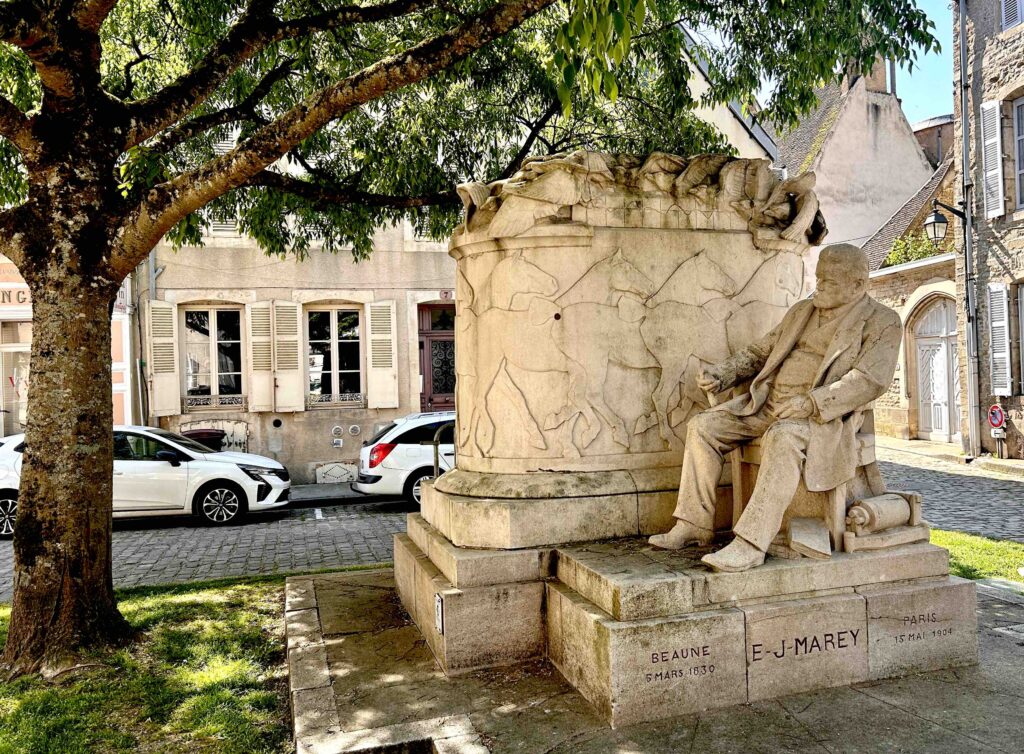
On the way here we stopped off for a day in Beaune. Wandering through the backstreets we came across this delightful memorial to Étienne-Jules Marey, who we learn was born in the town in 1830. As Wikipedia says, he was ‘a French scientist, physician, physiologist, chronophotographer and inventor.’ And for anyone engaged by the pre-history of the cinema, the most interesting of these roles is ‘chronophotographer‘.
John Wyver writes: I have started a nearly month-long holiday in France, and after three days’ driving have arrived at the small town of Simiane-la-Rotonde in the Luberon. Which is glorious, and which I will send an occasional update from over the coming days, while also continuing to make the final preparations for The Cultures of Early Television conference in early July, registration for which is open here.
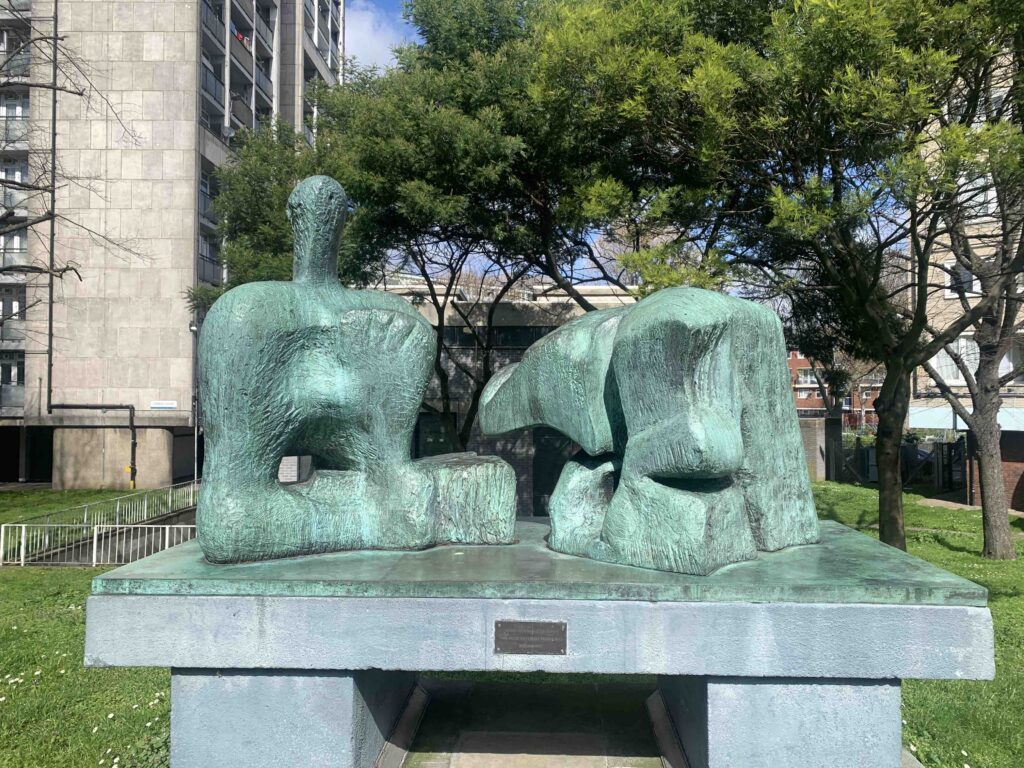
Posts will continue but with slightly dodgy connectivity they may be a little late, like this week’s miscellany of articles and audio that have engaged me over the past week. And the link to this week’s header image, which is my photo of Henry Moore’s Two-Piece Reclining Figure No. 3, sited at the Brandon Estate in Lambeth, is the second of the Municipal Dreams blog posts highlighted below.
• Nine Days in May: an excellent History of the BBC contribution by David Hendy about the pre-Corporation Company during the General Strike that began on 2 May 1926. As he writes,
The public wanted up-to-date information on a rapidly changing crisis, and with newspaper printing at a standstill the BBC was in a unique position to fill the void. Yet, the BBC’s role in the Strike was to prove highly contentious, and proved to be the first major flashpoint between broadcasters and the Government over questions of impartiality and independence.
John Wyver writes: I am something of a fan of the Voices of British Ballet podcast, which features oral history recordings made since 2002 as well as new exchanges with dancers, choreographers and critics. A current strand is celebrating the great dancer and choreographer Ninette de Valois, marking the 100th anniversary of the founding of Ninette de Valois’ Academy for Choregraphic Art in March 1926 and 25 years since de Valois’ death.
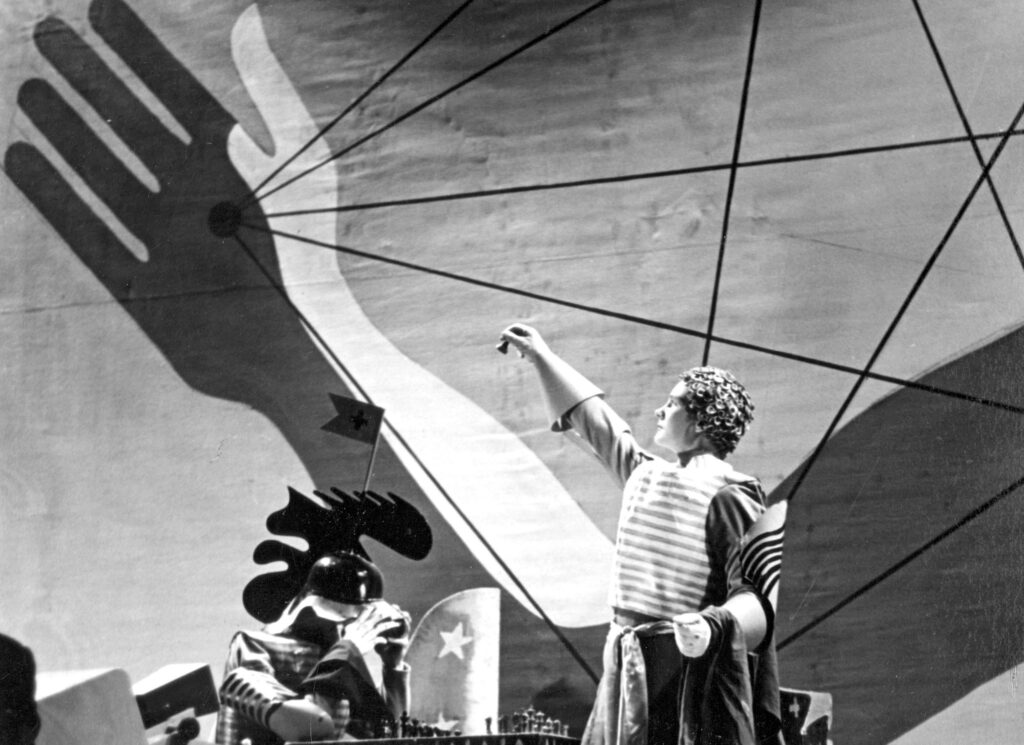
One recent fascinating edition features Patricia Linton talking to Dr Anna Meadmore, archivist at The Royal Ballet School about de Valois’ ballet Checkmate. As the Voices… website notes,
Checkmate is one of the only two ballets by Ninette de Valois to survive in the repertoire. It makes allegorical use of a chess game to represent a battle between love and death. Arthur Bliss, the composer, and Edward McKnight Kauffer, the designer, worked with de Valois’ ideas in a way that made perfect sense of the ensuing battle, and testified to her commitment to Serge Diaghilev’s ideas on the importance of music and design in ballet…
As well as reflecting on the ballet’s genesis and its key dancers, the podcast is especially interesting on the possible political meanings of the ballet. Although neither the Voices… website nor the podcast notes, Checkmate was also broadcast on several occasions by the BBC television service from Alexandra Palace, and this gives me the excuse to showcase one of my favourite images from Magic Rays of Light: The Early Years of British Television.
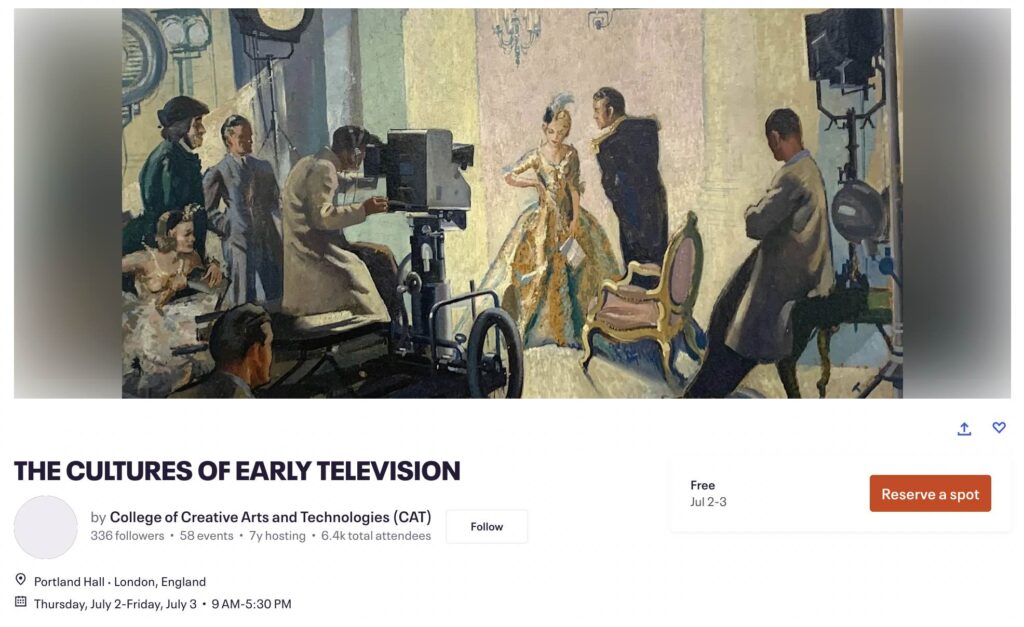
The Cultures of EarlyTelevision is a two-day conference about television before the Second World War in Britain, continental Europe, the United States and the Soviet Union. With presentations, panels and screenings of rare archival material, the event marks the centenary of the first British public presentation of what John Logie Baird called “true television”, which took place in London in early 1926.
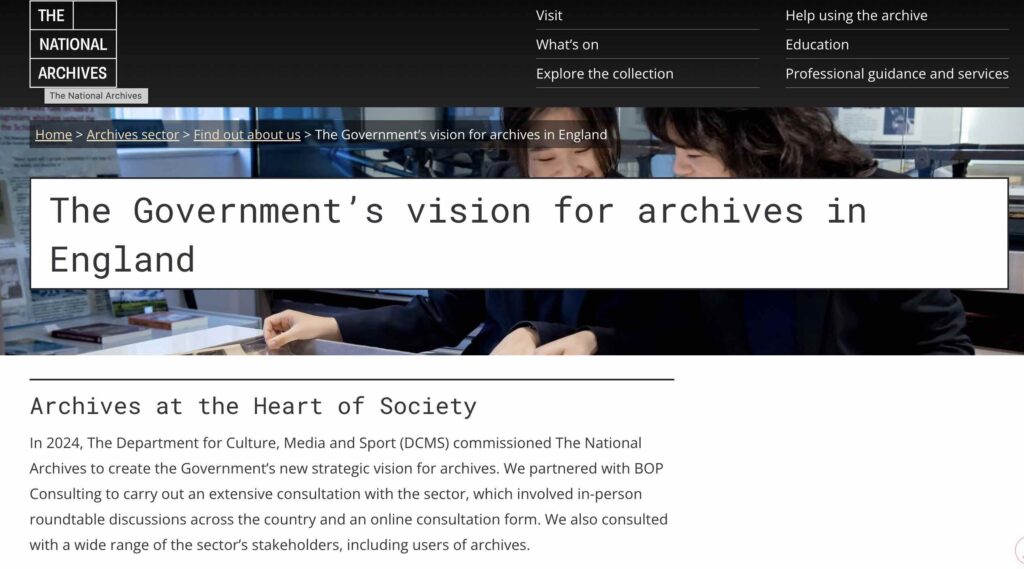
John Wyver writes: Ten days ago, with perhaps rather too little fanfare, the Government released a new strategic vision for archives. Commissioned from The National Archives (TNA) and launched by Baroness Twycross, Minister for Museums, Heritage and Gambling, this involved, as the project’s website notes, ‘an extensive consultation with the sector… in-person roundtable discussions across the country and an online consultation form. We also consulted with a wide range of the sector’s stakeholders, including users of archives.’
Given such thorough preparation, Archives at the Heart of Society is, in some ways, a comparatively modest (online) document. Nonetheless it makes a really strong and convincing case for the central importance of archives, and for why they must be accessible, inclusive and sustainable. Using it as a yardstick against which to measure the operation of the BBC Written Archives Centre (WAC) shows just how far short of best practice the Corporation’s archive falls.
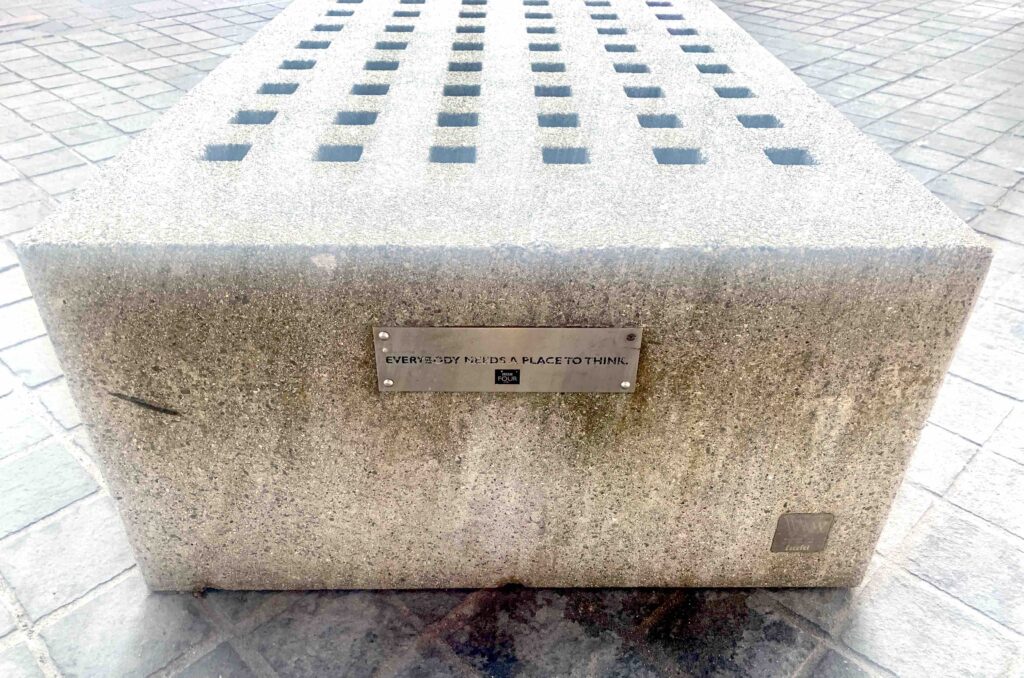
John Wyver writes: My header image is of a somewhat-worse-for-wear concrete bench on London’s South Bank. Attached is a precious souvenir of the 2002 launch of BBC Four — nearly a quarter of a century ago! I feature it here as a complement to the first item in today’s list of articles and more that I have found engaging and enriching over the past week.
• The disappearance of the public bench: although this excellent Gabrielle Bruney essay for Places journal is focussed on US examples, the arguments she makes are absolutely applicable this side of the pond too:
Benches, like other public amenities, are places where optimistic visions of civic life meet messier realities. They’re sites of leisure and contestation that invite a range of constituencies with vastly differing needs and desires… To remove benches, or to curate who gets to sit, is to abandon the work of defining a civic ideal and determining, together, how to live up to it. When seating disappears, our relationship with public space becomes more grudging and utilitarian. Benches are symbols of hospitality, an invitation to participate in the civic realm.
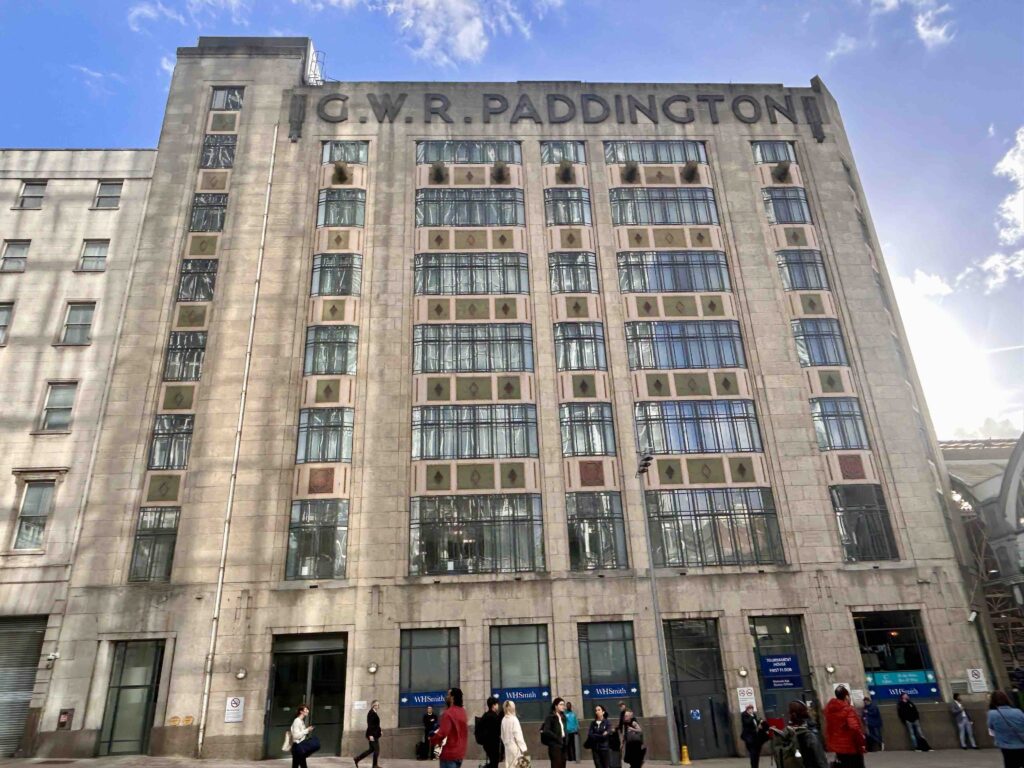
John Wyver writes: Articles and more encountered and appreciated over the past week. My header image is one of my favourite facades in London, that of the building now known as Tournament House at Paddington Station. Designed by P.E. Culverhouse of the GWR Chief Civil Engineers office and completed in 1935, it was this week revealed again as its covering of scaffolding was removed.
• Projections – David Bordwell’s Contributions to the Study of Film: a special open-access edition of the journal ‘for movies and mind’ dedicated to the late, great writer on cinema; there are exceptional riches here, although perhaps not for those who are unfamiliar with Bordwell’s writing and recent film theory.