
Fog and war
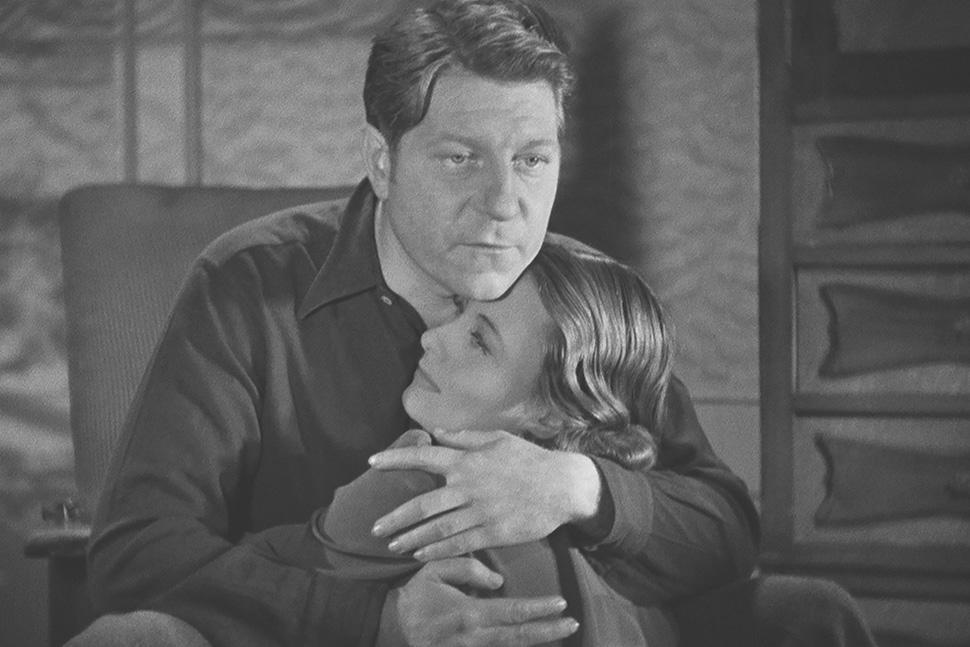
John Wyver writes: To BFI Southbank yesterday for an accidental double bill. I hadn’t planned it this way, but it happened that I watched Marcel Carné’s Le Quai des brumes, 1938 (above), just before the silent High Treason, 1929, the third programme in the Magic Rays of Light season. I’m not sure there are any parallels between the two, beyond the fact that both made for exceptional cinema experiences.
Perhaps I saw Carné’s masterpiece of fog and doomed romance on BBC2’s World Cinema decades ago, but I do not recall seeing it any more recently. Shown in NFT1 from a very fine recent digital restoration, it came across, as it has done for audiences for decades, as a yearningly romantic tale of a brief encounter between Jean Gabin’s stoical and damaged military deserter Jean, and an alluring young woman, Nelly, incarnated by a breathtaking Michèle Morgan.
The film was shot by the great cinematographer Eugen Schüfftan almost entirely in studio sets created by the comparably great art director Alexandre Trauner. But perhaps its most wondrous element, along with the peerless performances of Michel Simon, Pierre Brasseur and Delmont, complementing Gabin and Morgan, is Jacques Prévert’s script, which laces its tale of quotidian low-life with lines of radiant poetry.
The programme note reproduced Lucy Sante’s very fine 2004 essay for Criterion concludes, exceptionally, like this:
The hazy lights, the wet cobblestones, the prehensile poplars lining the road out of town, the philosophical gravity of peripheral characters, the idea that nothing in life is more important than passion—such things defined a national cinema that might have been dwarfed by Hollywood in terms of reach and profit but stood every inch as tall as regards grace and beauty and power.
As I explained last week, I programmed High Treason in the BFI Southbank early television season because the film features numerous magined forms of television. Public and private screens show broadcast scenes from a ‘Daily Television News’ show and the ‘Government Broadcasting Station’. But television also features as visual telephones for intimate chats between lovers and as a system for real-time surveillance.
What I did not anticipate was how the film’s framework of an imminent conflict between Europe and ‘the Atlantic States’ would appear quite as prescient as it did yesterday. The film looked glorious in a sharp, tonally rich 35mm print from the BFI National Archive, and on the screen it had a near-indefinable quality of alive-ness that was absent from the otherwise exceptional digital version of Le Quai des brumes.
As I learned afterwards the print was projected at 22 frames per second, rather than the conventional 24. Such screening adjustments are sometimes made for the showing of hand-cranked silent features, and in this case it seemed exactly the right decision. In addition, John Sweeney at the piano complemented the vivid print with an improvised score of subtle intelligence and sensitivity, which the sell-out crowd greatly appreciated.
Many thanks to BFI curator Jo Botting and her colleagues for all of this, as well as to Dick Fiddy who introduced the film, and who lobbied for and organised the whole Magic Rays of Light season. And as Dick noted afterwards, in the film television plays its part in averting a global conflict, offering a benign view of the emerging medium that contrasts with the ways in which post-war British cinema presented television in features like Meet Mr Lucifer, 1953, and Simon and Laura, 1955.
Next up in the season is the Radio Parade of 1935, made in 1934, a Will Hay satire about the BBC with a vision of television as a medium for large screens in public spaces. It’s a treat, and Sunday afternoon’s showing is an exceptionally rare opportunity to see it on a big screen.
Leave a Reply