
Ghosts of sculptures past
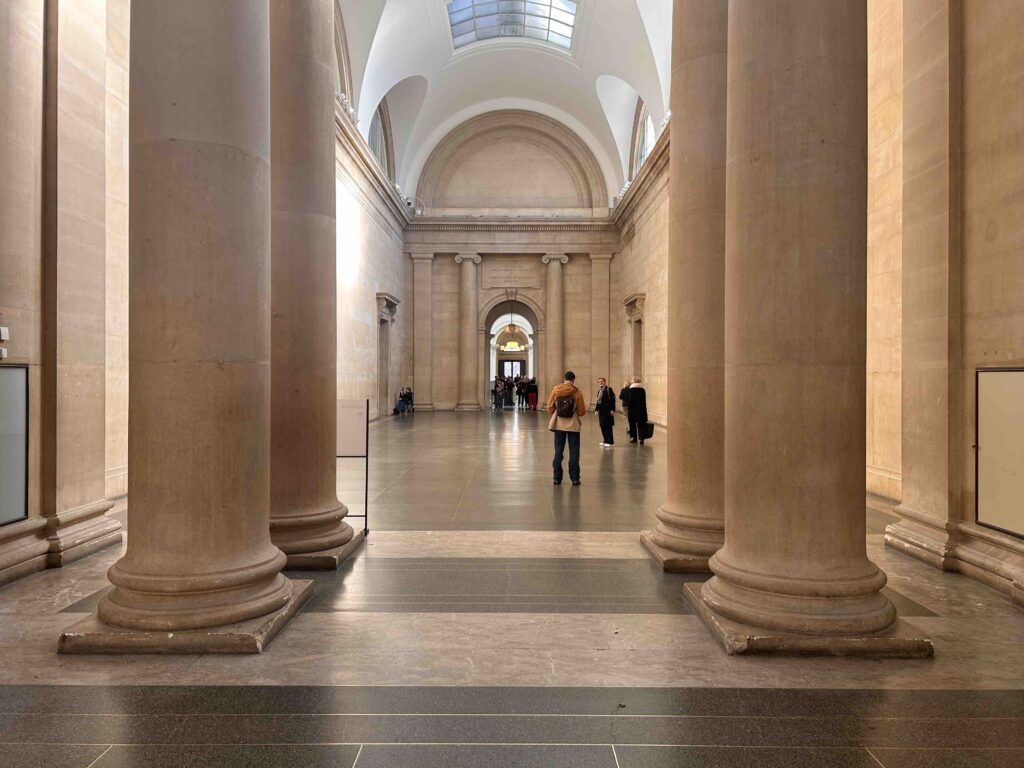
John Wyver writes: An inconsequential observation, and as such one that hardly warrants its own post. But I was at Tate Britain this morning, among crowds attracted by the final days of Lee Miller (until 15 February) and the blockbuster Turner& Constable: Rivals and Originals (all day tickets sold by 10.30 or so when I arrived). With such pleasures on offer the curatorial staff have clearly felt that, following a recent presentation of Tate’s major Epsteins, the lofty central Duveen galleries (that’s the south one, above) and central rotunda can be left empty for a while.
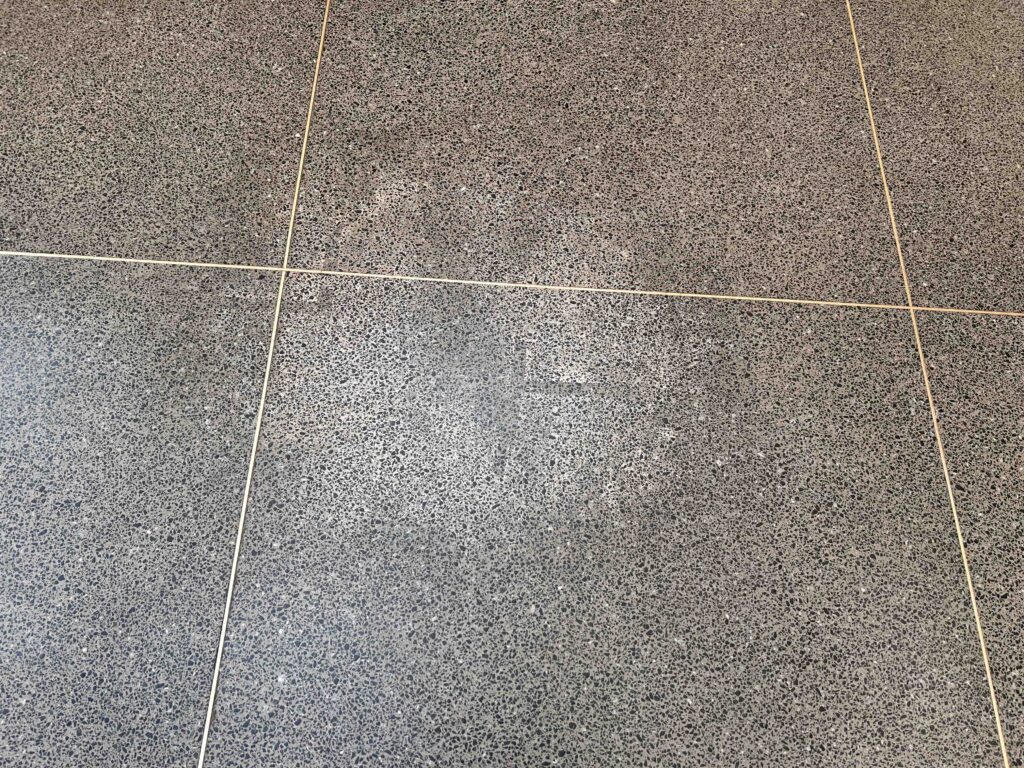
Although I have noticed this quirk before, I was especially taken today by the ‘ghost’ shadows on the stone (marble?) paving. Marks made by heavy sculptural installations from the past, these seem to inhabit the floor of the south Duveen gallery in a rather unique way. Something about the surface means that these traces of lost exhibitions persistently resist cleaning away.
One of them, below, may be a memory of one block of Richard Serra’s Weight and Measure, 1992, conceived for the Duveen galleries and installed here between September 1992 and January 1993. As I recall it, the floor had been especially strengthened to carry the load of these two forged substantial steel blocks, about which David Sylvester wrote so brilliantly for the LRB.
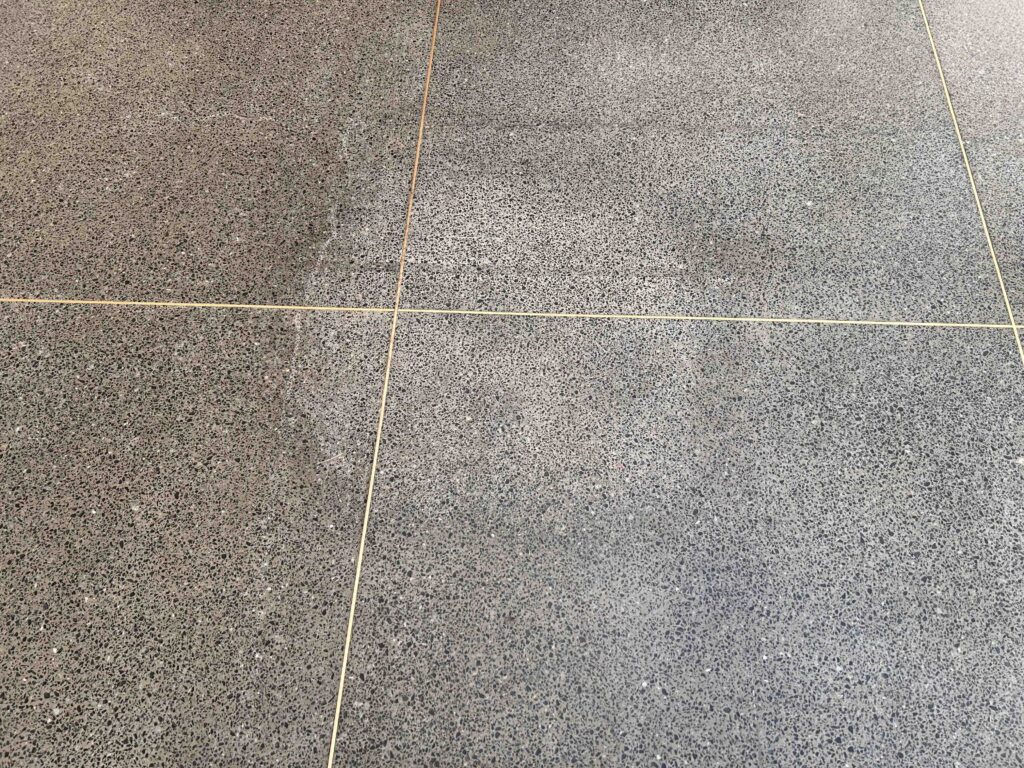
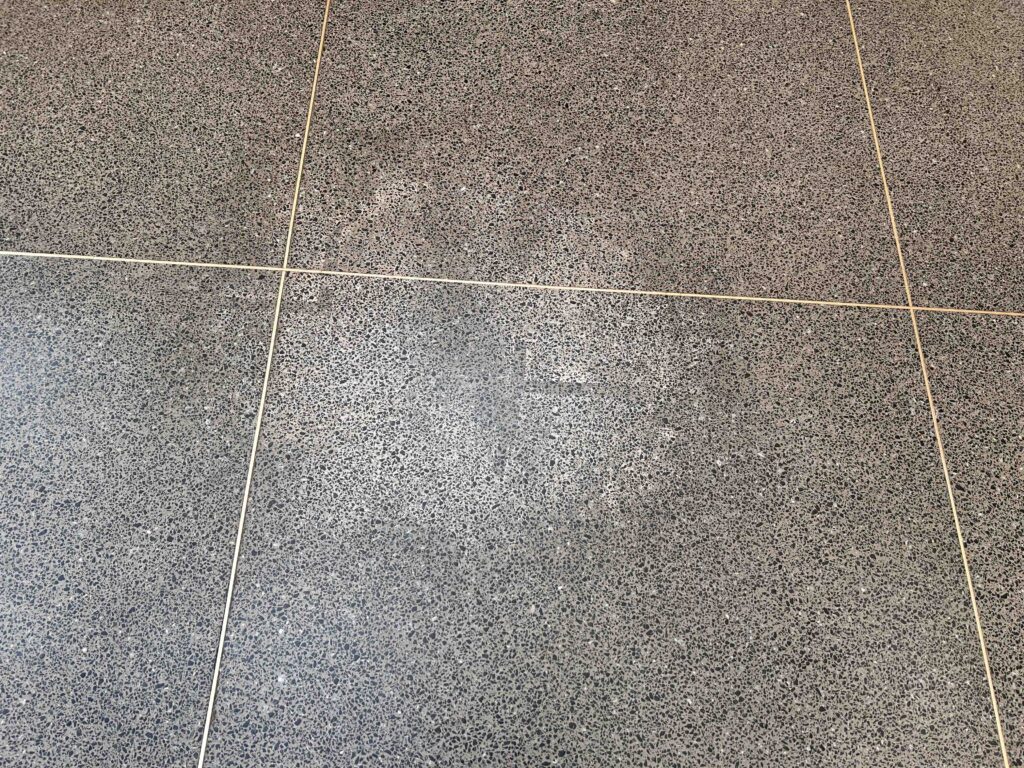
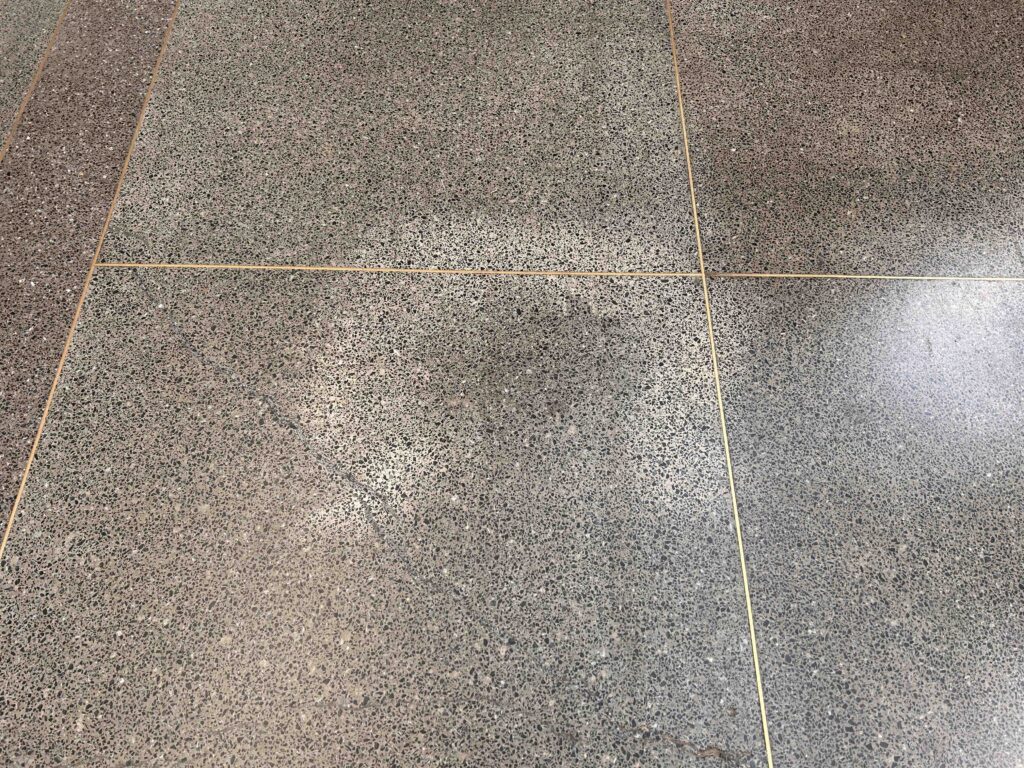
Then again, it along with its modest companions, three of which are below, may be indices of quite other works, perhaps of the Epsteins, or perhaps from the many other shows I have enjoyed here, from medieval devotional art to brightly coloured ‘pop’ sculpture of the 1960s.
Somehow I find these ghosts both pleasing and reassuring, sitting as they do between the permanence of the stone or metal that stood silently here and the transience of a display that held the space for just a few months.
If the floor is largely unoccupied when you next visit Tate Britain, glance down as you walk through the south hall and perhaps reflect for a moment or two on, as T.S. Eliot phrased it, ‘time present and time past’.
Leave a Reply