
The Sunday dozen
John Wyver writes: This week’s selection of stuff that I’ve found interesting and enriching over the past seven days.
We lost the great documentary filmmaker Frederick Wiseman this week, and there have been numerous fine tributes; among the richest articles I’ve found online are the following:
- What if the great American novelist doesn’t write novels: an especially astute Mark Binelli profile for The New York Times [gift link] is from December 2020.
- ‘When you stop shooting, that’s when the best thing is going to happen. You have to persevere’: an interview with Frederick Wiseman: a 2015 Sight and Sound interview conducted by David Jenkins, focussed on National Gallery, 2014, which is currently available in the UK on the subscription service from BFIplayer [free trail; then £6.99 per month].
- ‘Launching missiles is your job’: for Doomsday Machines, Alex Wallerstein on ‘the sublime banality of Frederick Wiseman’s Missile, 1988.
- Remembering Frederick Wiseman: the filmmaker who changed documentary cinema forever: thoughts from Thomas Moran for The Conversation.
• Enthralling or enraging?: in an original and engaging interactive from The New York Times [gift article] Alissa Wilkinson argues with herself about the films of Emerald Fennell, and most especially of course “Wuthering Heights” (which I liked more than most of those I know).
• The end of cinema?: Georgie Carr reviews two new books by A S Hamrah for LA Review of Books, the online journal that that I have linked to regularly over the past months, but see…
• How the LA Review of Books destroyed itself: … about this really concerning post by tasbeeh herwees for No Bad Days about which there has been a great deal of commentary online over the past week.
• The hot Hollywood trend for minute-long TV shows: ‘the sort of thing you’d watch drunk at 2am’: remarkable on vertical films for phones, from Stuart Heritage for the Guardian, with intriguing examples.
• Native non-fiction’s quest for self-determination: Adam Piron for Criterion’s Current on the history of indigenous filmmakers in the United States.
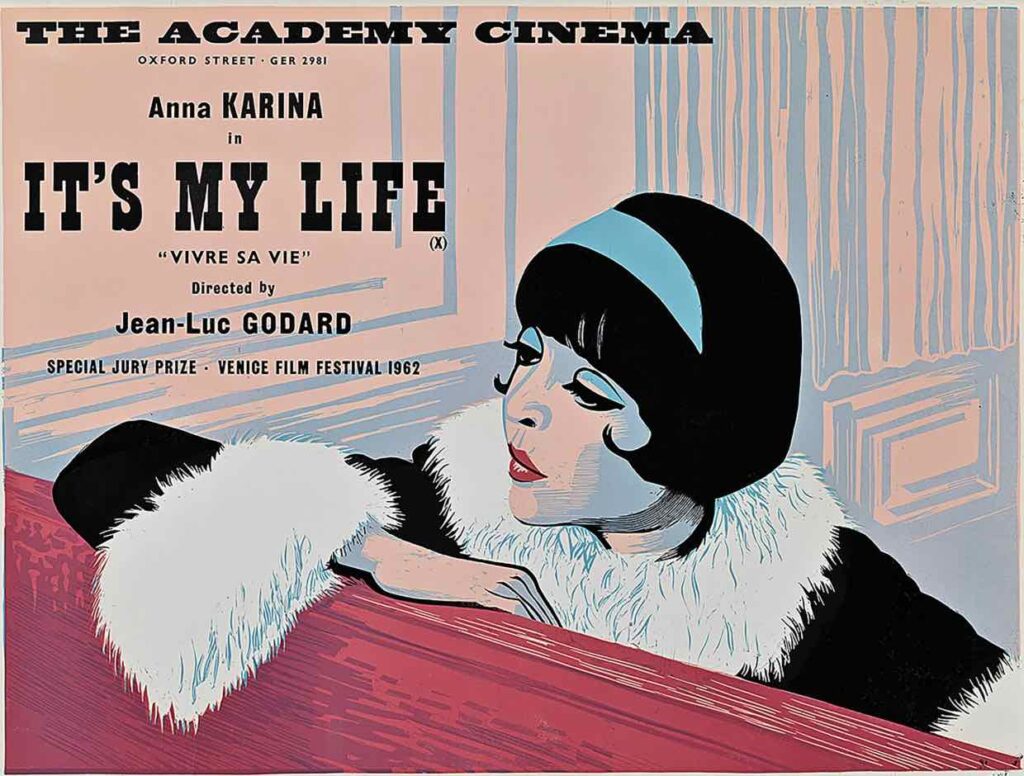
• Peter Strausfeld, the movie-poster master: a terrific tribute by Anthony Lane for The New Yorker [£; limited free access] to the artist who across thirty years created totally memorable posters for London’s Academy cinema, including for Godard’s Vivre sa vie, which is the header image.
• Alexei Ratmansky’s leap of faith: for The New York Review of Books [£; limited free access] Marina Harss profiles the Ukrainian choreographer and his latest creation, The Art of the Fugue, premiered in Copenhagen in November.
• Guns, money and opium: an eye-opening essay by Laleh Khalili for the LRB [£; limited free access] about the USA’s Green Berets over the past seven decades.
• How far back in time can you understand English?: a truly fascinating ‘experiment in language’ by Colin Gorrie for the blog of Dead Language Society.
• On being an historian in dystopian times: Katherine Blouin for Everyday Orientalism reflects on ‘how it feels to be a historian here and now, at this particular point in history’, and asks the urgent questions:
What is the responsibility of the historian, and more broadly of humanities scholars, during times of climate collapse, televised genocides, techno-feudal fascism and imperial meltdown? How does it feel to be working on the dystopian nature of widely trusted civilizational myths when these same myths are being repurposed for yet more dystopian enterprises in real time? And what is the moral duty of historians (especially White, settler, tenured historians like me) in times like now?
• The revolutionary crappiness of Darren Aronofsky’s On This Day … 1776: the best thing I’ve read about the historical generative AI series is Philip Maciak’s response for The New Republic; here’s the first episode from Youtube:
• The AI companies trying to make grief obsolete: Charley Burlock for The Atlantic [£; limited free access] is fascinating on the ‘digital after-life industry’.
• The only taboo left is copyright infringement: I’m not sure I agree with Ryan Broderick’s provocation for Garbage Day, but it’s an exceptionally interesting read.
• And finally…: Grant Gee’s new film about the fabulous jazz pianist Bill Evans just won the Silver Bear prize in Berlin for best director with his Everybody Digs Bill Evans, which I really look forward to; meanwhile, here’s the man himself playing ‘My foolish heart’ for BBC2’s Jazz 625 in 1965, with a transcription by Michael Solomon:
Leave a Reply