
The Sunday dozen
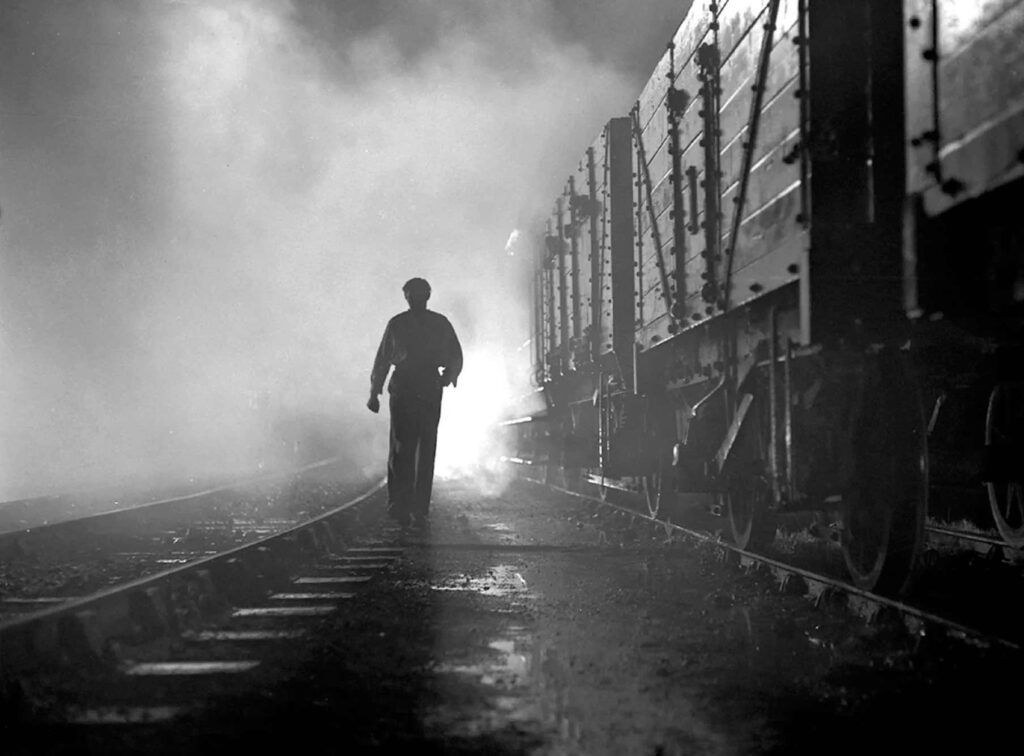
John Wyver writes: More politics than usual, perhaps, among things that have engaged my attention in the past seven days. There are several very good film reads too, and modern and contemporary music, along with a recommended podcast interview. The image above is from Robert Hamer’s remarkable It Always Rains on Sunday (1947) and is drawn from the first recommendation; look out for Lynda Nead’s BFI Classic about the film coming from Bloomsbury next year.
• Magic from elsewhere: Geoffrey O’Brien for The New York Review [£; limited free access] is terrific on post-war British cinema, responding to the Locarno retrospective this summer curated by Ehsan Khoshbakht, and the accompanying book Great Expectations: British Postwar Cinema, 1945–1960…
• The White Unicorn: a “tale of babies, boudoirs, lingerie, misunderstanding husbands”:.. and staying with post-war British cinema, this is Jo Botting’s very fine BFI ‘Inside the Archive’ column, about a 1947 melodrama with Margaret Lockwood which I realise now (although had completely forgotten) I wrote about in detail back in 2016 for this blog.
• The best films of 2025: I don’t intend to feature many (more?) ‘best of’ lists, but this two-for The New Yorker column [£; limited free access] by Justin Chang and Richard Brody is acute and thoughtful.
• Found Footage Magazine #11: a fully open access online edition of ‘the independent film journal devoted to the inventive use of existing images in film & video arts… a vital resource for artists and filmmakers, scholars, researches, and cinephiles interested in the theoretical, historical, and aesthetic dimensions of found footage cinema’; a cornucopia of rewarding interviews and essays
• “But there’s no market for women composers…”: Leah Broad’s Songs of Sunrise Substack celebrates the music of Avril Coleridge-Taylor and the release of the first full album dedicated to her orchestral music; Coleridge-Taylor is not only a major but to-date overlooked composer and conductor but was also the first person of colour to appear on British television…
… and here’s Chineke! Junior Orchestra performing Avril Coleridge-Taylor’s ‘Sussex Landscape’, Op 27, at Royal Russell School as part of the 2025 Summer Residential, conducted by Yudania Gómez Heredia.
• New Music Show: this Saturday late-night BBC Radio 3 series is one of my BBC Sounds must-listens each week, and never more so than the editions the team, led by Kate Molleson and Tom Service, report annually from the Huddersfield Contemporary Music Festival; the lead link is to the opening edition a fortnight back, and there are two more here and here, with a further one to come next Saturday.
• They used art as ‘fake news’ to sell colonialism. This show is a fact check: Nina Siegel for The New York Times [gift link] on what sounds like a fascinating exhibition at the Africa Museum in a Brussels suburb showcasing the institution’s collection of colonial propaganda and the approaches to exposing and critiquing that.
• Glitchcore bosch: terrific LRB blog post from Mark Sinker about the bizarre billboard mural that was briefly above Côte Brasserie in Kingston upon Thames.
• Zen and the art of photography: a delightful interview for Aperture by the journal’s editor Michael Famighetti with artists Irina Rozovsky and Mark Steinmetz, a couple who run The Humid, ‘a photography project in Athens, Georgia, offering workshops, lectures, and traditional analog training’; the images are great, as are the discussions of the materialist and labour aspects of photographic practice:
Printing is arduous [this is Steinmetz]. You’ve got to be able to focus. You don’t want to be crazy when you’re printing, where everything one day turns out to be too contrasty or pale the next day. The baths, moving the print from here to there—there’s so much to it, especially if you want to maintain your darkroom’s cleanliness so there’s no fixer contamination, so that your prints are indeed archival. There’s a lot to think about all the time. It’s very strenuous.
• Songs of Seven Dials: Dave O’Brien speaks with Matt Houlbrook in a New Books Network interview about the author’s new book subtitled ‘An Intimate History of 1920s and 1930s London’; it’s a great read, and rigorous but very accessible, just like this podcast.
• What if our ancestors didn’t feel anything like we do?: a really engaging essay by Gal Beckerman for The Atlantic [£; limited free access] on the history of emotions, mostly focussed on the ideas of Rob Boddice but with walk-on appearances by Joanna Bourke, Javier Moscoso and others.
• Six lessons from the 2024 election [gift link]: original and eye-opening analysis about Labour’s victory from Sam Freedman’s always immensely worthwhile newsletter (for subscribers), Comment is Freed.
• MAGA 101: Inside Trump’s fast-track masterclass in undermining academic freedom: Emma Briant for Index on Censorship on the repressive measures employed in the United States, and why and how they may spread to Europe and beyond.
• My guide to populist-proofing your democracy – before it’s too late: unarguable and essential by Timothy Garton Ash for the Guardian.
• We asked interior designers to explain Trump’s ‘garish’ White House redesign — and they had THOUGHTS: Caroline Bologna for HuffPost talks entertainingly with experts about the meanings of the gilt and glitz imposed on the Oval Office and elsewhere; this would be funny if it weren’t so serious.
• And finally…: guitarist and record producer Steve Cropper, who died this past week, is lovingly eulogised by Richard Williams in his thebluemoment.com blog and in a deeply knowledgeable Guardian obituary; here is the virtuoso performing ‘(Sittin’ on) the dock of the bay’ with Tom Jones at the BBC Proms in 2017:
Leave a Reply