
The Sunday dozen
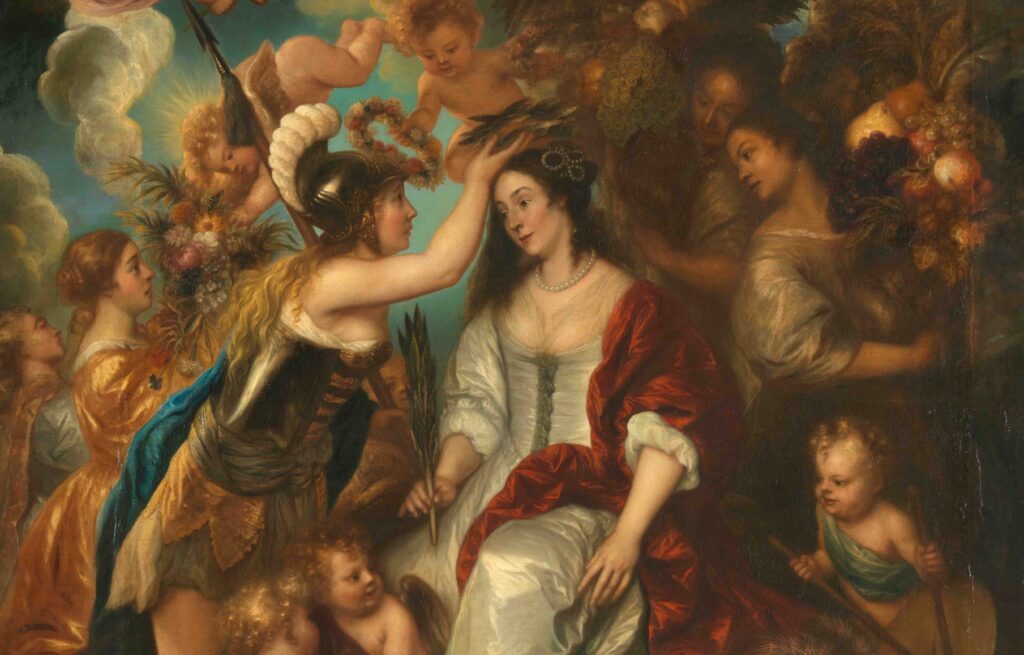
John Wyver writes: as usual, stuff that I found in the past week that helped me get through these strange and terrible times; the header image is a detail from Jan Lievens’ 1652 ‘Allegory of Peace’, from the collection of Amsterdam’s Rijksmuseum. Seemed right this week.
• Kenith Trodd obituary: firebrand TV producer and Dennis Potter’s right-hand man: Ian Greaves’ very fine tribute for the BFI to a great television producer who we lost this week; here’s ‘Hands Across the Table’ from episode 5 of the Potter-scripted, Trodd-produced Pennies from Heaven, 1978.
• How Maggie Gyllenhaal’s The Bride! uses IMAX like no other film: especially for those of us obsessed by aspect ratios, this is a fascinating tech-y report by Sarah Shachat for IndieWire about the innovations in the movie’s production:
How The Bride! uses IMAX is sometimes a slow change — it has a native 2:39:1 aspect ratio for a kind of epic, sweeping feeling. But if you see it in one of the 40 1:43:1 IMAX theaters around the world, The Bride! find[s] ways to grow into itself. It changes to a 1:90:1 aspect ratio and to a 1:43:1 aspect ratio. It shifts between 2:39:1, 1:90:1, and 1:43:1, and sometimes the aspect ratio changes across three cuts.
• Eurotechno: for Reverse Shot, Max Carpenter with a curious, engaging tale of the 1993 production by the British group Stakker of the avant-garde ‘videola’.
• Artistic license: a slightly bonkers and somehow very Italian tale by Ingrid D. Rowland for NY Review of Books [£; limited free access] involving restorations to Rome’s Basilica of San Lorenzo in Lucina, the late Silvio Berlusconi and the profile of prime minister Giorgia Meloni.
• Eugène Atget’s epic record of time and place: for The New Yorker [£; limited free access], Hilton Als on the photographer’s endlessly enigmatic and beautiful images of pf late 19th and early 20th century Paris.
• Michael Heizer measures his art in miles and tons: M.H. Miller profiles the land artist and sculptor for The New York Times Style Magazine [gift link]; like the author, I once went to a great deal of trouble to see ‘Double Negative’, 1969, in the desert, and I remain very pleased that I did.
• Reviewing the BBC’s Architectural Heritage | The Late Show: a blast from the past, specifically 1989, released on Youtube by BBC Archive this week – Jonathan Meades pronounces most entertainingly on the Corporation’s buildings, preceded by a tentative intro from Tracey McLeod in a Lime Grove that was not long for this world:
• This Romeo and Juliet dance unfolds onstage and on camera: regulars will know of my interest in the integration of live video with performance, and this is an account by Margaret Fuhrer for The New York Times [gift link] of a notable instance: choreographer Benjamin Millepied’s new version danced to Prokofiev’s score Romeo and Juliet; see also Millepied’s 2019 ‘pilot’ film Romeo+Juliet, currently viewable at NOWNESS, and Gia Kourlas’ New York Times review [also gift link] of the stage production, Romeo and Juliet search for love, with a cameraman.
• When players become artists: the rise of in‑game photography: so interesting from Gabriel Aroni for The Conversation.
• How Notting Hill exposed Britain’s postcolonial crisis: I’m not sure how long this has been online, but I only discovered it this week – a remarkably rich discussion by Nicholas Mirzoeff at The MIT Press Reader (and adapted from his 2023 book White Sight) of the links between photographer Roger Mayne, theorist and teacher Stuart Hall and the endings of Empire.
• Iran, week one: the best general account and analysis I’ve yet read, by Tom Stevenson for LRB [£, limited free access].
• Real war and culture war: another regular reminder that Chris Grey’s Brexit & Brexitism blog remains essential, and never more so than this week’s discussion of the links between Iran and, yes, Brexit and Brexitism.
• History and AI: why Microsoft and the World Economic Forum get it wrong: short, sharp contribution to the ongoing debate by Queen Mary, University of London historian Leslie James:
Humanities interactions with each other and with the natural environment are recorded in song and dance, in objects and on parchment. The world’s knowledge is not digitised. If we do not recognise this, then we will continue to reproduce existing inequalities in our knowledge of the world.
• Why all fantasy and science fiction writers are historians: this, too, is very good on history and more, by Ada Palmer for Strange Horizons.
• And finally…: the camerawork may be prosaic but Rosalía’s Berghain live this week at The BRIT Awards 2026, with added Björk, is really pretty amazing:
Leave a Reply