
54 reasons to be cheerful in 2025
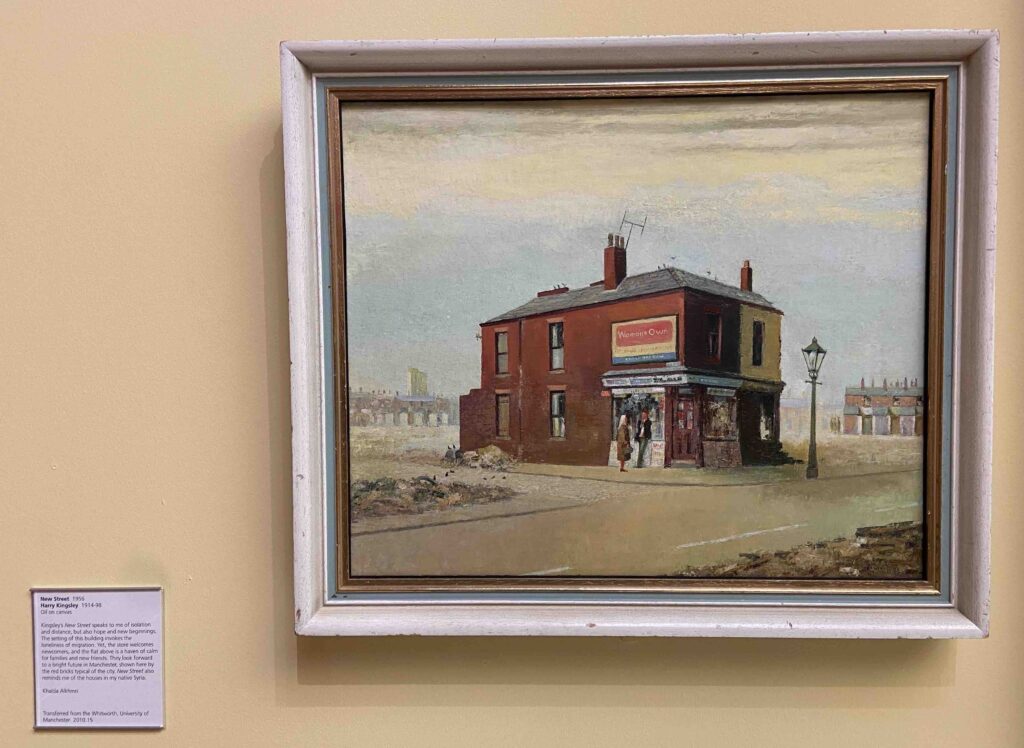
John Wyver writes: Welcome to an eclectic year-end list of the books, exhibitions, films, performances and other stuff (although not much music) that enhanced and enriched my 2025. There are some obvious choices here, but for the most part I have tended towards the perhaps-surprising or marginal or over-looked. The listing in neither a chronology nor a ranking.
Taken together they offer a sense of (some of) what engaged and enthused me during a year when the genocide in Gaza and the trashing of democracy in the States and the war in Ukraine and the disappointments of Labour here, along with all the rest of the hideousness, pressed in upon us in sometimes near-intolerable ways. Essentially a retrospect of responses, there is also an idea or two for viewing or reading or visiting in the new year. And why 54? Why not? Warm best wishes for a better 2026.
As for the painting above, it is Harry Kingsley’s New Street, 1956, in the collection of Manchester Art Gallery…
• Manchester Art Gallery: having almost all of a day free in Manchester in the spring, I decided to spend it with the permanent collection in Whitworth Street, and it was such a pleasure; I devoted extended time to a few works (Stubbs, Valette, Sickert, Wadsworth), and I appreciated the gallery’s focus on its audiences, on context and displays like What is Manchester Art Gallery?, and on concerns about race, empire and decolonisation – I really liked the café too.
• Headingley Test against India: the last few weeks have been desperately dispiriting for any fan of the England cricket team, so it’s worth recalling the glorious chase in June to reach the target of 371 in the final hour.
• Mission: Impossible – The Final Reckoning: maybe it isn’t as great as previous instalments, but this last go-round (for the moment?) for Tom Cruise’s triumphal series is still pretty wonderful, and especially so when seen at BFI Imax.
• Radical Japan – Cinema and State: Nine Films by Nagisa Oshima: an exceptional Blu-ray box set from Radiance Films, with the director’s radical feature films from The Catch (1961) to Dear Summer Sister (1972), plus a host of extras.
• Dept. Q: this nine-part Netflix detective story with Matthew Goode as an irascible on-the-edge cop in Scotland was one of the delights of my streaming viewing; I’m pleased to know there’s a second series in production.
• New Music Show: BBC Radio 3’s weekly showcase of contemporary audio is one of the few audio strands that I attempt to listen to every edition of, and I’m invariably surprised and engaged; thanks to Kate Molleson and Tom Service for being such expert guides.
• The New Life: I only got to Tom Crewe’s very fine historical fiction during the recent Christmas holidays, but now I echo Clare’s and Kate’s deep admiration for its vivid, physical, sexual and intelligent writing.
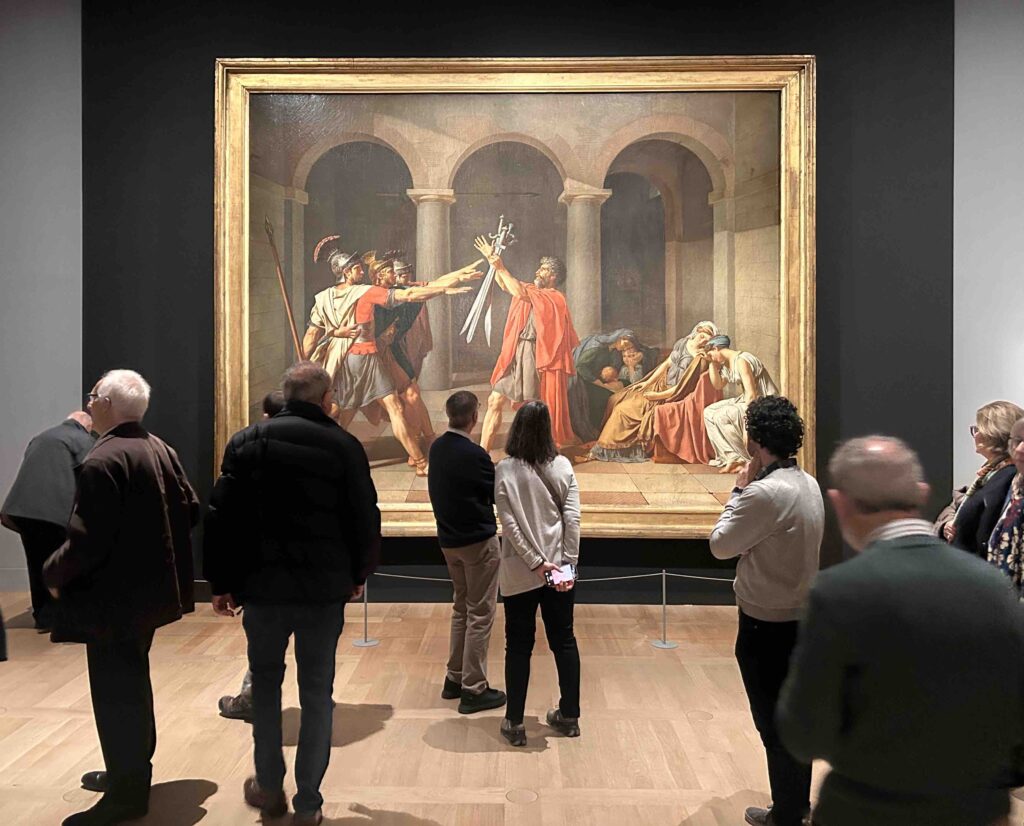
• Jacques-Louis David: I wrote in my Postcard from Paris about my visit to the Louvre’s glorious retrospective, which is on until 26 January; above Oath of the Horatii with other visitors.
• Captive Cinema: this selection by BFI Television Curator Lisa Kerrigan of Associated-Rediffusion documentaries from the 1950s and ’60s made for a terrific evening at BFI Southbank in the autumn, and there’s an online trace of the programme in the notes available via the link; several of the films were authored by journalist Daniel Farson, and remarkably the BFI is releasing a first selection of Farson’s work on Blu-ray in February.
• Shifty: Adam Curtis’ sprawling 6-part found footage essay about the weirdness of living in Britain at the end of the twentieth century remains on BBC iPlayer, and is well worth exploring for its acute analysis and its often off-the-wall archive elements.
• New Books Network: the format of this podcast is simple – an academic interviews another academic about their recently published book – and while the ideas are often complex, this invariably renders them accessible and approachable; I listen most mornings as I walk to and from the gym, and during the year I purchased at least a dozen titles after hearing from their author.
• The Diplomat: in October we were graced by a third series of Debora Cahn’s daft but brilliantly bingeable Netflix series, and I’m eagerly looking forward to season 4.
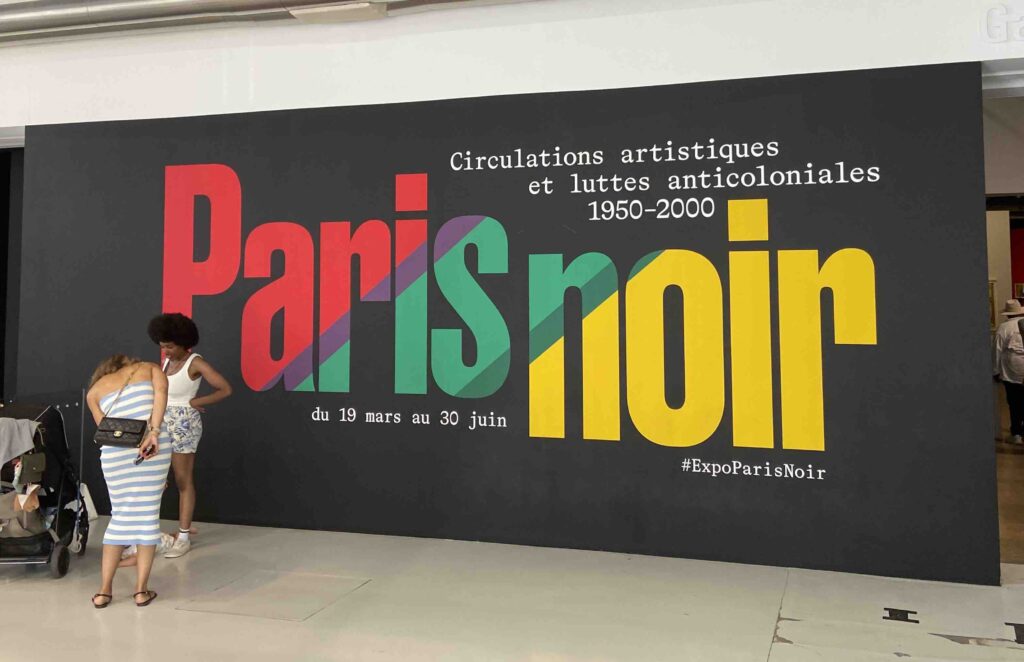
• Paris Noir – Artistic circulations and anti-colonial resistance, 1950 – 2000: a truly eye-opening exhibition at the Centre Pompidou showcasing the presence and influence of Black artists in France from the 1950s to 2000; there was so much here that was unfamiliar and bold and brilliant, including works by Iba N’Diaye, Herbert Gentry and Sam Gilliam.
• Le Bistrot du Paradou: I was fortunate enough to enjoy a number of exceptional meals during the year, but unquestionably the highlight was the lunchtime celebration of my 70th birthday in the courtyard of this perfect French restaurant, which astonishingly – and fatally – provided for the prix fixe as much vin rouge, blanc et rosé as the party could consume; a good time was had by all the family.
• A Quiet Place: a new discovery for me this year were the crime novels of Japanese author Seicho Matsumoto, published in translation as handsome Penguin paperbacks; this is perhaps the best of those that I’ve read so far – spare, taught, finely but not absurdly plotted and with rich insights into post-war Japanese society.
• Abba Voyage: essentially a wrap-around screen production with a live band and an amazing light-show, this is an extraordinary and totally enjoyable experience (although the manga-style animations are daft), and quite obviously one future for performance.
• ROHTKO: Łukasz Twarkowski’s four-hour ROHTKO at the Barbican was an astonishing experience, brilliant and at times banal and boring, but I have never seen performance and on-stage live video integrated with such panache and beauty; the trailer below gives you a tiny sense of what it was like, although really, yep, you had to be there. I also appreciated the company’s The Employees, based on the novel by Olga Ravn, which was vivid and visceral at the QEH earlier in the year.
• Warfare: watching from the front row of BFI IMax Ray Mendoza and Alex Garland’s real-time conflict involving a platoon of American Navy SEALs in the home of an Iraqi family was, well, intense.
• Walter Benjamin: A Critical Life: Howard Eiland and Michael W. Jennings’ monumental study had sat in my ‘to read’ pile for too long, and diving into it consumed a fair part of the early months of the year; but it was unquestionably worth the effort, and I closed it with a far deeper understanding of Benjamin and of so much more.
• Van Gogh: Poets & Lovers: a simply magnificent National Gallery exhibition which I took the family to in January, and which it’s fair to say we were all overwhelmed by.
• Aurora Floyd: I am a sucker for Victorian sensation fiction, and I simply raced through Mary Elizabeth Braddon’s 1863 tale.
• Heather Cox Richardson – Letters from an American: each morning I appreciate this invaluable and deeply informed email newsletter which brings me news and analysis from across the pond by a progressive, level-headed and outraged historian.
• Blue Lights: a very superior cop show, in season 3 from Two Cities Television and the BBC, set in modern-day Belfast, with a strong sense of place, rich characters, and a careful balance of grit and sentiment.
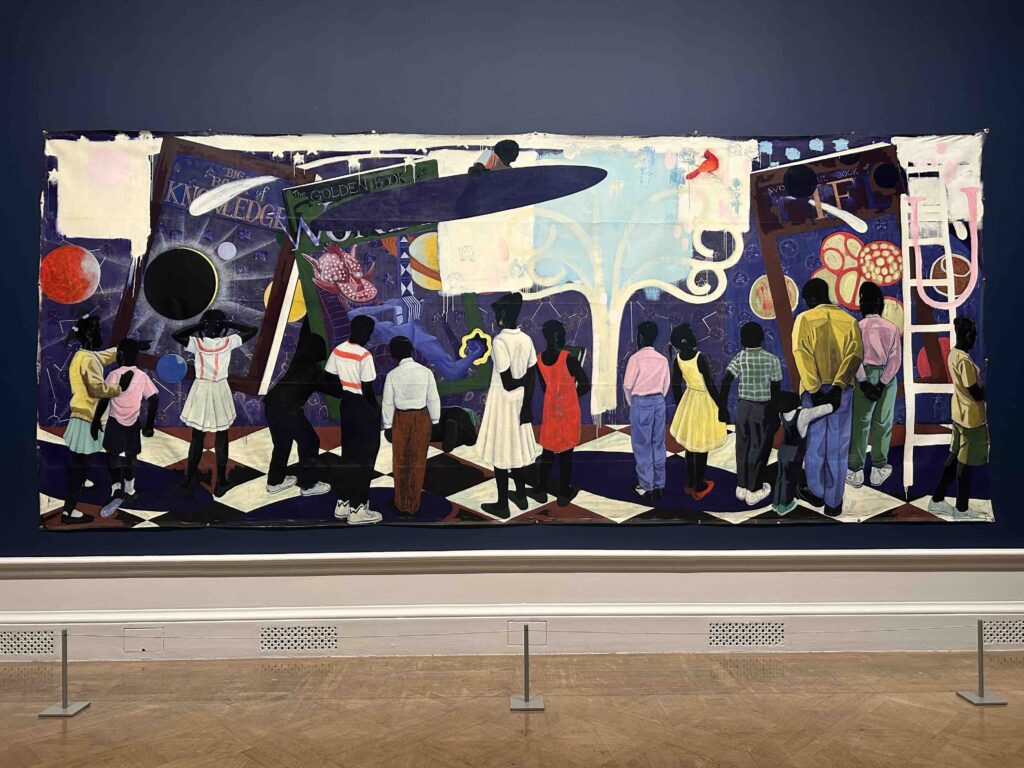
• Kerry James Marshall – The Histories: you have until 18 January to catch this magnificent Royal Academy show, with the artist’s compelling and moving paintings of Black life in the United States; reader, there was a tear in my eye as I stood marvelling before Knowledge and Wonder, 1995 (above), created for a Chicago public library, and so full of hope and joy.
• Black Bag: the fact that Steven Soderbergh’s spy thriller clocks in at just 94 minutes is one reason to like it a lot, as is a David Coepp’s script written for intelligent adults, and great performances from, among others, Cate Blanchett and Michael Fassbender.
• The Director: Daniel Kehlmann’s fictional inspired by the life of German film director G.W. Pabst is probably my book of the year; the scene towards the end when he films with a cast of extras brought from a Nazi concentrsation camp is horribly unforgettable.
• Hedda: not the over-produced and empty film adaptation, but rather Tanika Gupta’s version of Ibsen’s tale, intelligently updated to the film industry post-war Britain, with a very fine central performance by Pearl Chanda; Hetty Macdonald directed for Richmond’s Orange Tree Theatre, a house that I appreciate more every time I go. (This entry was originally Mr Bates vs The Post Office before Billy Smart pointed out that this ITV series was transmitted in 2024!)
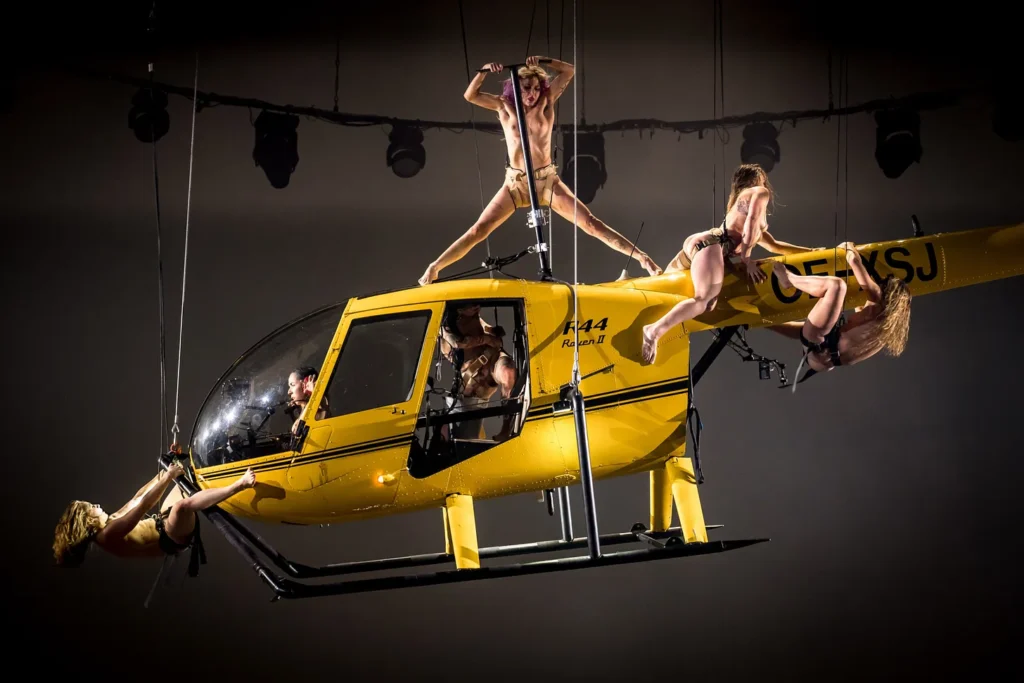
• Ophelia’s Got Talent: in the summer daughter Kate and I went to Paris largely to experience Florentina Holzinger’s performance work (above) that, in a brilliant blog post, Kate described as an ‘aquatic fever-dream’; I was thrilled and repulsed and captivated and turned inside out by its challenges, its beauty, and its originality; for more, go read Kate’s thoughts.
• A Cottage on Dartmoor: Anthony Asquith’s 1930 dark and innovative melodrama was a revelation at BFI Southbank in November, and immeasurably enhanced by the live accompaniment of the peerless neil Brand.
• The Studio: Seth Rogan’s inside Hollywood comedy from Apple is a joy, and not least for having Marty in tears at having his cherished project turned down.
• Jean Luc Godard’s Wild Palms: Michael Witt’s intelligently programmed Jean-Luc Godard: Unmade and Abandoned season at the ICA opened with this ‘world premiere’ – on 35mm no less – of the filmmaker’s imagined adaptation of William Faulkner’s novel, created by intertwining as a single work alternate reels of Made in USA (1966) and 2 ou 3 choses que je sais d’elle (1966) – images below; I wrote about the unique experience here.

• Greyhound: an engrossing journey on the page, Joanna Pocock’s memoir-cum-travelogue from Fitzcarraldo has so much to offer on Tr*mp’s America.
• Figures in Extinction: a triptych in dance from choreographer Crystal Pite and Complicité Artistic Director Simon McBurney, created with Nederlands Dans Theater and experienced at Sadler’s Wells this autumn – constantly surprising, exquisite, powerful.
• Outrageous: there are strands of scorn online for this 6-part BBC drama about the Mitford sisters, which is still on iPlayer, but I revelled in its quirkiness, its ensemble playing, and its fabulous frocks and furniture (which is probably what they spent most of their modest budget on).
• Nouvelle Vague: supremely enjoyable, Richard Linklater’s film about the making of Godard’s À bout de souffle is a hymn to filmmaking in all its forms – as is the immaculate trailer below.
• Comrades in Art: Artists Against Fascism 1933-1943: Andy Friend’s beautifully produced study of the Artists International Association is a book I’ve long wanted to read – and it did not disappoint.
• When We See Us: A Century of Black Figuration in Painting: I was fortunate to catch in Brussels this exhibition, curated by Koyo Kouoh, Director and Chief Curator of the Zeitz MOCAA in Cape Town, of works by Black artists from Africa and the African diaspora; so many discoveries (for me), so much that was dazzling and productively disturbing.
• British Blonde: Women, Desire and the Image in Post-war Britain: my friend Lynda Nead’s book was published this autumn by Yale, and its a wonderfully illustrated, endlessly stimulating study centred on readings of Diana Dors, Ruth Ellis, Barbara Windsor and Pauline Boty.
• The Wonderful World of the Brothers Grimm: the most exciting of the many treats at Widescreen Weekend at Bradford’s Science+Media Museum was a performance of the only surviving 3-strip print of this 1962 Cinerama drama.
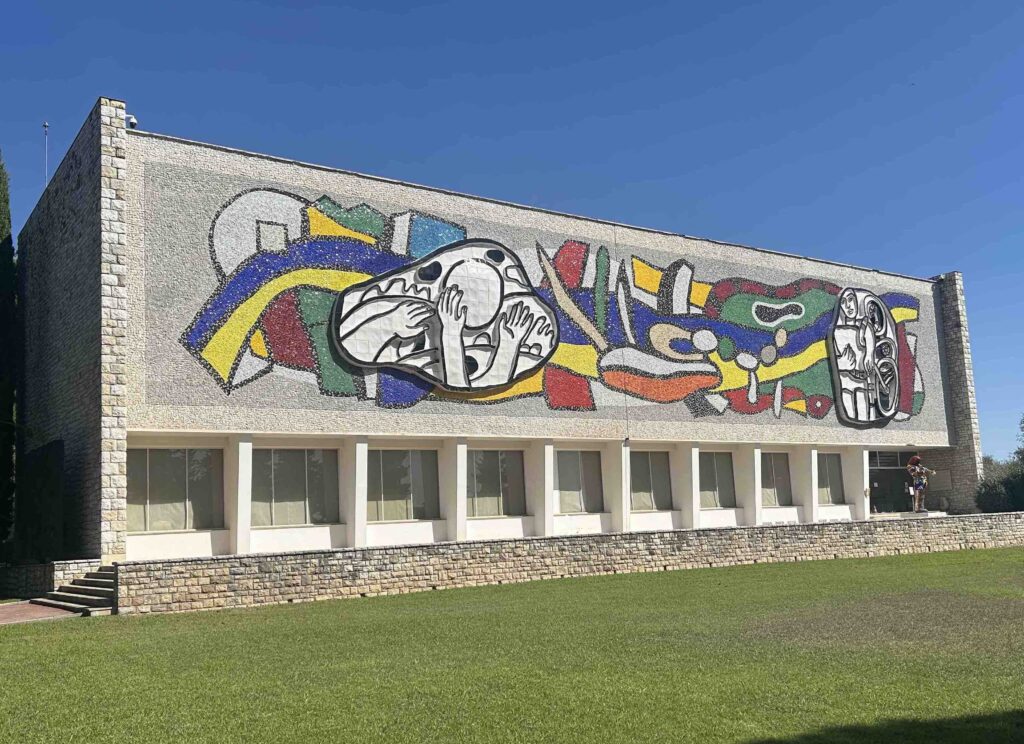
• Fernand Léger National Museum: as we were without a car in the south of France this autumn, Clare and I set out to visit this wonderful collection near Biot (above) by train and bus, and ended up traipsing forever along a busy main road in the scorching heat; but it was worth it for a broad selection of the artist’s major works, exceptionally well-displayed in its fine modernist showcase.
• Heiress – Sargent’s American Portraits: this was a beautiful focussed exhibition at Kenwood House, combining bravura painting by John Singer Sargent with compelling social history that was neatly associated with each of the major works.
• Hell Drivers: Cy Endfield’s exciting 1957 tale of rivalry amongst truck drivers was perhaps the highlight of my trip to the Locarno Film Festival and its rich retrospective, Great Expectations – British Postwar Cinema 1945-1960, a selection of which is coming to BFI Southbank in May.
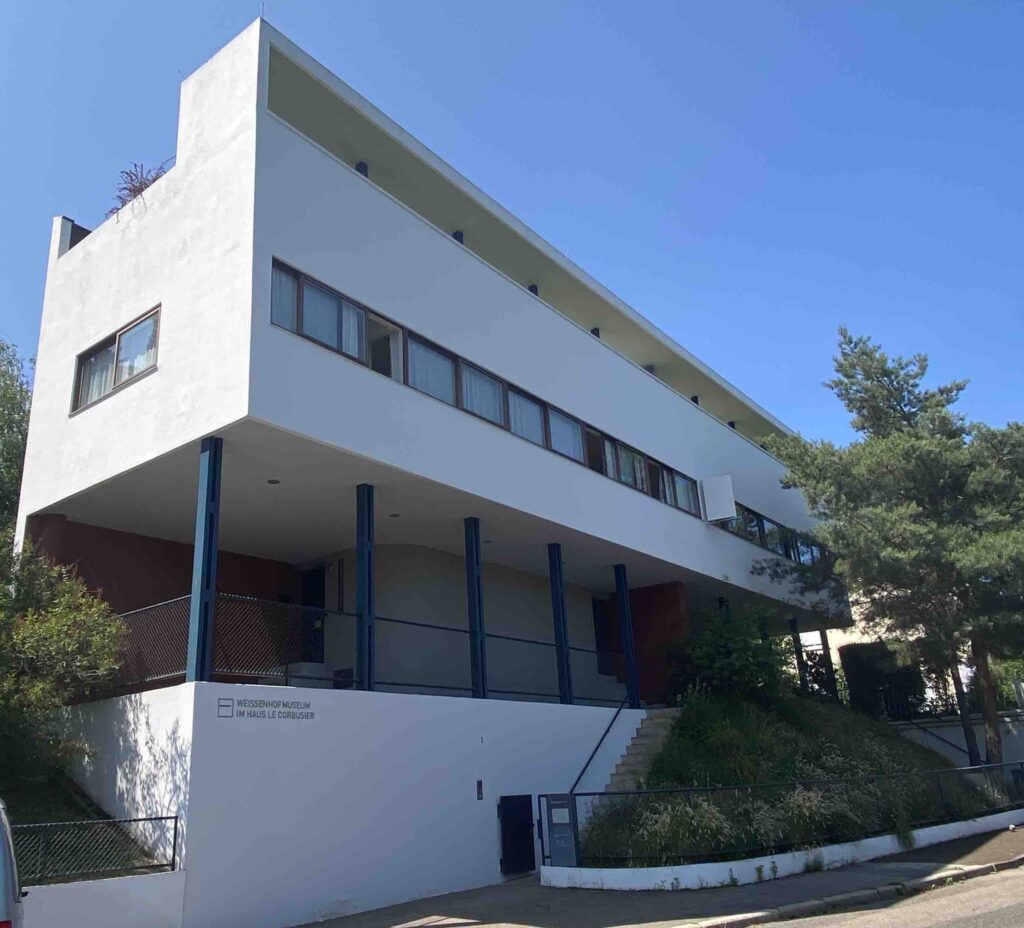
• Weissenhorf Estate: a visit to this collection of modernist houses built at the invitation of Mies van der Rohe for an exhibition on the edge of Stuttgart in 1927 had long been on my bucket list, and on a blisteringly hot day in the summer it did not disappoint; above, Haus Le Corbusier.
• Concerts at St Jude’s: not fifty yards from our house in Balham is St Jude’s Free Church in Heslop Road, and here since the summer of 2024 Isabella Gellis and Joseph Havlat have been organising a pay-what-you-can series of chamber music concerts of the highest quality, with their friends and fellow students playing Beethoven, Ravel, Schubert, Stravinsky and more, as well as works by contemporary composers; in April they gave Messiaen’s Harawi. I could not be more pleased that they promise a full programme for this coming year.
• Two Prosecutors: irredeemably bleak, Sergei Loznitsa’s drama (below) set in 1937 in the Soviet Union is a compellingly nightmarish political tale that I saw at the BFI London Film Festival and that opens in the United Kingdom on 27 March.
• “Degenerate” Art – Modern Art on Trial Under the Nazis: this carelly curated Musée Picasso, Paris, show, with a small selection of masterpieces, seemed shockingly resonant given events across the Atlantic.
• 100 Best Movies of the 21st Century: this immaculately presented and compendious list was the focus for a week’s worth of debate during a summer journey through Germany and Switzerland.
• Balanchine: Three Signature Works: I treated myself to a comparatively expensive ticket for this sublime Royal Ballet programme in March, which comprised Serenade, The Prodigal Son and Symphony in C; choreography and dancing at the very highest level, with breath-taking moments of beauty.
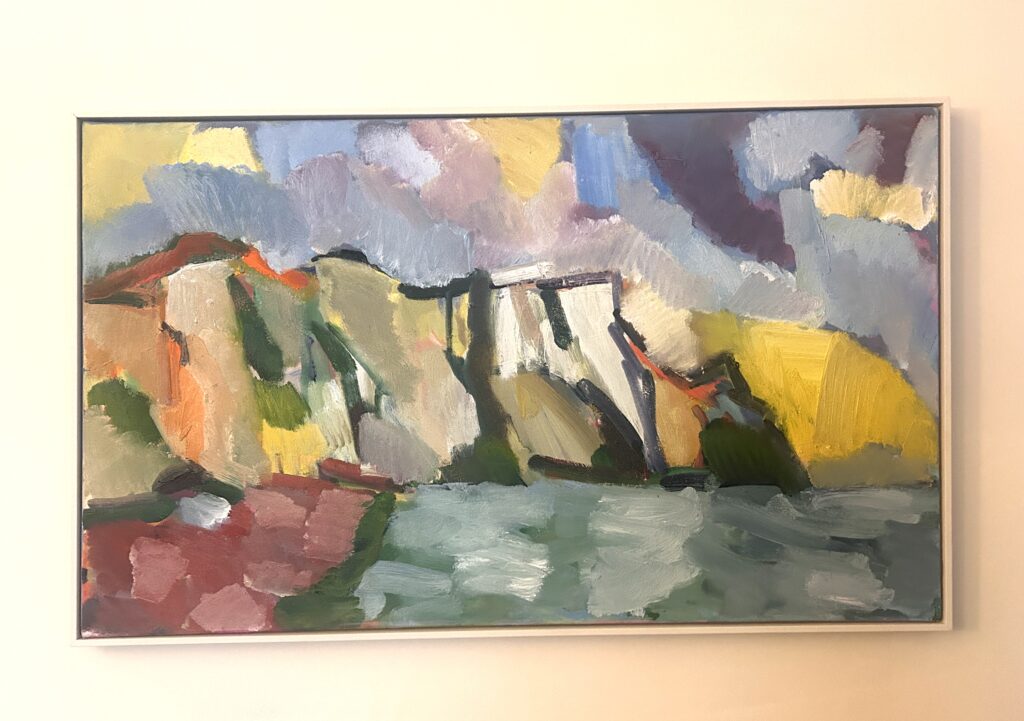
• Seaford Head from Splash Point, Early Morning, July-August, 2024: in memory of Clare’s mother Beryl, who died in 2024, we bought the glowing landscape above by the wonderful painter Julian Le Bas, and it means so, so much to have it hanging in our front room.
• The Years: I saw the transfer of this Almeida production at the Harold Pinter Theatre – remarkable performances (Deborah Findlay, Gina McKee, Tuppence Middleton, Anjli Mohindra and Harmony Rose-Bremner) brought to life Annie Ernaux’s sweeping tapestry Les Années, in a spare but immensely effective production by Eline Arbo.
• England vs Spain: experienced on television at home, the Women’s Euro 2025 Final in July was a tense and ultimately joyous occasion.
• One Battle After Another: Paul Thomas Anderson’s epic was the year’s best film for me, and it was special to see a Panavision print projected perfectly at the Odeon Leicester Square.
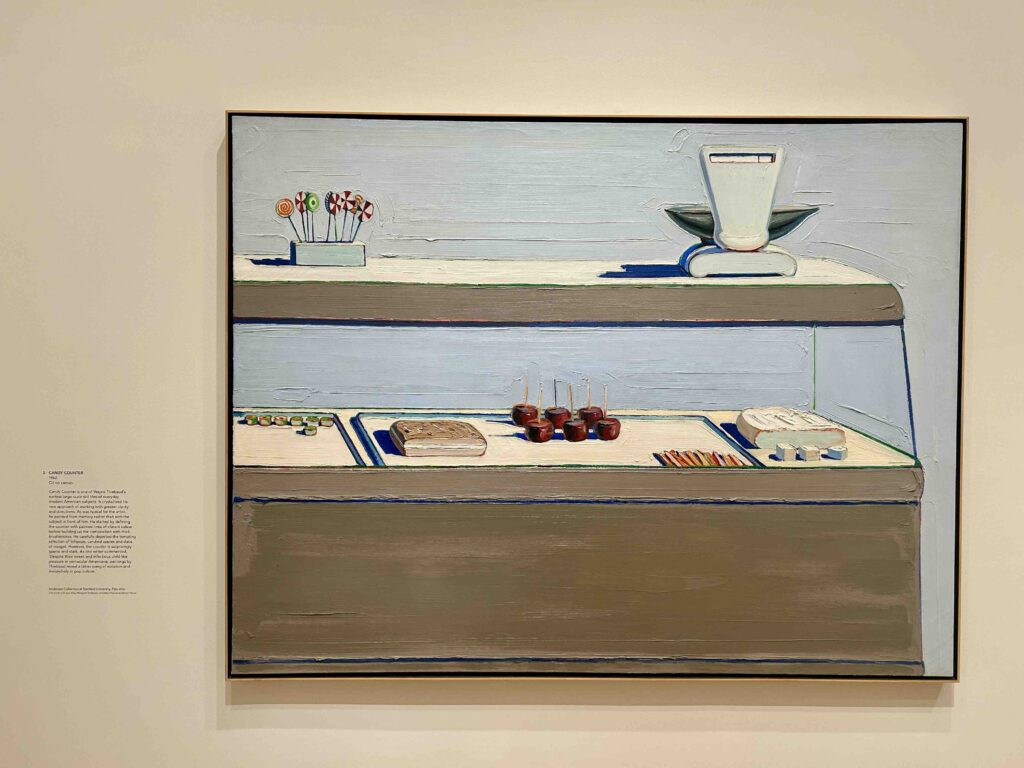
• Wayne Thiebaud. American Still Life: a tightly-focussed, totally luscious exhibition in two rooms at the Courtauld Gallery (and on until 18 January) – paintings from the 1960s that are intense and poised and utterly pleasing yet rigorous, and in love with their medium; above, Candy Counter, 1962.
• Melvyn Bragg reading Thomas Hardy on Radio 4: I caught Melvyn reciting ‘She, To Him, I’, with a catch in his voice and a tear in his eye, on the Today programme on Christmas Eve. I welled up too, but the combination of two national treasures is and was definitely a reason to be cheerful.
When you shall see me lined by tool of Time,
My lauded beauties carried off from me,
My eyes no longer stars as in their prime,
My name forgot of Maiden Fair and Free;
When in your being heart concedes to mind,
And judgment, though you scarce its process know,
Recalls the excellencies I once enshrined,
And you are irked that they have withered so:
Remembering that with me lies not the blame,
That Sportsman Time but rears his brood to kill,
Knowing me in my soul the very same—
One who would die to spare you touch of ill!—
Will you not grant to old affection’s claim
The hand of friendship down Life’s sunless hill?
I suppose that you might have come to it very late… but Mr Bates Vs. The Post Office was broadcast in January 2024, not this year.
Oh lord – you’re right! I’ll have to find a replacement, so as to keep the same title.
OK, I’ve put in the Orange Tree production of Hedda instead, which I regretted leaving out as soon as I published this this morning. Thanks, Billy.
Hell Drivers was a few years earlier than 1962. But nobody grips a steering wheel like Stanley Baker, I concur. A great list – thank you!
Another mistake – thanks, Melanie, and Happy New Year. Now corrected from 1962 to 1957.
I would imagine that you have a copy of the 2017 Network Blu-ray of Hell Drivers, one of their best ‘The British Film’ releases. If you have a few hours to spare, they can be very enjoyably spent watching the wealth of supporting period Stanley Baker documentaries, features and plays.
So much here i agree with, or wish I’d got to. Glad you’ve included The Diplomat and Blue Lights, two cases of old-fashioned series TV that still deliver sharp commentary on the contemporary world in entertaining wrappers. I found The Director ran out of steam, like Pabst under Nazi control. But the counterfactual parts were superb – like meeting Goebbels and Wodehouse attending a Berlin premiere. And as for JL David at the Louvre – see my Fb post…
Many thanks, Ian, although I had the opposite experience with The Director. I found the early parts rather unfocussed but I thought the final chapters were compelling and moving.