
Marey memorialised
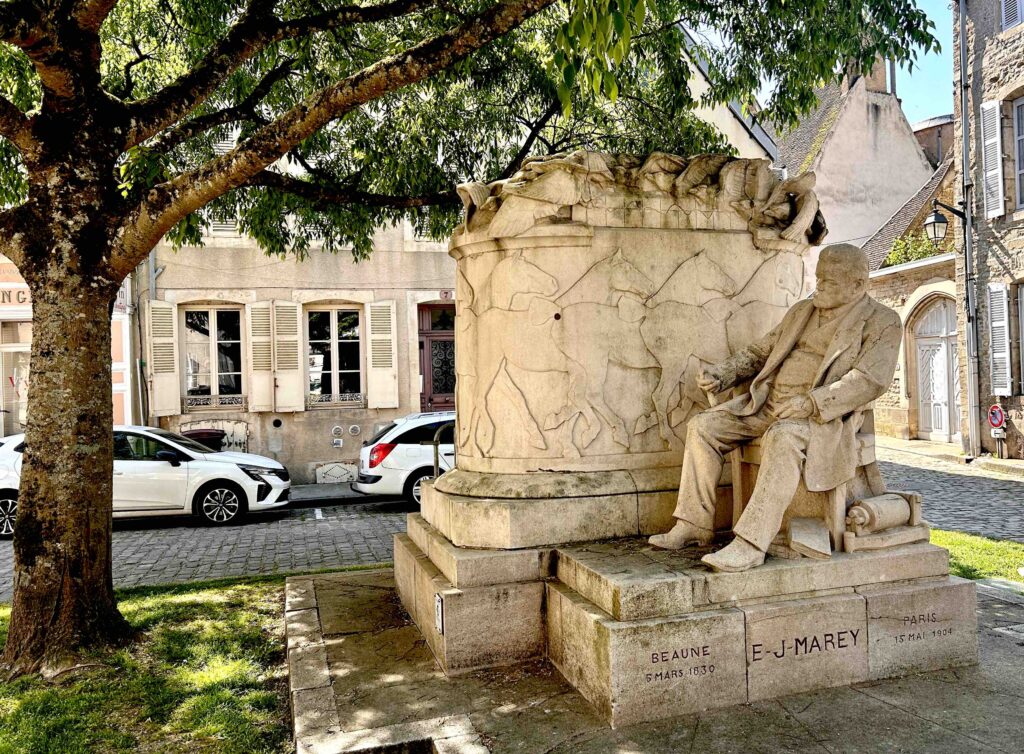
John Wyver writes: We are en vacances, having driven during three days from London to the small town of Simiane-la-Rotonde in the middle of the beautiful but rather remote landscapes of the Luberon. (Before the envy kicks in too strongly, this morning it’s raining. Hard.)
On the way here we stopped off for a day in Beaune. Wandering through the backstreets we came across this delightful memorial to Étienne-Jules Marey, who we learn was born in the town in 1830. As Wikipedia says, he was ‘a French scientist, physician, physiologist, chronophotographer and inventor.’ And for anyone engaged by the pre-history of the cinema, the most interesting of these roles is ‘chronophotographer‘.
Wikipedia can explain further:
In 1889, Étienne-Jules Marey coined the term “chronophotography” to describe a technique for capturing instantaneous images. Inspired by Jules Janssen ‘s astronomical revolver (1874), this technique employed a new film camera he developed in collaboration with his assistant Georges Demenÿ , which he initially called a “chronophotograph” — the term “chronophotography” was officially adopted in 1889.
This technique involved taking a rapid succession of snapshots on a single strip of light-sensitive paper, and later on celluloid (invented in 1888 by John Carbutt), using a camera equipped with a single lens. This allowed for a more precise analysis of the different positions of objects during movement.
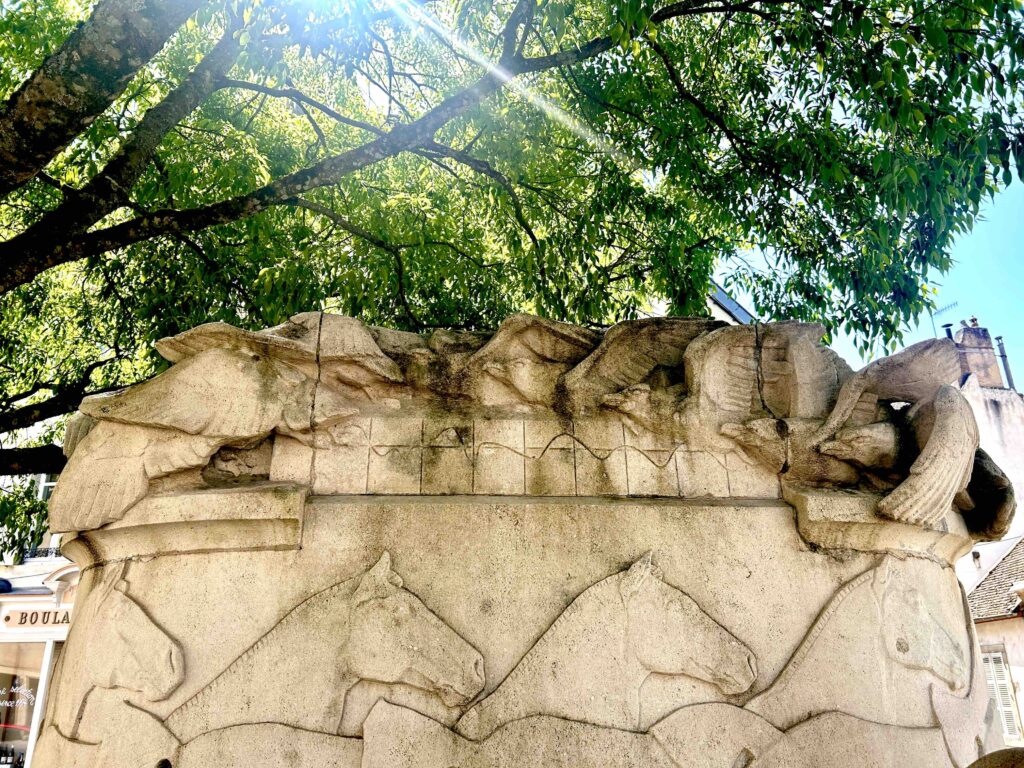
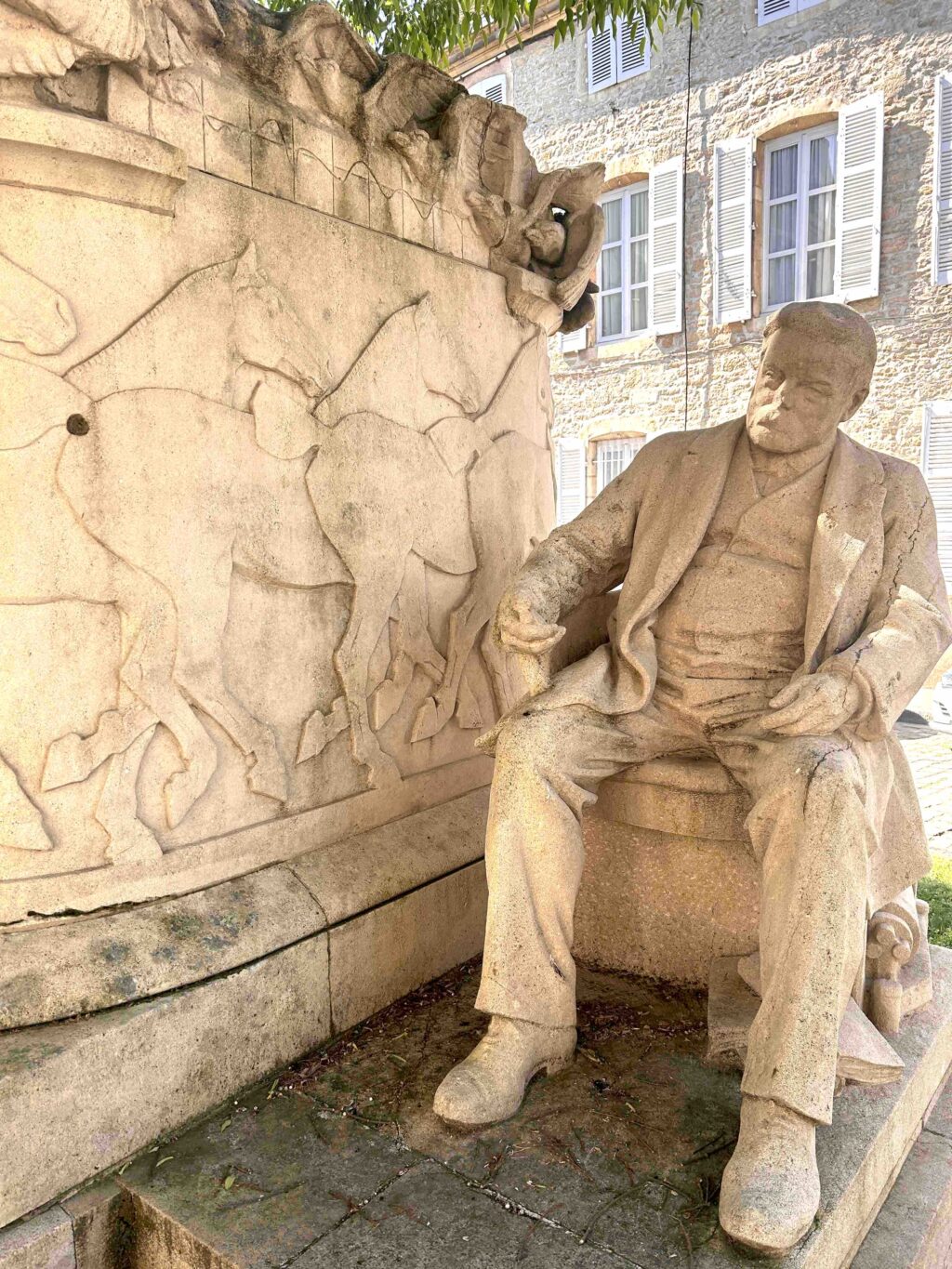
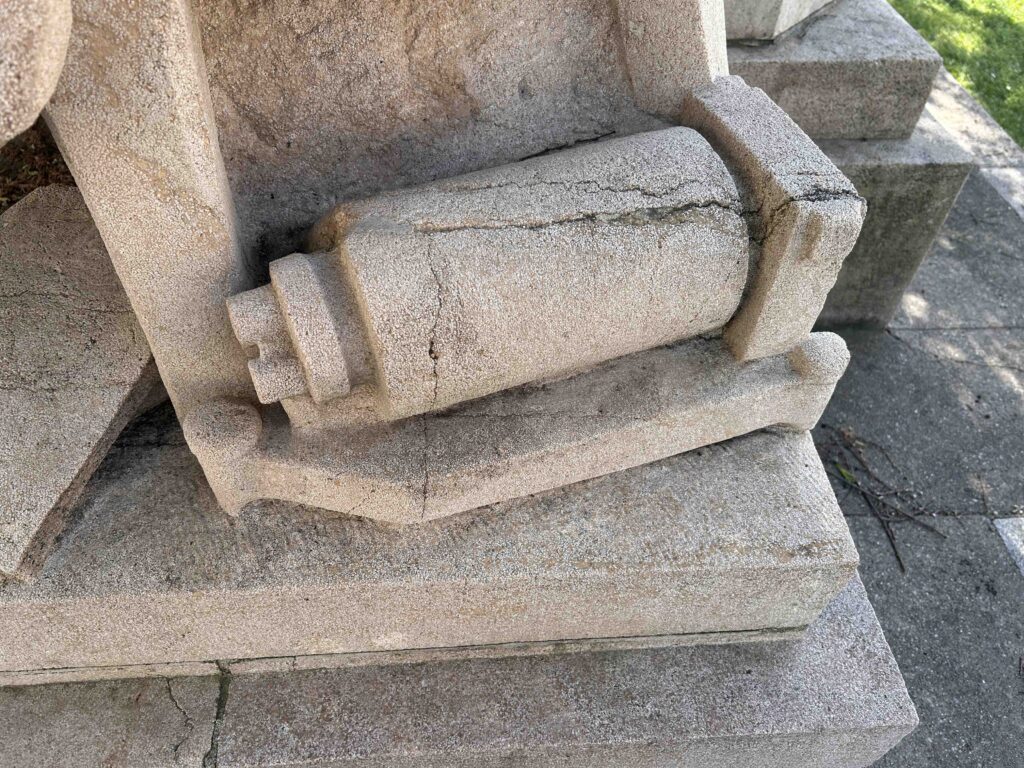
Marey’s monument has him as an older man seated, but as if explaining something to a listener. Behind him, carved in low relief, is a succession of horses in movement, captured in stone rather than on a photographic plate. And above (although not that easy to see in my photos) is a realisation of a bird in flight, much as Marey himself sculpted as a three-dimensional visualisation of his analysis. At his feet, below, is a photographic gun in stone.
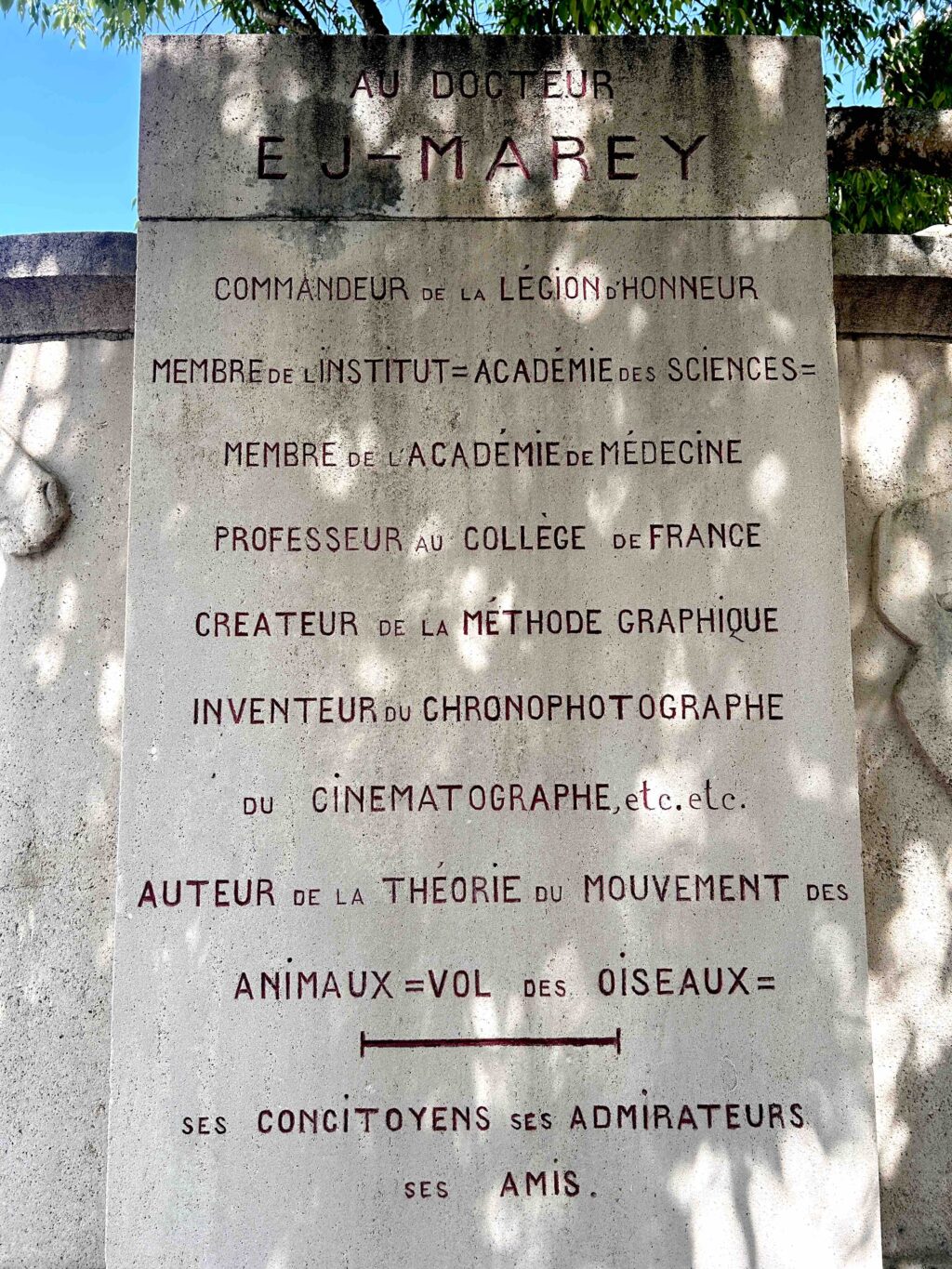
On the reverse of the monument is an impressive citation of the good doctor’s achievements, although while recognising how he is a part of the pre-history of film, to salute him as ‘inventor of cinematography’, as I take one line to read, is definitely a step too far.
Leave a Reply