
‘This Temple of the Arts and Muses’, part 1
John Wyver writes: ‘This Temple of the Arts and Muses’ is the opening phrase of the dedication, displayed in Latin and supposedly written by John Reith, at the entrance to Broadcasting House. Sited on an irregular plot in Portland Place, just north of Oxford Circus, the BBC’s headquarters was opened in May 1932. Palace of the Ether: Broadcasting House and the Architecture of the BBC, 1922-1932 is Elizabeth Darling’s handsome and fascinating study of the building and its contexts..
Beautifully produced by Lund Humphries (albeit hardly a snip at £45), this is a really exceptional book, elegantly written, crammed with information and ideas, and graced with wonderful illustrations. Here I want to draw out some of the elements that I found especially interesting; in a second post, I will focus on the (comparatively little) that the volume has to say about Studio BB, the basement location of the BBC’s 30-line television service which began just three months after the building’s official opening.
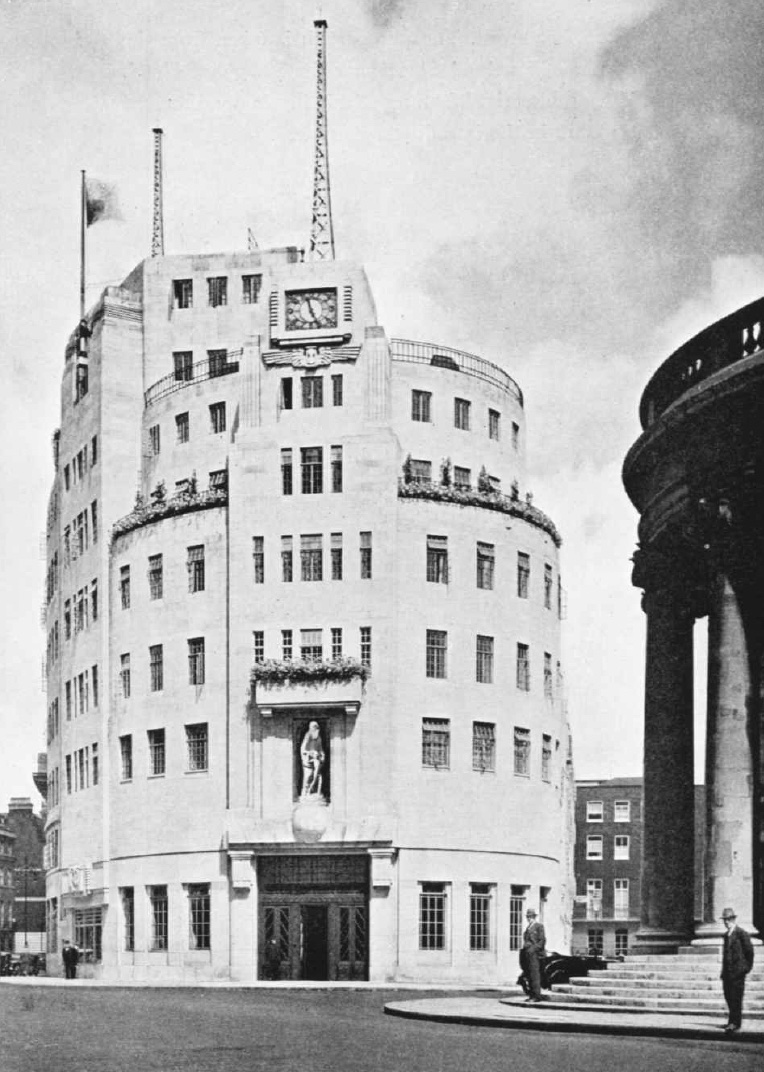
As she has done in her other writing, most especially Re-forming Britain: Narratives of Modernity before Reconstruction (2006), Elizabeth Darling works here with an expansive understanding of ‘architecture’, considering not just the physical structure and its design, but also its commissioning, construction, reception and afterlives. BH was a modern building for the creation of media that from the beginning was itself profoundly mediated.
She explores the friendships and affiliations that shaped BH both inside and out, and uncovers some surprising links to the bohemian and queer cultures of 1920s’ London (and Cambridge). The rapidly changing nature of the profession of the architect is an important frame, as is the contemporary architectural culture, including ideas about what was thought, within the coporation and beyond, to be appropriate for the headquarters of a major corporation and a public institution.
The BBC had only been constituted in 1922, but six years later, when there was a commitment to build BH, the corporation was acutely aware of its central place in the life of the nation, and indeed of the empire. It was already a core institution of modern Britain, and the story of the building reflects and refracts that in numerous ways, not all of them exactly in alignment.
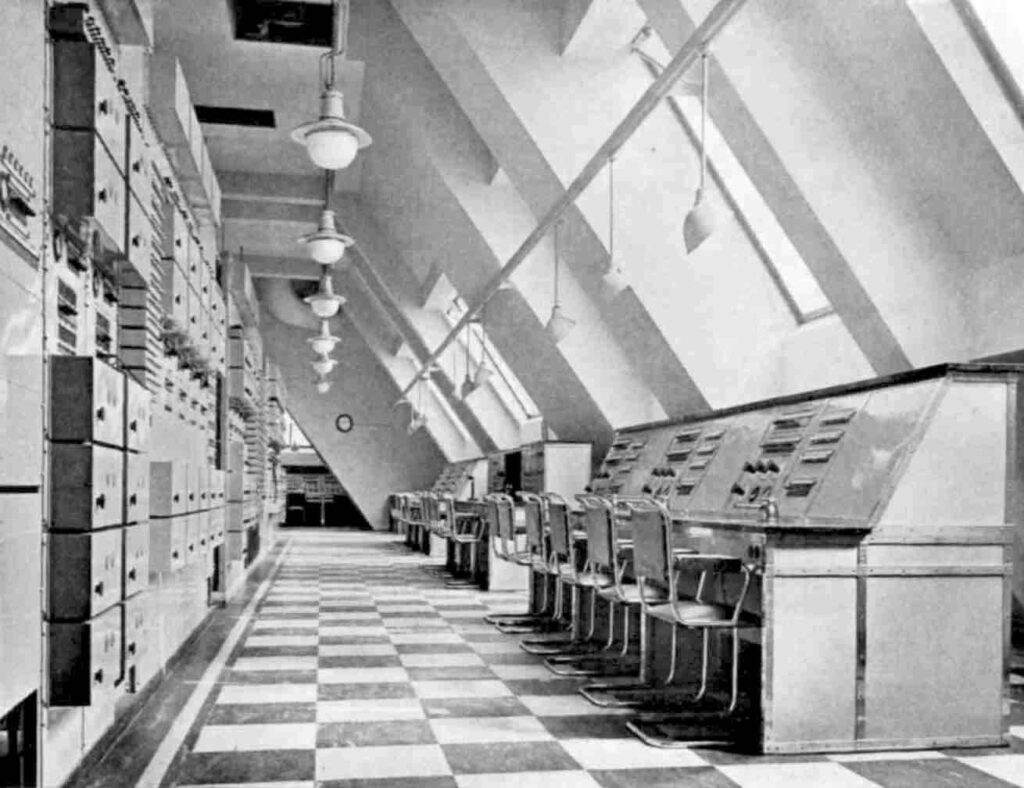
Moreover, Darling is alive to ‘the way that institutions like the BBC were active in the production of new forms of modern British selfhood, all inflected by changing experiences of class, gender and race’. But the book smartly complements the broad consideration of subjectivities, of both producers and consumers, with detailed attention to the lay-out of BH, its complex layering, and especially its sonic landscape. (The header image is of the eight floor Control Room.)
Let me pull out just two strands that especially struck me. One concerns the main architect of BH, Lieutenant-Colonel George Valentine Samuel Myer (1883-1959), who as Darling notes ‘has tended to fare badly in accounts’ of BH. Palace of the Ether is partly an attempt to reinstate him as fundamental to the building’s genesis and to its achievement, counter-balancing the attention that has been given to the more unambiguously ‘modernist’ figures who worked on the interiors, including Serge Chermayeff, Wells Coates and Raymond McGrath.
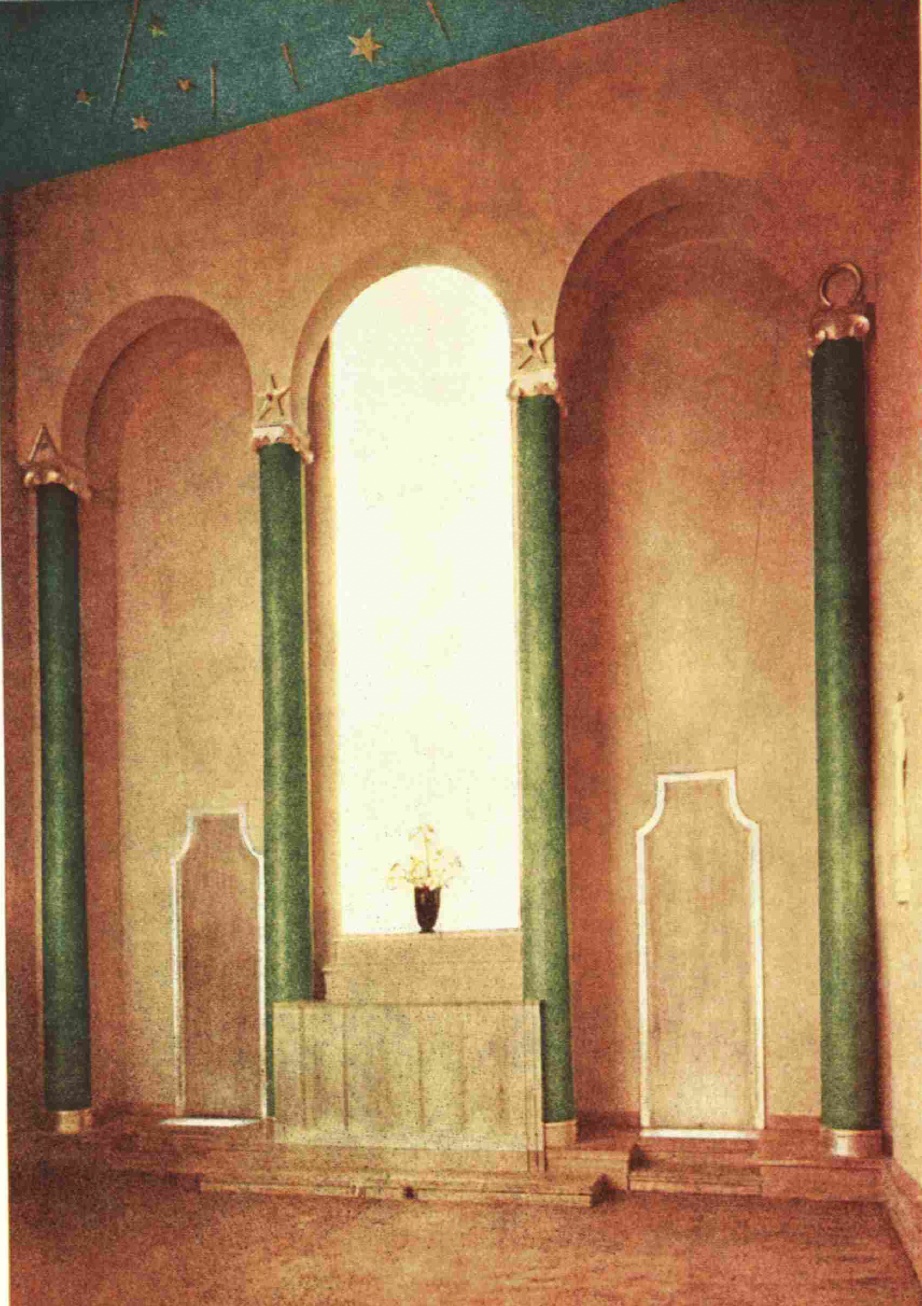
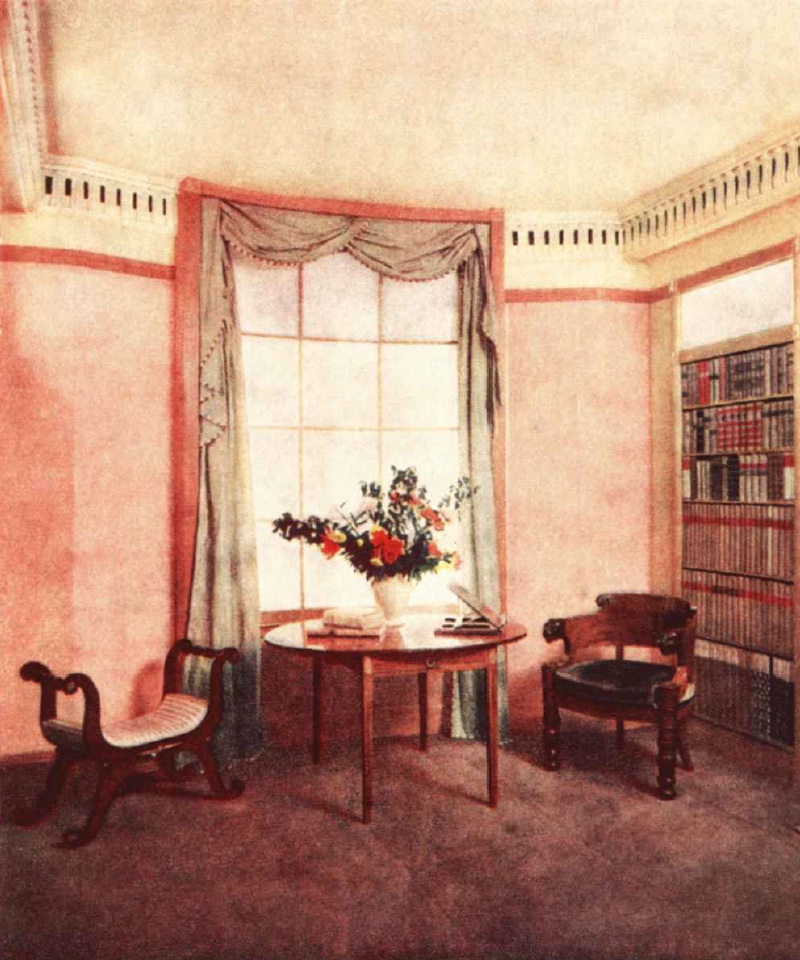
In giving due weight to Chermayeff, Coates and McGrath, Darling also reveals the interior contributions of designer Edward Maufe, known for his ecclesiastical interiors and responsible for Studio 3A from which religious services were broadcast (above), and also the too frequently overlooked Dorothy Warren, who designed Studio 3D, one of the spaces from which Talks were broadcast (below).
And that’s the second revelation that the book held for me, which is that far from being neutral spaces that could be used for more or less any kind of broadcast, each of BH’s studios was conceived for a specific programme type and was elaborately decorated to provide an appropriate environment.
The experience of producers working in the makeshift studios in the BBC’s previous building, Savoy Hill, had demonstrated that non-professionals who came to broadcast found it hard to adjust to speaking or performing in neutral environments that were, by necessity, acoustically deadened. So it was thought that the hostility of the spaces had to be mitigated by architectural and design treatments that were in some way supportive of the programmes to be produced there and so of the people that would make them. Maufe’s interior had the air of a austere chapel, Warren’s of a comforting library.
Inevitably, this plan, to which enormous attention was paid initially, quite quickly proved at odds with the rapidly expanding production demands that had not been adequately anticipated. And in the case of Studio BB, which was intended for dance bands, octets and chamber music, there was a rapid, radical pivot to television, as my second post will explore further.
In the meantime, you can listen to Elizabeth Darling speak about Palace of the Ether with Miranda Melcher in a New Books Network podcast. And downloadable here from the invaluable World Radio History site is a .pdf of the BBC’s 1932 publication Broadcasting House, from which I have taken the illustrations for this post.
Leave a Reply