John Wyver writes: another of my favourite OTDs from the 122 contributed to date, posted again during this week when I am on holiday.
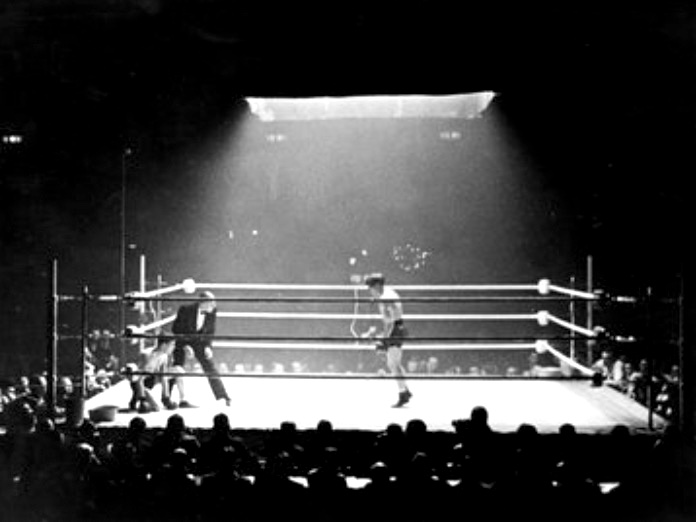
Characterised by The Times as ‘an animated scene’, the interior of the Marble Arch Pavilion cinema was packed on the evening of 23 February 1939 with ‘an audience of men and women who were evidently boxing enthusiasts.’
Every seat was taken and some 70 others were standing against the walls, and there were excited cries of ‘Go it Eric’ and waves of applause. The occasion was the large-screen showing of the fight between Eric Boon and Arthur Danahar (above), an event of singular significance in the history of pre-war television.
John Wyver writes: As I am holiday this week I am posting again a number of my favourite OTDs to date.
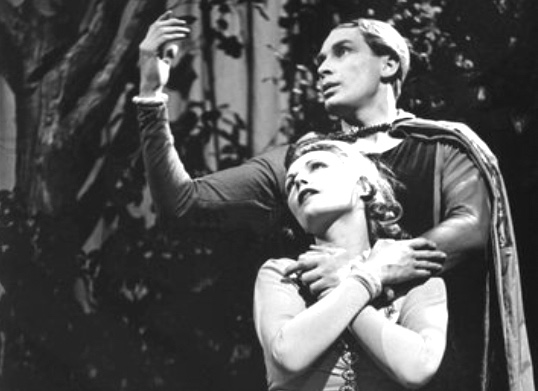
The whole of the afternoon schedule on Monday 24 January 1938 was occupied by a presentation of act 2 of Richard Wagner’s music drama Tristan and Isolde. In the evening this was played again, in perhaps the most uncompromising cultural transmission of the pre-war period. Inevitably, the producer responsible was the innovative and uncompromising modernist Dallas Bower. The reaction was, well, mixed.
John Wyver writes: As I am on holiday this week I am taking the chance to post again a number of my favourite OTDs from the 122 published to date…
The evening of Thursday 9 February 1939 saw a 40-minute edition of Contrasts, which was a catch-all title for juxtapositions of variety artists from differing traditions. This was a particularly eclectic line-up featuring dancers from Java and Bali performing Japanese classical dance; singers Harry van Oss and Naya Grecia; Dutch-born writer and actor Selma van Diaz performing ‘The Lady’s Maid’ monologue-as-short-story by Katherine Mansfield; and dances by Pola Nirenska, a Polish Jewish refugee who had been a pupil of modernist dance pioneer Mary Wigman.
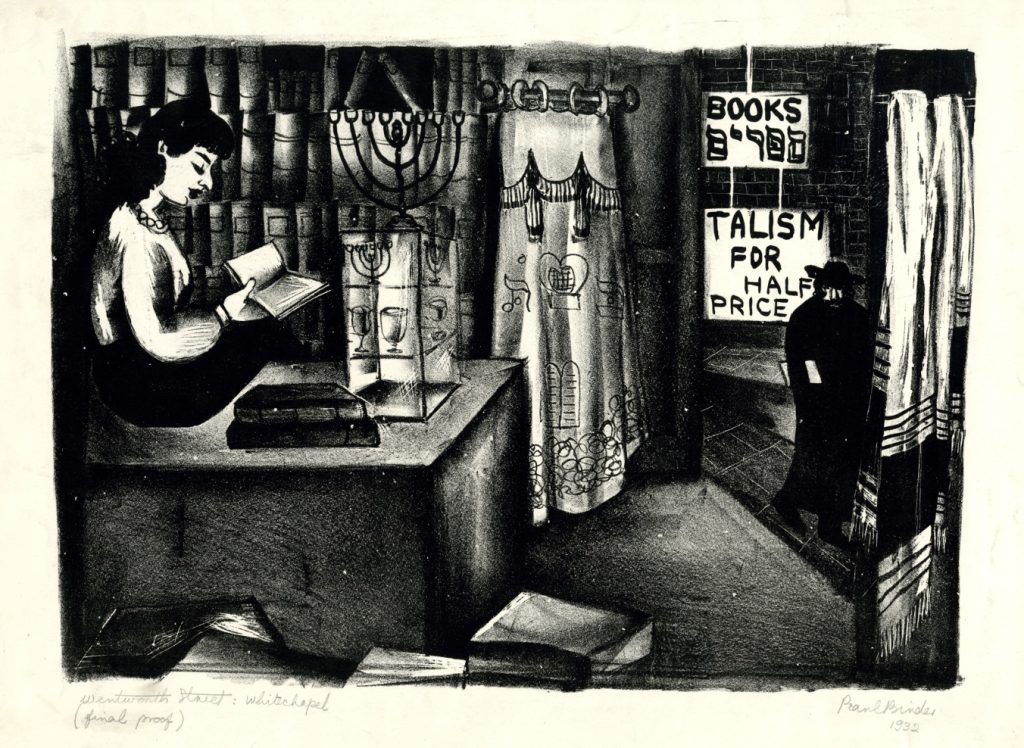
This modernist melange was assembled by the artist Pearl Binder, who was not only a co-founder in 1933 of the radical Artists International Association (currently the focus of a fascinating archive display at Tate Britain), but also an Alexandra Palace regular providing illustrations for television talks about fashion and other subjects.
John Wyver writes: As I am on holiday this week, I am presenting again some of my favourite OTD posts, exactly as they first appeared…
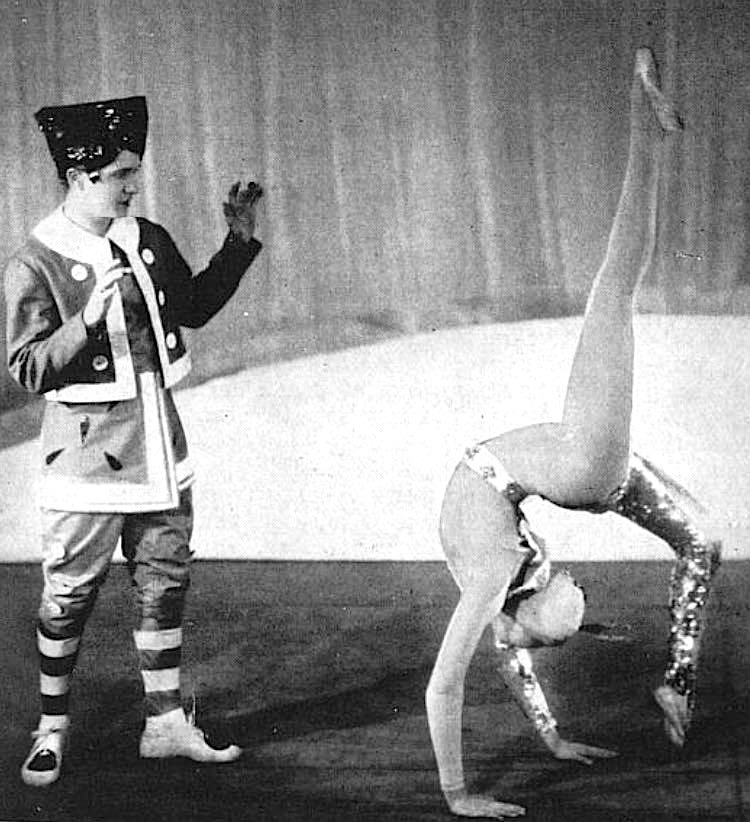
Today’s post is a melancholy little tale of a short, vibrant life in which early television played just a small part. The subject is dancer and acrobat Laurie Devine (above, right), who appeared performing ‘various dances’ on the late-night half-hour 30-line transmission from Studio BB at Broadcasting House on Wednesday 22 February 1933.
That Wednesday night was one of at least 40 documented appearances by Ms Devine on 30-line television, on occasions dancing with her brother Tom, and with a final bow on 4 September 1935. When she returned to work in her native Australia in August of the following year, she claimed ‘to have taken part in more television broadcasts than anyone else in the world’. Less than four months later, however, having had to withdraw from a hit revue in Sydney, she was dead from pneumonia.
John Wyver writes: I am on holiday in France this week, and so with 122 original OTD posts out in the world I thought I might highlight once again six of my favourite posts to date. This one is presented as it first appeared with the query and updates as they came along…
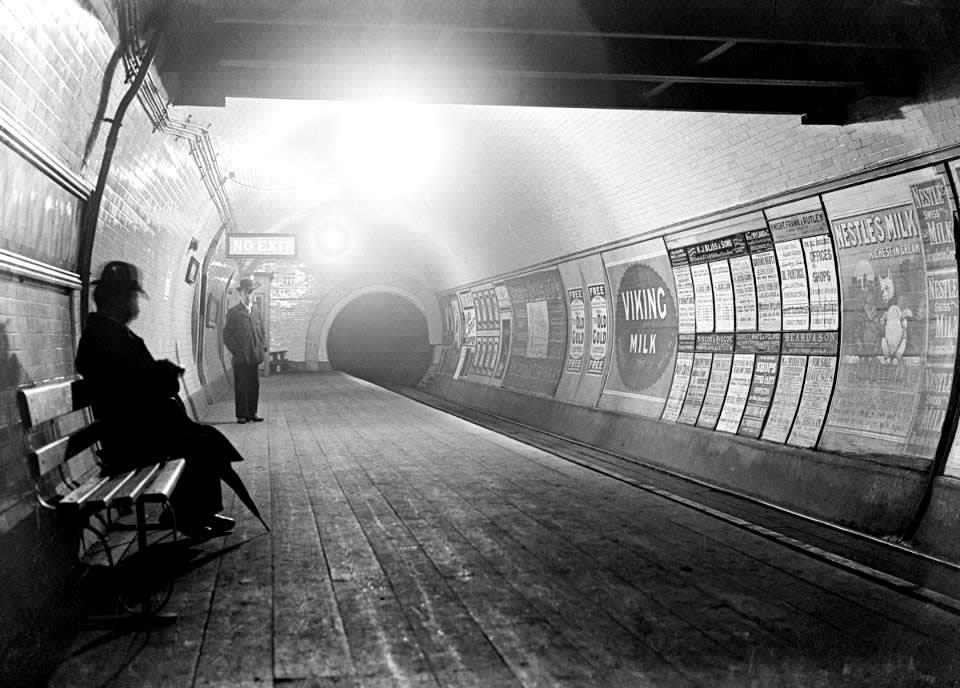
A mystery. Afternoon transmissions on Tuesday 19 January 1937 included the 8-minute unbilled drama The Underground Murder Mystery by J. Bissell Thomas. Produced by George More O’Ferrall, this would appear to be the first original script (that is, not adapted from a stage play) broadcast from Alexandra Palace, but – appropriately perhaps – it’s a mystery. No script seems to exist, and even the writer is fairly obscure. Can anyone help with any further information?
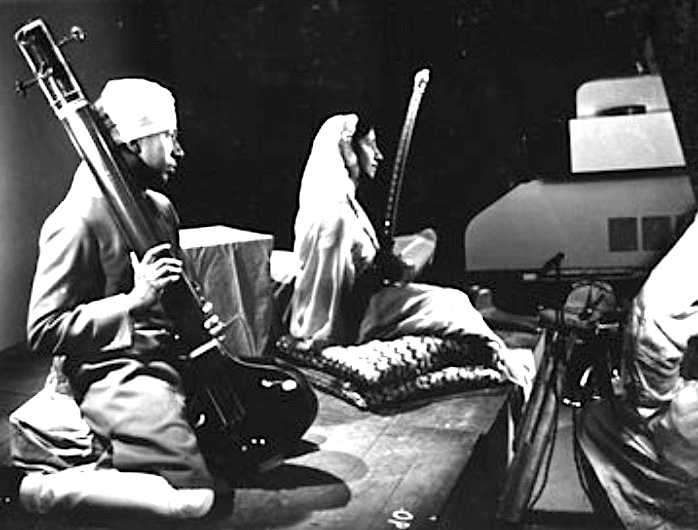
John Wyver writes: Just before 10pm on Wednesday 6 April 1938, a 10-minute broadcast from Alexandra Palace presented Surya Sena and Nelun Devi (above) performing Sinhalese folk songs. The transmission was organised by producer and musicologist Philip Bate, who we have met here before.
Surya Sena and his wife Nelun Devi were important pioneers in the revival of Sri Lankan folk music, and the programme is a further indication of how remarkably eclectic was the mix of musicians featured on early television.
(Before posting a little more about these two musicians, I should say I am holiday in France this week – which is why this post is a day late, and why for the rest of the week I am going to feature reprises of my six favourites from the 120 OTD posts to date.)
John Wyver writes: Although we have next-to-know moving image records of pre-war television programmes, almost all of which were transmitted live, we do have elements of the transmissions in the form of the twice-weekly newsreels and the documentary films that were broadcast from Alexandra Palace.
Given the extent and significance of documentary filmmaking in the 1930s, by the GPO Film Unit, Strand Films and other groups, it is perhaps surprising that relatively few independently produced films were licenced for showing by the BBC.
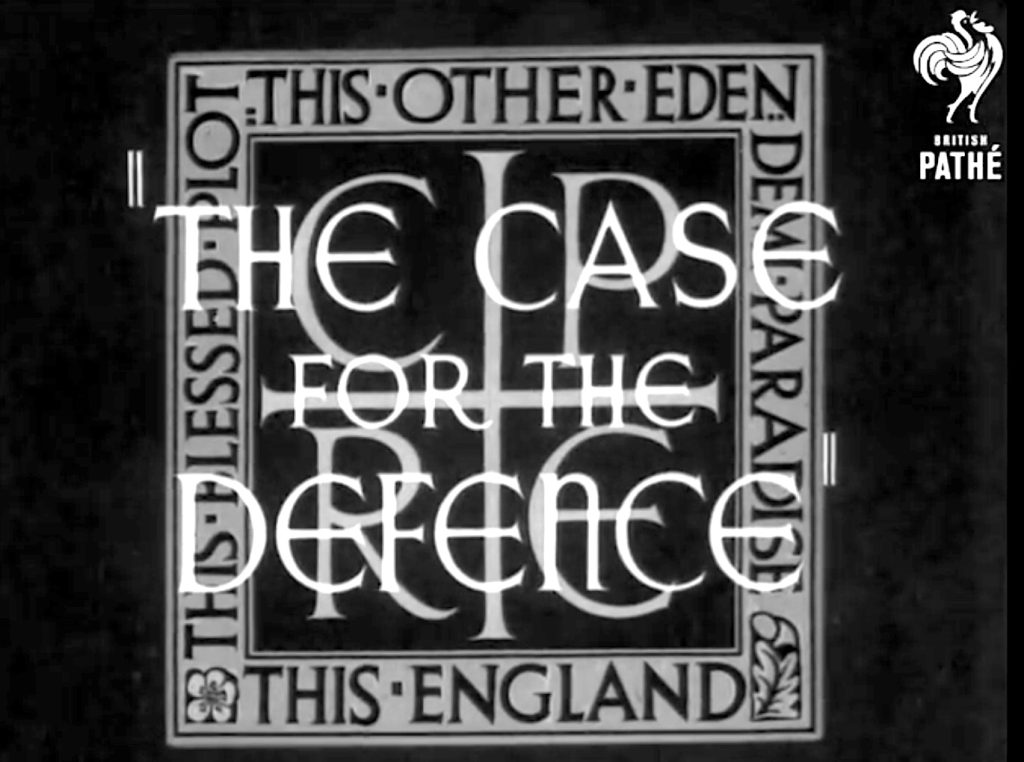
Among the few that were was the Council for the Preservation of Rural England’s campaigning film made in 1938 and variously titled Rural England, This Blessed Plot and The Case for the Defence. It was screened at 10.17pm on Wednesday 5 April 1939, and courtesy of Pathé can be found online today.
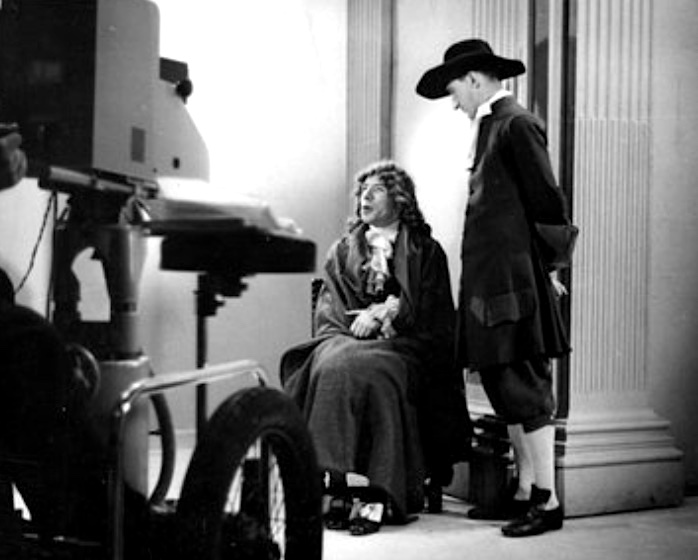
John Wyver writes: Afternoon transmissions on Monday 4 April 1938 were mostly taken up by a 45-minute ‘feature’ about Sir Christopher Wren. This dramatised presentation was scripted by playwright Christine Hahlo, whose only other credit I can find is Poet’s Licence presented in the West End in 1932. William Devlin took the part of the architect, Robert Rendel was John Evelyn, Rex Walters played Charles II, and Samuel Pepys was incarnated by Ivor Barnard.
Producer Eric Crozier had mounted the earlier ‘feature’ Turn Around in September 1937, which combined dramatised studio sequences with a modest amount of location filming on an ocean-going luxury liner. Wren of St Paul’s applied the approach to a historical subject.
John Wyver writes: On 3 April 1933 the BBC’s 30-line producer Eustace Robb, who had been overseeing transmissions since the previous summer, mounted his most expansive musical production to date. Transmitted from the tiny studio BB at Broadcasting House, achieved with just a single ‘scanner’ (effectively the camera), The Troika was designated ‘a Russian gypsy episode with music’.
This was a collaboration with Russian emigré Vladimir Launitz, a former aviator who fought for the ‘White’ forces in the Russian Civil War, and who also found the cast and arranged many of the score’s folk songs. Seven principals put across 18 numbers, before scenery designed by Count George Armfeldt and with dresses by Tatiana. (The latter is almost certainly Tatiana Georgievna Bruni; any further info on either her or the Count would be much appreciated.)
Writing in the monthly Television, and noting that Robb ‘certainly spread himself on this show’, ’Spectator’ saw this presentation as a significant step forward in television production ‘that in microphone “fades” and effects had all the complications of a radio play plus the lighting, focussing, dressing and movement required by television.’
John Wyver writes: Television on the afternoon of Sunday 2nd April was mostly occupied by the 40-minute feature Leviathan, described as ‘a survey of sea-monsters, past and present’. A discussion between Lt-Commander R.T. Gould, author of The Case for the Sea-Serpent, and London zoo curator David Seth-Smith framed dramatised scenes (above, and in full below) bearing witness to tales of beings from the deep.
Apparently Lt-Commander Gould had told Picture Page viewers the previous October that he was a firm believer in the existence of sea monsters, and in this programme producer Stephen Harrison offered him the chance to expound his views more fully. What intrigues me most about the transmission, however, is the writer credited for the dramatised scenes, Reyner Heppenstall.