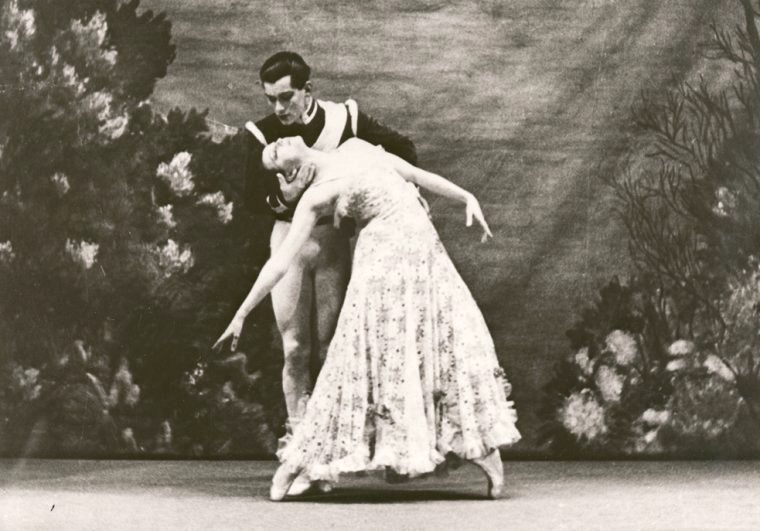
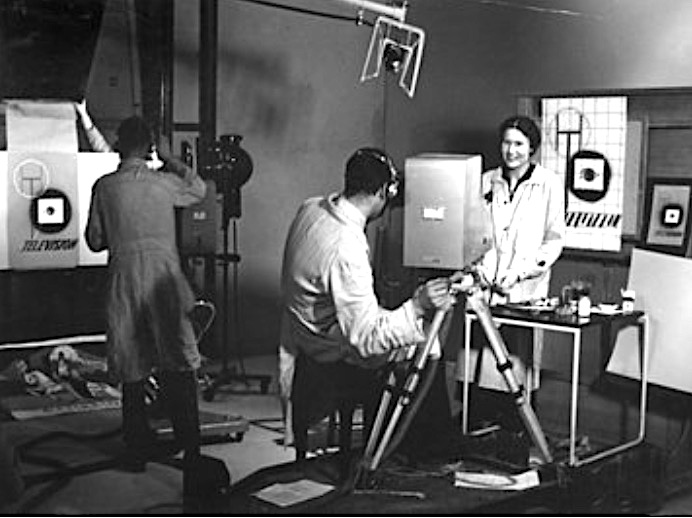
John Wyver writes: the afternoon of Tuesday 2 March 1937, just four months after the AP service had begun, featured one of television’s most innovative pre-war programmes. Fugue for Four Cameras was a strikingly experimental six-minute dance collaboration created by producer Stephen Thomas with choreographer Antony Tudor.
The broadcast began with Maude Lloyd centred on screen dressed in practice costume and performing a classical solo to J.S. Bach’s ‘Fugue in D Minor’ . As a second musical theme was introduced, a superimposed image of Lloyd from another camera joined her on screen, and then a third, and a fourth.
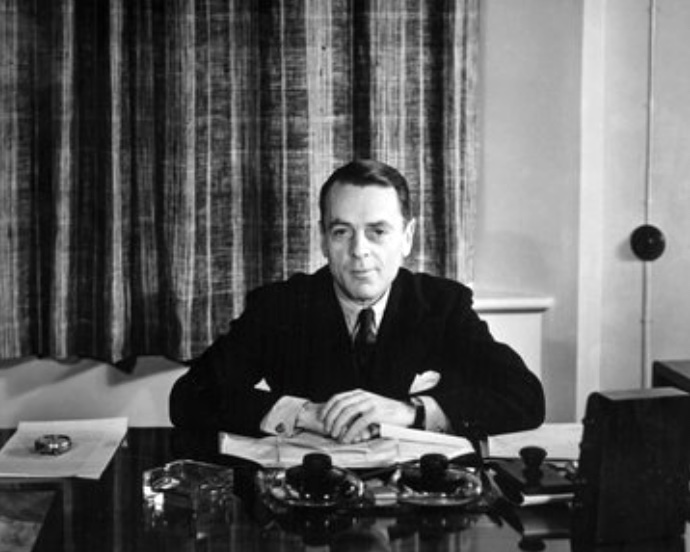
John Wyver writes: Sunday 1 March 1936 saw The Observer splash an exclusive interview with BBC director of television Gerald Cock (above, in his Alexandra Palace office) eight months ahead of the offical opening of the service. The article, bylined only ‘Our television correspondent’, is a fascinating glimpse of Cock’s sense of what television might be and could be, as well as being striking for the differences between aspirations and what eventually went to air.
John Wyver writes: With 88 original OTD posts now on this blog, I thought it might be appropriate to compile this index of the February ones, to complement those for January and for December (and a bit of November). I was heartened that towards the end of this month a couple of friends began to post responses, and I do hope that this trend continues.
John Wyver writes: Before the war The Times did not employ a regular television critic, but occasional anonymous columns offered acute reflections on the development of the new medium. These included a piece published on Monday 27 February 1939 headed ‘The progress of television: the theatre as an ally’.
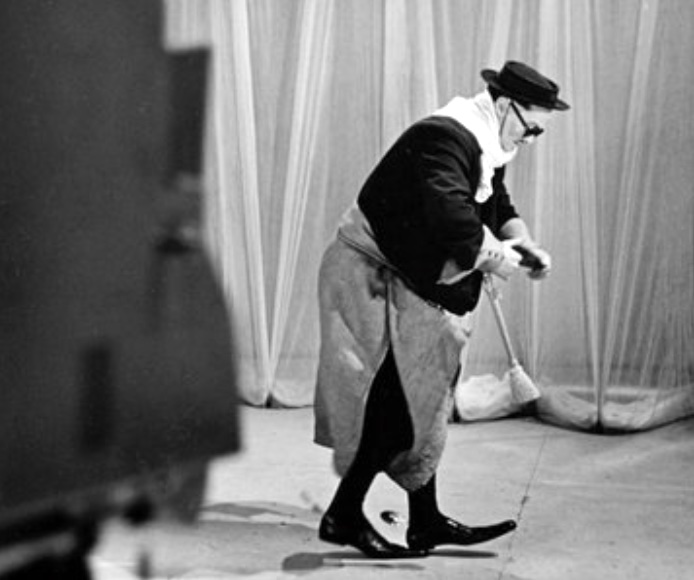
Taking its cue from three recent outside broadcasts, including one of a variety bill from the Coliseum featuring the French clown George Dorlis, as well as a studio appearance by the same artist (above), the writer reflected on the differences between entertainment broadcast from a theatre and that mounted in the studios at AP.
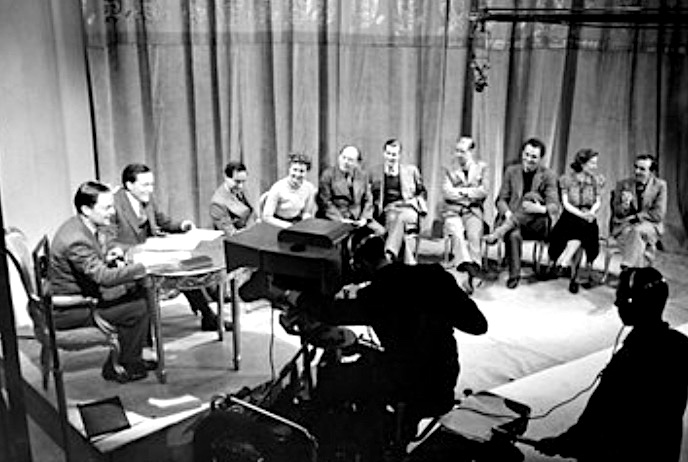
John Wyver writes: On Sunday 26 February 1939 Sight and Sound was a studio ‘bee’ hosted by Sir Kenneth Clark, youthful director of the National Gallery known to friends and peers as ‘K’. Seated in a wide semi-circle with K at one end, four artists were tasked to identify verse quotations, and four poets had to recognise details from famous paintings.
‘The poets won,’ K later recalled, although the accuracy of his charming autobiography, The Other Half: A Self-Portrait (1977; link to text at archive.org), is somewhat undermined by his claim that this was television’s first programme about the visual arts. Not only had Talks already produced numerous such transmissions, but K himself had presented one several months before, introducing reproductions of Florentine masterpieces in the nation’s collection.
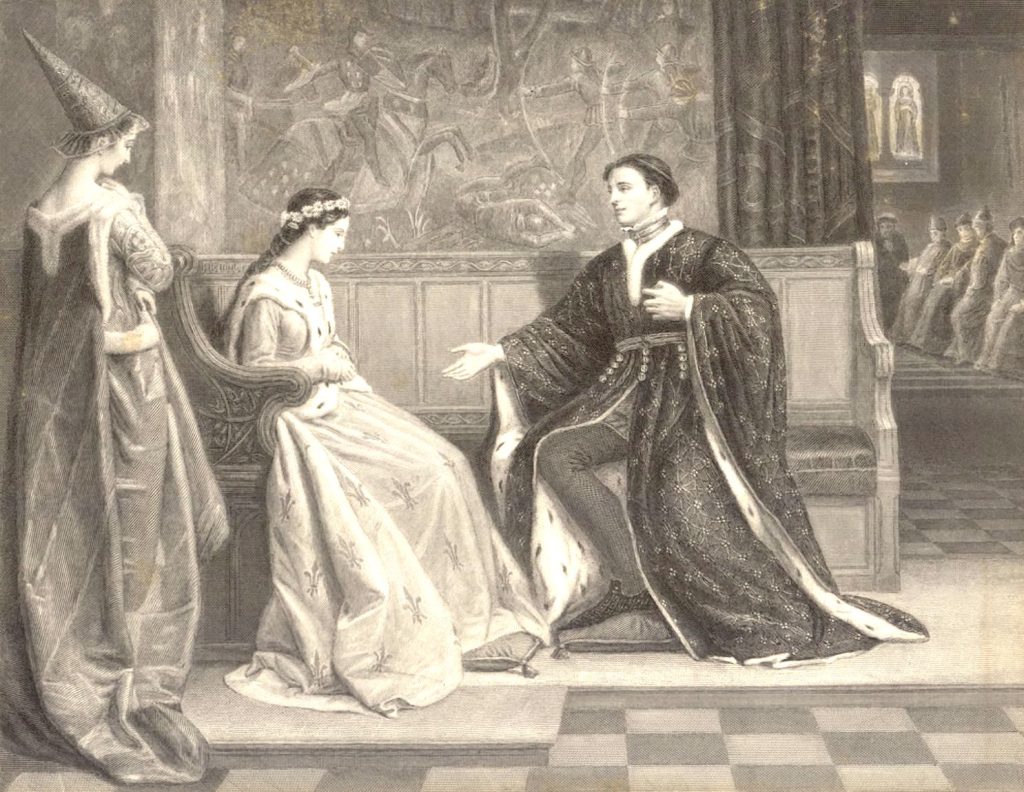
John Wyver writes: Today is the 93rd anniversary of the earliest Shakespeare performance on British television that I can identify. In the morning of Thursday 25 February 1932, producer Harold Bradly in the Baird studio in Covent Garden’s Long Acre, marshalled Colleen Clifford and Willard Stoker to play two ‘proposal’ scenes, one modern, by a writer called Jerome Leslie, and one ‘ancient’, from Shakespeare’s Henry V.
Although the Programme-as-Broadcast record offers no further details, the scene must be act 5 scene 2, in which the young king, victor against the French at Agincourt, woos the Valois princess Katherine. Shakespeare has a great deal of fun with franglais and one or two suggestively sexual jokes, although it is unlikely that the broadcast stressed the latter.
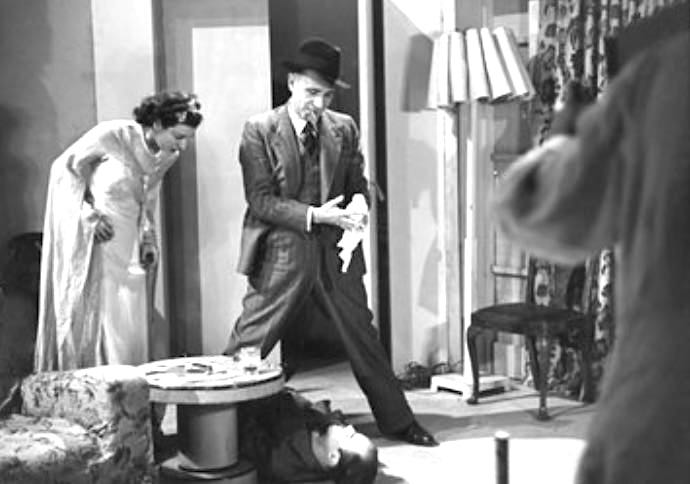
John Wyver writes: The evening schedule of Friday 24 February 1939 featured a half-hour police drama with a twist, since you, the viewer, were expected to solve the crime. The Fletcher Case was the third of the occasional Telecrime series, of which the second, Poetic Justice, with Joan Miller and Charles Farrell is illustrated above.
As the billing said, ‘Viewers will be given sufficient evidence to enable them to solve the problem which confronts Inspector Holt’, who was played in Stephen Harrison’s production by J.B. Rowe.
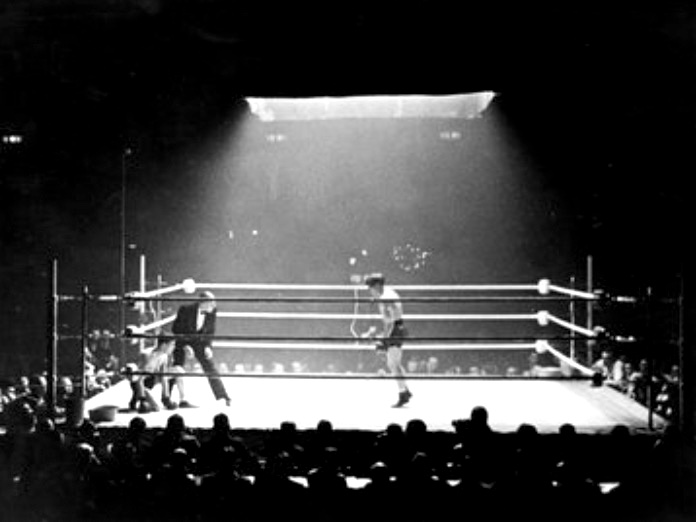
John Wyver writes: Characterised by The Times as ‘an animated scene’, the interior of the Marble Arch Pavilion cinema was packed on the evening of 23 February 1939 with ‘an audience of men and women who were evidently boxing enthusiasts.’
Every seat was taken and some 70 others were standing against the walls, and there were excited cries of ‘Go it Eric’ and waves of applause. The occasion was the large-screen showing of the fight between Eric Boon and Arthur Danahar (above), an event of singular significance in the history of pre-war television.
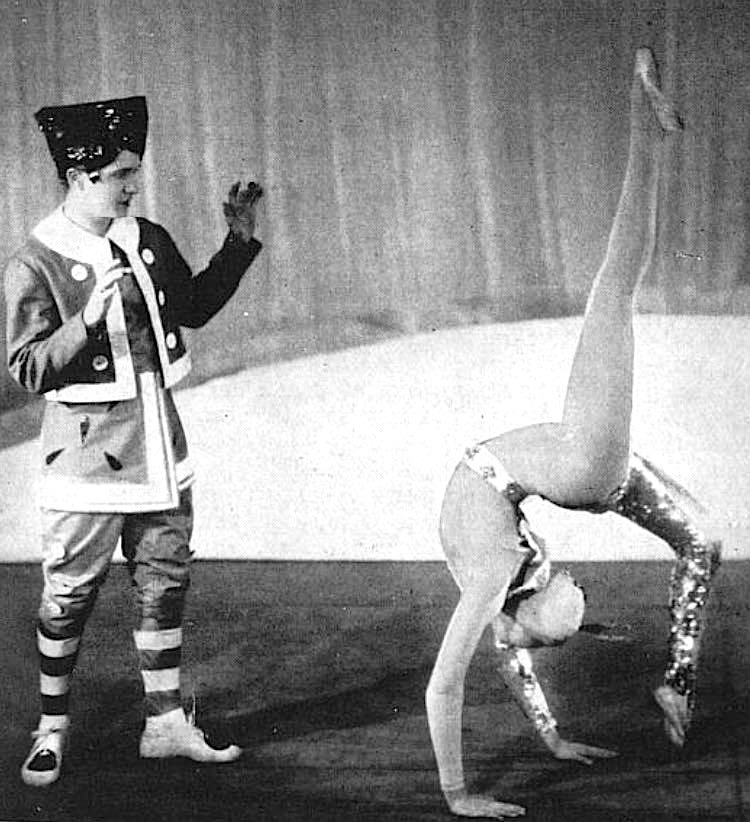
John Wyver writes: Today’s post is a melancholy little tale of a short, vibrant life in which early television played just a small part. The subject is dancer and acrobat Laurie Devine (above, right), who appeared performing ‘various dances’ on the late-night half-hour 30-line transmission from Studio BB at Broadcasting House on Wednesday 22 February 1933.
That Wednesday night was one of at least 40 documented appearances by Ms Devine on 30-line television, on occasions dancing with her brother Tom, and with a final bow on 4 September 1935. When she returned to work in her native Australia in August of the following year, she claimed ‘to have taken part in more television broadcasts than anyone else in the world’. Less than four months later, however, having had to withdraw from a hit revue in Sydney, she was dead from pneumonia.
John Wyver writes: Making a Poster on the evening of Monday 21 February 1938 featured artist Dora Clarke, familiar from other AP broadcasts, taking the audience through the stages of producing what was not exactly a poster, but rather the front cover of a forthcoming issue of The Listener.
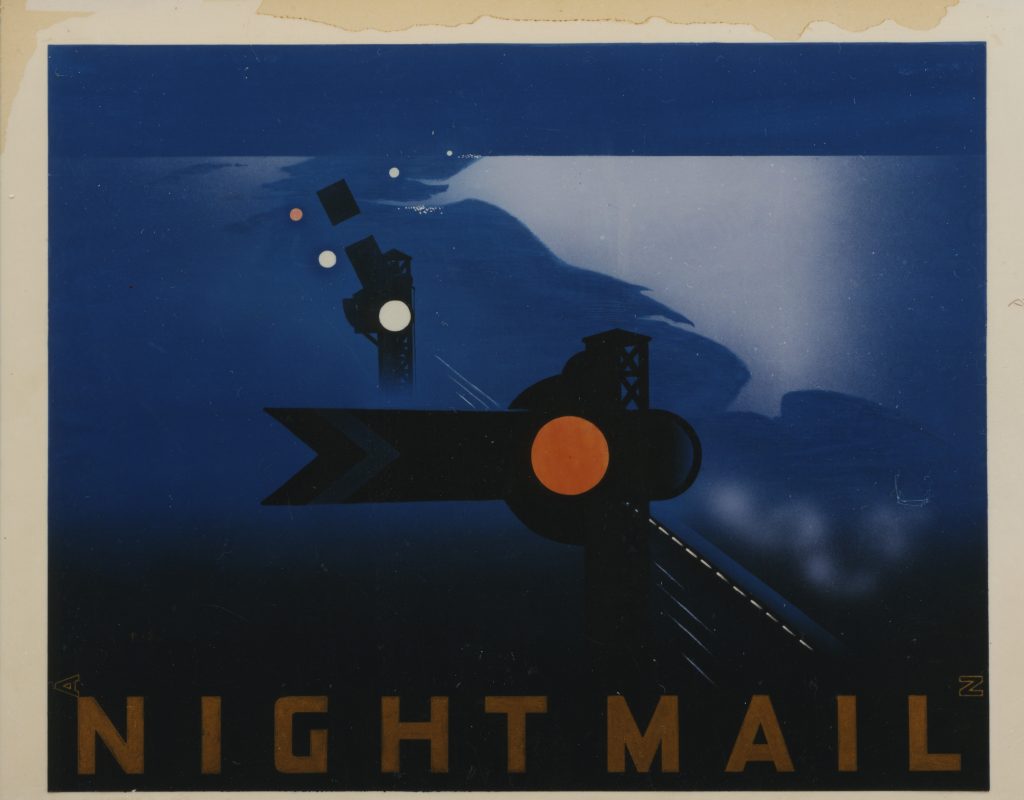
Nor was Ms Clarke actually the designer, who was in fact Pat Keely, a significant creative figure and designer of the wonderful ‘Night Mail’ poster (the original art for which is below, and for the service not the documentary), but relegated on this broadcast to assisting the presenter while remaining (as the PasB noted) out of vision.