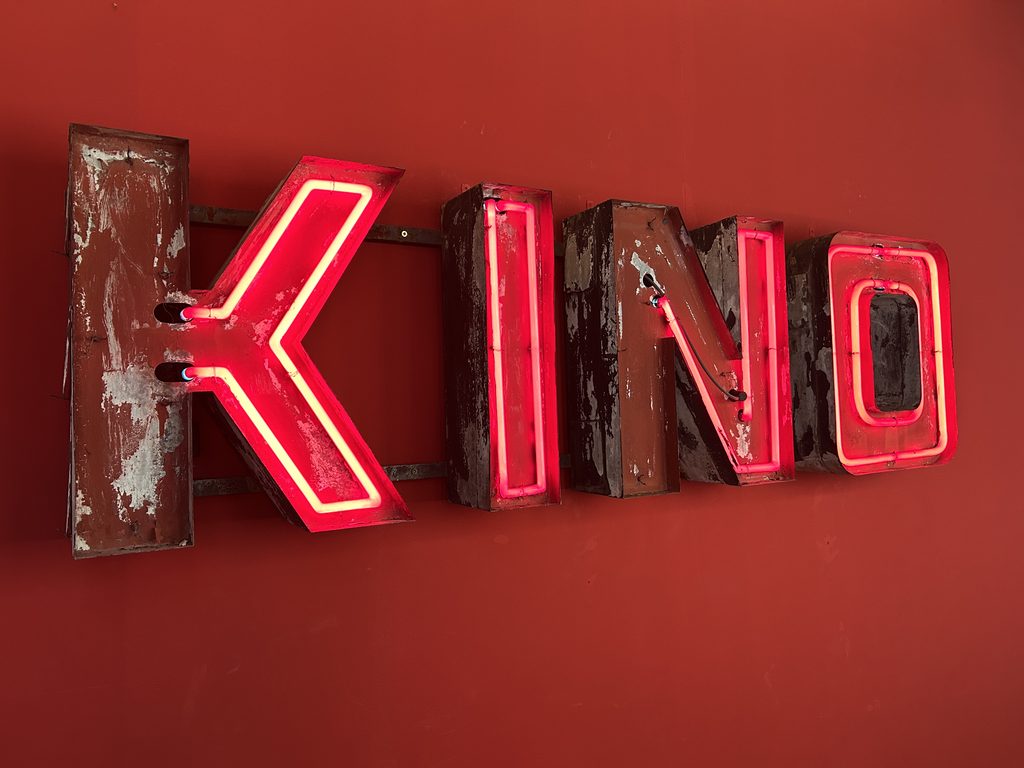
John Wyver writes: I have been away, on an excellent trip to Warsaw, Tallinn and Helsinki, and so have neglected the links for the past two Sundays. Here is a catch-up selection of stuff that has recently caught my eye, with the intention that I will return to a proper Sunday column next weekend; I may also add a handful of extra links here. The image above is from the fascinating Neon Museum in Warsaw, which I will discuss more in a future post.
• The 100 best TV shows of the 21st century: The New York Times [gift link] begins another of its mega-listing stunts, which will doubtless prove infuriating and invaluable in about equal measures.
• Not a civilisation, an organ: there’s so much to engage with and reflect on about AI at present, and this blog post about agentic swarms by the ever-excellent Bill Thompson should be near the top of your reading list.
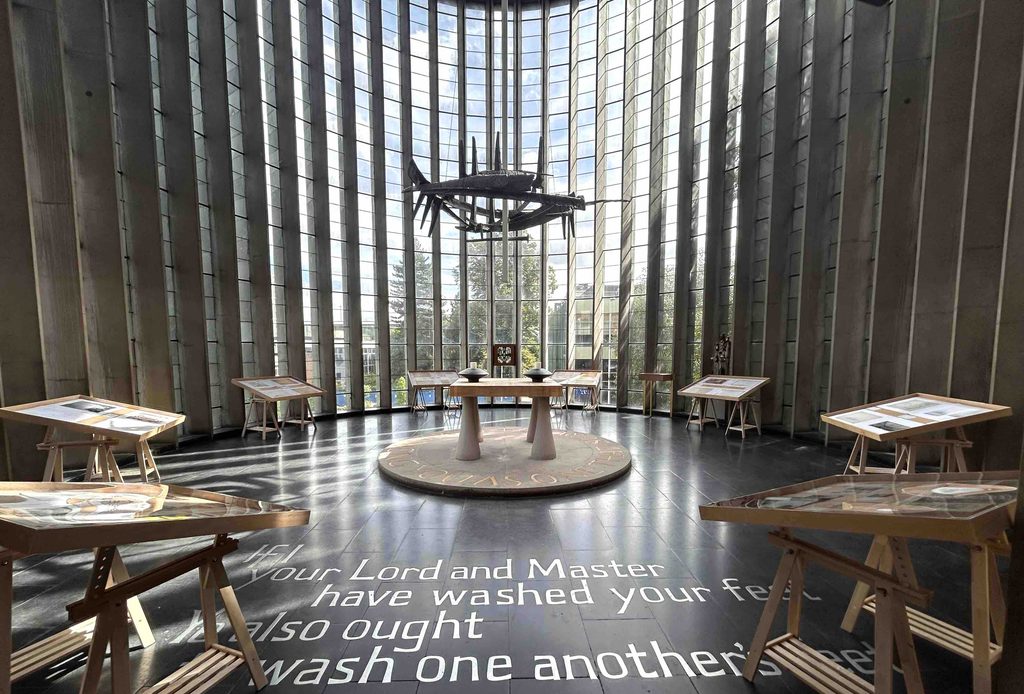
John Wyver writes: To Coventry, to the city’s great and glorious cathedral, and most particularly to the exhibition 75: Towards a New Cathedral (until 21 September), mounted there in the Chapel of Christ the Servant (above). I visited with my friend and colleague Helen Wheatley, who was the consultant on my BBC Four documentary Coventry Cathedral: Building for a New Britain (the link is to the film on Youtube, as here):
When Helen and I, along with our collaborators Todd MacDonald, who filmed and edited, and Ian Cross, who created the very special graphic design, were working on the film in 2021 , I was frustrated by how few traces I could find of the 200-plus entries to the 1950-51 competition to design a rebuilt cathedral after wartime bombing. Basil Spence, of course, won that competition, and now this compact and rich exhibition surfaces a number of those other plans. Helen and I found it fascinating.
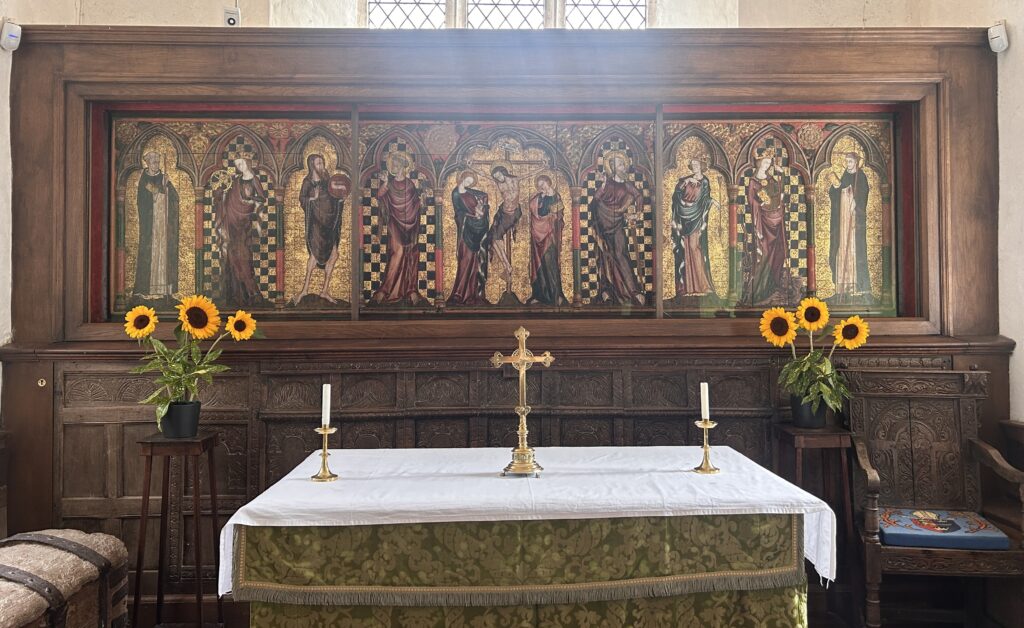
John Wyver writes: One of the pleasures of the past weeks was a day’s ‘churching’ with friends in Suffolk, during which we visited the tiny thatched church of Thornham Parva. Behind the altar is the astonishing and exquisite Thornham Parva Retable (above), the largest medieval altarpiece in England. This is thought to have been made in the 133os for a Dominican priory, and it escaped later iconoclasts by being removed from the church. It was only in 1927 that it was rediscovered, hidden in a woodpile.
Otherwise, apologies for missing a week last Sunday; here is this week’s selection of articles and more that have engaged me recently and enriched my understanding.
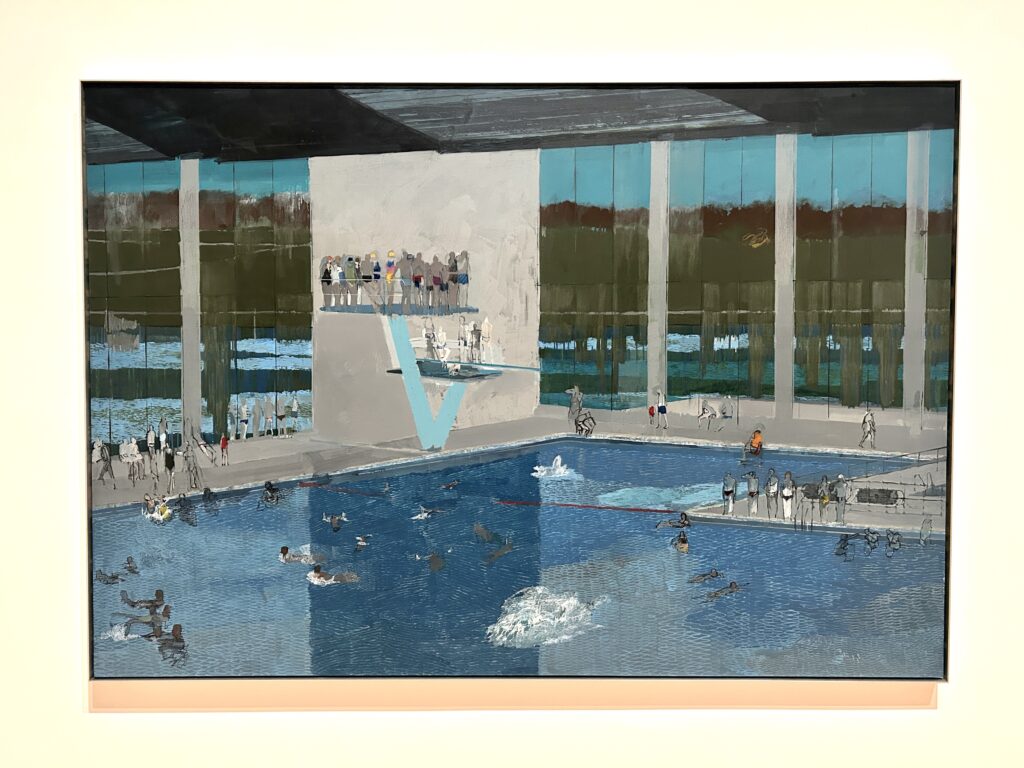
John Wyver writes: Welcome to this week’s collection of articles and more that I have found engaging and enriching over the past seven days. My header image is Hurvin Anderson’s ‘Audition’, 1999, seen at the artist’s really exceptional retrospective at Tate Britain, which closes today. If you’ve missed it, do take a look at Tate’s short video:
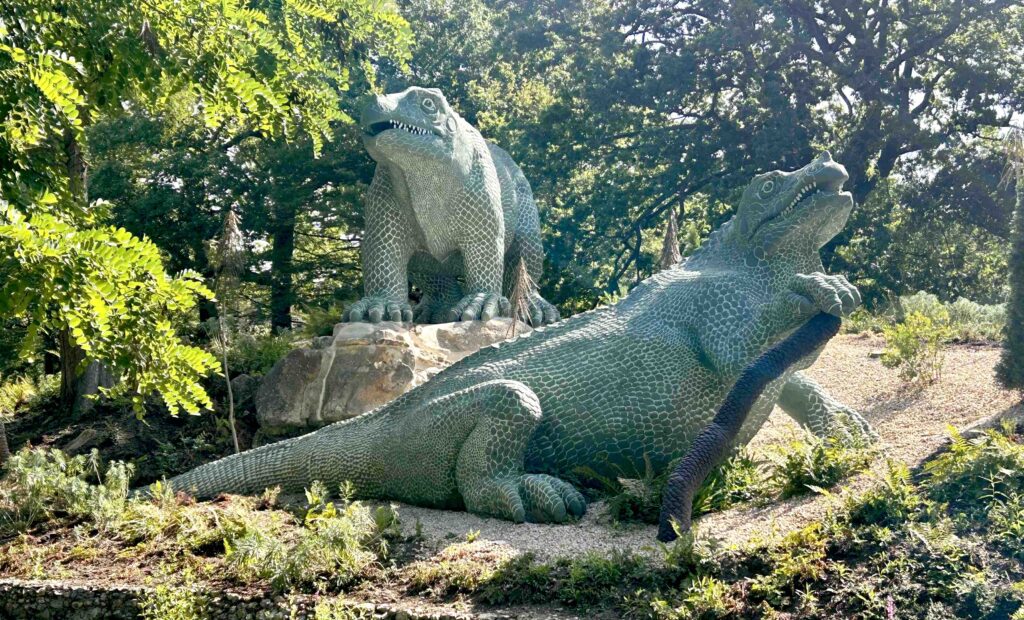
John Wyver writes: The usual Sunday helping of stuff that I have found engaging and enriching over the past week. The header image is of two Hylaeosaurus dinosaurs on the Tidal Lakes Trail in Crystal Palace Park, which we visited last weekend. The recently restored Victorian monsters look wonderful.
• So you want to build an AI star?: a completely fascinating, and disturbing, report by Reggie Ugwu for The New York Times [gift link] about the creation of fake personas on screen…
• Are you a human?: .., and Jill Lepore’s dazzling New Yorker essay [£; limited free access] is the perfect complement.
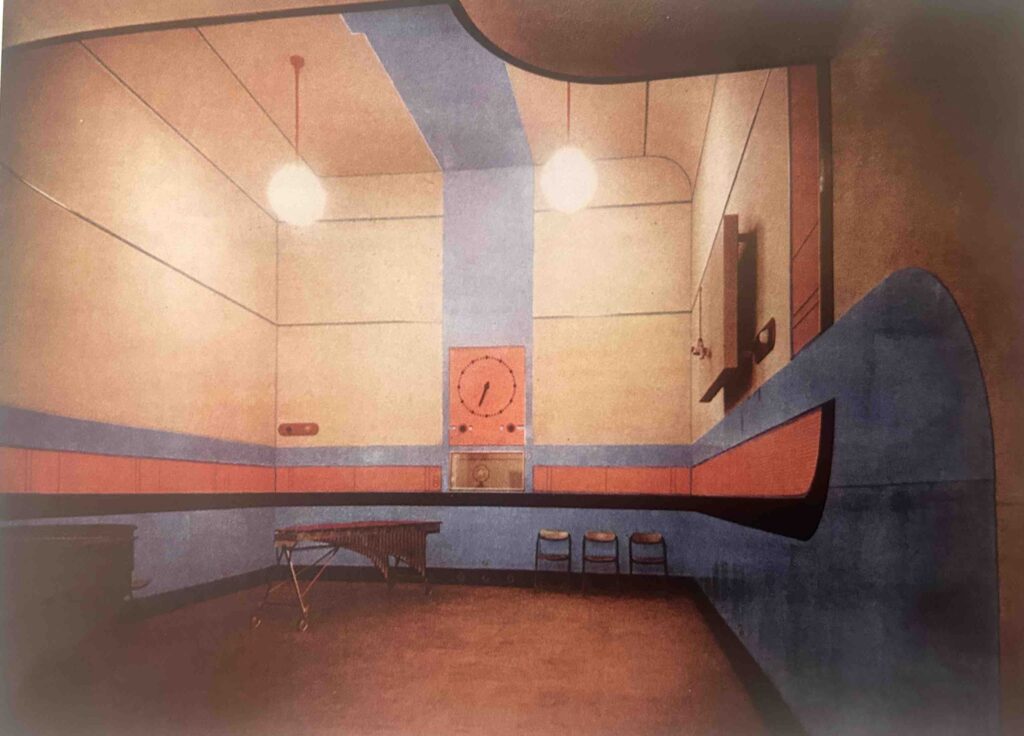
John Wyver writes: Come with me a little further down the rabbit hole that is Studio BB in the original Broadcasting House. This post follows my two-part ‘This temple of the arts and muses’, the first element of which is here and the second here. And it is prompted by the presence of the grand piano in the photos of Studio BB, as below. This is the story of who played that piano for much of the time during the television years of 1932 to 1934. And unlike the majority of posts on this blog it has romance at its heart.
John Wyver writes: In my previous post I enthused about Elizabeth Darling’s new book Palace of the Ether: Broadcasting House and the Architecture of the BBC, 1922-1932. Here I want to focus on just one aspect that Darling throws some light on, but which I am keen to explore further: the use from August 1932 of Studio BB (above, and in the images below) in the newly constructed BH for regular television transmissions by Baird’s 30-line mechanical system.
BH officially opened on 15 May 1932 (the first transmissions were in March), and little more than two months later, the first of six ‘test’ television broadcasts was made from there, ahead of the official first night of 22 August. Although the standard histories acknowledge Studio BB, it is always described simply as being in the basement with no further details supplied.
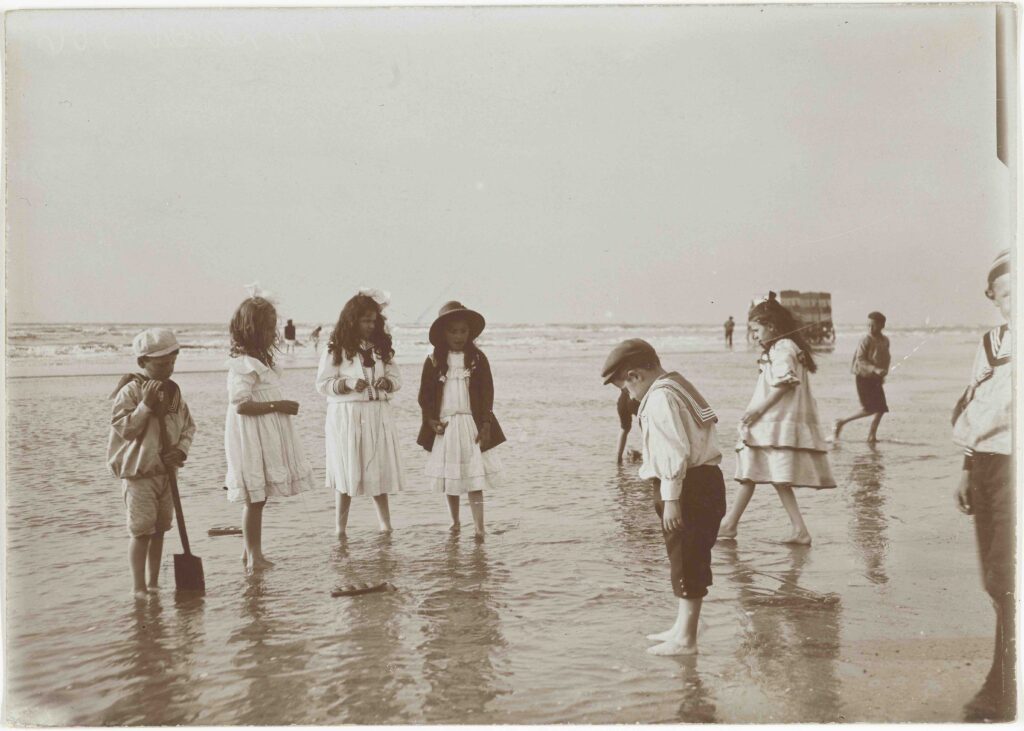
John Wyver writes: As I manage to do on most Sundays here is a collection of links to stuff that I have found interesting and rewarding over the past week. The header image, which seems suitably seasonal, is ‘Paddling at the beach in Zandvoort’ by the German firm of Knackstedt & Näther, from 1900 – 1905; the image is part of the collection of the Rijksmuseum in Amsterdam.
• Red & Black – Hollywood Left and the Blacklist: Ehsan Khoshbakht’s retrospective for this year’s Locarno Film Festival could not be more timely; I’m not there, but the full and tantalising list of films means I can recreate much of it at home; see also the press release for background, and there is a six-part podcast as well.
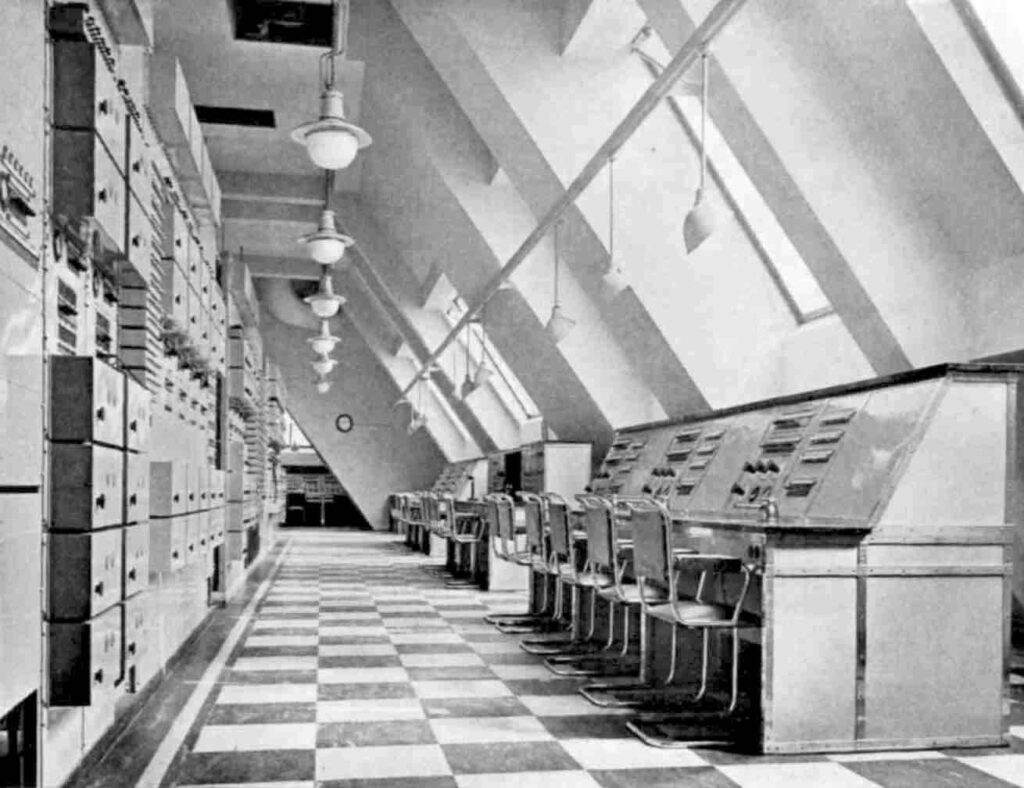
John Wyver writes: ‘This Temple of the Arts and Muses’ is the opening phrase of the dedication, displayed in Latin and supposedly written by John Reith, at the entrance to Broadcasting House. Sited on an irregular plot in Portland Place, just north of Oxford Circus, the BBC’s headquarters was opened in May 1932. Palace of the Ether: Broadcasting House and the Architecture of the BBC, 1922-1932 is Elizabeth Darling’s handsome and fascinating study of the building and its contexts..
Beautifully produced by Lund Humphries (albeit hardly a snip at £45), this is a really exceptional book, elegantly written, crammed with information and ideas, and graced with wonderful illustrations. Here I want to draw out some of the elements that I found especially interesting; in a second post, I will focus on the (comparatively little) that the volume has to say about Studio BB, the basement location of the BBC’s 30-line television service which began just three months after the building’s official opening.
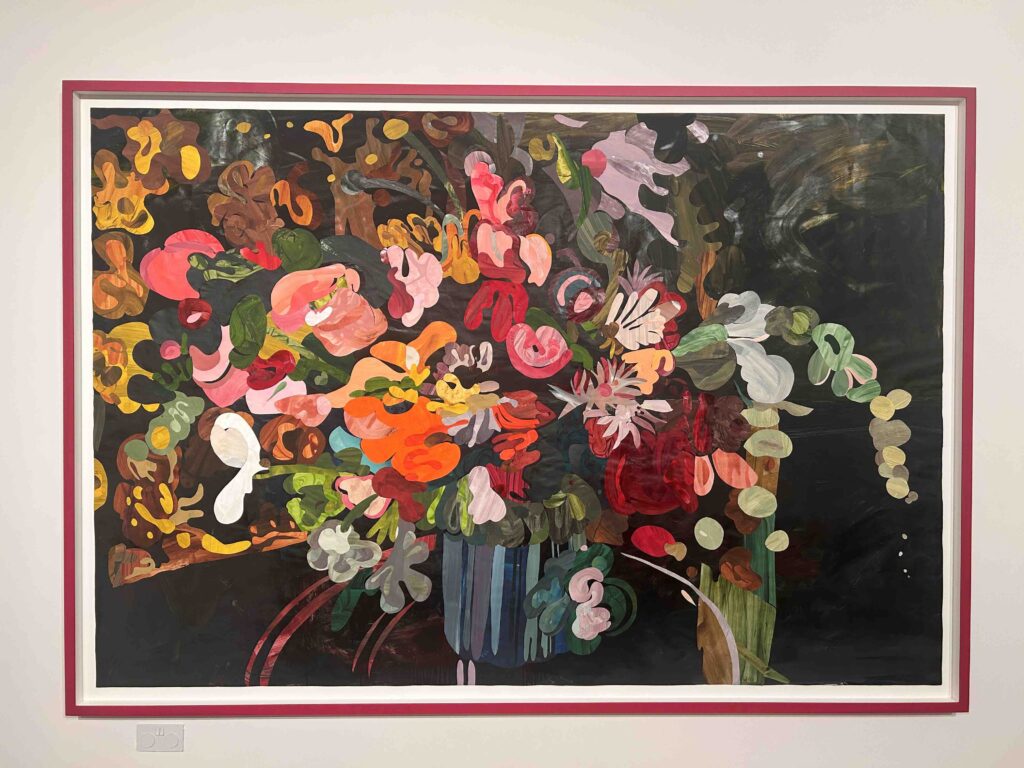
John Wyver writes: My usual compendium of links to stuff that this week has caught my eye and engaged my brain. My header image is of Collage for Losing the Garden, 2026, oil on paper, from the glorious exhibition ‘Garden without Seasons’ of recent work by Clare Woods that opened this week (until 8 November) at Pitzhanger Manor & Gallery. Beautiful paintings, collages and screenprints, beautifully displayed in beautiful spaces.
I wasn’t sure whether to highlight the Odyssey articles that Bluesky at least has been buzzing about all week. You have probably read some, or all, of them already, but they are so interesting, and I think so revealing about contemporary culture, that I have brought together the key ones.
An uncomplicated man: peerless translator of Homer Emily Wilson kicked things off for the LRB [£; limited free access]with this response to Christopher Nolan’s film, which was widely taken to be a takedown. Which in many ways it is, but it is also richer and more complex than that…
Nolan vs Homer: … and in this LRB podcast discussion with Thomas Jones, Wilson is considerably more nuanced – and fascinating.
Artful weaving: the week’s other substantial response to the film is Daniel Mendelsohn’s essay for NY Review of Books [also £; limited free access], which provides context from Nolan’s earlier work.