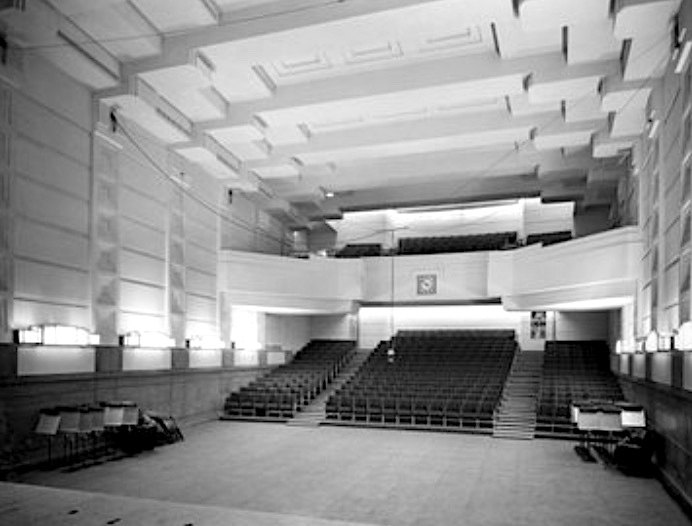
John Wyver writes: At twenty-past-four on Monday 26 June 1939, just two months before war was declared, Grace Wyndham Goldie showed her green ticket to gain access to Broadcasting House’s Concert Hall (above, in 1932, soon after its opening).
The occasion was billed as a Television Tea Party, to which lookers-in had been invited to listen to and interrogate director of television Gerald Cock. Some 700 set owners had requested a ticket, and from his office wastebasket Cock had drawn 75 names, each to be accompanied by a plus-one.
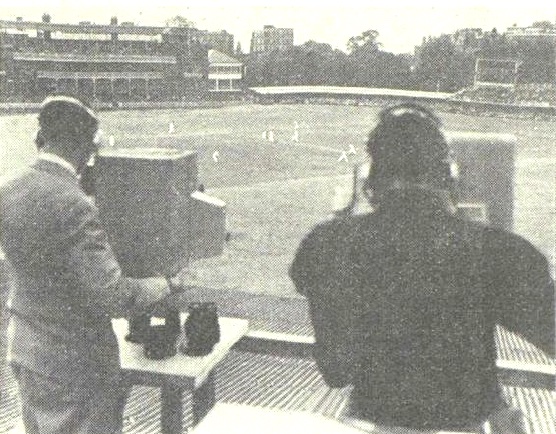
John Wyver writes: At 11.30am on the morning of Friday 24 June 1938, television’s cameras were at Lord’s for an hour of the second Test Match between England and Australia. Coverage ‘by kind permission of the MCC’ featured commentary by Captain H.B.T. ‘Teddy’ Wakelam, assisted by David Hofman, and Joe Hulme giving his opinion on the match and the players.
In addition to watching the all-important 22 yards of the wicket, viewers saw, as the PasB noted, ‘shots of the crowd, the ground, scoreboard, pavilion, stands, etc.’ Two further hours of play were shown later in the day, either side of a variety show, along with a wrap-up 20 minutes featuring the end of the day’s play.
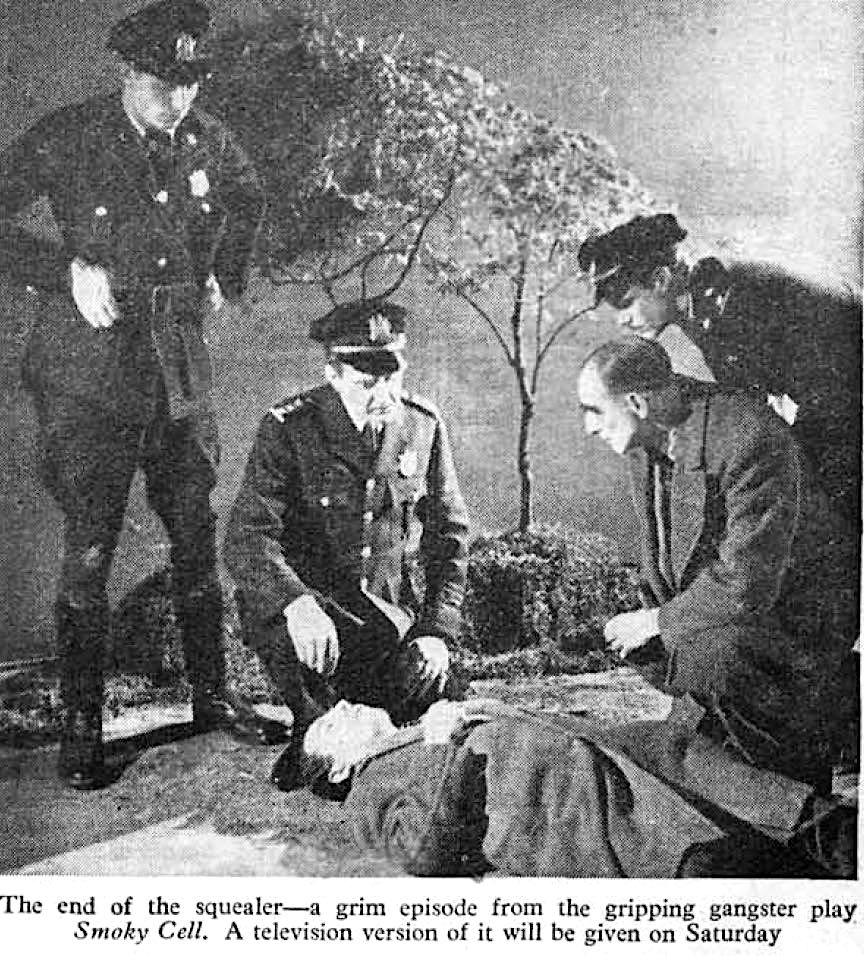
John Wyver writes: On Saturday 24 June 1939, following a day of visits to Lord’s for the Test match against the West Indies, viewers could enjoy the evening’s 70-minute staging of Edgar Wallace’s play Smoky Cell. Producer Michael Barry was in charge, marshalling a large cast led by American-born, London-based Percy Parsons as police chief O’Regan.
The crime dramas of Edgar Wallace, who had died seven years before, became increasingly important to Alexandra Palace as the new television service realised that it needed more popular plays to attract viewers.
John Wyver writes: Just before 10.30pm on Friday 23 June 1939, pianist Phyllis Sellick closed out the evening transmission from AP with ‘Jeux d’eau’ by Ravel and Liszt’s ‘La Campanella’ arranged by Ferruccio Busoni. Programmes by this point shut down each night with a short presentation of soothing music. After ten previous Piano Interludes, which had started at the end of March, this was Phyllis Sellick’s final television appearance before the war.
A celebrated pianist and teacher, known in particular for her commitment to modern British composers including Vaughan Williams, Michaedl Tippett and Lennox Berkeley, Sellick continued to work into her tenth decade, dying at the age of 95 in 2007. Five years before this, she appeared on Desert Island Discs, which can be heard here.
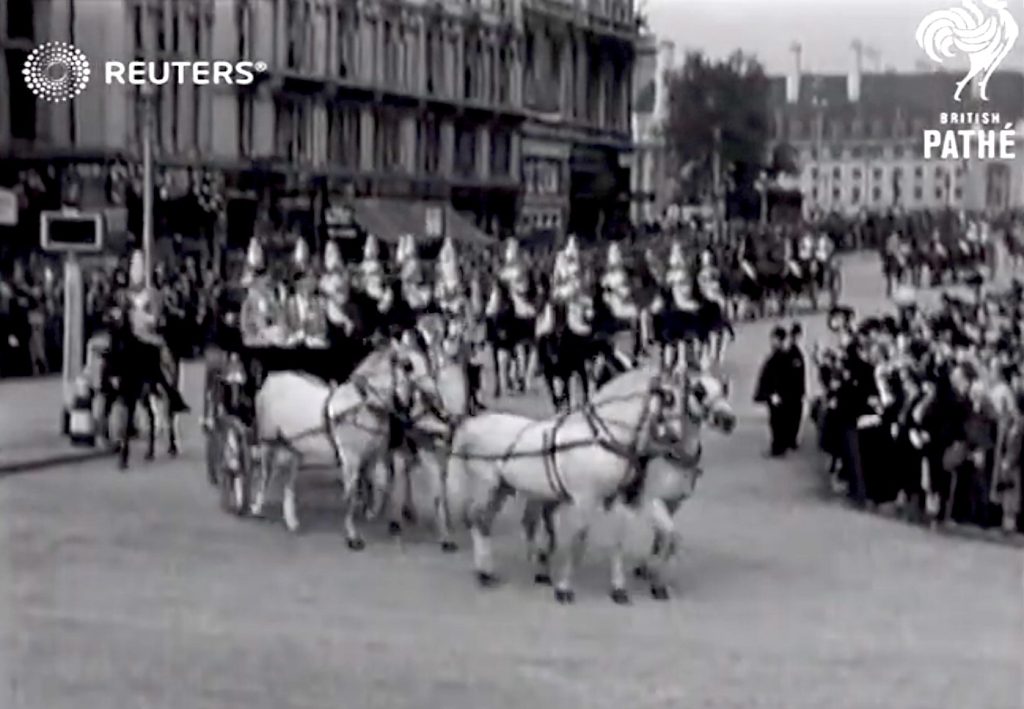
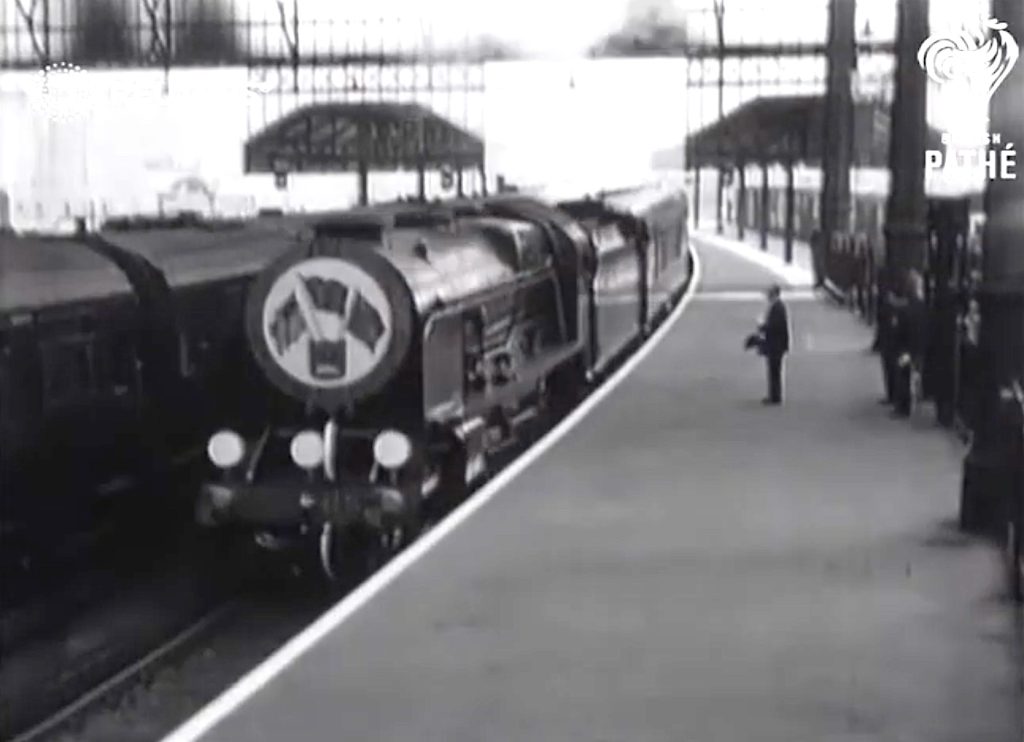
John Wyver writes: On the afternoon of Thursday 22 June 1939 one of the BBC’s mobile control units was stationed at Waterloo while the other was by the Victoria Memorial close to Buckingham Palace. Six weeks or so before the BBC had seen their Majesties off on their tour of Canada and the United States, and now a two-location outside broadcast was welcoming them back.
From 5.13pm for 20 minutes lookers-in saw the arrival of the Royal Train and then the elaborate ceremony of greetings on the platform with, among others, Prime Minister Neville Chamberlain, United States ambassador Joseph Kennedy, and Chairman of the Southern Railway, Mr R. Holland Martin. Freddie Grisewood was the BBC’s man on the spot, and a press report detailed that one television camera ‘was trained on Princess Margaret, following her movements closely’.
The television schedule then carried five minutes of Gaumont British newsreel coverage of the tour before in a further 40-minute broadcast commentator Edward Halliday showed the royal coach coming to Buckingham Palace and then George VI and Queen Mary, along with Princesses Elizabeth and Margaret, waving from the balcony. Also featured, according to the Programme-as-Broadcast form were ‘general crowd scenes’.
John Wyver writes: On Monday 21 June 1937, at 3.03pm for just 15 minutes, and then again at 3.42pm for a further 10 minutes, the Television service broadcast a live OB from the Wimbledon Championships for the very first time.
Once true OBs were technically and creatively possible the choice of lawn tennis as the first major sport to be televised was largely pragmatic. The Wimbledon Championships followed less than six weeks after the Coronation, allowing just sufficient time for necessary training with the new equipment.
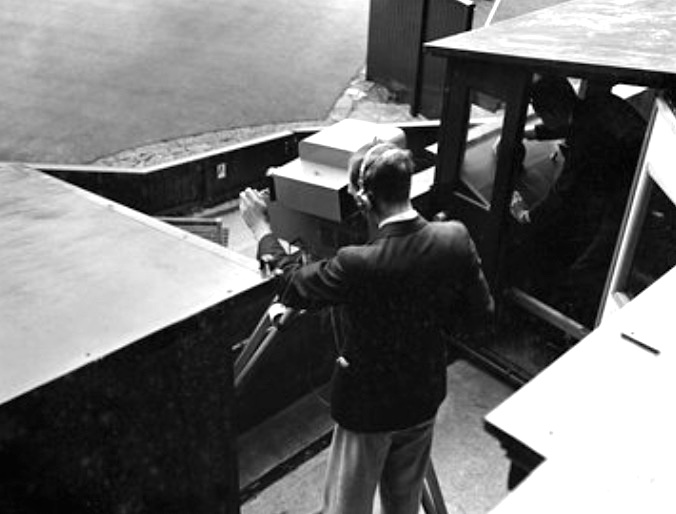
The south London courts complex, opened in 1922, was a long way from the coaxial cable route, but with no high ground between SW17 and AP, a radio link across 17 miles to the re-transmitting studio could be tested for the first time (see below for the aerial, set alongside the mobile control room).
John Wyver writes: On the evening of Tuesday 20 June 1933 Eustace Robb, producer of the BBC’s 30-line television service, achieved a considerable coup by persauding in front of the camera for the first time the great Russian dancer Tamara Karsavina. She performed solos from Mlle de Maupin to music by Lisberg, which she had choreographed herself, Claire de Lune to Debussy, and ‘Chant Indoue’ from Rimsky-Korsakov’s Sadko.
Russian tenor Maxim Turganoff, a refugee from the Revolution, accompanied her in the Rimsky-Korsakov, and arias in period costume by Mozart and Bizet were also contributed by mezzo-soprano Leonie Zifado. The Gershom Parkington quintet provided the music.
After the dress rehearsal, Karsavina spoke to a journalist from the monthly Television:
No I am not in the least exhausted; I loved it. You see I have been here before to watch my pupils and I know what to expect. The flicker [from the projector beam, which was only light in the space] does not worry me as I do not move very close to it, and now I have practised I can easily keep in the picture, though the space is very small.
John Wyver writes: Mid evening on Monday 19 June 1939 AP offered episode 3 of Rough Island Story, a six-part history of Britain with Harold Nicolson and J.F. Horrabin, who we have already encountered in these blog posts as the host of News Map. Radio Times detailed this 25-minute studio broadcast as ‘the story of Britain’s rise to the status of an Imperial Power’ (note the caps).
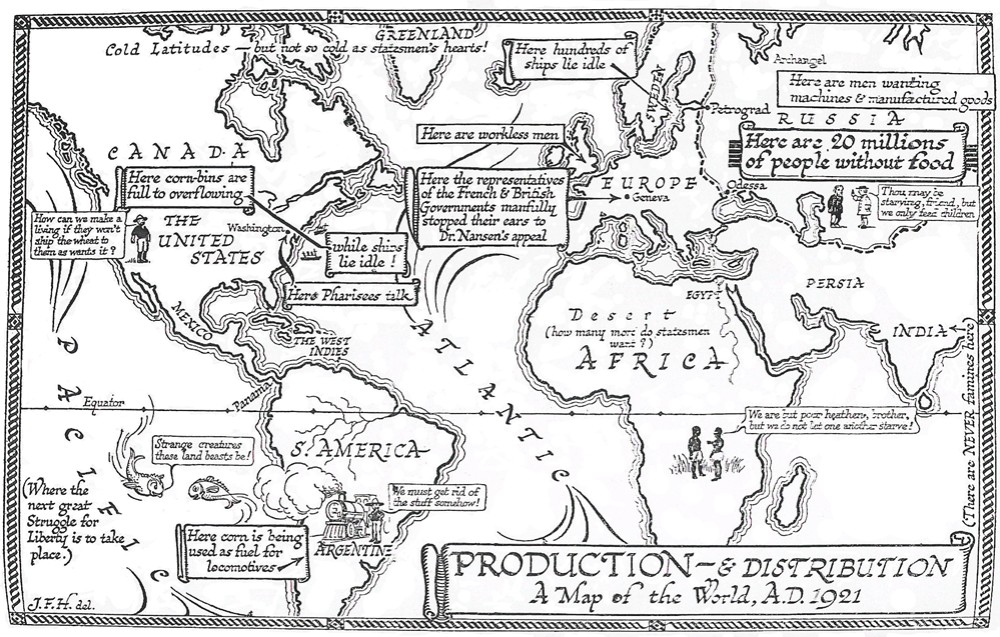
Horrabin is an especially fascinating character who was familiar to audiences of the time not only from News Map but also from numerous radio broadcasts. He was the author of the popular book An Atlas of Current Affairs, for which he also drew the maps, as he did with chalk and brush live on television. But as the 1921 map from The Communist reproduced above suggests, Horrabin’s politics were strikingly radical.
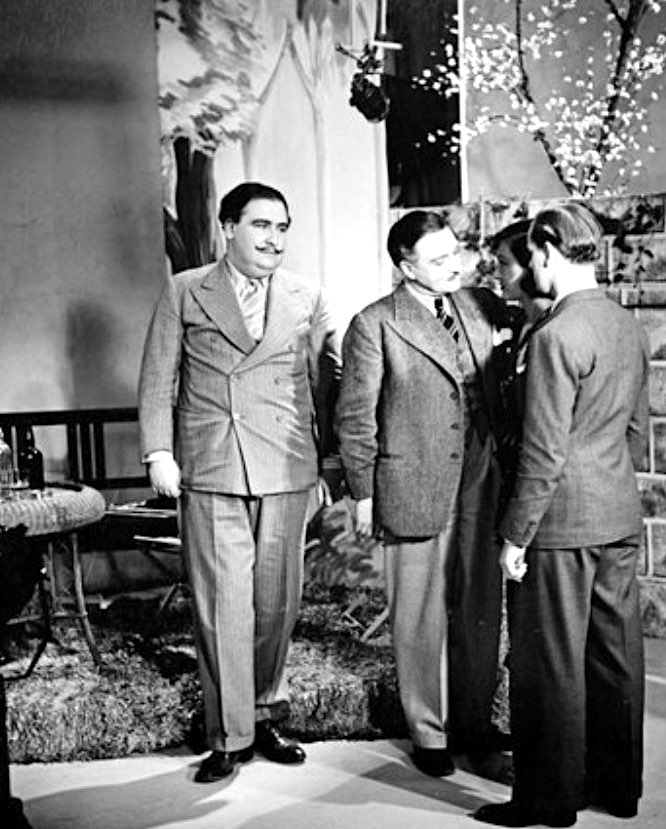
John Wyver writes: The afternoon of Friday 18 June 1937 saw television’s first incarnation of Agatha Christie’s detective Hercule Poirot when George More O’Farrell staged her short play The Wasp’s Nest. Entrusted with the role of the Belgian sleuth was actor Francis L. Sullivan, described somewhat unflatteringly by Wikipedia as ‘a heavily built man with a striking double-chin and a deep voice.’
Sullivan had first played the character in Christie’s 1930 play Black Coffee. Again per Wikipedia, Sullivan
became a good friend of the author. She approved of his portrayal despite the fact that physically he was far too tall for the dapper little Belgian detective. (Sullivan stood six feet, two inches in height.)
He later played Poirot in the 1940 play Peril at End House and won a Tony award in 1950 for his appearance in Christie’s 1950 drama Witness for the Prosecution.
John Wyver writes: ‘Hurrah for Big Bill Campbell!’, wrote Listener critic Grace Wyndham Goldie after seeing the singer host the third edition of Western Cabaret on the afternoon of Saturday 17 June 1939. ‘What speed! What verve! What vivacityI What gaiety! What a change!’
A re-run of a show transmitted the previous Tuesday evening, this edition of Western Cabaret featured host Big Bill Campbell and his Hill-Billy Band, together with among others The Three Van Strattens, Harry Lester and his Hayseeds, and ‘Pop’ Tom Soulsby. ‘Big Bill’ himself had been born in Canada, but settled in England in 1930 and, up until his death in 1960, popularised ‘cowboy’ music with radio shows and frequent UK tours. Wyndham Goldie was a fan:
The point – the great, glorious and unprecedented point – about this show was that it had life in it. From the opening tune played by the Hill-Billy Band to Big Bill’s own chorus song, ‘Old Macdonald had a Farm’ and the high spot comedy singing of Evelyn Dall the thing had enough zip and go to raise the roof of Alexandra Palace. And, what is more, it was fun.
This is what all too many television cabarets aren’t. They may be expensive, they may be elaborate, they may give us close-ups of female limbs from the ankle to the thigh, gentlemen may do strange things with canes and opera hats, singers may assure us in tones of liquid gloom that ‘as long as hearts shall beat lovers shall always meet in purple dreams’. But, to adapt George Robey, no one would suggest that they’re gay.