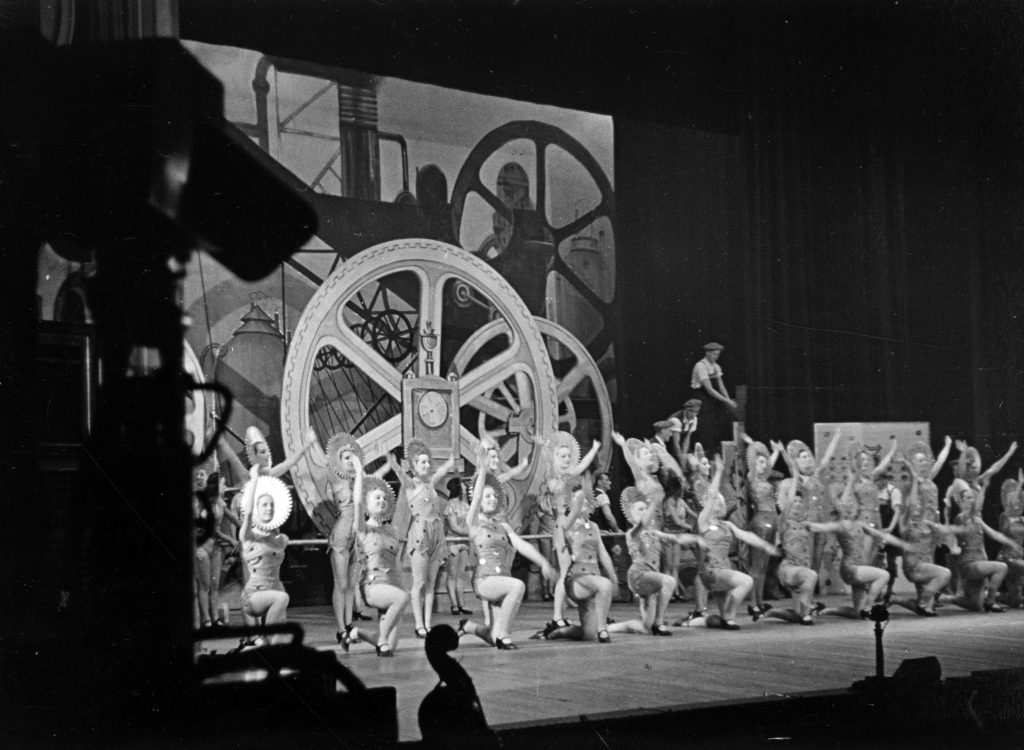
John Wyver writes: Television’s treat on the evening of Tuesday 18 April 1939 was the third Coliseum Night presenting the first half of the variety bill at Sir Oswald Stoll’s flagship theatre in London’s St Martin’s Lane. Featured artists included The Damora Dancers, comedians Mooney and Dawe, and a parade of solo artists among which were singers Betty Driver (‘Blue skies are around the corner’; later Betty Williams in Coronation Street) and Bertha Willmott (‘Daddy wouldn’t buy me a bow-wow’), and comedienne Yvonne Arnaud.
Two years on from the modest daytime ‘local OB’ from the railway siding adjacent to Alexandra Palace, which was featured in yesterday’s post, the Television service could mount a remote evening transmission from a cavernous auditorium, albeit with additional lighting brought in for the broadcast. ‘To put over the excellent pictures which we see is a remarkable technical feat,’ applauded the Observer’s ‘E.H.R.’
John Wyver writes: Just after 3pm on Saturday 17 April 1937 BBC Television began an ‘outside broadcast’ from the railway terminus adjacent to Alexandra Palace. Billed as Demonstration of Railway Locomotives, and organised with London North Eastern Railway, the transmission featured Pacific, Silver Jubilee and Atlantic locomotives, brought onto this branch line especially for this programme. Commentary was provided by the stalwart Leslie Mitchell and ‘Inspector Jenkins’, presumably a LNER official.
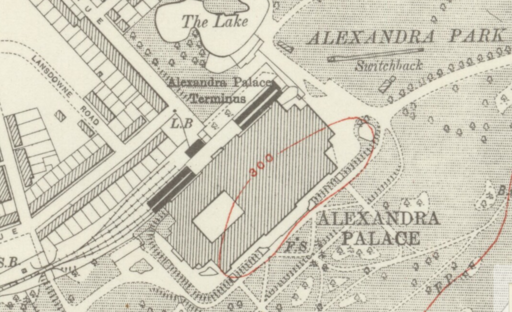
The railway station at AP, which opened in 1873 and closed in 1954, was right alongside the north face of the Palace, as can be seen from the detail of a 1920 Ordnance Survey map above. The sidings were sufficiently close to an entry point to Studio A, on the south side, so that one or more cameras linked with heavy cables to the interior control room could be used for the broadcast. Six months on from the official opening of the 405-line service, this was still the way in which ‘local OBs’ were organised.
Local OBs of this kind included golf lessons in the Park, demonstrations of model aircraft, parades of vintage cars, and displays of trained dogs and horse jumping. It was only with the delivery, some three weeks after this trainspotting adventure, of the BBC’s first Marconi-EMI mobile control unit, that remote OBs could be broadcast from across London — starting with the Coronation parade on 5 May.
John Wyver writes: Sir Charles Spencer Chaplin was born 136 years ago today. To mark his 50th birthday on Sunday 16 April 1939, when Charlie was working on the script for The Great Dictator (1940), Alexandra Palace screened an afternoon programme of extracts from his early comedies. Largely because of the industry refusing to license any extracts to the new medium, this was the only substantial recognition of cinema history by the pre-war television service.
Selecting from the archive of the British Film Institute, which had been founded earlier in the decade, the Institute’s technical director H.D. Waley chose scenes from the Keystone comedy Tillie’s Punctured Romance (1914), and three Essanay films, all made in 1915, The Tramp (above), The Bank and The Champion. Miss May Langston, who had been playing for the movies since 1905, provided piano improvisations and, pleasingly, the prints were shown at the correct speed of 16 frames per second.
Here’s the feature-length Tillie’s Punctured Romance in all its comic glory:
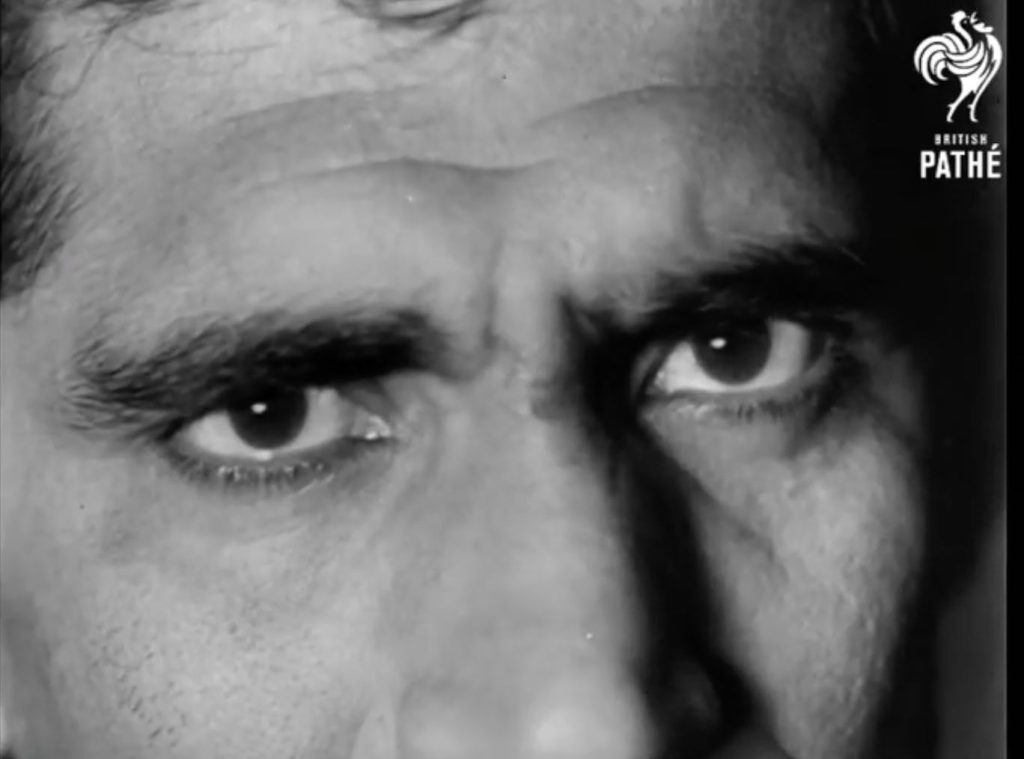
John Wyver writes: Lest these posts give the impression that pre-war television from Alexandra Palace was all classical ballet and mimed Wagner, the evening of Saturday 15 April 1939 was one of seven occasions when the studio hosted Indian magician Kuda Bux, otherwise known as ‘the man with the X-ray eyes’. Just as it does today, television loved a soupçon of sensationalism.
Over the course of eight decades, Kuda Bux, a self-styled “Hindu mystic,” was a point of intersection for vaudeville, Roald Dahl, spiritualism, paranormal research, precursors to reality TV, the allure of the East, bad PR, brilliant PR, radio programs that needed a time delay, and yogic concentration.
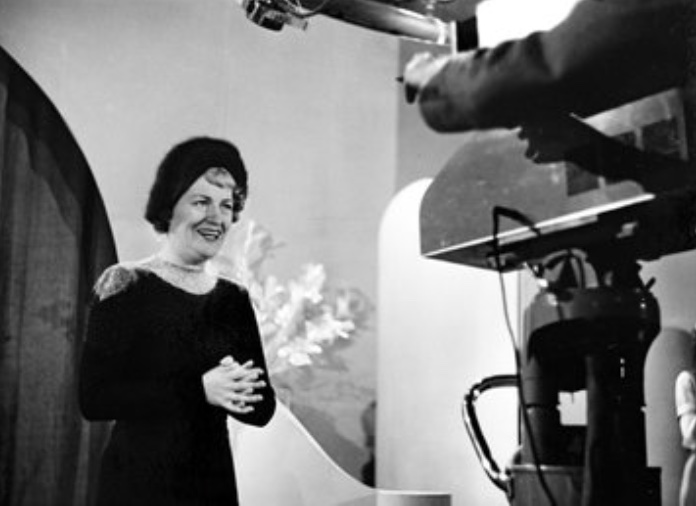
John Wyver writes: At one minute past 3pm on the afternoon of Thursday 14 April 1938, Alexandra Palace switched over to a feed from a studio built inside the Ideal Home Exhibition. In a first 10-minute visit to Olympia, Jasmine Bligh interviewed actor and singer Yvonne Arnaud, the close harmony group trio The Cavendish Three perfomed ‘I double dare you’ at the piano, and accompanied by Kay Cavendish, Gracie Fields sang ‘Sally’ and ‘Little Old Lady’ (above).
Later that afternoon, as well as that evening Picture Page visited the BBC’s outside broadcast set-up at the show, and broadcasts from Olympia dotted the schedules on Saturday (but since it was the Easter weekend, not Good Friday or Easter Sunday), and then from Monday to Thursday the following week.
At a time when viewers were still far more likely to encounter television in an exhibition, viewing room or bar rather than in a home (there were perhaps 5,000 families with sets across London), the BBC committed significant resources to these broadcasts aligning the medium with domestic modernity.
Back from holiday; normal service resumes with OTD post no 123…
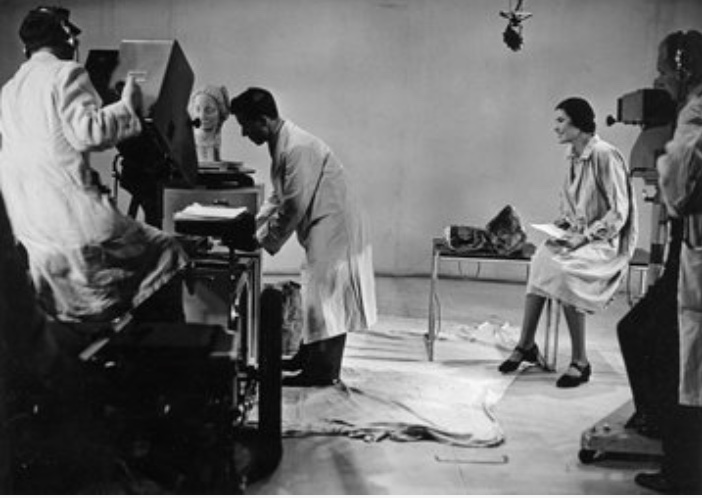
John Wyver writes: On the afternoon of Tuesday 13 April 1937, and then again that evening, a second series of producer Mary Adams’ series The World of Women opened with a 17-minute illustrated talk by sculptor Dora Clarke (above). The artist presented a number of her artworks in wood, bronze and ‘bronzed plaster’, and apparently demonstrated her method ‘on a half finished pig in wood’.
We have already met the artist as the presenter of Making a Poster in February 1938, and she made a number of other appearances on pre-war television. In July 1937 she demonstrated plaster casting in July 1937 (which is the likely occasion of the header image) and then illustrated the process of Making a Life Mask in November that year. She reprised the latter presentation in February 1939, and five months later, in July, she displayed hand block printing on textiles.
John Wyver writes: another of my favourite OTDs from the 122 contributed to date, posted again during this week when I am on holiday.
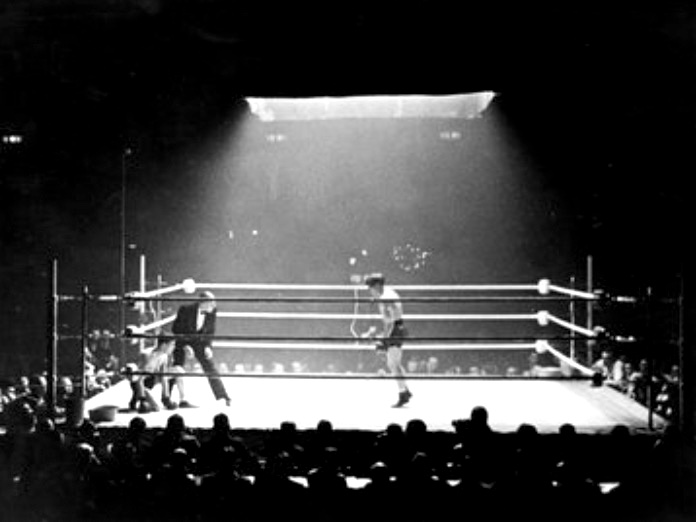
Characterised by The Times as ‘an animated scene’, the interior of the Marble Arch Pavilion cinema was packed on the evening of 23 February 1939 with ‘an audience of men and women who were evidently boxing enthusiasts.’
Every seat was taken and some 70 others were standing against the walls, and there were excited cries of ‘Go it Eric’ and waves of applause. The occasion was the large-screen showing of the fight between Eric Boon and Arthur Danahar (above), an event of singular significance in the history of pre-war television.
John Wyver writes: As I am holiday this week I am posting again a number of my favourite OTDs to date.
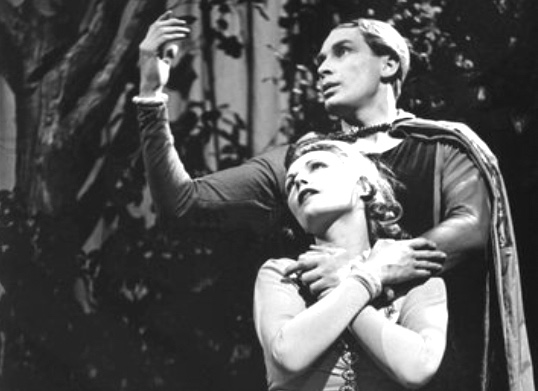
The whole of the afternoon schedule on Monday 24 January 1938 was occupied by a presentation of act 2 of Richard Wagner’s music drama Tristan and Isolde. In the evening this was played again, in perhaps the most uncompromising cultural transmission of the pre-war period. Inevitably, the producer responsible was the innovative and uncompromising modernist Dallas Bower. The reaction was, well, mixed.
John Wyver writes: As I am on holiday this week I am taking the chance to post again a number of my favourite OTDs from the 122 published to date…
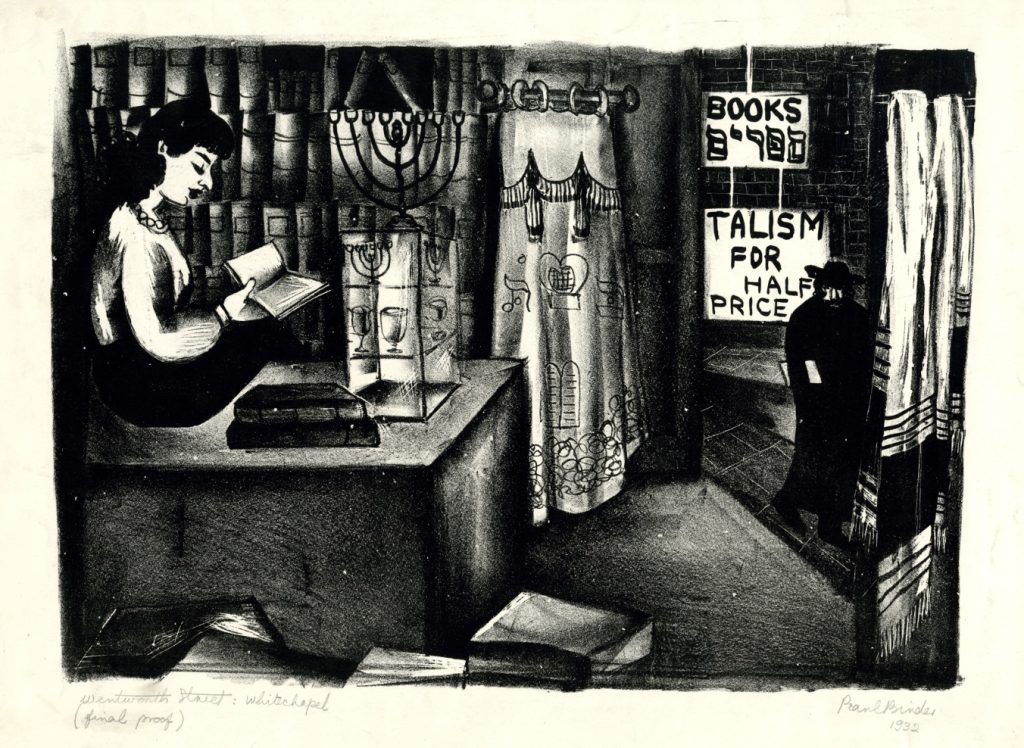
The evening of Thursday 9 February 1939 saw a 40-minute edition of Contrasts, which was a catch-all title for juxtapositions of variety artists from differing traditions. This was a particularly eclectic line-up featuring dancers from Java and Bali performing Japanese classical dance; singers Harry van Oss and Naya Grecia; Dutch-born writer and actor Selma van Diaz performing ‘The Lady’s Maid’ monologue-as-short-story by Katherine Mansfield; and dances by Pola Nirenska, a Polish Jewish refugee who had been a pupil of modernist dance pioneer Mary Wigman.
This modernist melange was assembled by the artist Pearl Binder, who was not only a co-founder in 1933 of the radical Artists International Association (currently the focus of a fascinating archive display at Tate Britain), but also an Alexandra Palace regular providing illustrations for television talks about fashion and other subjects.
John Wyver writes: As I am on holiday this week, I am presenting again some of my favourite OTD posts, exactly as they first appeared…
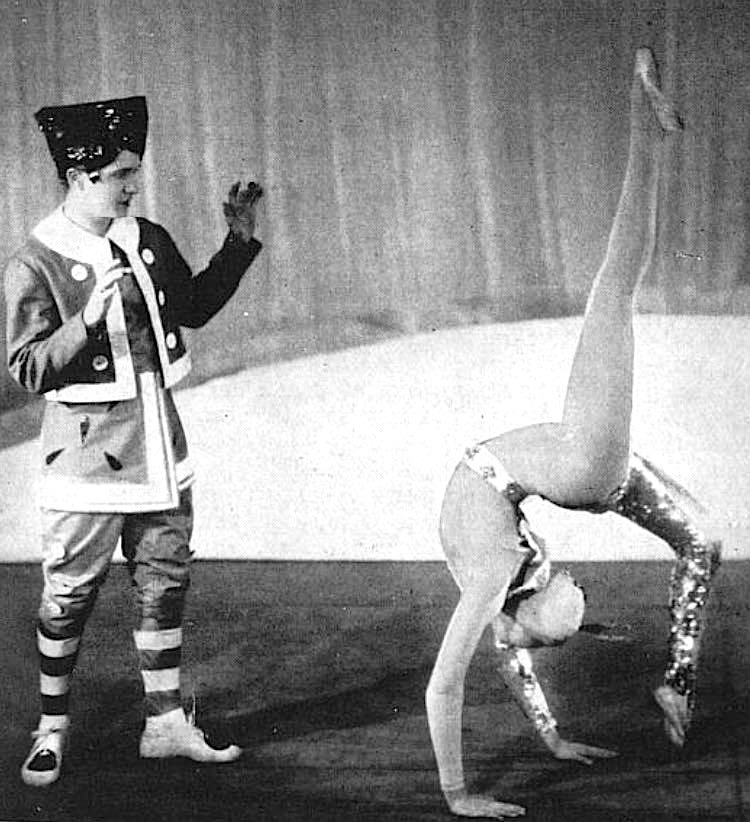
Today’s post is a melancholy little tale of a short, vibrant life in which early television played just a small part. The subject is dancer and acrobat Laurie Devine (above, right), who appeared performing ‘various dances’ on the late-night half-hour 30-line transmission from Studio BB at Broadcasting House on Wednesday 22 February 1933.
That Wednesday night was one of at least 40 documented appearances by Ms Devine on 30-line television, on occasions dancing with her brother Tom, and with a final bow on 4 September 1935. When she returned to work in her native Australia in August of the following year, she claimed ‘to have taken part in more television broadcasts than anyone else in the world’. Less than four months later, however, having had to withdraw from a hit revue in Sydney, she was dead from pneumonia.