4th August 2014
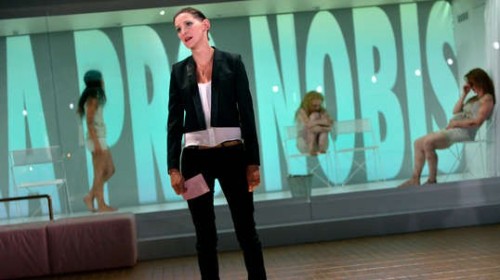
Tomorrow, at the final preview before Wednesday’s press night, I get to see a production that I have been looking forward to for simply ages. Maria Aberg is directing John Webster’s The White Devil in the Royal Shakespeare Company’s Swan Theatre in Stratford. So that’s one of the very greatest of all plays by one of the very smartest directors around in perhaps the best auditorium in the world. Excited, moi?
If you need an introduction to the play, the Wikipedia entry is a decent place to start. But in terms of this production, see this interview with Maria Aberg:
There is also a very good WhatsOnStage.com interview with Maria. Her production for the RSC of King John in The Swan in 2012 (go here for Peter Kirwan’s review for the Bardathon) is one of the most exciting and challenging productions of Shakespeare I’ve seen in recent years – and I have every hope that her take on Webster is as thrilling. Certainly the great set of production photographs by Keith Pattison that the RSC has just posted online suggests that this will be the case.
The RSC and Dusthouse have made a striking trailer for the show which comes with its parental advisory warning: ‘This trailer contains scenes that some viewers may find disturbing’.
More later in the week…
Image: Laura Elphinstone as Flaminio in The White Devil. Photo by Keith Pattison, courtesy Royal Shakespeare Company.
3rd August 2014

An offering including several compelling pieces about copyright (honest!). Apologies as usual to all those from whom I’ve taken tips without credit.
• What’s left to discover today? Plenty: David Bordwell as richly interesting as ever.
• L.A Plays Itself is finally coming to home video. Here’s how: Glenn Whipp for the Los Angeles Times on ‘fair use’, film clips and Thom Andersen’s 2003 video essay about the city in cinema.
• At least one real, athentic moment of humanity with Cameron Diaz: Alex Pappademas meets her for Grantland.
• Concrete nostalgia, Southmere Estate, Thamesmead: Andrea Klettner goes on a day trip for lovelondoncouncilhousing.com.
• Bullying and hypocrisy – Andy Coulson’s reign at the News of the World: more from Nick Davies’ book Hack Attack.
• Crime fiction: extraordinary journalism from Nicholas Schmidle for The New Yorker.
• Gloomy pageant: Jeremy Harding on David Marquand’s new book about Britain, for London Review of Books.
• How did Bob Dylan get so weird?: a long read from Bill Wyman for Vulture.
• Ira Glass can’t relate to Shakespeare? Good: Holger Syme at disposito.
• The Nether: not exactly a review (he hasn’t seen the show) but reflections on theatre and the virtual from Andrew Haydon at Postcards from the Gods.
• The death of privacy: Alex Preston for the Observer.
• Ways of knowing: Robert Pippin on the humanities in American universities.
• The ephemeral ebook library: fascinating piece from Sharon Farb and Sean Johnson Andrews about the ‘first sale doctrine’ and ebooks.
• The networked catalog: Matt Miller for the New York Public Library.
• Lawsuit filed to prove Happy Birthday is in the public domain; demands Warner pay back millions of license fees: … and another compelling piece about copyright, from Mike Masnick at TechDirt.
• Victory – format shifting and parody clear last hurdle: more on recent developments over copyright, from Javier Ruiz at the Open Rights Group.
• The American room: Paul Ford on another way of looking at the spaces of the States on YouTube.
• How the Commonwealth Games is helping define the future of broadcasting: Brendon Crowther at the BBC R&D blog…
• The network behind the R&D 2014 Commonwealth Games showcase: and this from the same blog but from Martin Nicholson.
Image: Summer Day (detail), Johan Hendrik Weissenbruch, c. 1870 – c. 1903, with thanks to the Rijksmuseum’s wonderful policy of allowing images from its collection to be shared and used. As for the choice… why not?
2nd August 2014
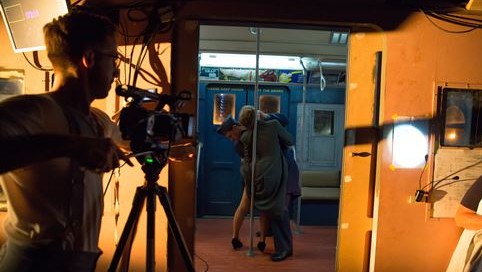
To Cinema 1 at the Barbican for a live stream of The Forbidden Zone from the Salzburg Festival. Written by Duncan Macmillan and directed by Katie Mitchell, this new work premiered last Wednesday, plays Salzburg for another week and then goes to the Schaubuhne in Berlin. (A download of the programme in English is available here.) For one night only, and to one screen only, this innovative relay came to the Barbican as a co-commission with 14-18 NOW, WW1 Centenary Art Commissions. Surprising and fascinating it most certainly was, as well as emotionally engaging.
As background, this video from 59 Productions includes rehearsal footage and an interview with Katie Mitchell:
read more »
29th July 2014
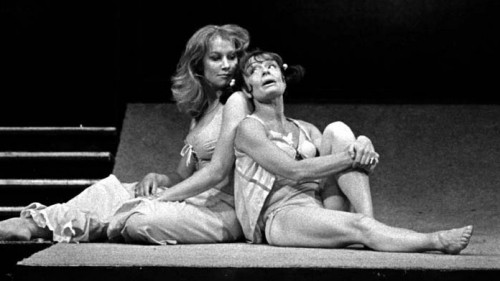
Today I went, by appointment, to what they call a carrel in Rare Books and Manuscripts at The British Library. My carrel was a little room with a glass wall, rather fierce air-conditioning and some headphones. An immensely helpful librarian explained that I should put on the headphones and she would start the playback I had requested. There had been, she admitted, a bit of a panic earlier when they discovered that the tape had been recorded more than forty years ago on a reel-to-reel machine at a very eccentric speed. But all was well. So I closed my eyes, opened my ears, and was transported back to the Aldwych Theatre on the evening of 2 January 1971. Playing out in my head was an ‘as live’ recording of The Two Gentlemen of Verona. read more »
28th July 2014
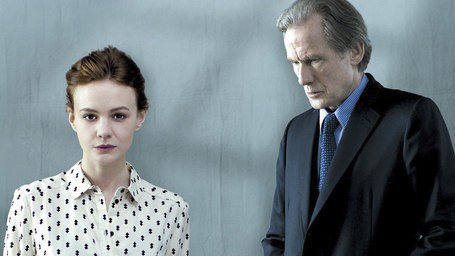
Discussions about adapting stage plays for the screen, whether broadcast live or recorded ‘as live’, have moved on apace over the past couple of months. There have also been a number of further cinema broadcasts, including a successful presentation by NT Live of David Hare’s Skylight, of which Encore screenings are continuing. Below are some recent readings about this question.
• Let’s stop pretending that theatre can’t be captured on screen: this Michael Billington Guardian piece (18 June 2014) is something of a game-changer:
I went this week to a preview of Digital Theatre‘s screen version of Richard Eyre’s Almeida production of Ibsen’s Ghosts: I can only say that it offered an experience comparable to that I had in the theatre… while I remain an evangelist for live theatre, I think it’s time we stopped pretending that it offers an unreproducible event. A theatre performance can now be disseminated worldwide with astonishing fidelity.
• Sir Alan Ayckbourn voices fears over theatre screenings: the playwright offers a note of scepticism; from BBC online, 11 June 2014.
• NESTA research finds that National Theatre Live has no negative impact on regional theatre-going: outline from The Audience Agency on the research undertaken with NESTA; 25 June 2014.
• Research finds that National Theatre Live has no negative impact on regional theatre-going: this is NESTA’s press release; 24 June 2014…
• NESTA Working Paper 14/04: … and this is a download of the report in full.
• How live cinema screenings can help boost live arts audiences: Arts Council Chair Peter Bazalgette adds his gloss to the research; from the Independent, 30 July 2014.
• New work needs to be done before cinema broadcasts bring new audiences to opera: the focus is different, but this English Touring Opera research is also a valuable contribution to the debates; this is their 27 May 2014 blog piece…
• English Touring Opera – Opera in cinemas research: … and this is a download of the paper in full.
• The bitter taste of live screening: Elizabeth Freestone raises some important questions about live cinema broadcasts; from Arts Professional, 5 June 2014.
• Coney’s no island – could streamed theatre let audiences call the shots?: Andrew Haydon for the Guardian on Coney’s interactive theatre experiment Better than Life; 1 July 2014.
• Of Mice and Men to be National Theatre’s first live Broadway screening: meanwhile, NT Live is expanding its geographical reach to take in a New York show; this is the BBC’s 25 July news report. Screening dates for the ‘as live’ recording have still to be announced.
The next RSC Live from Stratford-upon-Avon cinema broadcast is Simon Godwin’s sparkling and totally delightful production of The Two Gentlemen of Verona on 3 September; details here.
26th July 2014

Welcome home – to sunshine, a much-neglected blog and more than 1,700 spam comments that need (rapid) reviewing. Here is a developing list of some of the things I’ve found interesting in the past few days since I have been back from a wonderful time in Italy. With apologies for not giving credit where it’s due for the pieces I didn’t discover myself.
• NOW THEN: a new batch of brilliance from Adam Curtis.
• The down and dirty history of TMZ: a completely compelling profile of the above by Anne Helen Petersen for Buzzfeed.
• The pervasive power of Rupert Murdoch: an extract from Hack Attack by Nick Davies, courtesy of the Guardian.
• ‘Hollywood Exiles in Europe’ – feeling alienated and anxious: Kenneth Turan for the Los Angeles Times on a UCLA season of movies made by those who driven away by the Red-baiting of the 1950s.
• Excerpt from Crying at the Movies: a section of Marion Sprengbether’s ‘film memoir’, published in 2002.
• Insomnia – unbearable lightness: Jonathan Romney for Criterion on the 1997 Norwegian thriller.
• Moonrise Kingdom – Wes in Wonderland: David Bordwell on current notions of auteurism as highlighted by Anderson’s film.
• Hollywood transformed: Tom Shone for the Financial Times on China and the contemporary cinema.
• Edinburgh 2014 – brain benders of the Black Box: Harriet Warman for Sight & Sound at the EFF showcase of experimental moving images.
• Andrew Dickson on Shakespeare in the Wild West: great podcast.
• The Nether “trailer”: a smart interactive experience for the show currently at the Royal Court.
• Mastersinger: Alex Ross profiles Joyce DiDonato for The New Yorker.
• The all-American expo that invaded Cold War Russia: Matt Novak at Paleo-future on the American National Exhibition in Moscow, July 1959.
• Prefab, post fab and just fab: John Grindrod visits Catford’s Excalibur Estate of post-war pre-fabs.
• No moral, no uplift, just a restless ‘click’: Holland Cotter at The New York Times on MoMA’s Garry Winogrand retrospective…
• In transit: … and a very fine Geoff Dyer piece on Winogrand from the London Review of Books archives.
• Musical gold: a fine Rebecca Mead New Yorker piece on investing in Stradivari.
• Brief lives: Luke McKernan on writing for the Oxford Dictionary of National Biography (which I’ve also been doing recently)
• At the crime scene: a remarkable London Review of Books essay by Adam Shatz on the sado-masochism (and more) of Alain Robbe-Grillet.
• What is the great American novel?: for TLS Sarah Graham reviews Lawrence Buell’s The Dream of the Great American Novel.
• Big air: The New Yorker‘s Ben McGrath at the X Games.
• BBC R&D at the Commonwealth Games 2014: the future of broadcasting is here – or, at least, it’s in Glasgow.
• Beyond digitisation – new possibilities in digital art history: James Cuno for Iris at The Getty.
• Citizen Bezos: Steve Coll on Amazon for The New York Review of Books.
• Understanding the participatory culture of the web – an interview with Henry Jenkins: … by Trevor Owens at a Library of Congress blog.
22nd June 2014
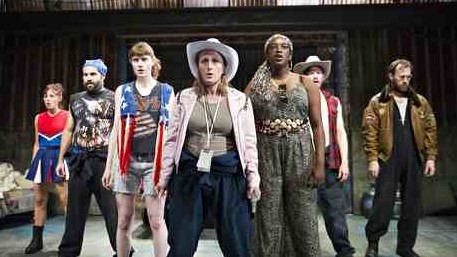
• From the Bard to Bart – how Mr Burns challenges our common culture: Mark Lawson at the Almeida (above, Tristram Kenton’s Guardian image of the production).
• Recovered, discovered and restored – DVDs, Blu-rays and a book: a round-up of recent releases by Kristin Thompson.
• Charles Barr on Ealing 13: the best writer on British film considers Network’s most recent release of rarities from the studio.
• The forgotten great theatres of London: Joe Carroll at the Londonist.
• ‘Peter Brook is an exceptional human being’: Rupert Christensen for the Telegraph.
• Life and death: John Grindrod on his parents and the demolition of Taberner House in Croydon.
• Save the Warburg library!: for The New York Review of Books, Anthony Grafton and Jeffery Hamburger.
• Think big. Build big. Sell big: Carol Vogel on Jeff Koons for The New York Times.
• Garry Winogrand, street photographer – a retrospective, in pictures: Jonathan Jones introduces a glorious selection.
• Beyond Pong – why digital art matters: an illustrated Guardian essay by James Bridle.
• Inside the color factory – my chat with a photo colorizer: Matt Novak interviews Dana Keller.
• The internet with a human face: Maciej Ceglowski’s talk from Tellerrand last month.
• Big Bang Data: site (in English) for an important exhibition in Barcelona.
• E-books vs paper?: Julian Baggini for the Financial Times.
• Inheritance: Ian Parker profiles Edward St Aubyn for The New Yorker.
• Paupers and richlings: Benjamin Kunkel on Thomas Piketty, from London Review of Books.
• The literature of the second gilded age: for LA Review of Books, Stephen Marche on Thomas Piketty and contemporary literature.
• Football considered as one of the arts: from Luke McKernan.
18th June 2014
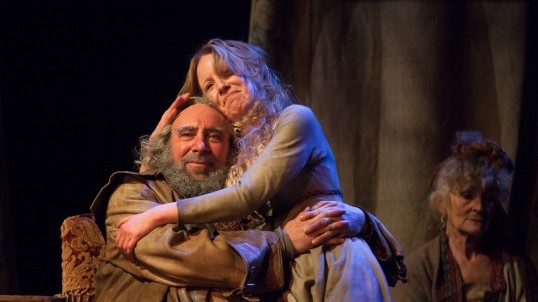
If it’s Wednesday, it must be the live broadcast day of the Royal Shakespeare Company’s Live from Stratford-upon-Avon broadcast of Henry IV Part II. We’re back at the Boar’s Head tavern, which is where Falstaff, Hal and the company acted out the banishment of the fat knight in Part I (below). Prepare to have your hearts broken tonight…
15th June 2014

• The Space: welcome!
• The 1940s are over, and Tarantino is still playing with the blocks: David Bordwell on Quentin Tarantino, Walt Disney, and Henry James.
• Are digital cameras changing the nature of movies?: part one (of three) from Andrew O’Hehir at Nautilus.
• Finding the method in the medieval theatre’s madness, from the Guardian.
• Interview – veteran theatre director Peter Brook: from the Financial Times.
• Director Maria Aberg: ‘We have a responsibility to consider gender-blind casting’: The White Devil director interviewed at What’sOnStage.
• She speaks: Dan Hutton in the RSC rehearsal room for Midsummer Mischief.
• Going live – Philip Auslander and the theatre of liveness: Erin Sullivan at Digital Shakespeares.
• On criticism – the Guardian years: pieces on theatre criticism at Postcards from the Gods.
• Inheritance: Ian Parker profiles Edward St Aubyn, The New Yorker.
• Reading – the struggle: Tim Parks, New York Review of Books.
• On Margate sands: Luke McKernan goes back to Margate to see Mondrian.
• The urge to strangle: T J Clark on Matise, London Review of Books.
• Nicholas Serota on Cy Twombly’s gift to Tate: from the Financial Times.
• The Ladybird book of postwar rebuilding: from Dirty Modern Scoundrels.
• How state of the art engineering is revolutionising the museum experience worldwide: from Architizer.
• Jennifer in paradise: the world’s first Photoshopped image, from the Guardian.
• Inaugural lecture – A Decade in Digital Humanities: from Melissa Terras.
• A world digital library is coming true!: Robert Darnton for The New York Review of Books.
• The trials of Entertainment Weekly: one magazine’s 24 years of corporate torture: Anne Helen Petersen for The Awl.
• All of Bach: every week you can find here a new recording of one of Bach’s 1080 works.
• Yesterday: a new Haruki Murakami story, courtesy of The New Yorker.
PS. The above is a try-out for a new Sunday Links format, stripped-down, lacking credits and thanks, but perhaps sustainable. We’ll see.
12th June 2014
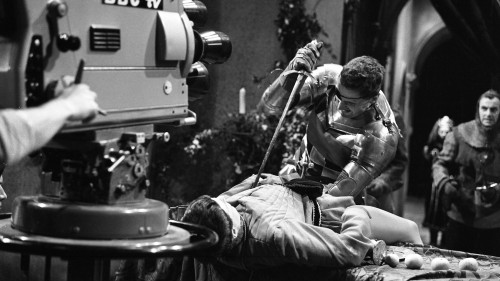
Regular readers will know that I am involved with the Screen Plays research project, based at the University of Westminster and generously funded by the Arts and Humanities Research Council. The project is documenting the history of theatre plays on British television and early next year will publish a database of information about all three thousand-plus television productions of plays originally written for the theatre. Screen Plays has just announced the call for proposals for its concluding conference in London on 20 February 2015, and that seemed like an appropriate prompt for a handful of links about the topic.
• The Screen Plays blog
• Call for proposals – Theatre and Television: Adaptation, Production, Performance
Last month Screen Plays organised a successful BFI Southbank season, Edwardian Drama on the Small Screen, which was accompanied by a half-day symposium.
• Introduction to the season
• My Guardian article about television productions of the plays of Bernard Shaw (above).
• Dr Billy Smart’s symposium keynote, Edwardian values, 1970s television: John Galsworthy on BBC1
• Notes from the symposium
Associated with the Screen Plays project is the Illuminations DVD release of the 1960 BBC cycle of Shakespeare History plays, An Age of Kings (above). Details of the DVD box set are here, the 10 5-star Amazon readers’ reviews are here, and this is one of the trailers that we have produced for the release: