
Comrades in Eastbourne
John Wyver writes: I was today ridiculously late in visiting the Towner Eastbourne’s revelatory Comrades in Art: Artists Against Fascism exhibition — it has been open since May and now you have only until Sunday to catch it. Which, needless to say, you should, in part because it features a host of fascinating and little-known artworks, as well as a wealth of associated contextual photos, diaries, catalogues, posters and the like, but also because it lays out an alternative history of mid-century British art to that accepted as the mainstream. And then there’s its telling of a hopeful and inspiring tale of engaged artists standing against fascism. So perhaps there is a lesson or two there for us.
Developed from Andy Friend’s exceptional book Comrades in Art: Artists Against Fascism 1933-1943, published by Thames & Hudson last autumn in a gloriously illustrated edition, the show relates the story of the Artists’ International; Association (AIA), and highlights the work of eleven of its key members: Peggy Angus, Pearl Binder, James Boswell, James Fitton, Margaret Fitton, James Holland, Percy Horton, Peter Laszlo Peri, Betty Rea, Cliff Rowe and Nan Youngman.
As the Towner’s website details:
The AIA was established in 1933 to unify artists against fascism and war, rallying comrades across Europe during the Spanish Civil War and efforts to overcome the rise of fascist General Francisco Franco. The artists involved worked across a range of styles, and the Association also focused on wider access to art, through affordable lithograph prints and mural commissions.
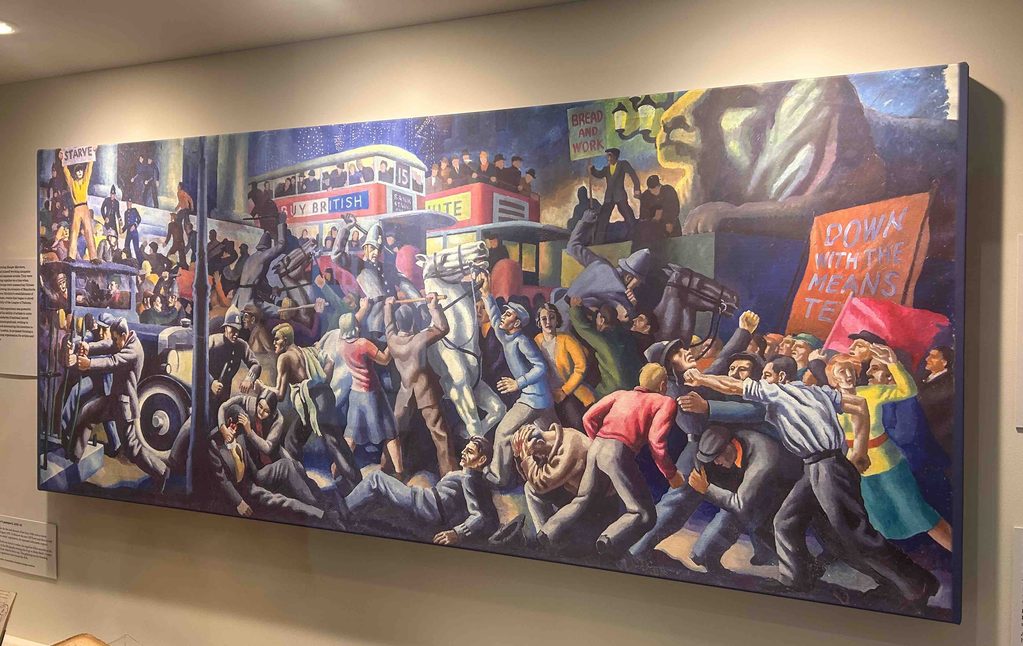
The densely hung exhibition, co-curated by Friend and the Towner’s Karen Taylor, begins with a room of portraits of these figures, before confronting the visitor with Cliff Rowe’s remarkable ‘The struggle between the unemployed and the police forces’, 1933, or rather with a half-size facsimile of the painting (above). At one point it had been hoped to feature the original, which astonishingly is in the Collection Borys Voznytskyi, Lviv National Art Gallery, Ukraine, but even as a facsimile it has considerable force.
In 1933 Rowe was in Moscow, where he was asked to create an artwork reflecting the class-struggle in his own country, In locally available copies of The Daily Worker Rowe learned of ten days of street clashes between the police and two thousand hunger marches, and he for his painting he brought combined scenes in Hyde Park, St George’s Circus, Westminster and Camden in one confrontation set in Trafalgar Square. (The violent response of the police led to the foundation of the National Council for Civil Liberties.)
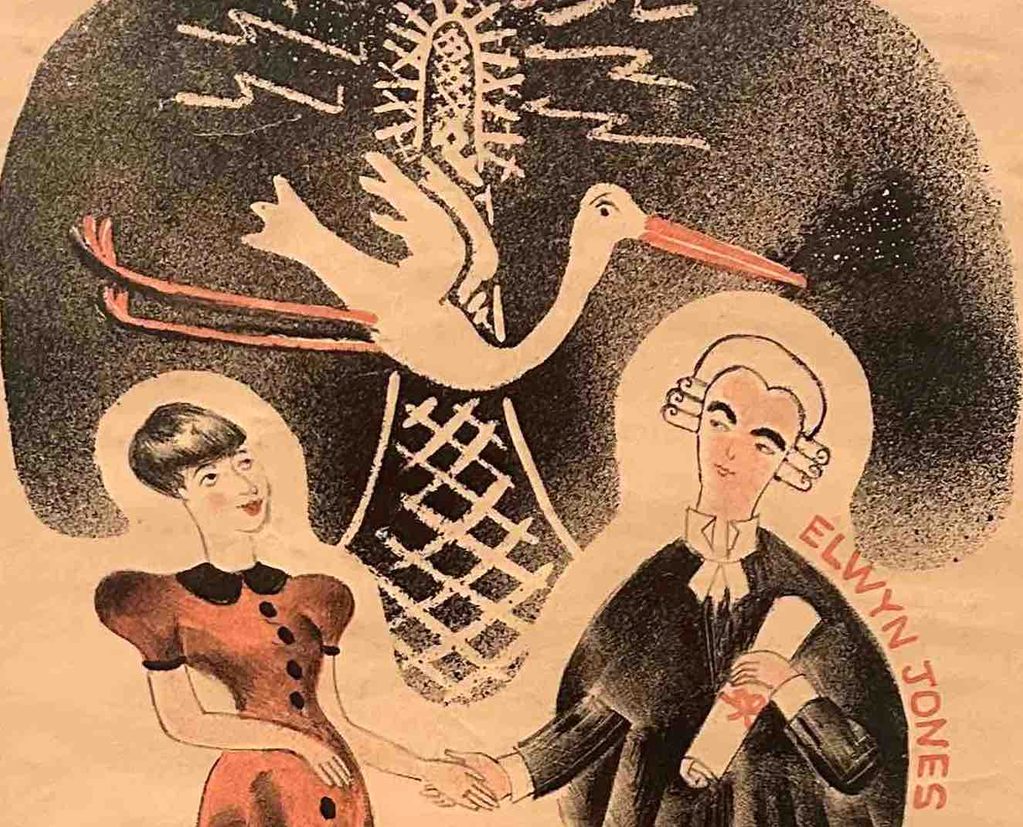
Rowe is a central figure in the show, as is Pearl Binder, represented here by a generous and glorious selection of drawings, lithographs, paintings and cards, like the one below (a detail of which is the header image). This is a two-colour lithograph, copies of which were sent to friends at Christmas 1937. The pregnant artist holds hands with her new (second) husband, barrister Frederick Elwyn-Jones, who, as the wall label notes, ‘later was a prosecutor at Nuremberg, a Labour MP for 29 years, Britain’s Attorney General in the 1960s and its Lord Chancellor in the 1970s.’
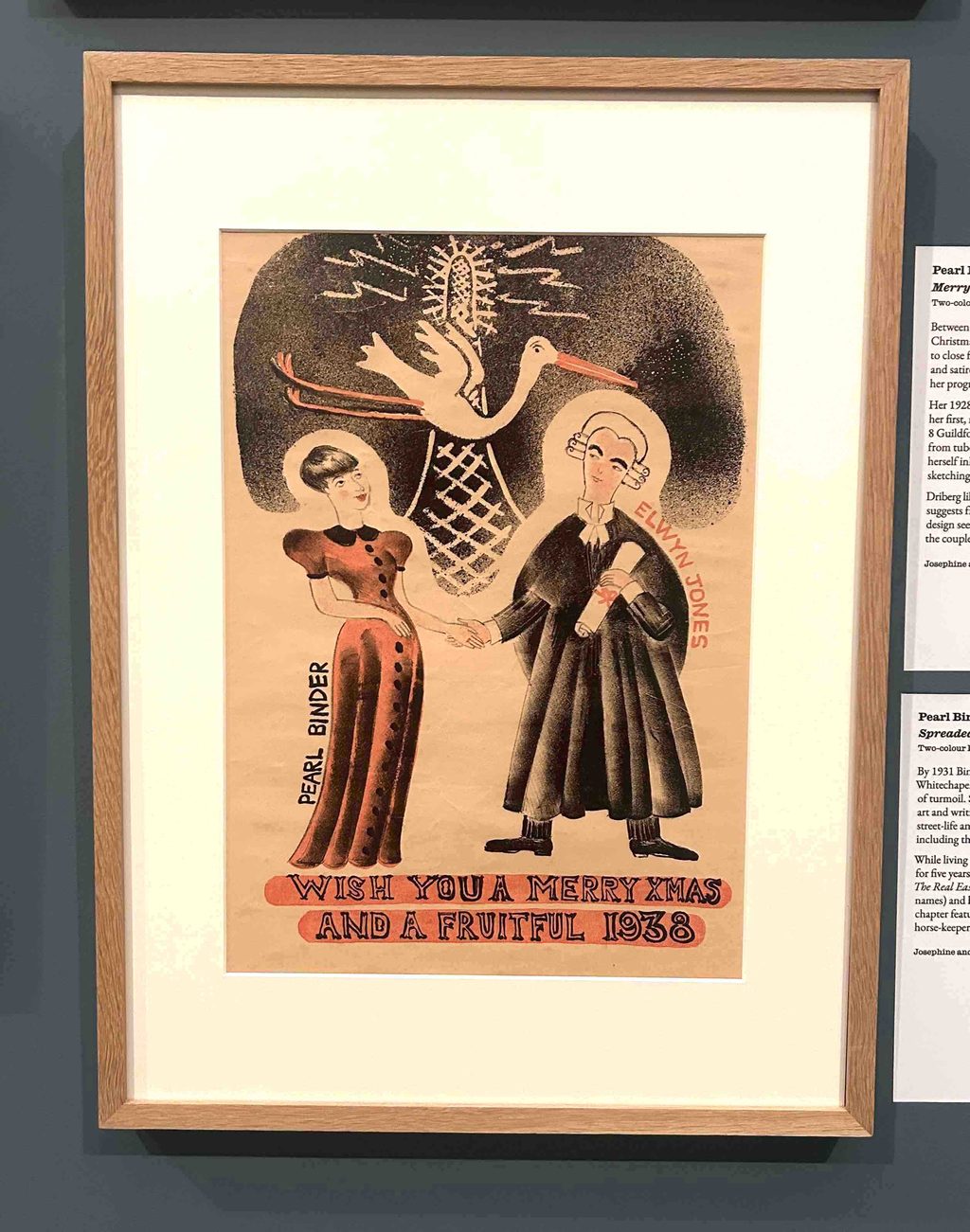
The stork bringing the baby to the happy couple is flying past the transmitter mast of Alexandra Palace, where Binder was by then regularly contributing to programmes for the ‘high-definition’ BBC television service which had started in November 1936. I am fascinated by Binder, who I encountered during my research for Magic Rays of Light: The Early Years of Television in Britain, where I wrote:
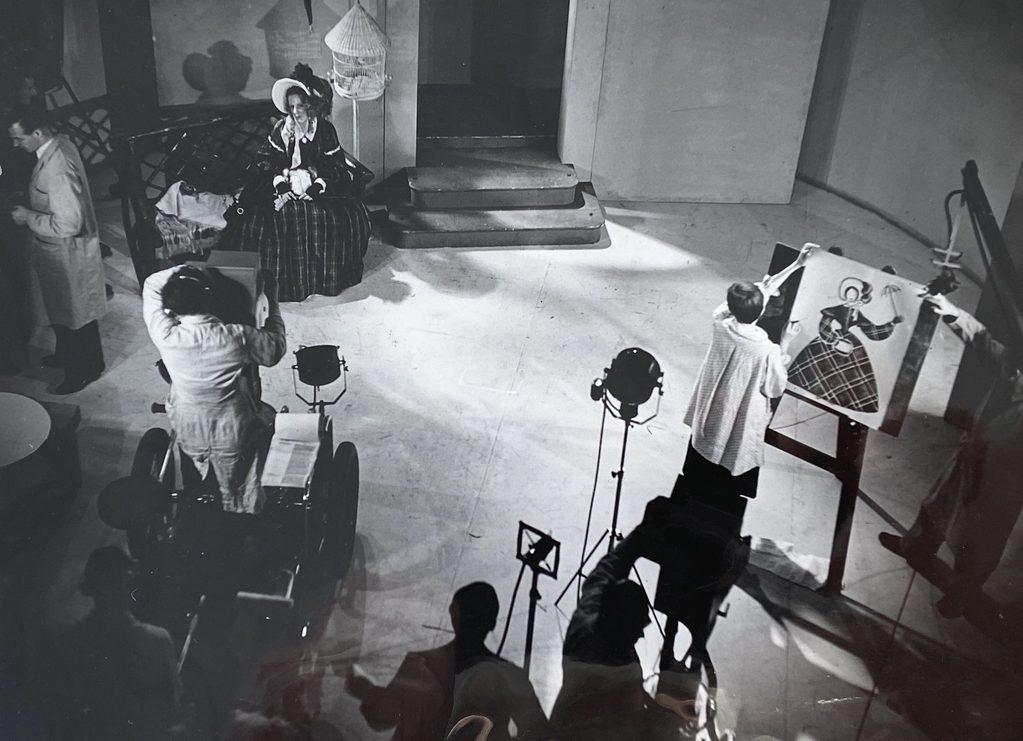
In the autumn [of 1937] the series Clothes-Line added both a historical dimension with vintage dresses and an innovative presentation style. As the models paraded, Pearl Binder drew at an easel accompanied by the recitation of verses written for the occasion by James Laver. ‘When it was over,’ The Listener critic wrote, ‘we were left wondering quite what we had just seen and heard — a poetry-reading, a lightning-artist display, a mannequin parade, or what? Actually it was of course no one of these things but a new sort of television feature borrowing in part from the technique of all three.’
Here she is at work on that programme:
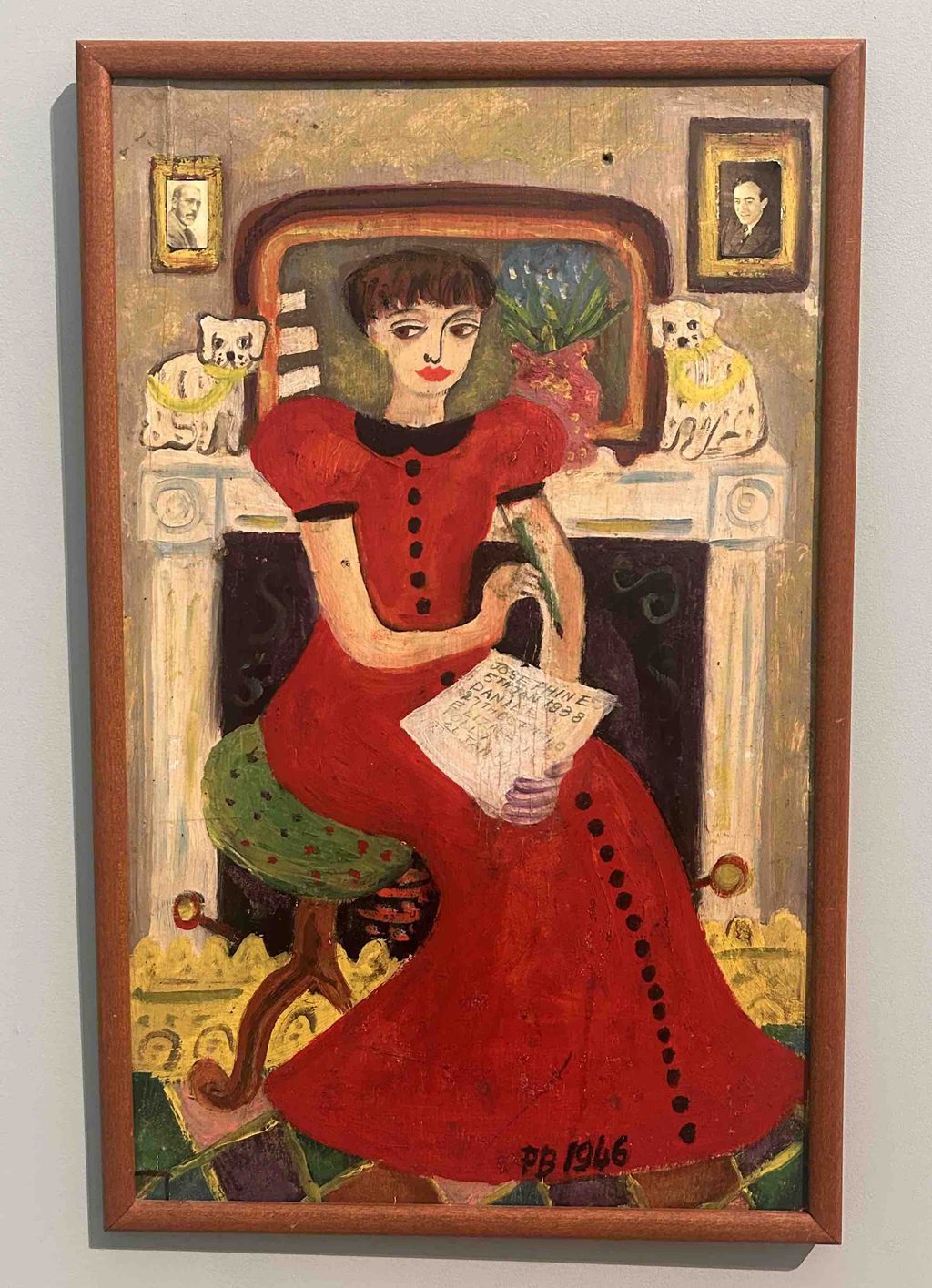
And here she is in the wonderful ‘Self-portrait with husbands’, 1946, painted on a wardrobe panel in her home, with collaged photographs, and included in the Towner show:
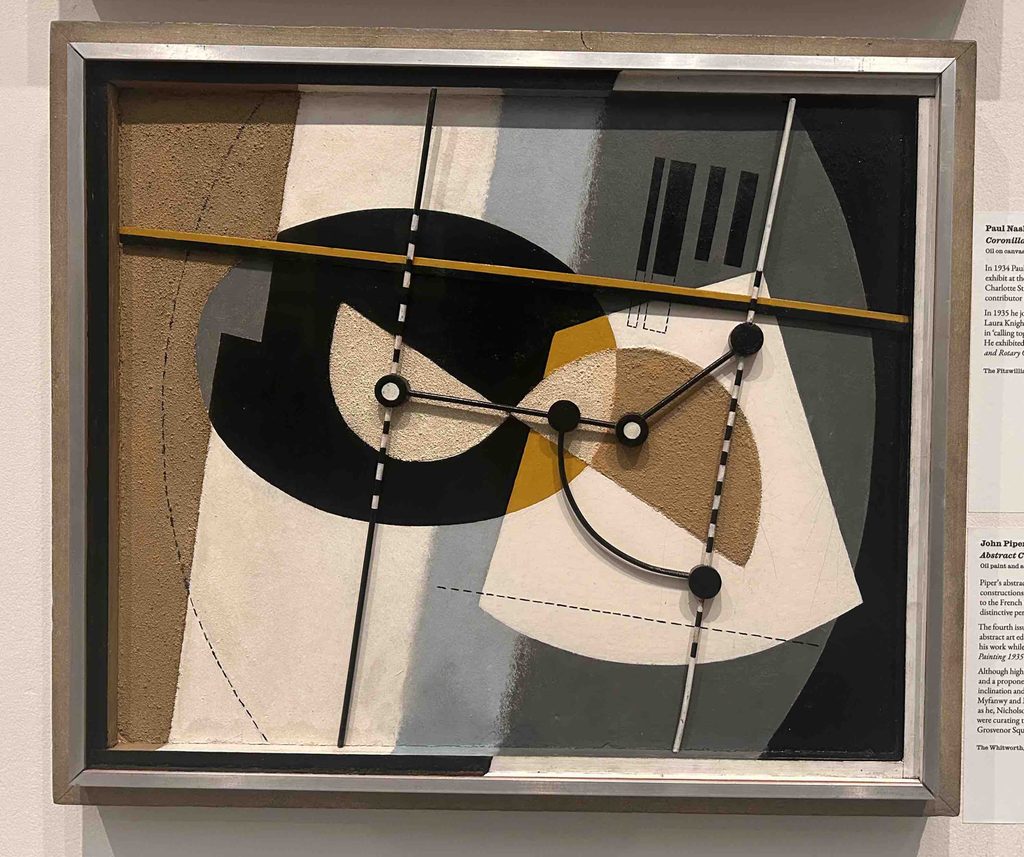
There is so much else in the show that is of interest, with many of the more familiar names of mid-century British modernism represented by significant works, including John Piper (see his ‘Abstract construction’, 1934, below), Paul Nash, Barbara Hepworth and Peter Lanyon, but the figures who are mostly celebrated include Betty Rea, Nan Youngman, Peter Laszlo Peri and Jaems Boswell.
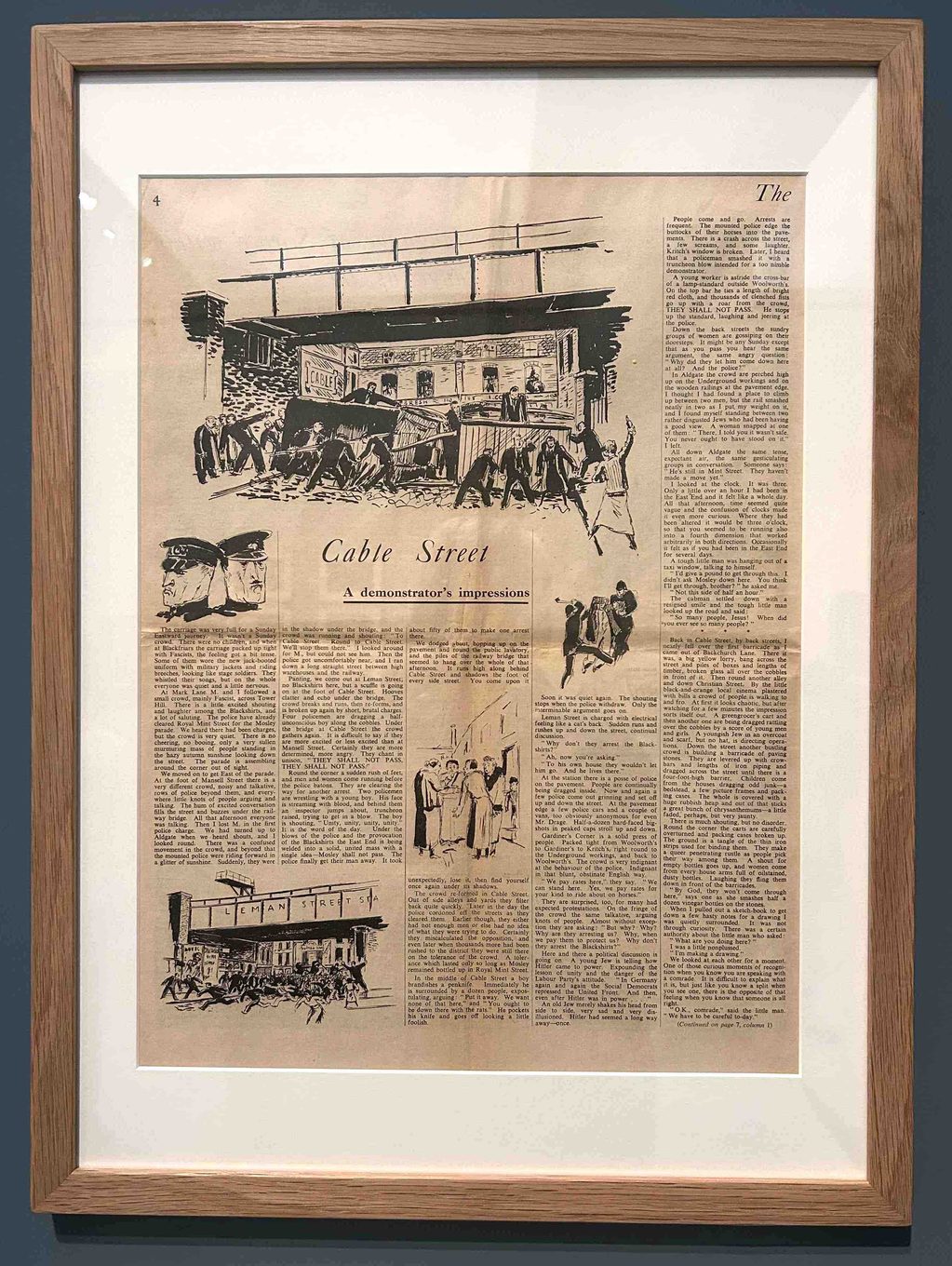
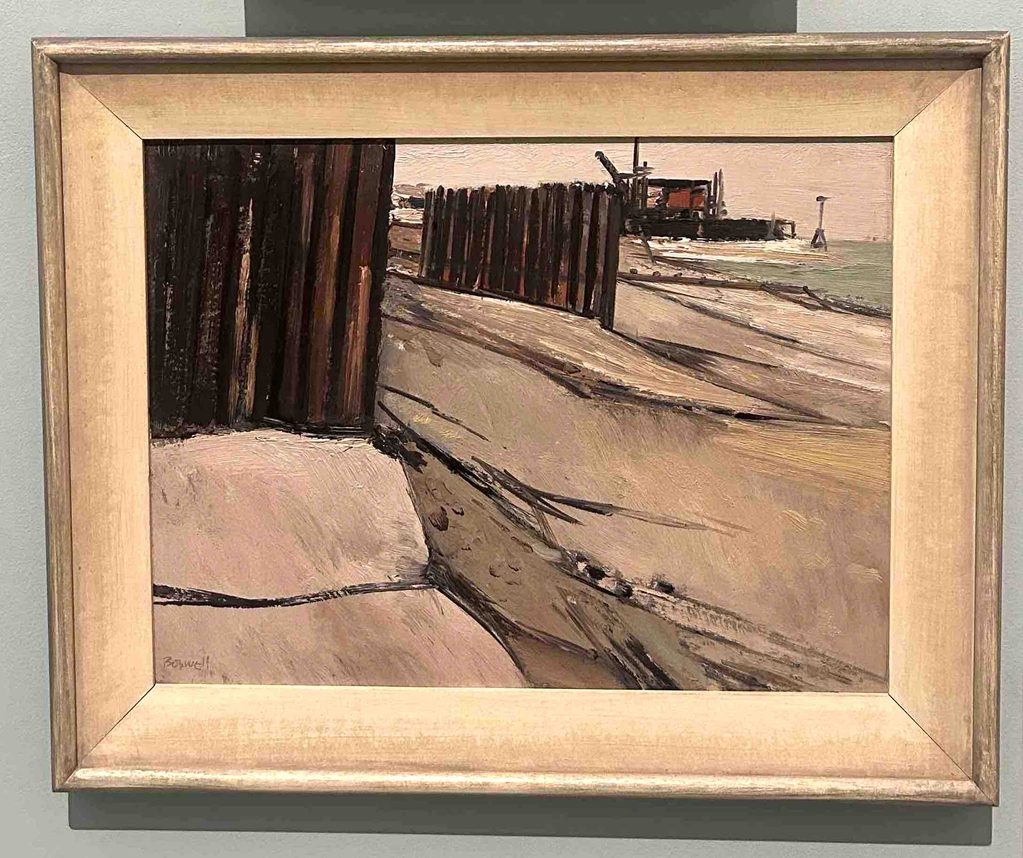
Boswell is an especially fascinating figure, and his work runs right through the show, from his impressions of the anti-fascist demonstration in Cable Street on 4 October 1936, drawn for the Lawrence & Wishart internal newspaper The Eye, through to ‘Cold shore’, 1970, painted the year before he died.’
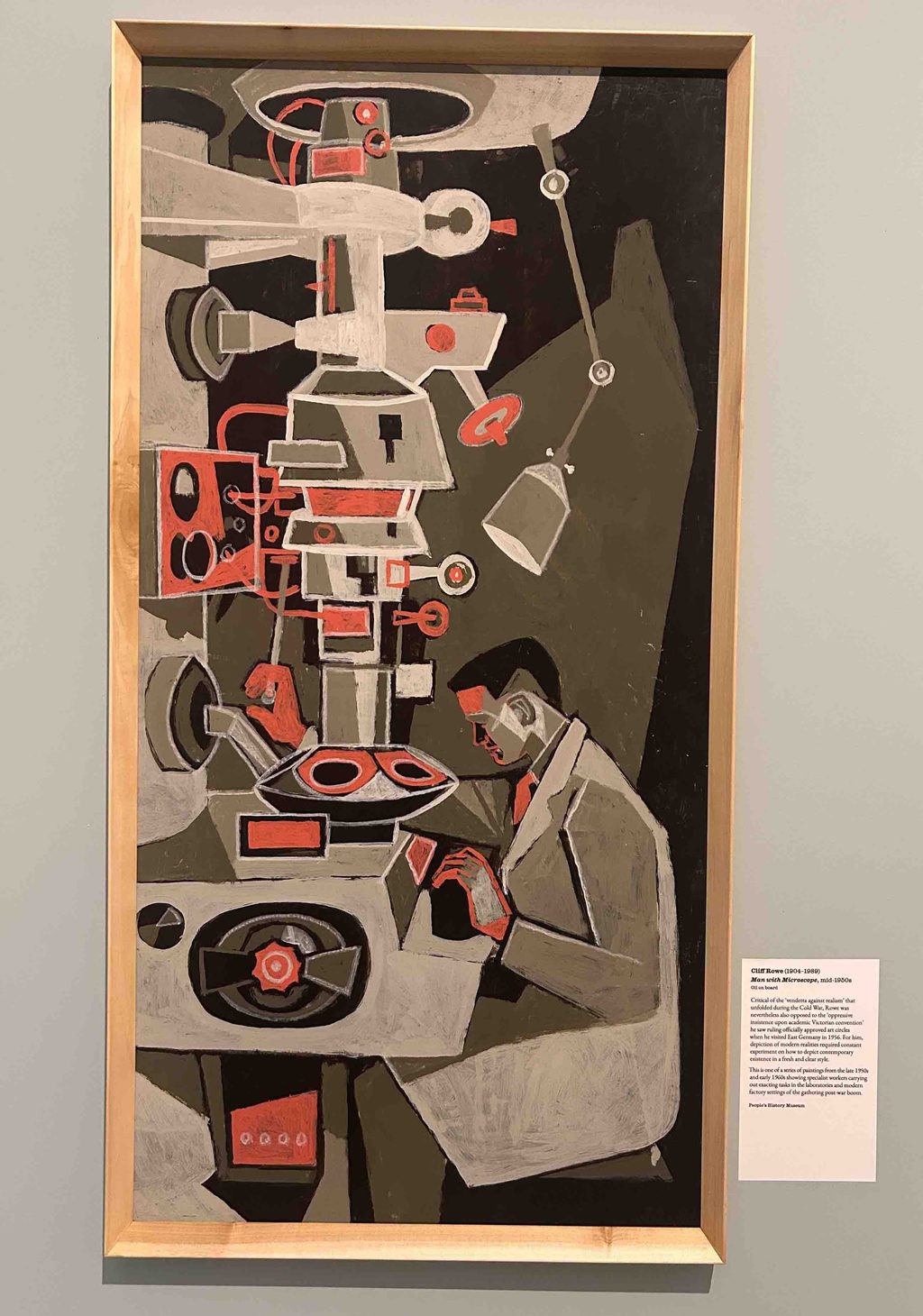
Friend’s book more or less finishes in the middle of the Second World War, but the exhibition takes the story forward, through the years of reconstruction and into the 1950s and 1960s. Which is all to the good, since there is much of interest from the post-war years, including this further work by Cliff Rowe, ‘Man with microscope’, from the mid-1950s. The wall label is informative:
Critical of the ‘vendetta against realism’ that unfolded during the Cold War, Rowe was nevertheless also opposed to the ‘oppressive insistence upon academic Victorian convention’ he saw ruling officially approved art circles when he visited East Germany in 1956. For him, depiction of modern realities required constant experiment on how to depict contemporary existence in a fresh and clear style.
In sum, as I say, the show demonstrates how narrow is the ‘official’ history of mid-century British art, and that there was a major strain of engaged social realism, at times tinged with Surrealism, that paralleled the better-known story of modernist abstraction. Interestingly, Julia Bailey makes a similar argument about art in the United States in her recent book Painting Paranoia: Cold War Art and Anti-Communism from University of Illinois Press; see this New Books Network podcast for more.
I sincerely hope that the show contributes significantly to a rethinking of twentieth-century British art history, and that major single-artist shows are devoted to many of the key figures, perhaps beginning with Pearl Binder.
For other responses, see ‘The British artists who battled the Nazis with paint’ by Evgenia Siokos for the Telegraph; Joe Lloyd’s review for Studio International; and ‘The story of British antifascist art’ by John Quin for ArtReview. To get a sense of the hang, and to hear Andy Friend speak about the AIA and the exhibition, take a look at this Towner video:
Finally, here is an hour-plus presentation by Andy Friend about his book and the AIA made at a Courtauld Research Forum last autumn:
Leave a Reply