
The Sunday dozen
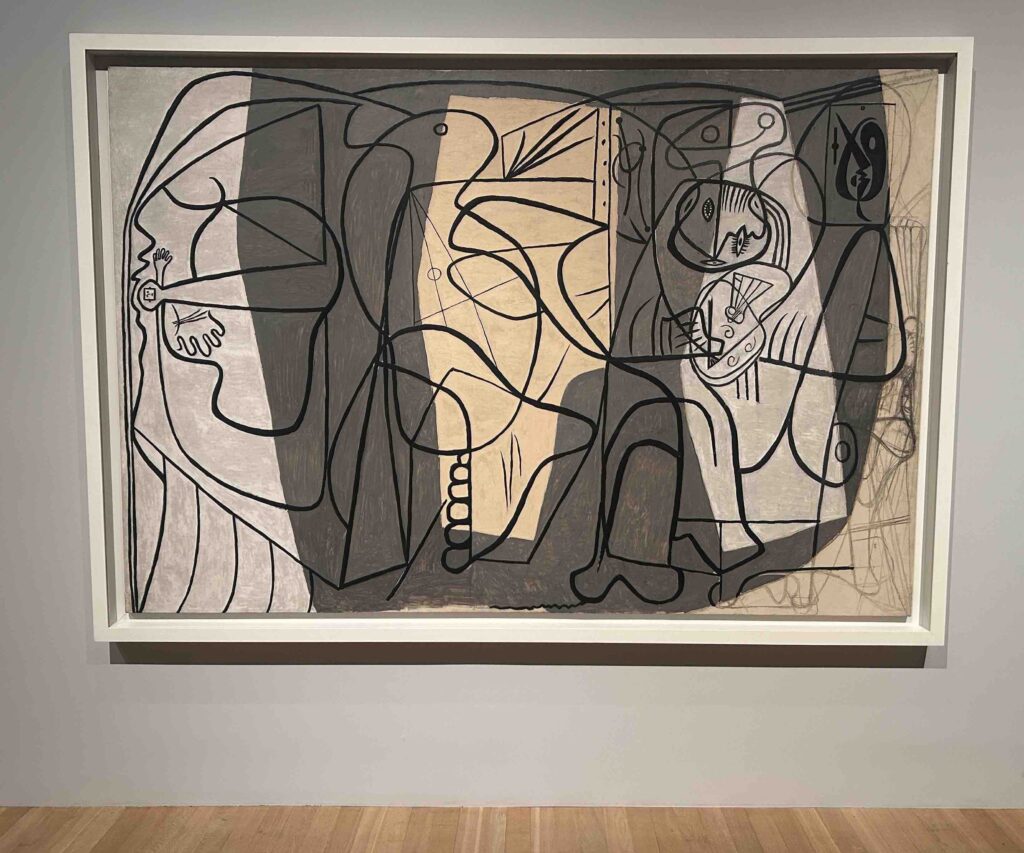
John Wyver writes: the week’s recommendations of articles and audio that I have found interesting and useful and enriching over the past week. Among my recent cultural highlights was Tate Modern’s Theatre Picasso exhibition (on until 12 April), which features the header image, the master’s extraordinary ‘The Painter and his Model’, 1926.
• First…
• The weirdness of the archive, the possibilities of the present: for Los Angeles Review of Books, Maggie Hennefeld celebrates, brilliantly, the ‘resurgent movement to preserve, restore, and contextualize vital works of feminist filmmaking’.
• “People crave being in the dark together”: Bill Morrison looks back on Decasia and the shift to digital memory: for BFI Georgia Korossi reports from the Thessaloniki Documentary Festival and speaks with the filmmaker who engages so brilliantly with the archive:
I’ve spent a career rescuing images people otherwise wouldn’t see, and now I’m trying to rescue images people don’t see because there are so many of them, because they’re restricted, and because the government tells us not to look or claims they mean something other than what they show. It’s a different type of archive, producing millions of images every day, and creating its own obsolescence simply because we don’t see them.
• Planet of the tapes: a conversation with Alex Ross Perry: for Criterion, Clyde Folley speaks with the director of the essay film Videoheaven (2025) about the impact of VHS, the first home video format.
• The Sinners movie syllabus: with Ryan Coogler’s great movie doing well (but arguably not well enough) at the Oscars, here is the exceptional resource of relevant readings compiled by Jemar Tisby and Keisha N. Blain for Black Perspectives.
• A Hail Mary for Earth, built on solid science: I’m really looking forward to Project Hail Mary at BFI Imax on Tuesday, and this New York Times interview [gift link], conducted by Katrina Miller, with Andy Weir, writer of the 2021 novel on which it is based, is the perfect introduction; plus, here’s the terrific trailer:
• In Our Time: Dadaism: I definitely do not celebrate sufficiently often BBC Radio 4’s strand, which has settled down nicely with new host Misha Glenny; here he speaks about the early 20th century art movement and its ideas with the peerless art historian Dawn Ades, Stephen Forcer of the University of Glasgow, Ruth Hemus of Royal Holloway, University of London.
• The New Museum reopens, asking ‘What is human?’: Jason Farago for The New York Times [gift link] marks a significant addition to Manhattan’s cultural scene and hymns
a first show of true ambition: “New Humans,” a showcase of more than 150 artists who have defended, abandoned or reimagined humankind as modern technologies rumbled our species’ self-definition.
• The Revolutionists – The Story of the Extremists Who Hijacked the 1970s: I have just finished reading Jason Burke’s extraordinary (and long) history of international terrorism that draws together so many significant strands from radical left politics and Islamism; this New Books Network audio interview with the author by Rebekah Buchanan is a very good way in.
• Did you know music streaming has roots in Pittsburgh?: Zack Furness’ remarkable slice of media archaeology, about the Telephone Music Service, is from 2019, but thanks to Bluesky I was delighted to find it this past week.
• London’s Imperial statues, Black Lives Matter and the culture war: historian Alan Lester’s walking tour of ‘men on pedestals who made their reputations, careers and fortunes exploiting people of colour in the British Empire’ was first published in April 2021, but I only came across it this week – and needless to say it retains its relevance and power.
• What was Doge? How Elon Musk tried to gamify government: a terrific Guardian Long Read by Ben Tarnoff and Quinn Slobodian (it’s an extract from their new book).
• The intelligence monopoly Is over. Creating a God’s eye view of the Iran strikes: from three weeks back, buut sadly just as relevant now, this is a truly extraordinary account by Bilawal Sidhu for their Map the World blog of how they created
a full 4D reconstruction of Operation Epic Fury — from the military and commercial satellites overhead to the cascading airspace shutdowns across the Gulf. Replayable, scrubbable, minute by minute on a 3D globe. And I did it over the weekend. By myself.
• They Would Not Dream of Flowers: translating through the Tehran blackout: a moving and beautiful essay by Miaad Banki for Public Books about working in impossible circumstances with the words of Fernanda Trías.
• And finally…: this week Laurie Spiegel published ‘In Memory of Éliane Radigue (1932–2026)’, a short tribute to the influential musician and composer who can be seen at work in this fine short documentary:
Leave a Reply