6th August 2025
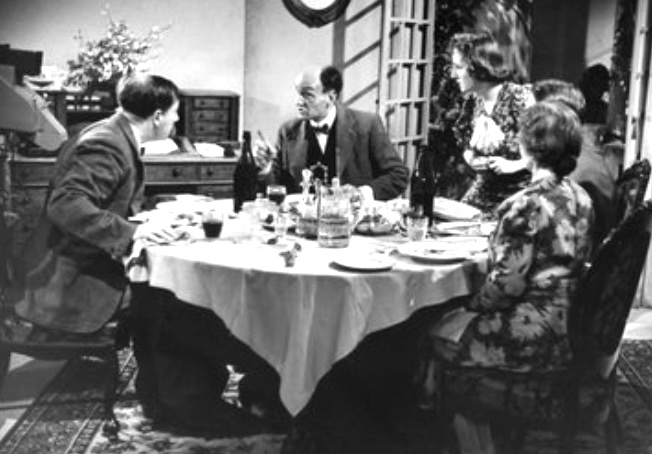
John Wyver writes: The evening of the next day was to be devoted to the Russian ballet, and so the week’s headline drama was played on Saturday 6 August 1938, rather than the traditional Sabbath. The play was J.B. Priestley’s comedy-drama from 1933, Laburnum Grove. Michael Barry adapted and produced, with a fine cast that included Maurice Denham, Rosemary Lomax, Kitty de Legh, Charles Victor and Susan Richards.
‘E.H.R.’ for the Observer noted that the play had previously been given on radio, and that this production
showed how much more enjoyable is a play when it can be seen as well as heard.
read more »
5th August 2025
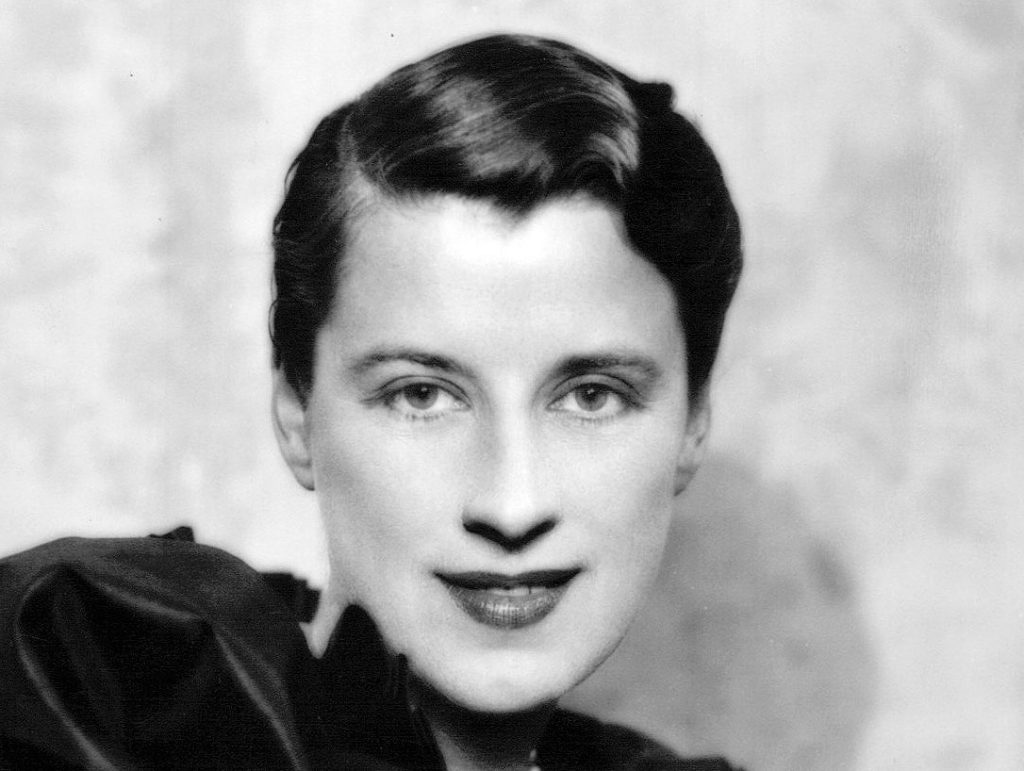
John Wyver writes: Nearly three years on from the first 405-line broadcasts from Alexandra Palace to Radiolympia, the levels of creative ambition and achievement were exceptionally high. The producers were creating innovative drama, mounting complex OBs and, as yesterday’s post suggested, developing new forms like the studio documentary. But inevitably there were days when it was clearly a stretch to fill the nearly three-hour schedule. One of those days would appear to have been Saturday 5 August 1939.
read more »
4th August 2025
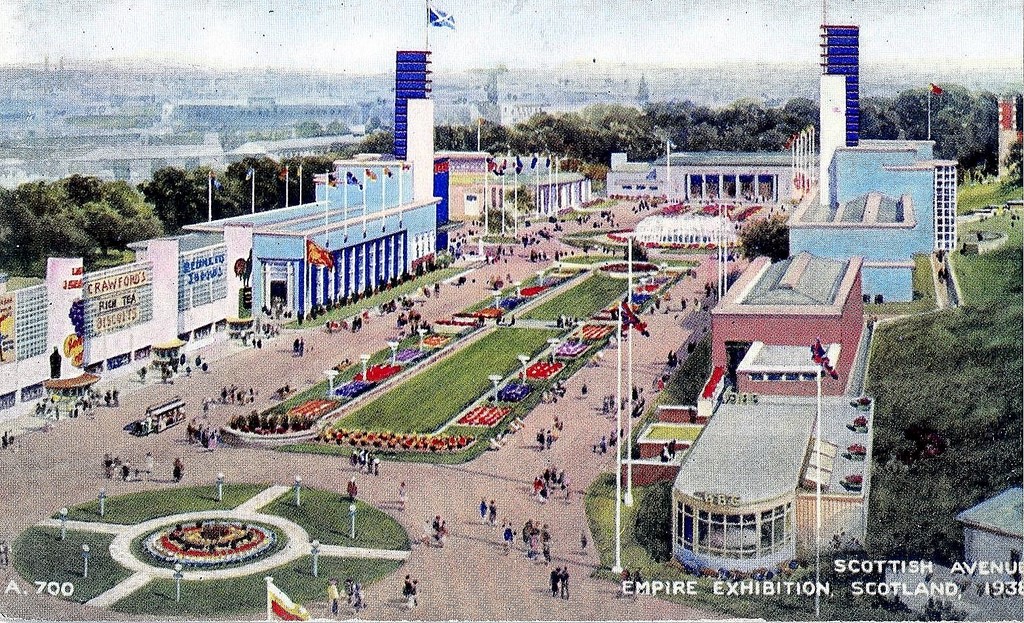
John Wyver writes: On the evening of Thursday 4 August 1938 Alexandra Palace offered a feature programme with the somewhat unweildy title Exhibition: A Panorama Paris 1797-Glasgow 1938. Devised by Reginald Beckwith and Andrew Cruikshank, and produced by Moultrie Kelsall, this marked Glasgow’s Empire Exhibition with a look back to notable international fairs of the past century and a half.
The format was a sequence of short historical dramatisations linked to Paris in 1797-8, the 1851 Great Exhibition and the White City site, which hosted five international fairs in the early twentiety century, interspersed with ‘schoolroom’ scenes, which presumably provided some kind of historical context.
The three key creatives had collaborated on an earlier feature programme, Stands Scotland..?, in November 1937, and ‘E.H.R.’ in the Observer felt that they
had by no means expended all their originality on Stands Scotland…? Those who saw both will agree that the authors are a clever pair, with a gift for seeing things from the hitherto unused point of view.
In The Listener Grace Wyndham Goldie agreed:
Last week’s Exhibition, the first feature programme I have seen on television… was astonishingly successful, partly because it was, in form, a chronicle, partly because of its changes of scene and partly because the camera was used to comment, often wittily, upon the words instead of merely photographing the speaker. Since the programme had the vitality that so many of the plays lack it did not matter so much that it was long.
With this pair of feature programmes, with the broadcasts that Denis Johnston was developing like Death at Newtownstewart and The Parnell Commission, and with Soho and East End, the studio documentary was gradually emerging in these final months before the war. This was a form that was to flourish, comparatively briefly, in the post-war years, before being effectively supplanted by the tradition of documentary filmmaking.
[OTD post no. 230; part of a long-running series leading up to the publication on 8 January 2026 of my book Magic Rays of Light: The Early Years of Television in Britain, which can now be pre-ordered from Bloomsbury here.]
3rd August 2025
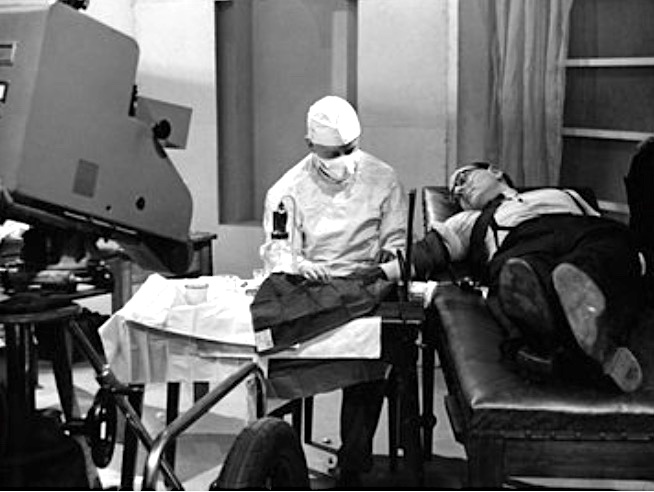
John Wyver writes: Sandwiched between a newsreel and a cartoon on the evening of Thursday 3 August was a quintessential example of television as a public service – and arguably further evidence of the BBC preparing the audience for the coming war.
Blood Donors was a 13-minute explanation and studio demonstration performed by Dr Jessop from University College Hospital. The donor’s name is recorded to history as one J. Markby.
That day’s Manchester Guardian outlined the purpose and plan for the broadcast:
More people, it is believed, would respond to the appeal for blood donors if they knew clearly what was expected of them and what happened when their blood was taken…
Doctors and their assistants from University College blood donors’ unit will take their apparatus to Alexandra Palace. where a volunteer will be tested before the· cameras for the qualjty of his blood. A doctor will then explain the different categories in which blood donors are placed.
Viewers will next see how a pint of blood is taken from a volunteer and how, if it is not used immediately, it is refrigerated for future use. The point of the broadcast is to show that the operation of the blood test and transfusion is extremely simple, and that the donors suffer no inconvenience.
[OTD post no. 229; part of a long-running series leading up to the publication on 8 January 2026 of my book Magic Rays of Light: The Early Years of Television in Britain, which can now be pre-ordered from Bloomsbury here.]
2nd August 2025
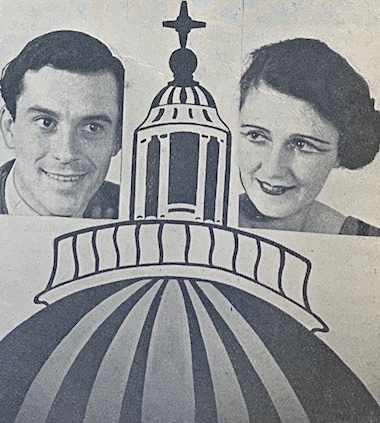
John Wyver writes: Nearly a year on from the BBC having taken over 30-line television, producer Eustace Robb was keen to produce increasingly ambitious broadcasts. One example was Looking at London by Television, a 35-minute original revue screened in the late evening on Wednesday 2 August 1933.
In the cast were Marjorie Gordon, John Rorke and Harold Kimberley, along with Billy Milton and the Paramount Victoria Girls. New sketches and songs, which included ‘The pigeons of St Paul’s’ and ‘Hyde Park Corner’, were contributed by Milton, Ernest Longstaffe and Harry S. Pepper.
Two images from the September issue of Television also indicate the inventiveness of the production working with just a single scanner and basic graphics. The range and riches of the show are also detailed in the magazine’s ‘Last month’s programmes’ column:
The revue Looking at London was the best yet seen and heard, and I attribute its success to the experienced cast and to the snappy presentation for which Eustace Robb, the producer, must have credit. Maybe he just happened to choose artists that I like; anyway, they all looked good to me.
read more »
1st August 2025
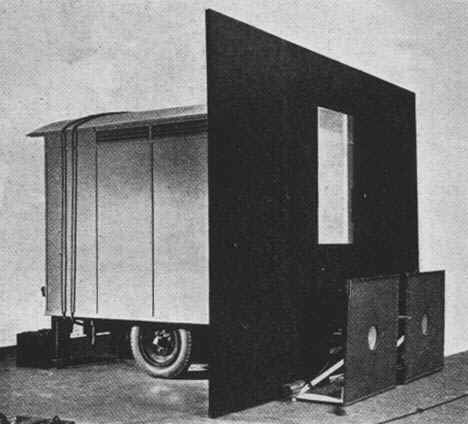
John Wyver writes: In the weeks just after The Man with the Flower in his Mouth (see earlier post), John Logie Baird’s campaign to extend awareness of the potential of television next took to the stage of the London Coliseum. On Thursday 1 August 1930 Television as part of a variety bill was four nights into the first week of its engagement.
From the start of his work with television, Baird had been fascinated by its large-screen potential, and a roof-top display used for the press and others to see The Man with the Flower in His Mouth had been unveiled one evening a fortnight before the broadcast. ‘Setting for the show was perfect,’ reported Variety. ‘Screen was rigged against the skyline on roof of a pretty tall building, with diminutive electric signs playing below it, and a flaming cloud bank drawn up behind.’
Following the presentation of The Man... to an audience of press and others, the cumbersome display was manoeuvred along from Long Acre to the cavernous theatre in St Martin’s Lane. As a crude screen mounted above two loudspeakers on one end of a black-painted caravan, television became a three-times-a-day novelty act on one of the capital’s most prestigious variety bills. In doing so, television followed early film which had been frequently featured in variety programmes.
read more »
31st July 2025
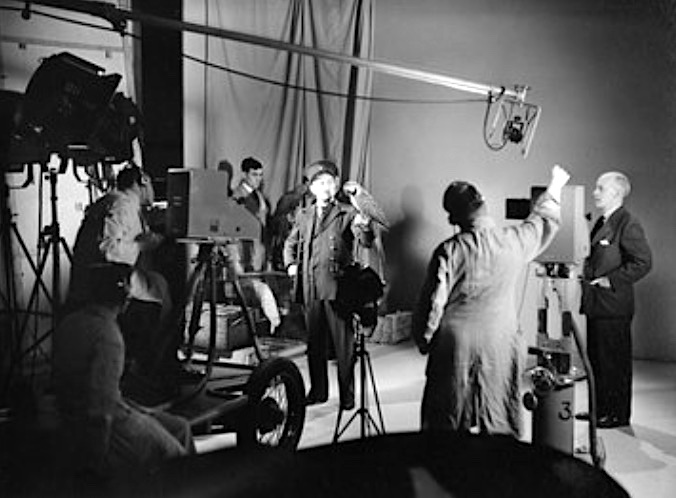
John Wyver writes: The late-night 45-minute broadcast in the BBC’s low-definition television service on Wednesday 31 July 1935 promised ‘an illustrated natural history talk’. And indeed the Zoological Society’s Dr David Seth-Smith, curator of mammals and birds, and already known as ‘the Zoo man’, brought to the 30-line Portland Place studio a remarkable menagerie. (Dr Seth-Smith is on the far right in the image above, which is of a studio broadcast from Alexandra Palace more than two years later, in November 1937.)
The PasB for the July transmission lists as visitors, in addition to a group of keepers, an African python, a boa constrictor, a king penguin, a panda and a mongoose, a chimpanzee, a lion cub, and an alligator, as well as a variety of fish and birds.
read more »
30th July 2025
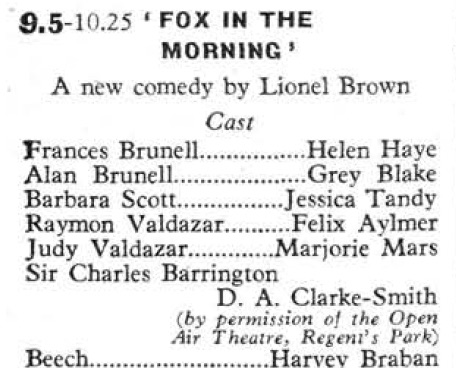
John Wyver writes: Radio Times‘s ‘The Scanner’ was enthusiastic ahead of a presentation of Lionel Brown’s new play Fox in the Morning which was shown on Sunday 30 July 1939. Brown penned moderately successful comedies that were staples of the rep circuit, and his Square Pegs had been adapted for television back in February.
Like Square Pegs, Fox in the Morning was to be produced by Fred O’Donovan, who had assembled a strong cast including Helen Haye and Jessica Tandy, Felix Aylmer and D.A. Clarke-Smith. I have not been able to track down a copy of the script, nor any reviews of the show, but perhaps all we need to know is that the setting is ‘the morning-room at “Condover”, the country house of the Brunell family.’
What excited ‘The Scanner’, however, was that although intended for the West End, Fox in the Morning was to have effectively a ‘try out’ on television before going to the stage. As the journalist wrote,
This is, I believe, an innovation—never before has a West-End playwright released a full-length play to Alexandra Palace before its stage premiere. It will have a run of four weeks in the provinces and then, all being well, be put on in the West End.
As far as I can see from a look through the newspaper archives, however, although Fox in the Morning was played on radio during August, the play never went before a live audience, the plan presumably scuppered by the imminent war.
[OTD post no. 225; part of a long-running series leading up to the publication on 8 January 2026 of my book Magic Rays of Light: The Early Years of Television in Britain, which can now be pre-ordered from Bloomsbury here.]
29th July 2025
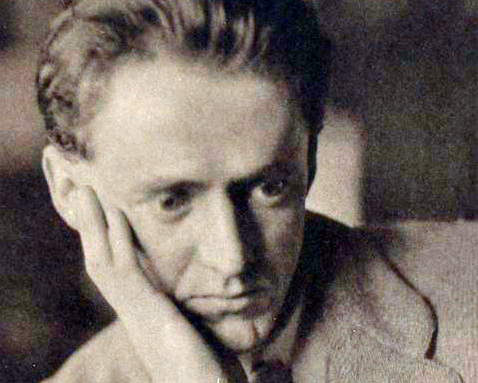
John Wyver writes: The afternoon of Friday 29 July 1938 saw the second presentation of a new half-hour opera, Nocturne in Palermo. With music by A. Davies-Adams, this was based on a 1924 text by the prolific and rather fascinating poet, playwright, critic and more, Clifford Bax. The producer was Stephen Thomas, who had worked with Bax on productions at the Lyric Hammersmith by Thomas’ mentor, Nigel Playfair.
Blessed with a private income, Bax wrote a considerable number of plays between 1912 and the late 1940s. He was also deeply involved with esoterica and the occult, being a friend and chess buddy of Aleister Crowley for many years. The photo above is a detail of a portrait by Alvin Langdon Coburn, shot on 30 March 1916.
When Nocturne in Palermo was published as a libretto in the autumn of 1924, having been staged earlier in the year with music (although whether this was by Davies-Adams or not is unclear), a critic for The Sportsman went to town, writing of its plotting being concerned with the
bloodless philandering of three men and two women in every possible combination of couples. “Empty as air it is; empty and aimless: and puppets are we,” says the prologue, all too truly. The dialogue hardly contains a good line, and the lyrics are dull. If you like Mr Bax’s thin and academic comedy, if you like this weary and academic artificiality, if you prefer puppets to men and women, well and good.
read more »
28th July 2025
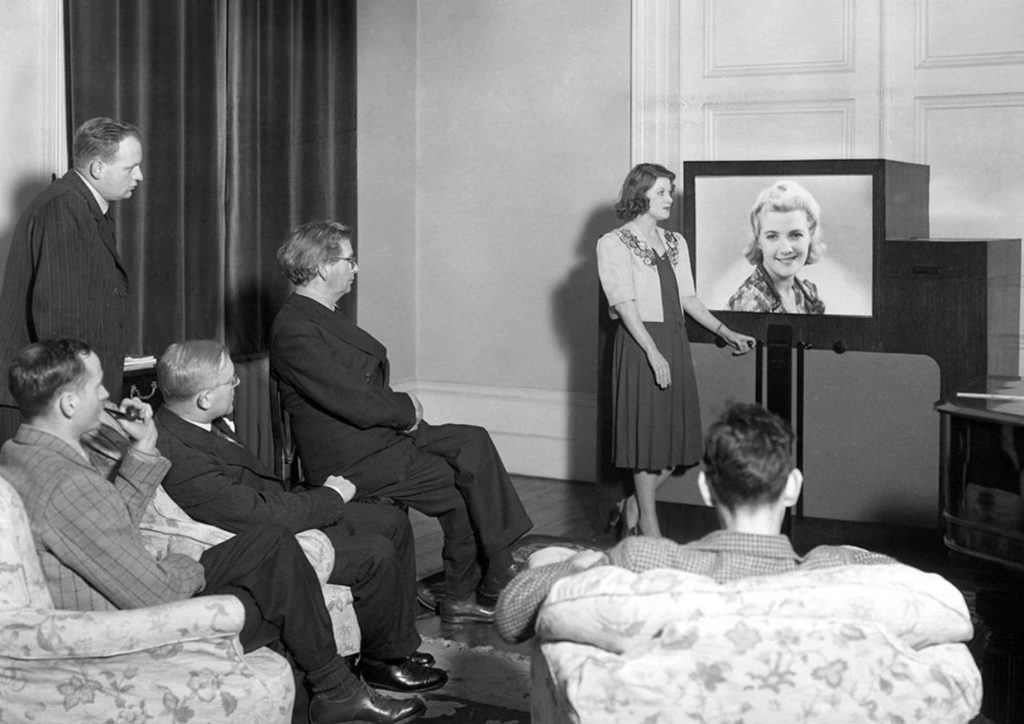
John Wyver writes: ‘Television in full colour: demonstration by Mr J.L. Baird’ was the headline to the report on Friday 28 July 1939 by the Daily Telegraph‘s radio correspondent L. Marsland Gander. His lede ran:
Important progress in recent experiments in the television of images in full colour was revealed yesterday in a laboratory at the Sydenham home of Mr J.L. Baird, who, in 1925, was the first person to transmit and receive television images.
Context for where this demonstration fits into the story of colour television in Britain can be found here, from the National Science and Media Museum, which is also where you can find the image above from 1940 of Baird demonstrating a television system in his home.
read more »