1st August 2025
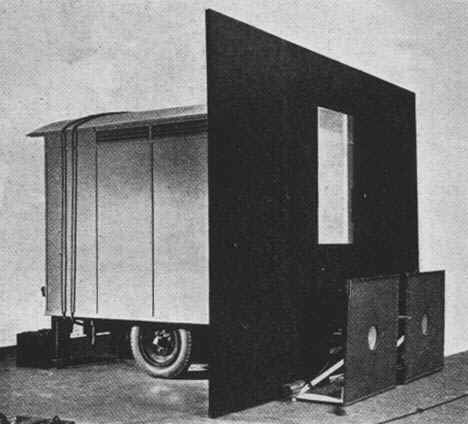
John Wyver writes: In the weeks just after The Man with the Flower in his Mouth (see earlier post), John Logie Baird’s campaign to extend awareness of the potential of television next took to the stage of the London Coliseum. On Thursday 1 August 1930 Television as part of a variety bill was four nights into the first week of its engagement.
From the start of his work with television, Baird had been fascinated by its large-screen potential, and a roof-top display used for the press and others to see The Man with the Flower in His Mouth had been unveiled one evening a fortnight before the broadcast. ‘Setting for the show was perfect,’ reported Variety. ‘Screen was rigged against the skyline on roof of a pretty tall building, with diminutive electric signs playing below it, and a flaming cloud bank drawn up behind.’
Following the presentation of The Man... to an audience of press and others, the cumbersome display was manoeuvred along from Long Acre to the cavernous theatre in St Martin’s Lane. As a crude screen mounted above two loudspeakers on one end of a black-painted caravan, television became a three-times-a-day novelty act on one of the capital’s most prestigious variety bills. In doing so, television followed early film which had been frequently featured in variety programmes.
read more »
31st July 2025
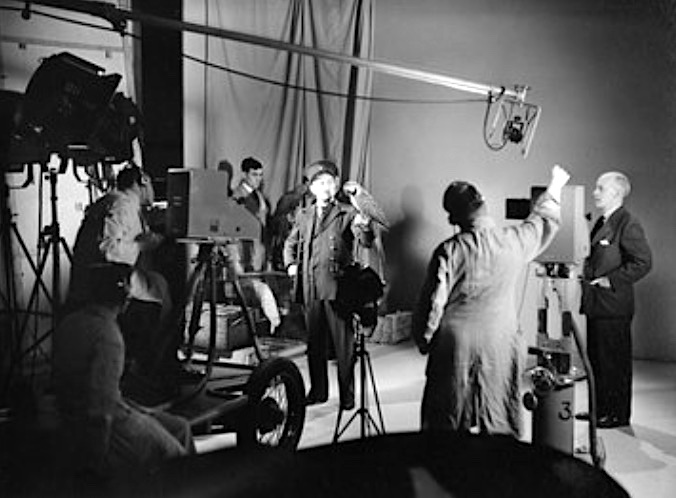
John Wyver writes: The late-night 45-minute broadcast in the BBC’s low-definition television service on Wednesday 31 July 1935 promised ‘an illustrated natural history talk’. And indeed the Zoological Society’s Dr David Seth-Smith, curator of mammals and birds, and already known as ‘the Zoo man’, brought to the 30-line Portland Place studio a remarkable menagerie. (Dr Seth-Smith is on the far right in the image above, which is of a studio broadcast from Alexandra Palace more than two years later, in November 1937.)
The PasB for the July transmission lists as visitors, in addition to a group of keepers, an African python, a boa constrictor, a king penguin, a panda and a mongoose, a chimpanzee, a lion cub, and an alligator, as well as a variety of fish and birds.
read more »
30th July 2025
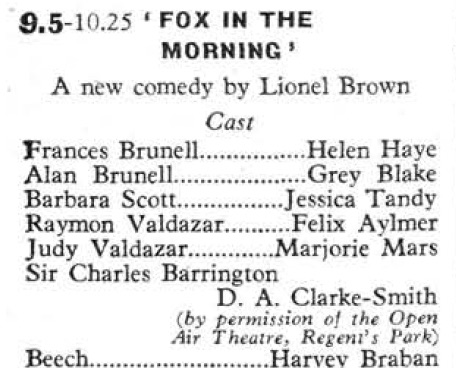
John Wyver writes: Radio Times‘s ‘The Scanner’ was enthusiastic ahead of a presentation of Lionel Brown’s new play Fox in the Morning which was shown on Sunday 30 July 1939. Brown penned moderately successful comedies that were staples of the rep circuit, and his Square Pegs had been adapted for television back in February.
Like Square Pegs, Fox in the Morning was to be produced by Fred O’Donovan, who had assembled a strong cast including Helen Haye and Jessica Tandy, Felix Aylmer and D.A. Clarke-Smith. I have not been able to track down a copy of the script, nor any reviews of the show, but perhaps all we need to know is that the setting is ‘the morning-room at “Condover”, the country house of the Brunell family.’
What excited ‘The Scanner’, however, was that although intended for the West End, Fox in the Morning was to have effectively a ‘try out’ on television before going to the stage. As the journalist wrote,
This is, I believe, an innovation—never before has a West-End playwright released a full-length play to Alexandra Palace before its stage premiere. It will have a run of four weeks in the provinces and then, all being well, be put on in the West End.
As far as I can see from a look through the newspaper archives, however, although Fox in the Morning was played on radio during August, the play never went before a live audience, the plan presumably scuppered by the imminent war.
[OTD post no. 225; part of a long-running series leading up to the publication on 8 January 2026 of my book Magic Rays of Light: The Early Years of Television in Britain, which can now be pre-ordered from Bloomsbury here.]
29th July 2025
John Wyver writes: The afternoon of Friday 29 July 1938 saw the second presentation of a new half-hour opera, Nocturne in Palermo. With music by A. Davies-Adams, this was based on a 1924 text by the prolific and rather fascinating poet, playwright, critic and more, Clifford Bax. The producer was Stephen Thomas, who had worked with Bax on productions at the Lyric Hammersmith by Thomas’ mentor, Nigel Playfair.
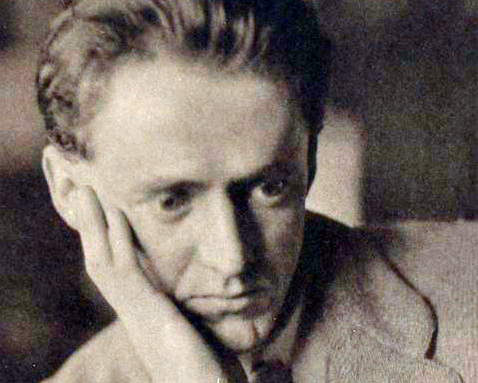
Blessed with a private income, Bax wrote a considerable number of plays between 1912 and the late 1940s. He was also deeply involved with esoterica and the occult, being a friend and chess buddy of Aleister Crowley for many years. The photo above is a detail of a portrait by Alvin Langdon Coburn, shot on 30 March 1916.
When Nocturne in Palermo was published as a libretto in the autumn of 1924, having been staged earlier in the year with music (although whether this was by Davies-Adams or not is unclear), a critic for The Sportsman went to town, writing of its plotting being concerned with the
bloodless philandering of three men and two women in every possible combination of couples. “Empty as air it is; empty and aimless: and puppets are we,” says the prologue, all too truly. The dialogue hardly contains a good line, and the lyrics are dull. If you like Mr Bax’s thin and academic comedy, if you like this weary and academic artificiality, if you prefer puppets to men and women, well and good.
read more »
28th July 2025
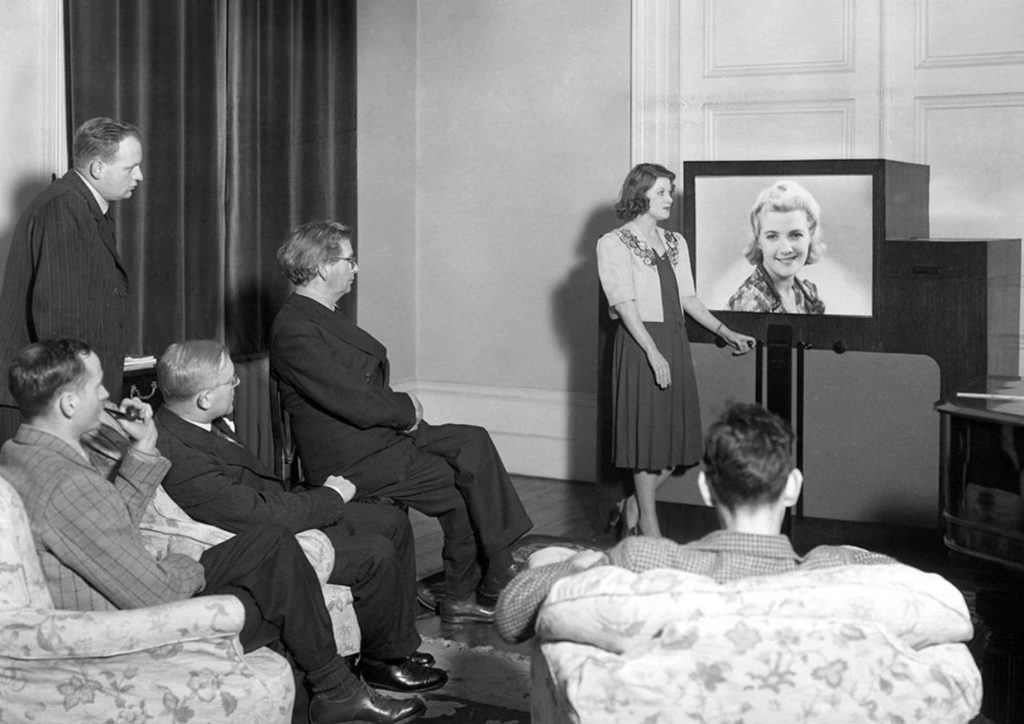
John Wyver writes: ‘Television in full colour: demonstration by Mr J.L. Baird’ was the headline to the report on Friday 28 July 1939 by the Daily Telegraph‘s radio correspondent L. Marsland Gander. His lede ran:
Important progress in recent experiments in the television of images in full colour was revealed yesterday in a laboratory at the Sydenham home of Mr J.L. Baird, who, in 1925, was the first person to transmit and receive television images.
Context for where this demonstration fits into the story of colour television in Britain can be found here, from the National Science and Media Museum, which is also where you can find the image above from 1940 of Baird demonstrating a television system in his home.
read more »
27th July 2025
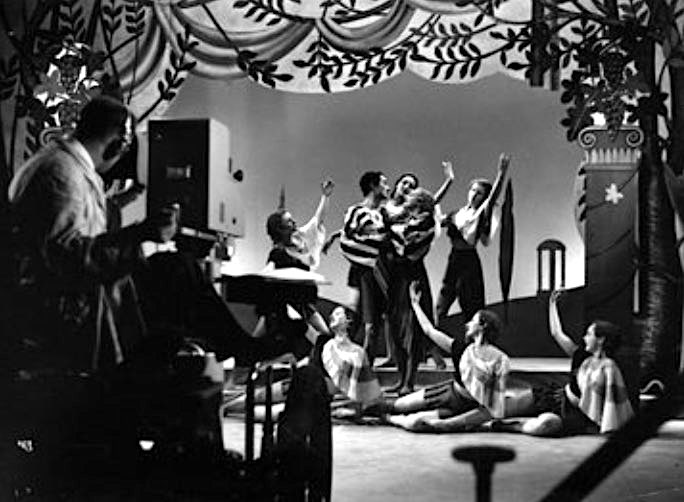
John Wyver writes: Some twenty months after the start of the BBC’s service from Alexandra Palace, Wednesday 27 July 1938 saw the publication, in what was still proudly called the Manchester Guardian, of an absorbing article under the headline, ‘Television Drama: A New Art?’ The author was Marie Seton, a 28-year-old actor, film and theatre critic who two years before had assisted the great Trinidadian writer and activist C.L.R James to mount for the Stage Society his play about the Haitian revolutionary Toussaint Louverture with Paul Robeson and Robert Adams.
Seton is a fascinating figure who in 1939 went on to assemble a cut of the extensive footage that Soviet filmmaker Sergei Eisenstein shot in Mexico towards the unfinished ¡Que viva México! which was released as Time in the Sun. She was a regular contributor to Sight & Sound and wrote a biography of Eisenstein [link to a copy of the 1960 Grove Press edition at Internet Archive]. From the 1950s on she was centrally involved in developing the film society movement in India, and she authored biographies of Jawaharlal Nehru and the Indian director Satyajit Ray [both IA links].
In the summer of 1938 she turned her attention to television drama:
read more »
26th July 2025
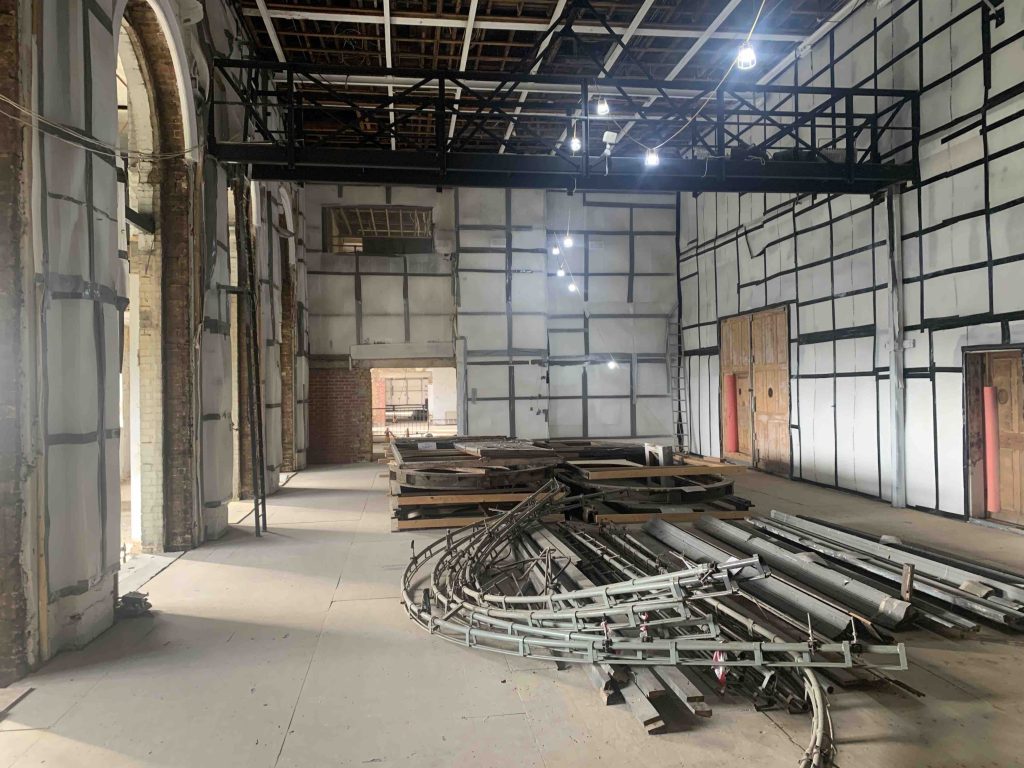
John Wyver writes: On Monday 26 July 1937 the television service from Alexandra Palace started a three-week shutdown. There had been broadcasts each afternoon and evening (except Sundays) since 2 November, with test transmissions and programmes for Radiolympia before then, and the under-resourced and over-used facilities and the staff needed to make repairs and take stock.
Trade dealers, however, deeply concerned about how few sets had been sold, a total that was probably less than one thousand, needed something to demonstrate to potential buyers. So until 16 August, and around daily newsreels, for an hour each morning AP transmitted a shot of Alexandra Park from a balcony, accompanied by records. The recently completed BBC Television Demonstration Film was also shown once a day.
read more »
25th July 2025
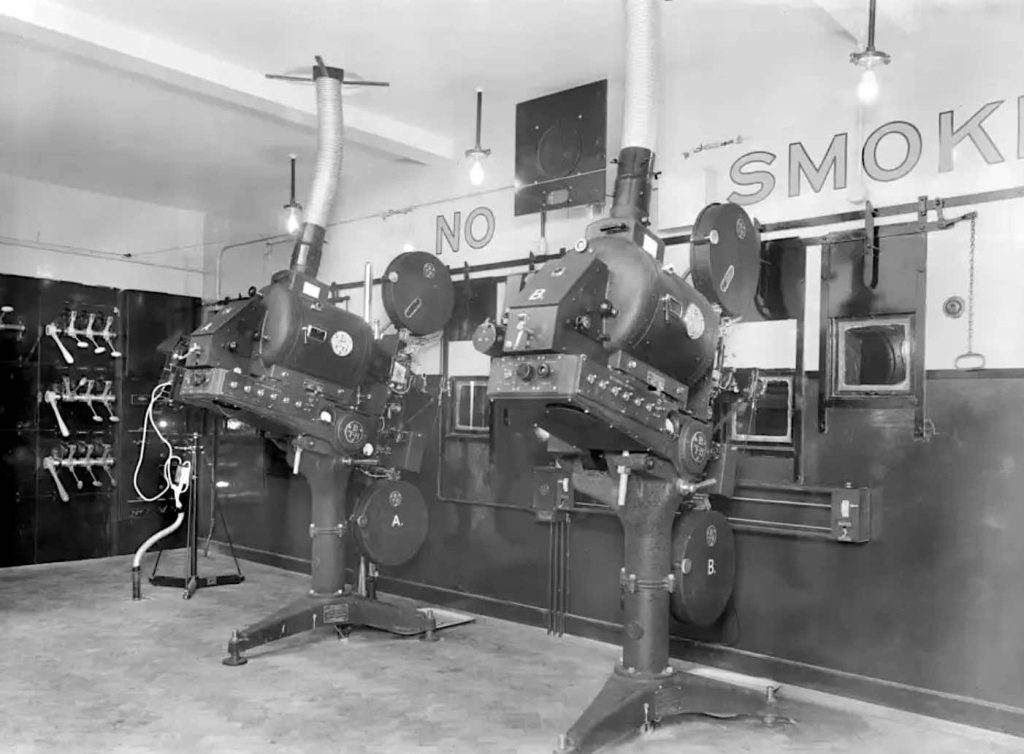
John Wyver writes: Under the headline ‘Film workers & television: wide effect on entertainment’, the Daily Telegraph on 25 July 1939 carried a fascinating report of a speech made the previous day by Robert Finnigan as the presidential; address to the annual conference in London of the National Association of Theatrical and Kiné Employees. As the paper’s industrial correspondent noted, ‘The conference represents many thousands of workers in all departments of the film trade.’
The paper summed up the speech’s theme as follows:
The Luddites – bands of mechanics who organised riots in 1811-16 – smashed machinery. The modern worker should adapt himself to innovations and co-operate with the employers.
Finnigan was concerned with the development of television and its impact on the film industry, and he announced that the conference would adjourn the following day to see a television demonstration in a West End cinema and hear a technical explanation.
read more »
24th July 2025
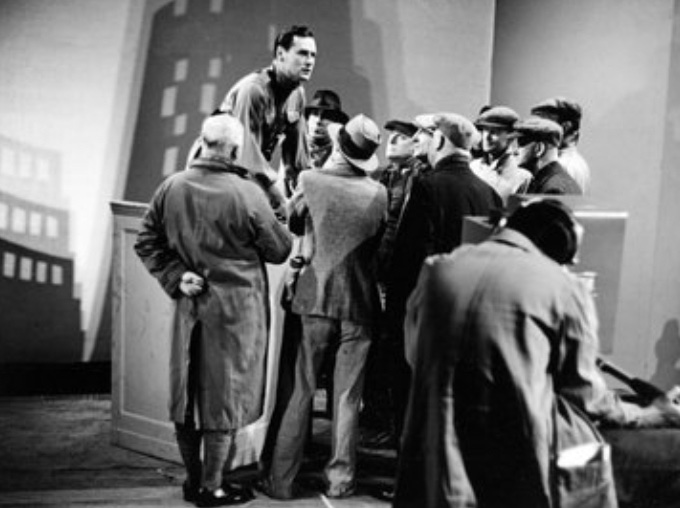
John Wyver writes: The evening schedule of Sunday 24 July 1938 was occupied by Shakespeare’s The Tragedy of Julius Caesar (billed under its full name) given in modern dress by a strong company under the direction of the invariably innovative Dallas Bower. Ernest Milton was Caesar and D.A. Clarke-Smith Marcus Antonius, while Sebastian Shaw took the role of Brutus and Anthony Ireland, Cassius. Laura Cowie played Calpurnia, and Carol Goodner, Portia.
Bower set the political drama in an unidentified European state which observers were encouraged to see as a fascist regime. He also worked with designers Peter Bax and Malcolm Baker-Smith to use for the first time their ‘penumbrascope’, which threw abstracted patterns on a cyclorama to suggest a range of settings including cityscapes. In addition, he integrated a number of newsreel scenes, listed as ‘riots’, ‘gunfire’, explosions’ and ‘aeroplanes’.
read more »
23rd July 2025

John Wyver writes: The line-up for the Baird Television transmission at 11am on the morning of Wednesday 23 July 1930 featured, as usual, a trio of entertainers. Scottish (although billed as ‘Scotch’) music hall comedian Tommy Lorne was up first, then baritone Frederick Yule, later to be an ITMA cast member during the war, followed by soprano Elsie Otley.
Each contributed an approximately 10-minute turn, standing in the scanner’s beam in a blacked-out studio so that their head and shoulders, along with their voice, were reproduced on a few hundred tiny, portrait-formatted 30-line screens across the country.
The Covent Garden studio at the time was transmitting a half-hour each weekday morning, along with an additional Friday half-hour at midnight. Broadcasts of this kind, with an occasional OB or drama like The Man with the Flower in his Mouth the previous week, had been offered with synchronous sound and vision for nearly four months now. They would continue until 1 July 1932, after which the BBC took over responsibility.
read more »