31st August 2025
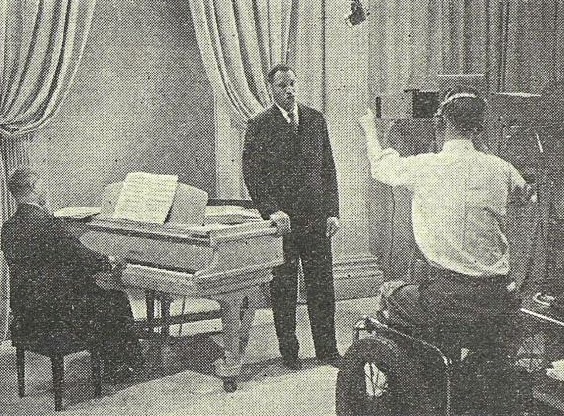
John Wyver writes: The day before closedown, Thursday 31 August, saw the publication of a Listener column by Grace Wyndham Goldie responding in part to a broadcast by Paul Robeson. A week and a day earlier the great singer had stood next to a piano (above) to perform ‘Water Boy’, ‘Night’, ‘Old Man River’ and ‘Lover’s Lane’. But Grace being Grace she could not simply wax lyrical:
Last week’s programmes were a treat. I might almost call them a fair treat. For they were designed for the crowd, animated by the needs of Radiolympia. Did we want to see what television can do with singing? Here was Paul Robeson. With ballet? We were shown Alice Markova. Outdoor stuff? There was Test Match Cricket and there were, tours of the Zoo.
Having passed those well-deserved compliments I now propose to draw a few less comfortable conclusions. The fact is that these programmes were deceptive; ingeniously and legitimately deceptive but deceptive all the same. For by picking artists of quite exceptional individuality and talent in various lines the authorities skilfully obscured the fact that the problems of presenting these lines in television are still unsolved.
read more »
30th August 2025
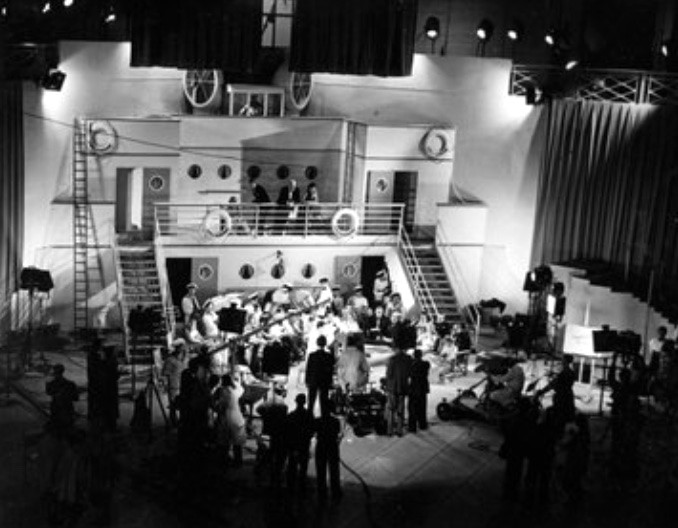
John Wyver writes: We are back at Radiolympia today, for the sixth day of the 1938 edition, on Tuesday 30 August. Come and Be Televised played in the morning, just after a broadcast from the fair by Mr Middleton about pruning roses. In the afternoon and also that evening there were transmissions of Cabaret Cruise, a variety show played across a spectacular set of an ocean liner built inside the television studio at Radiolympia.
Both afternoon and evening bills, hosted by ‘Commander’ Campbell, included impressions from Ernest Shannon, songs from Trudi Binar, a sketch with singing by Steve Geray and Magda Kun, and Chinese jugglers and acrobats The Five Lai Founs. All of whom featured around a fancy dress dance to music from Dennis van Thal and his orchestra.
Cabaret Cruise was shown several times from Radiolympia, but the Tuesday afternoon edition was special since it was also carried simultaneously on the Regional Programme as a ‘Sound and Vision’ radio broadcast. Quite how The Five Lai Founs came across on the wireless is unrecorded, not to mention the fancy dress frocks.
read more »
29th August 2025
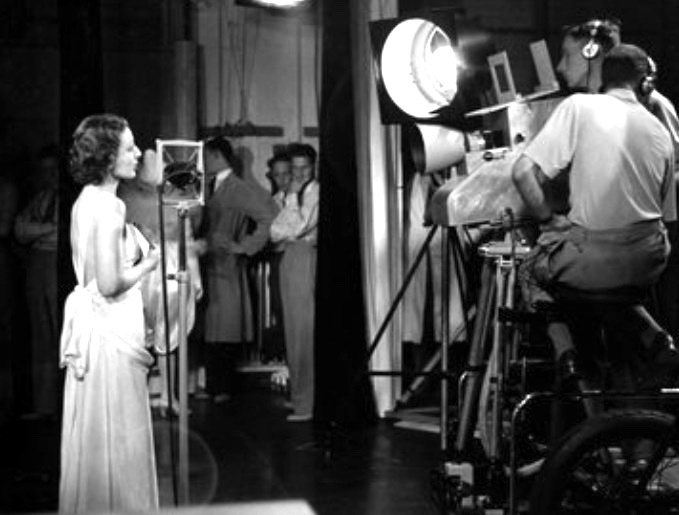
John Wyver writes: Saturday 29 August 1936 was the fourth day of test transmissions from Alexandra Palace arranged especially for reception at the Radiolympia trade fair in west London. The opening of the BBC’s ‘high definition’ service was over two months away, but for ten days AP put out a short schedule of variety and feature film extracts. Transmissions alternated daily between those via the Baird 240-line system and those from Marconi-EMI’s 405-line set-up.
The more reliable Marconi-EMI cameras were used on this first Saturday of Radiolympia, and after tuning signals in the late morning, the broadcast started at midday. A shot of Alexandra Park from a balcony was accompanied by commentary by producer Cecil Lewis. Leslie Mitchell took over announcing duties five minutres later, cueing up extracts from the Gaumont British feature First a Girl starring Jessie Matthews and then from Paul Rotha’s documentary about writers, Cover to Cover.
read more »
28th August 2025
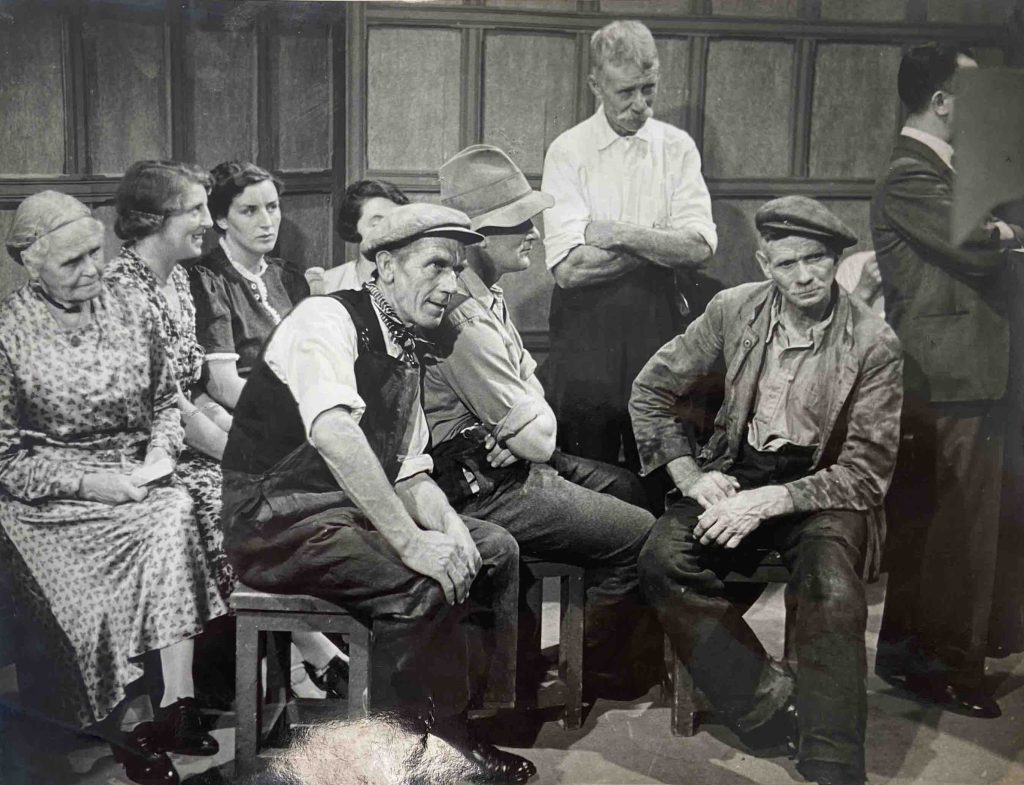
John Wyver writes: On the evening of Monday 28 August 1939, just five days before television’s closedown, producer John Pudney’s radio feature Modern Pastoral, about the coming of electricity to the Essex hamlet of Duton Hill, went out on the National Programme.
In a remarkable cross-media stunt Pudney arranged for a group of villagers, including the vicar Rev Sidney Spray, publican John Donnelly and roadman Harry Green, to come to Alexandra Palace to sit before the studio cameras as they listened to their own voices on the airwaves.
The fifteen minute broadcast, titled Up from the Country and produced by Mary Adams, also included a documentary film sequence of of life in Duton Hill, and was planned to feature a short introduction by Pudney. But despite Pudney having also produced television broadcasts at AP, because the programme began unexpectedly early, he missed the transmission.
The remarkable photograph of the occasion seems to capture a moment when a way of life that had changed little in several hundred years encountered modernity’s media world.
[OTD post no. 254; part of a long-running series leading up to the publication on 8 January 2026 of my book Magic Rays of Light: The Early Years of Television in Britain, which can now be pre-ordered from Bloomsbury here.]
27th August 2025
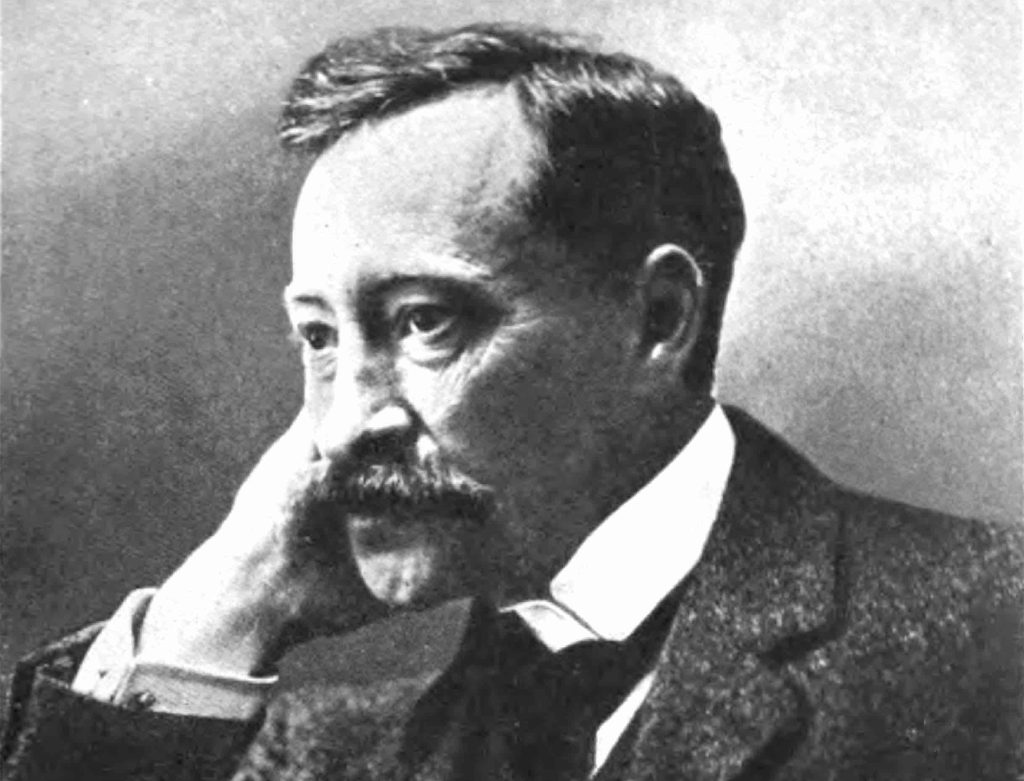
John Wyver writes: The evening of Sunday 27 August 1939 saw the first performance of Michael Barry’s production (on which he was assisted by Eric Crozier) of the comedy A Cup of Happiness by Eden Philpotts (above). Leon M. Lion, Roger Livesey and Janet Johnson headed the cast. The planned repeat, scheduled for Monday 4 September, was one of the first casualties of television’s wartime shutdown which began at lunchtime on Friday.
All-but-forgotten now, Philpotts was an extraordinarily prolific writer whose novels and plays were mostly set in his home county of Devon. Agatha Christie was a friend and admirer, and among his unlikely fans was Jorge Luis Borges, who rev iewed at least two of his novels.
If Philpotts is remembered now, it may be as the author of the play on which Alfred Hitchcock’s silent feature The Farmer’s Wife (1928) is based, but it is as likely to be because of his incestuous relationship with his daughter Adelaide, which apparently lasted from when she was five or six until she was in her early thirties. Adelaide also collaborated with Eden on several of his works.
The action of A Cup of Happiness takes place on Willowbrook Farm at High Holberton in Devon, and so designer Barry Learoyd was tasked with suggesting a rural setting that was rare for plays from AP. Almost all of the modern drama that was played was set in the city, whether London or an urban location across the Atlantic. Philpotts’ drama was rare among early television plays in being set in the English countryside.
[OTD post no. 253; part of a long-running series leading up to the publication on 8 January 2026 of my book Magic Rays of Light: The Early Years of Television in Britain, which can now be pre-ordered from Bloomsbury here.]
26th August 2025
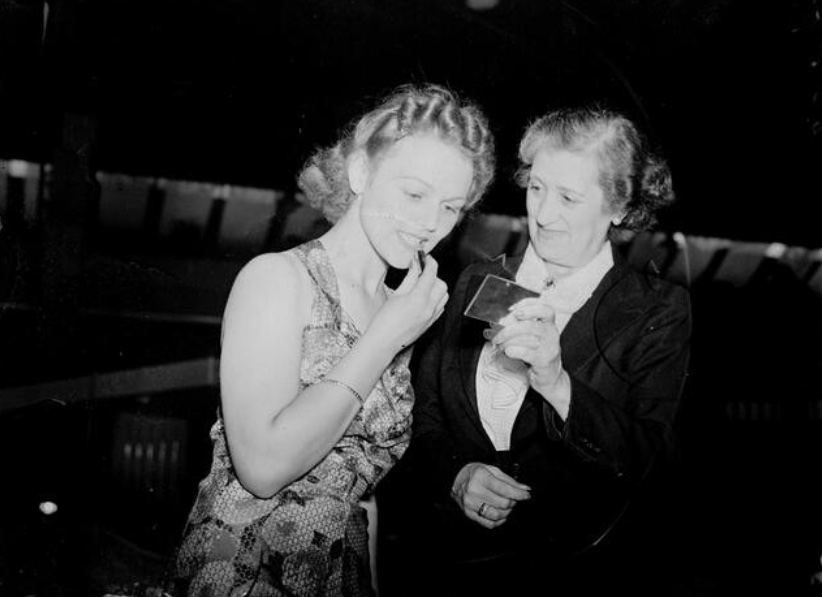
John Wyver writes: Saturday 26 August 1939, and war is just a week and a day away. The National Radio Show of Radiolympia is in full swing, and on this fourth day Come and Be Televised, Picture Page and a spectacular Cabaret are all broadcast from there. But for today’s story, which is too good not to feature, I’m going to break with the strict OTD format, and look back a few days to the evening of Monday 21, when the OB cameras were already in place at Olympia.
As a trail for television’s presence at Radiolympia, the BBC scheduled a brief spot for Lionel Gamlin to introduce to lookers-in East Dulwich’s Miss Patsy Kench, winner of the ‘Miss Radiolympia’ title. That’s her on the left, with Lady Standing, mother of BBC commentator Michael Standing. Lady S. was the Miss Radiolympia chaperone, and she described her charge ‘as an ideal type of modern English girl’.
The intention on the big night was that Patsy, ‘a fair girl of medium height’ according to the Daily Telegraph, would sing the exhibition’s theme song, ‘Let’s All Go to the Radio Show’. Somewhat gleefully, the Telegraph recounted what happened next:
read more »
25th August 2025
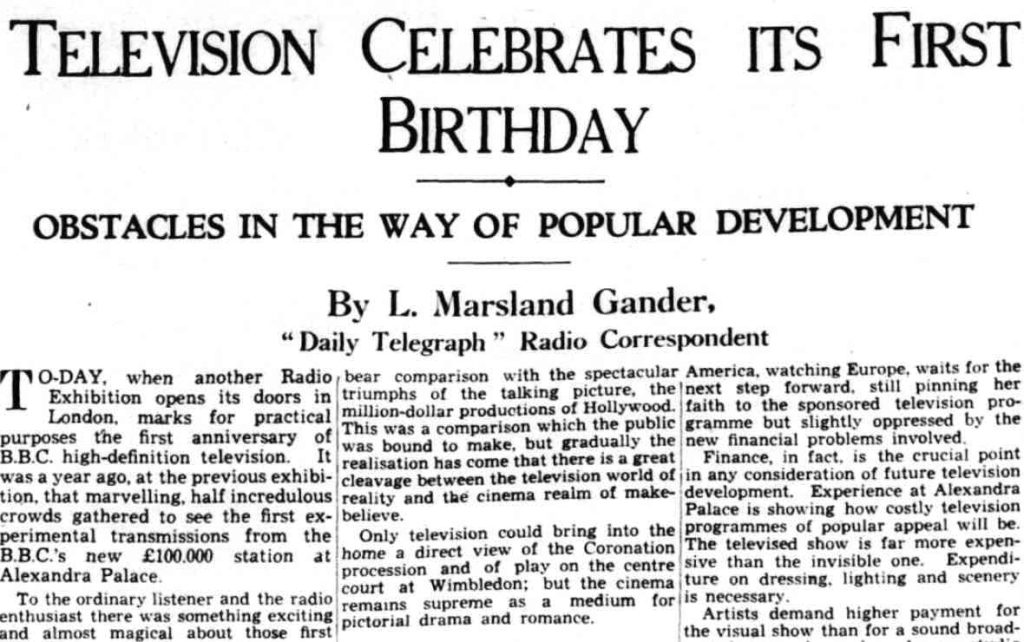
John Wyver writes: Having noted the first activity in at Alexandra Palace in 1936 yesterday, today we make a jump on a year on to an article that marked what was claimed as television’s ‘first birthday’. Never mind that regular transmissions by the 30-line system went back to 1928, which were acknowledged briefly, this was a celebration on 25 August 1937 of what the ‘marvelling, half-incredulous crowds’ saw at Radiolympia a year before.
The author was the well-informed L. Marsland Gander, still by-lined as the Daily Telegraph‘s ‘Radio Correspondent’, who recalled his own first directly personal experience of the new medium:
Some days before the exhibition I had had the unforgettable experience in my own home of abstracting living pictures from the air, pictures that had been projected through space from this same station [that is, AP] nine miles away. They had been reproduced on my screen only a split second after leaving the transmitting aerial at Muswell Hill.
read more »
24th August 2025
The 250th ‘OTD in early British television’ post.
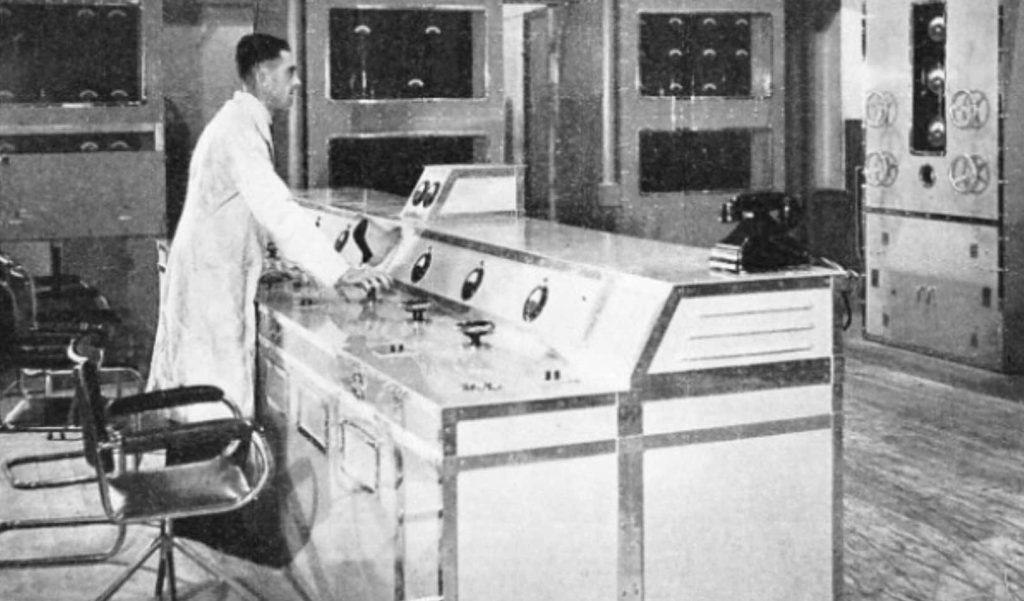
John Wyver writes: The Scotsman was among the newspapers that on the morning of Monday 24 August 1936 carried news of the previous day’s press preview of the BBC’s television operations at Alexandra Palace. Cecil Madden had hosted, with singer Rita Grant making a contribution, and the event was followed by a further encounter with the press on Tuesday, just ahead of the test tranmissions to Radiolympia that began on Wednesday 26.
In the absence of any actual programmes being ready for the press, the Scotsman correspondent focussed on the wonders of the technology:
One was immediately impressed by the solidly constructed machinery and apparatus, and the immense voltages used for the operation of the water-cooled valves. Two generators coupled together supply 10,000 volts for anode operation, another produces 5,000 volts for auxiliary anodes, and a smaller one supplies a mere 200 anodes for filament heating. It will be seen from these figures that the installations are on a grand scale.
read more »
23rd August 2025
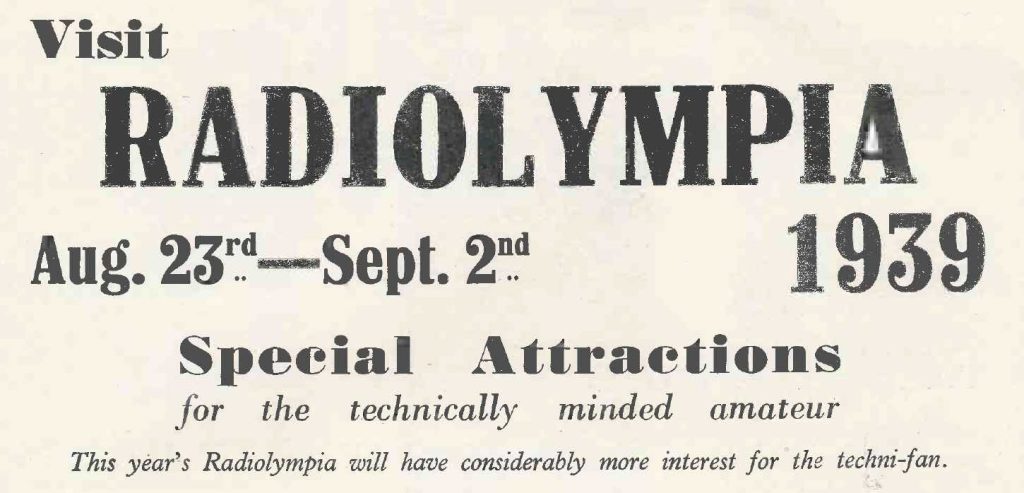
John Wyver writes: Late August means it’s time for the annual trade show Radiolympia. Manufacturers and consumers gathered for a week or so in west London to look at the latest radio and television receivers and to be entertained by the BBC. 1938’s Radiolympia, which we will also visit in the coming days, had been significant for the boost it gave to sales of televisions, and there were similar hopes for 1939. Although, of course, there was also the profound awareness of the likelihood of war.
One of the popular attractions in 1938, both at the fair and in the broadcasts made from there, was the daily ‘Come and Be Televised’ hour, which was repeated in 1939. On the first morning, Wednesday 23 August, Jasmine Bligh spoke with, among others, Mr G.H. Ripley about bookbinding, Miss V. Batchelor with her Welsh corgi puppy, and memory pianist Mr. W. Whittaker.
read more »
22nd August 2025
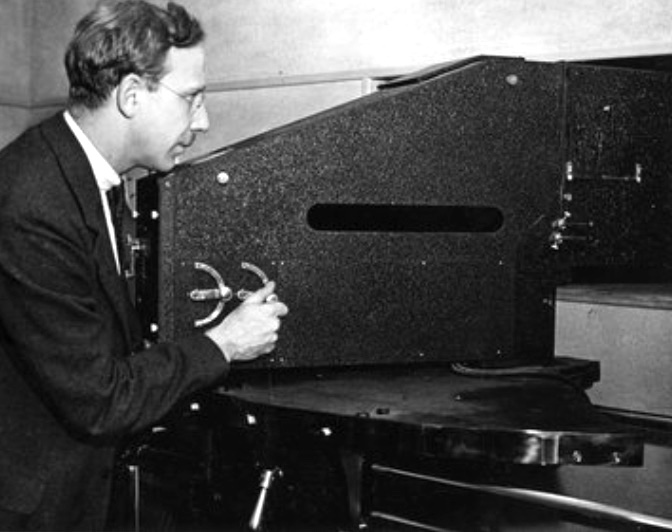
John Wyver writes: At just after 11pm on Monday 22 August 1932, the BBC began a television service using Baird company 30-line technology. Baird Television Ltd had been broadcasting since November 1929, at times with limited BBC support, but now responsibility for transmissions lay fully with the BBC. Looking back, John Logie Baird believed that handing control of the 30-line service to the BBC was a mistake:
We had in Long Acre [where his company was based], in effect, a rival broadcasting system to the BBC, with our own independent production being received by the public. This came to an end when the BBC took us over and I often regretted this and thought that we would have been better to have continued operating independently.
The decision was taken before Gaumont-British’s purchase of the majority stake in the Baird company, but since the new owners were interested in selling receivers, not in subsidising a programme service, the conglomerate approved. By the spring of 1932 it was agreed that initially there would be four half-hour broadcasts each week, and that although the BBC could change the number of transmissions the service would continue until at least 31 March 1934.
The inventor’s reservations aside, ‘to us in the rank and file of the Baird Company,’ engineer Tony Bridgewater recalled, ‘the attainment of this long-sought milestone in the advancement of television was a welcome relief and satisfaction. We felt that our activities had suddenly become respectable.’
read more »