18th March 2025
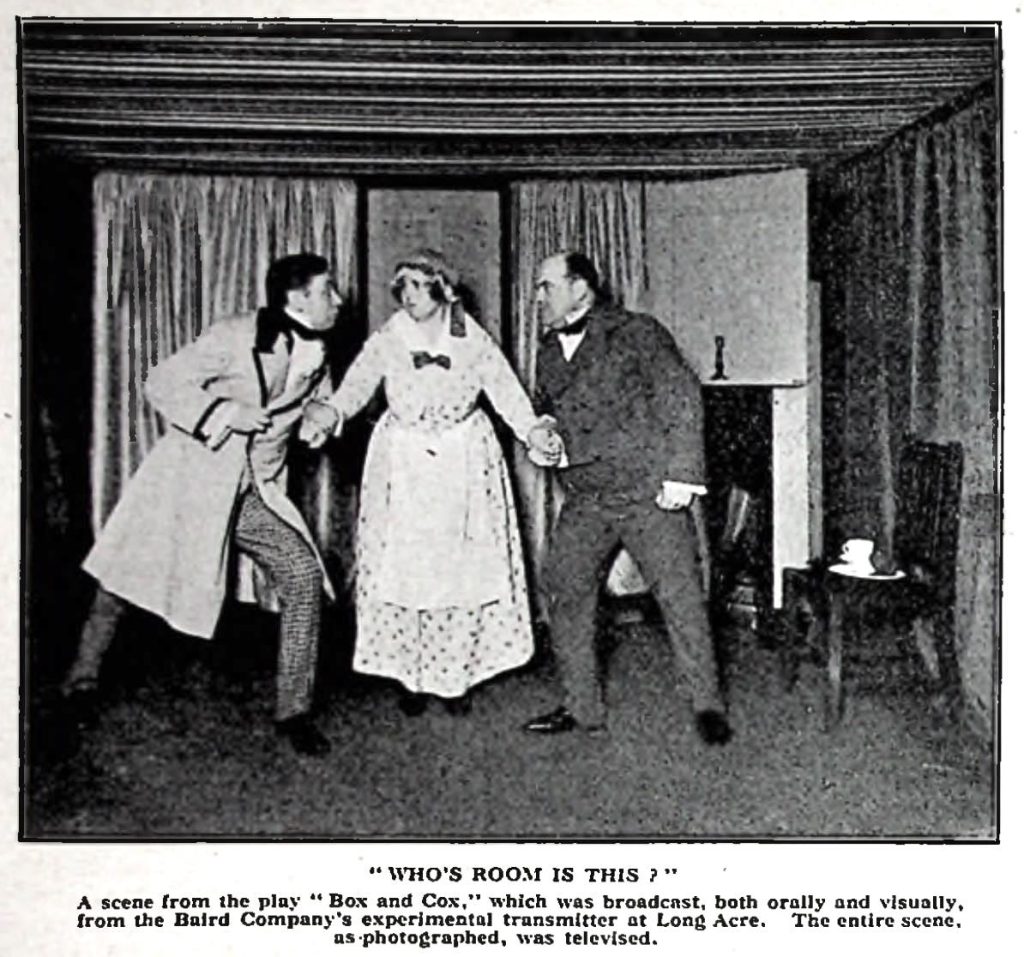
John Wyver writes: For whatever reason, it seems to be the case that 18 March was a somewhat unremarkable date for early television in each of the years between 1928 and 1939. Nothing jumped out at me as the subject for today’s post, and so I thought I might begin a new way of indexing some of the 105 posts to date – in part in the hope of encouraging you to access ones you might have missed.
Following is a list of the blog posts so far about studio drama on early television, listed in chronological order. from the first production of a play in December 1928, Box and Cox (above), to a 1939 one-night-only studio restaging of a production then running in the West End.
read more »
17th March 2025
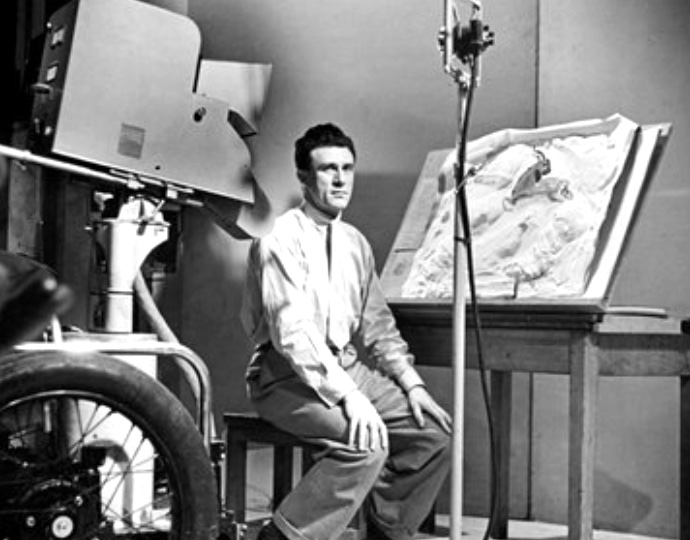
John Wyver writes: After a concert from Jack Hylton and his band on the evening of Friday 17 March 1939, Alexandra Palace broadcast Animals, Anatomy, Artists, a talk by John Skeaping on ‘the three main types of animal art – documentary, creative and caricature’. He illustrated this with his own drawings (above) and with animals brought from the zoo which were described by naturalist and later noted author James Fisher.
Fisher was an assistant curator at the zoo in the 1930s, and was about to publish his first book, Animals as Friends and How to Keep Them. He brought to the studio two penguins, a mongoose, a goat and a kid, while Skeaping himself contributed two French poodles as additional models.
read more »
16th March 2025
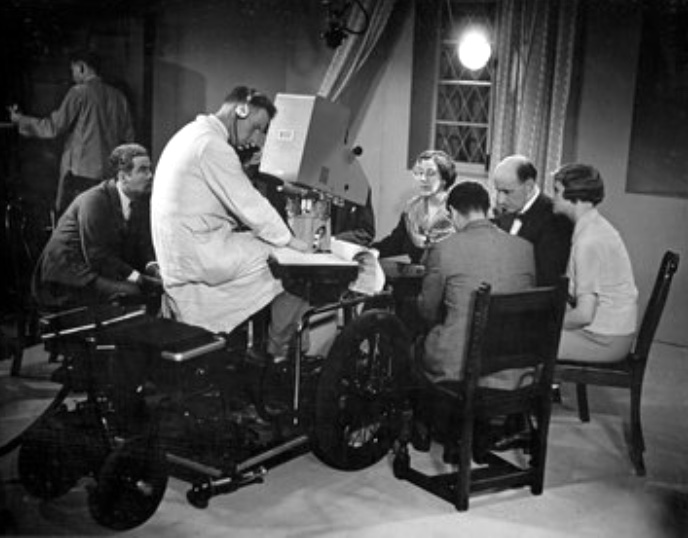
John Wyver writes: The afternoon of Wednesday 16 March 1938 saw a reprise of Eric Crozier’s production (above), first presented the previous September, of W.B. Yeats’s supernatural drama The Words Upon the Window Pane. The cast was led by Jean Moncrieff and Harcourt Williams, and Joyce Redman played the spirit ‘Lulu’.
In a 2020 article about the stage play, the veteran Guardian critic Michael Billington noted that he would love to see a stage production, which underlines how rarely the drama has been revived since the war, but the television version had five outings between 1937 and 1939. The text can be ‘borrowed’ for reading from archive.org here, and Billington provided a useful synopsis:
The Words Upon the Window-Pane (sic) (1930) is in many ways exceptional: it is Yeats’s only play with a realistic modern setting. Its subject is a seance held by the Dublin Spiritualist Association in rooms once occupied by Jonathan Swift’s Stella. Yeats has much fun at the expense of the visitors – one of whom wants advice about setting up a teashop in Folkestone – but the main concern is to expel an evil spirit who has been haunting past sessions.
read more »
15th March 2025
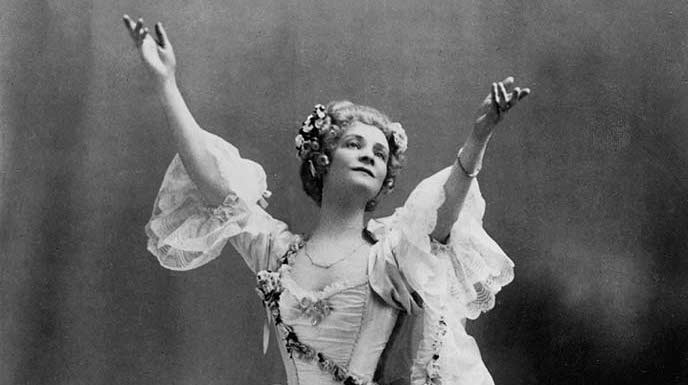
John Wyver writes: On the evening of Wednesday 15 March 1933, in a programme that alkso featured popular singer Maisie Seneshall and Danish musical comedy star Eric Bertner, the celebrated dancer Adeline Genée (above, 36 years before, dancing La Camargo) gave her farewell performance by television.
Genée had been dancing professionally since 1888, when she made her debut in her uncle’s Danish company at the age of 10, and throughout the Edwardian years she was a sensation in London, across Europe and the United States. Securing this ‘farewell’, even though her last major performance was reckoned to have been in 1916, was the first great ballet coup for the producer of the BBC’s 30-line transmissions, Eustace Robb.
read more »
14th March 2025
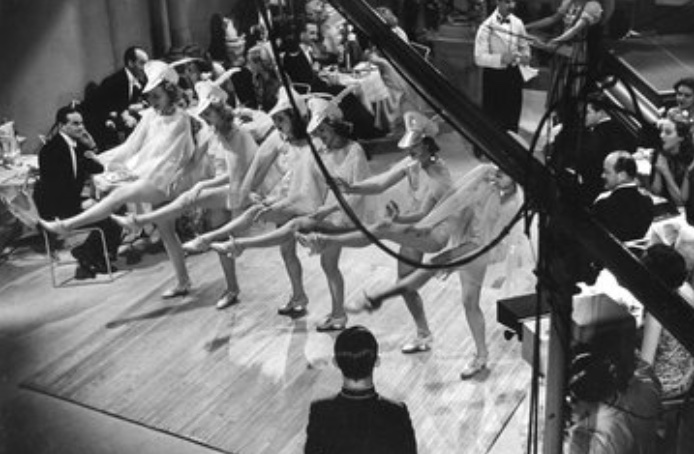
John Wyver writes: Cabaret: Sound and Vision was the rather clunky title of a 40-minute variety bill on the evening of Monday 14th March. In many ways it was standard AP fare, with compère Russell Swann introducing a line-up of The Grosvenor House Charm Girls tap dancing to ‘Gentlemen, the Choice is Yours’ (above, in this broadcast), along with impersonations from Nelson Keys and American singer Niela Goodelle.
The programme, however, is notable because it was one of a series of largely unsuccessful experiments in simulcasting television from AP with radio’s Regional programme. Radio Times assured readers (and listeners) that it
has been designed to provide an entertainment of equal interest to both listeners and viewers. It is not merely the sound part of a television broadcast, but it is a complete radio programme in itself.
read more »
13th March 2025
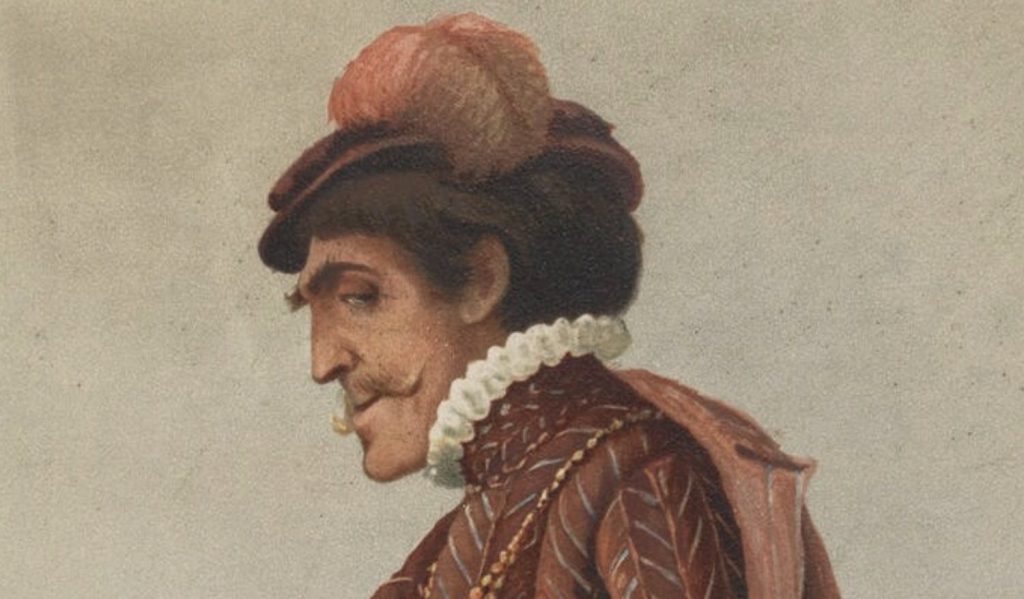
John Wyver writes: At 11pm on Monday 13 March 1933, the BBC’s 30-line transmission from Studio BB in the basement of Broadcasting House featured selections from ‘The British Theatrical Loan Exhibition’ that was currently on view at Dudley House in Park Lane.
The presentation also featured the then 31-year-old Ralph Richardson, attired in the costume of Benedick as famously played by Sir Henry Irving (above, detail) giving a few lines from act 2 scene 3 of Much Ado About Nothing, although as a previous blog post revealed, this was not the first Shakespeare performance on British television.
Nor was this the first broadcast showcasing artworks and precious objects from a major London exhibition. That tradition began the previous October, with selections introduced by Lord Lee of Fareham from the ‘Art Treasures Exhibition’ at Christie’s, and had continued in January 1933 with pieces from ‘The Loan Exhibition of the Reign of Queen Elizabeth’.
read more »
12th March 2025
The 100th original post in this series.
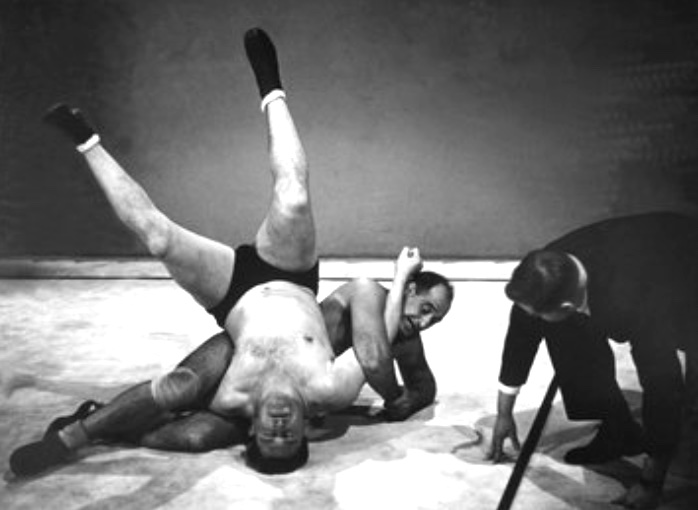
John Wyver writes: Closing out transmissions on Saturday 12 March 1938 was An Exhibition of Catch-as-Catch-Can Wrestling, featuring a bout in the studio between Earl McCready, heavyweight champion of the British Empire who hailed from Canada, and the South African grappler Percy Foster. Remarkably, a photograph exists of this contest, which is reproduced above, and for more about wrestling in 1938, go here.
Catch-as-Catch-Can Wrestling, or Catch Wrestling, is apparently (thanks Wikipedia) ‘an English wrestling style where wrestlers aim to win by pinning or submitting their opponent using any legal holds or techniques. It emphasizes adaptability and seizing opportunities during the match, with fewer restrictions than other wrestling styles.’ Following this March debut on screen, the sport was a popular attraction for pre-war television, and was one strand in the new medium’s apparent fixation with looking at bodies in motion.
read more »
11th March 2025
John Wyver writes: Across the winter of 1937-38, the Television service broadcast Pre-view on Friday afternoons and evenings. Featuring interviews, rehearsals and test sequences from the forthcoming attractions of the following week, the strand was an attempt to encourage more viewing, and of course more sales of sets.
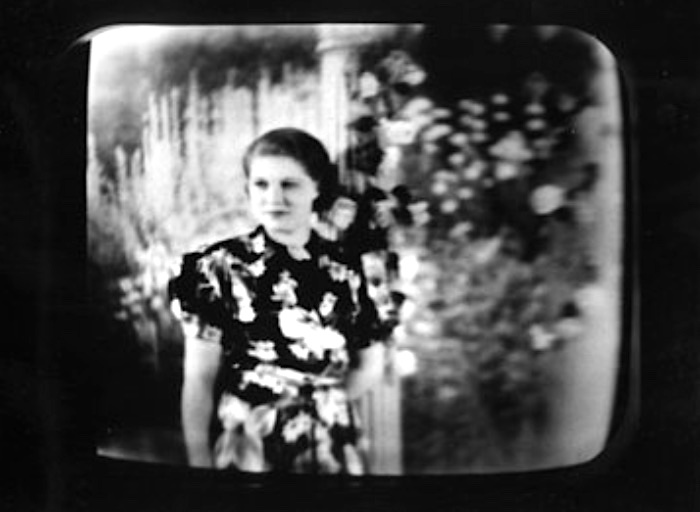
The format of the show, hosted by one of the women announcers, either Elizabeth Cowell or Jasmine Bligh, started out conventionally, but became increasingly eccentric as the series ran on. The 15th edition on 11 March 1938 was built around a comic guessing game in which Jasmine (see above in a generic shot taken from the screen at some point in 1937) and actor Charles Heslop as ‘Mr Viewer’ had to identify programmes in the coming week from visual clues.
read more »
10th March 2025
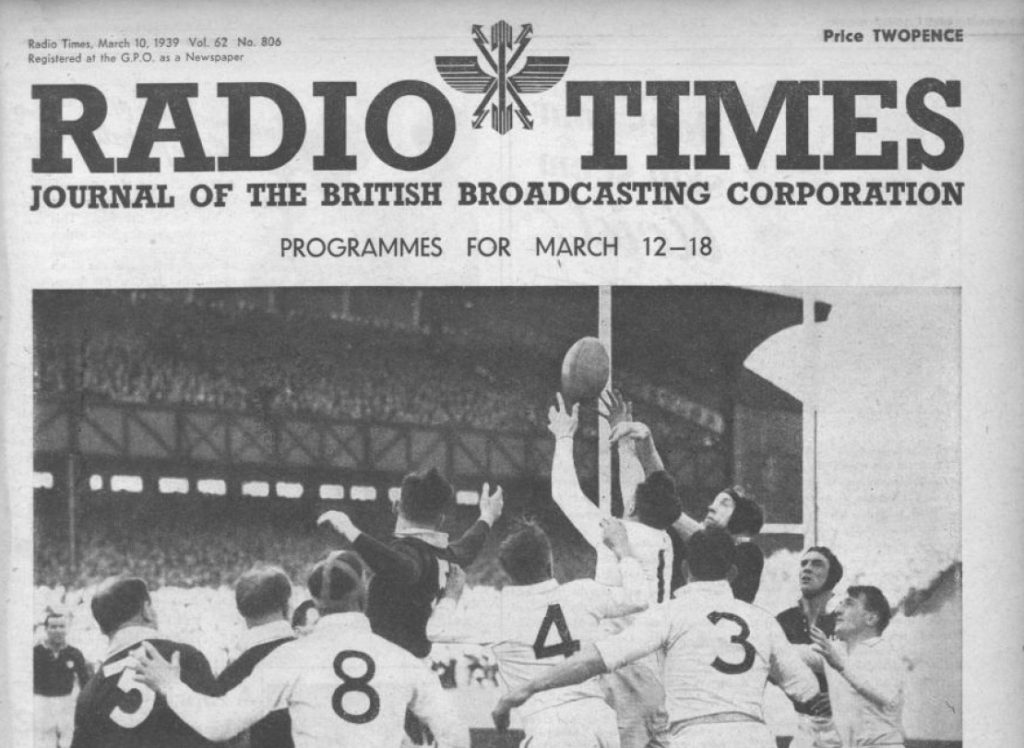
John Wyver writes: Friday 10 March 1939 saw the publication of Radio Times issue no 806. Around one-third of the copies distributed in the south of England carried television listings and the ‘diary column written by ‘The Scanner’.
These ‘television editions’ are a key element of the pre-war medium, not least because they would have been seen more regularly by far more people than would have had domestic receivers, of which there were perhaps just 18,000 in spring 1939. For many people, these magazines defined what television was.
read more »
9th March 2025
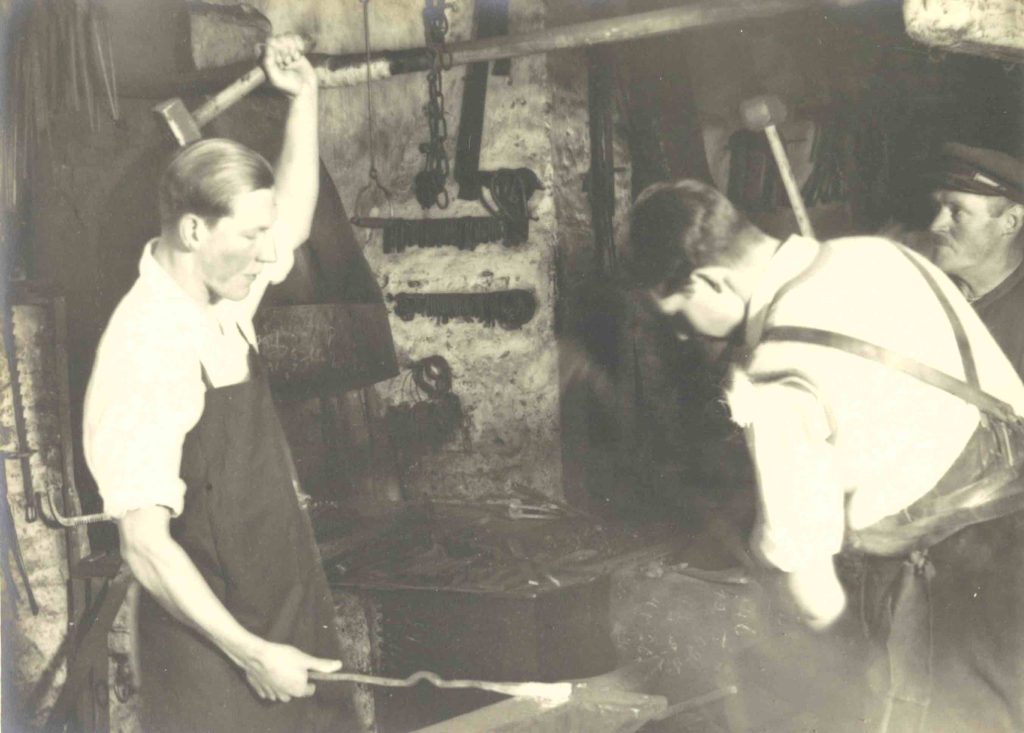
John Wyver writes: The Spring 1938 Craftsmen at Work series featured demonstrations in the AP studio of a potter at work at a wheel, of whisket-making (constructing baskets from strips of oak), withy-weiving (working with willow) and, on 9 March, a blacksmith. The series was one element of television starting to look beyond London and embrace rural England, also apparent in the monthly OB broadcasts On the Farm.
For the blacksmith, a furnace was installed in the lower scene dock, although it proved hard to get the camera sufficiently close to see details. As a critic recorded,
The swift balanced movements of the man, and his shadow against the wall were decorative and exciting to watch, but of the actual job in hand, we could see little or nothing.
read more »