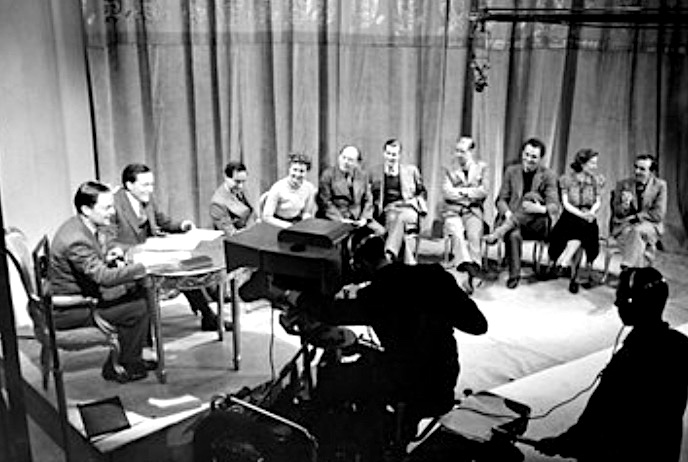
John Wyver writes: On Sunday 26 February 1939 Sight and Sound was a studio ‘bee’ hosted by Sir Kenneth Clark, youthful director of the National Gallery known to friends and peers as ‘K’. Seated in a wide semi-circle with K at one end, four artists were tasked to identify verse quotations, and four poets had to recognise details from famous paintings.
‘The poets won,’ K later recalled, although the accuracy of his charming autobiography, The Other Half: A Self-Portrait (1977; link to text at archive.org), is somewhat undermined by his claim that this was television’s first programme about the visual arts. Not only had Talks already produced numerous such transmissions, but K himself had presented one several months before, introducing reproductions of Florentine masterpieces in the nation’s collection.
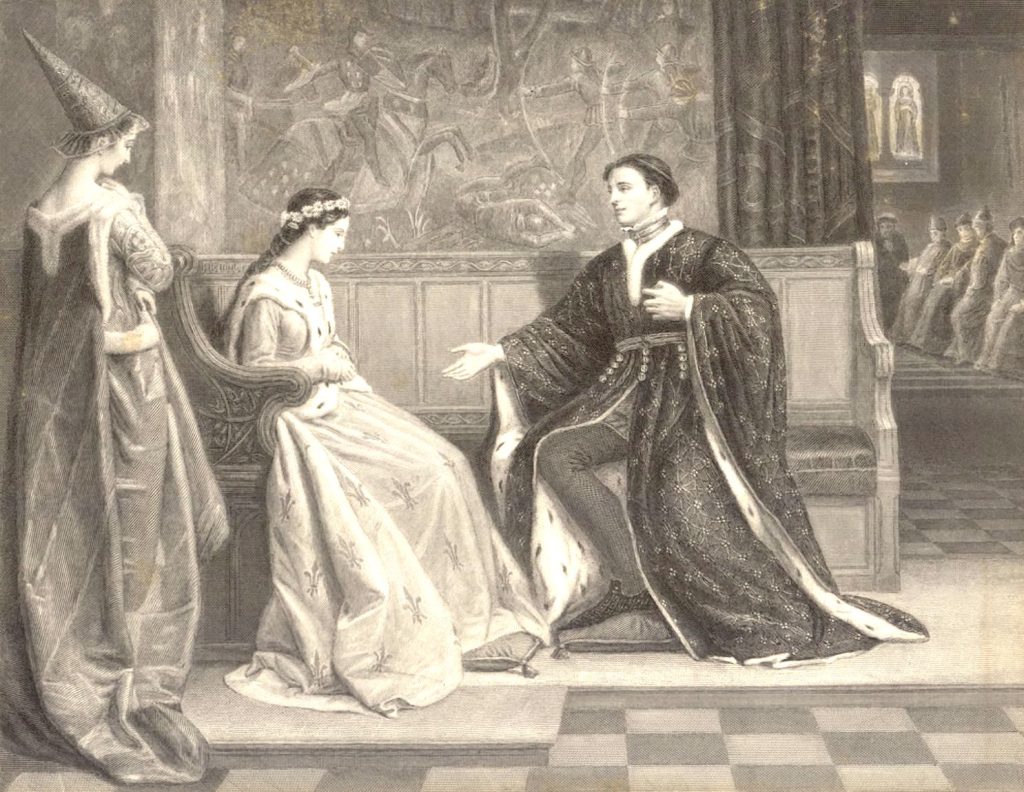
John Wyver writes: Today is the 93rd anniversary of the earliest Shakespeare performance on British television that I can identify. In the morning of Thursday 25 February 1932, producer Harold Bradly in the Baird studio in Covent Garden’s Long Acre, marshalled Colleen Clifford and Willard Stoker to play two ‘proposal’ scenes, one modern, by a writer called Jerome Leslie, and one ‘ancient’, from Shakespeare’s Henry V.
Although the Programme-as-Broadcast record offers no further details, the scene must be act 5 scene 2, in which the young king, victor against the French at Agincourt, woos the Valois princess Katherine. Shakespeare has a great deal of fun with franglais and one or two suggestively sexual jokes, although it is unlikely that the broadcast stressed the latter.
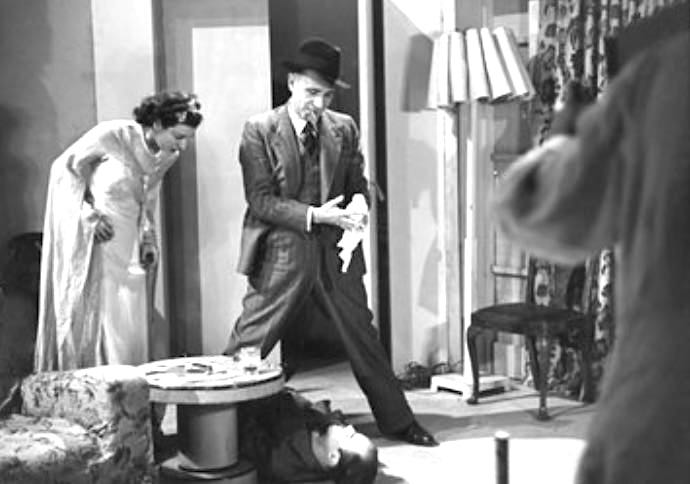
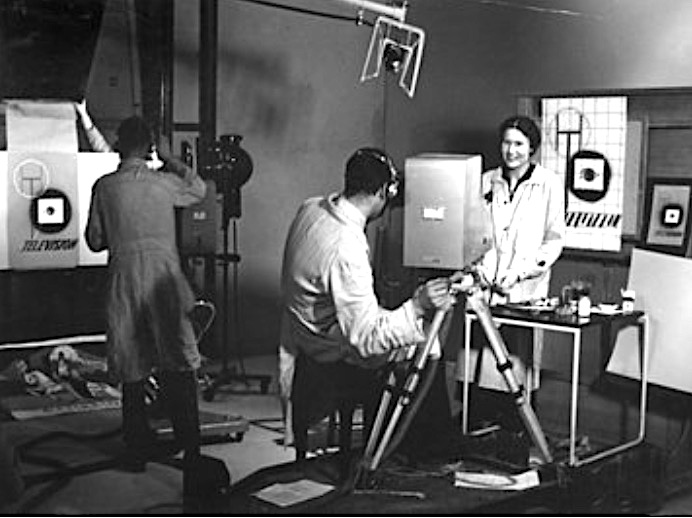
John Wyver writes: The evening schedule of Friday 24 February 1939 featured a half-hour police drama with a twist, since you, the viewer, were expected to solve the crime. The Fletcher Case was the third of the occasional Telecrime series, of which the second, Poetic Justice, with Joan Miller and Charles Farrell is illustrated above.
As the billing said, ‘Viewers will be given sufficient evidence to enable them to solve the problem which confronts Inspector Holt’, who was played in Stephen Harrison’s production by J.B. Rowe.
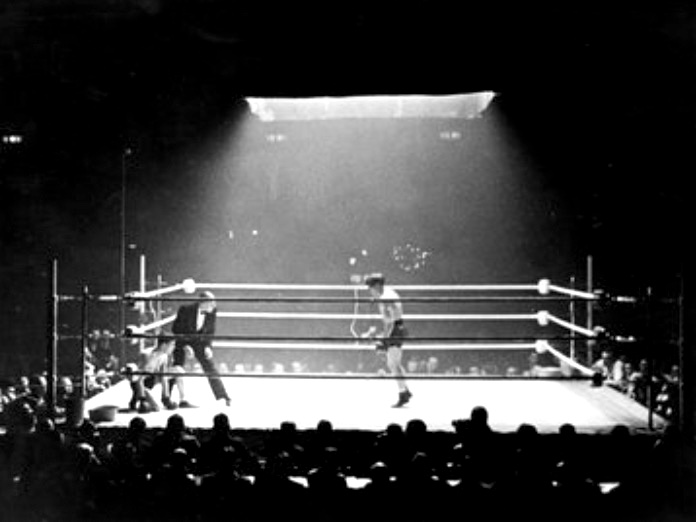
John Wyver writes: Characterised by The Times as ‘an animated scene’, the interior of the Marble Arch Pavilion cinema was packed on the evening of 23 February 1939 with ‘an audience of men and women who were evidently boxing enthusiasts.’
Every seat was taken and some 70 others were standing against the walls, and there were excited cries of ‘Go it Eric’ and waves of applause. The occasion was the large-screen showing of the fight between Eric Boon and Arthur Danahar (above), an event of singular significance in the history of pre-war television.
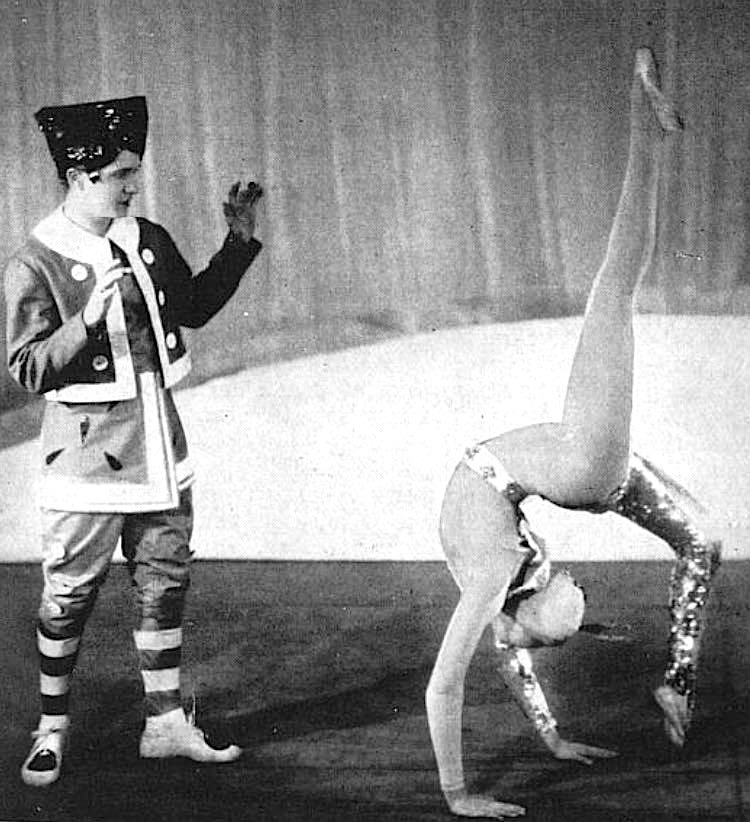
John Wyver writes: Today’s post is a melancholy little tale of a short, vibrant life in which early television played just a small part. The subject is dancer and acrobat Laurie Devine (above, right), who appeared performing ‘various dances’ on the late-night half-hour 30-line transmission from Studio BB at Broadcasting House on Wednesday 22 February 1933.
That Wednesday night was one of at least 40 documented appearances by Ms Devine on 30-line television, on occasions dancing with her brother Tom, and with a final bow on 4 September 1935. When she returned to work in her native Australia in August of the following year, she claimed ‘to have taken part in more television broadcasts than anyone else in the world’. Less than four months later, however, having had to withdraw from a hit revue in Sydney, she was dead from pneumonia.
John Wyver writes: Making a Poster on the evening of Monday 21 February 1938 featured artist Dora Clarke, familiar from other AP broadcasts, taking the audience through the stages of producing what was not exactly a poster, but rather the front cover of a forthcoming issue of The Listener.
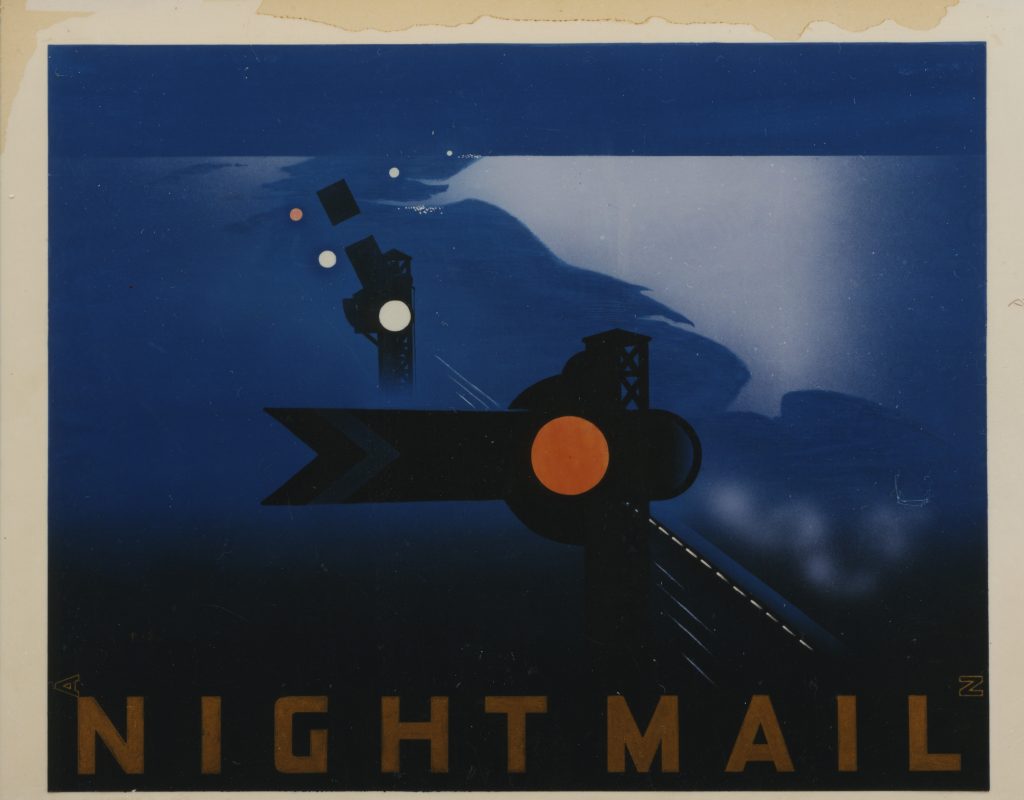
Nor was Ms Clarke actually the designer, who was in fact Pat Keely, a significant creative figure and designer of the wonderful ‘Night Mail’ poster (the original art for which is below, and for the service not the documentary), but relegated on this broadcast to assisting the presenter while remaining (as the PasB noted) out of vision.
John Wyver writes: Frustration reigned at AP on the afternoon of Saturday 20 February 1937 as it proved impossible to get the vision system working and between the sound-only transmission of records director of television Gerald Cock had to make two audio apologies for the breakdown. By the evening all was well, and act 2 scene 3 of Twelfth Night was played before a variety bill with entertainers Flotsam and Jetsam and acrobats Blum and Blum.
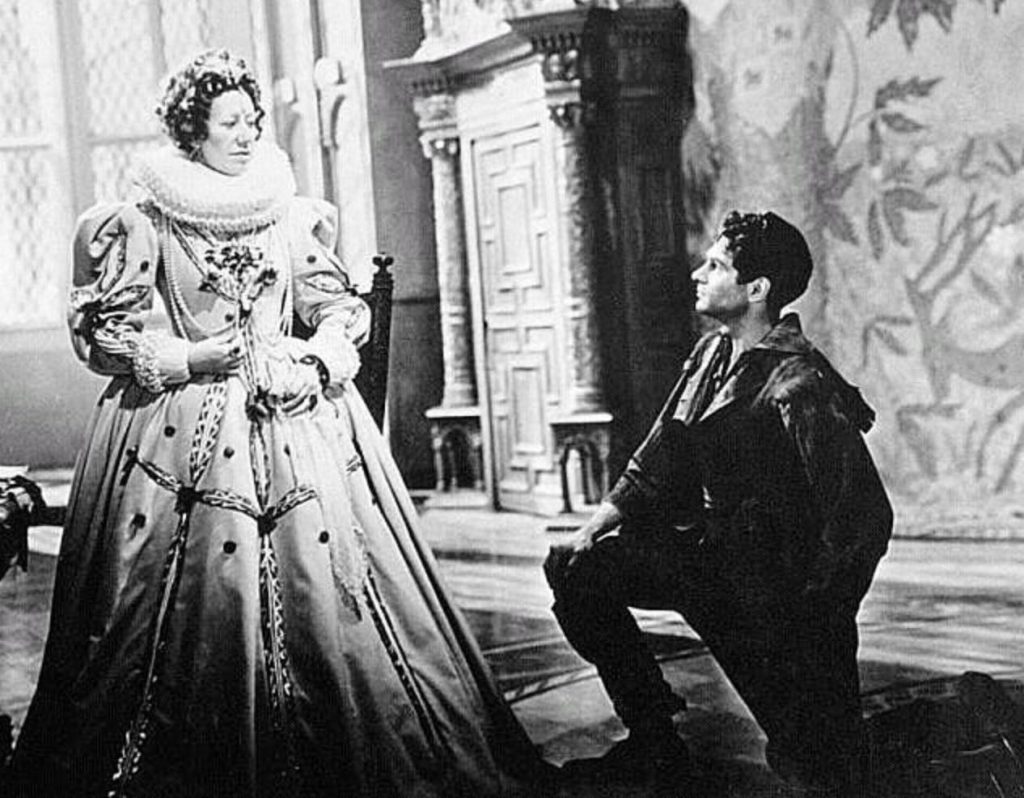
After which the studio was graced by a visit from Flora Robson, who was then filming Fire Over England at Denham (above, as Elizabeth I with – I think – Leslie Banks as the Earl of Leicester). Sitting alongside the actor for a transmission titled Stars and their Directors was not in fact William K. Howard, the film’s director, but Erich Pommer, one of the producers, together with Alexander Korda, .
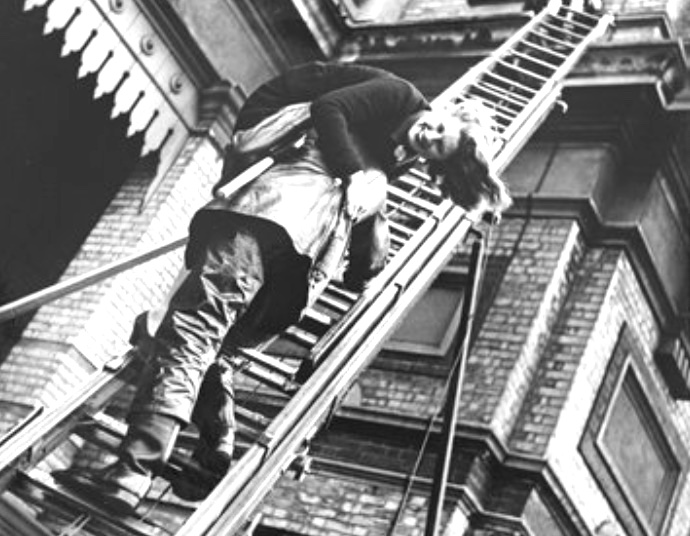
John Wyver writes: The afternoon of Saturday 19 February 1938 saw high drama enacted in and around Alexandra Palace. Fire Up Aloft was a 25-minute fire-fighting demonstration given by members of the Enfield Fire Brigade, with the full-hearted participation of Jasmine Bligh, above.
The broadcast was a ‘local OB’, achieved by taking studio cameras onto the terrace adjacent to the studio building but keeping them cabled to the internal control room. This was a programme form that was very popular right at the start of the AP service, although with the arrival of the mobile control unit transmissions of golf lessons and model aircraft displays in the park came to seem rather tame. Not so Fire Up Aloft.
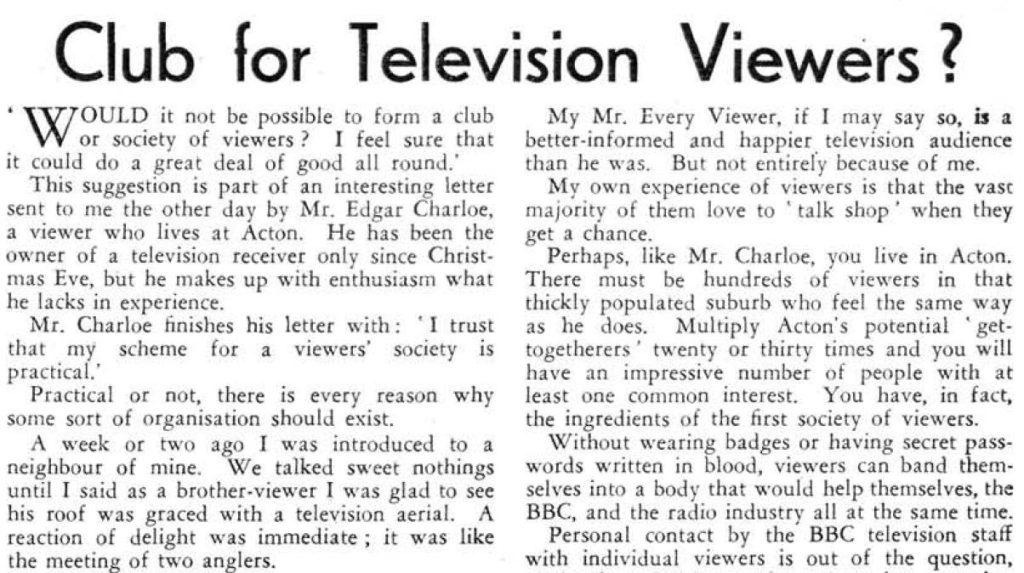
John Wyver writes: Just after 10pm on Saturday 18 February 1939 the AP schedule carried an unbilled 3-minute item titled Special Transmission. This was a short interview with the Mr Edgar Charloe of Acton about his suggestion for a ‘Viewer’s Club’.
The broadcast followed up a recent article that ‘The Scanner’ wrote for Radio Times prompted by a letter for Mr Charloe and reflecting on the idea of ‘a club or society of viewers’. Although the idea seems not to have developed, the discussion is perhaps one of the earliest indications of concerns about television, isolation and sociability. Plus, the Programme-as-Broadcast information solves the mystery of the identity of ‘The Scanner’, although only for the pre-war years.
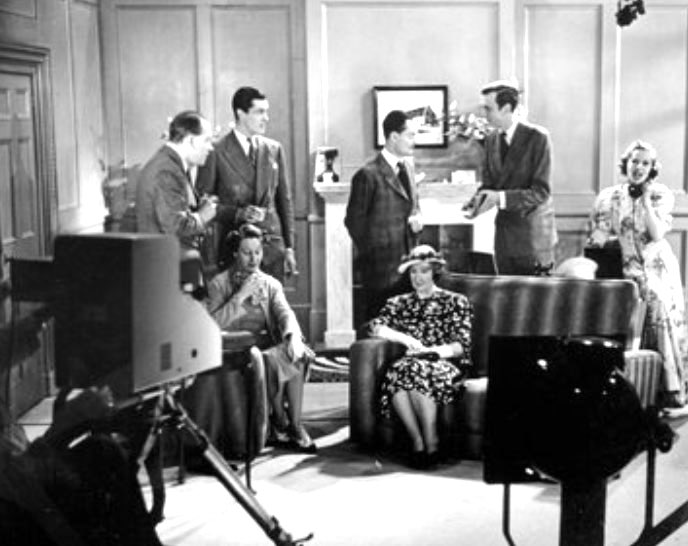
John Wyver writes: ‘We certainly live in a marvellous age,’ Amanda reflects to Elyot in the second act of Noel Coward’s Private Lives. ‘Too marvellous,’ replies Elyot, noting, somewhat ambivalently, that among the marvels of the age are bovine gland injections, and ‘aeroplanes, and Cosmic Atoms, and Television.’
The afternoon of Tuesday 17 February 1938 saw the second performance via the marvel of the age that was television of Coward’s one-act comedy from the cycle Tonight at 8.30, Hands Across the Sea. This was one of five pre-war screen stagings of his work, Which means that Coward was the modern playwright who, after Bernard Shaw, achieved the second-highest number of pre-war productions on BBC Television.
The first was his comic ‘interlude’ Red Peppers in November 1937. Then Hands Across the Sea before the full-length plays of Hay Fever, on the evening of Christmas Day 1938; The Young Idea in February 1939; and then in August that year, days before the service shut down because of the war, Private Lives.