1st February 2025
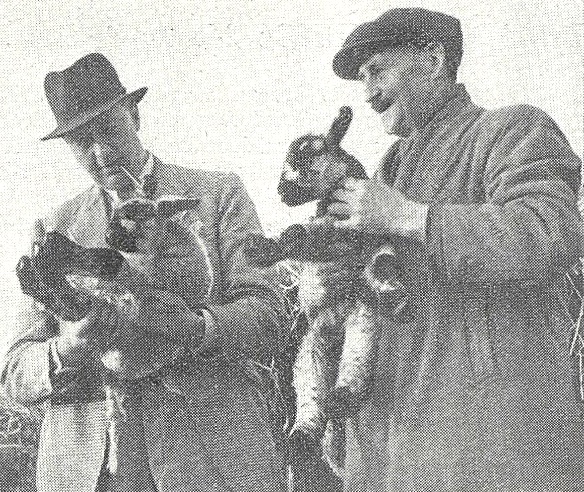
John Wyver writes: In the depths of winter, on the afternoon of Wednesday 1 February 1939, one of the mobile outside broadcast units made a first visit to Bulls Cross Farm at Waltham Cross, just off the A10 10 miles north of Alexandra Palace. This Month on the Farm would become a regular monthly OB through to the autumn, and was the pre-war precursor to the likes of Countryfile (1988- ) and Lambing Live (2010-2014).
read more »
31st January 2025
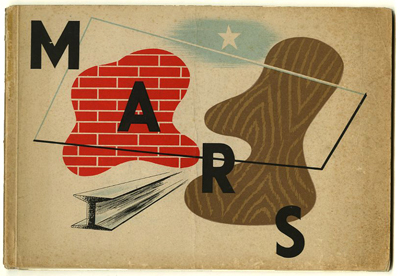
John Wyver writes: Since the end of November I have been posting most days about an aspect of British television before the Second World War. Through January I have managed a post each day, and here I have brought together the links to of each one, along with a short description of each, arranged in chronological order of the programmes, events and publications that they discuss.
My aim is to continue with these posts through to the publication in early 2026 of my book Magic Rays of Light: British Television between the Wars, which is a cultural history of the medium between 1926 and 1939, and which is linked to the Centenary (see the first entry below) of John Logie Baird’s first public presentation of “true television”.
read more »
31st January 2025
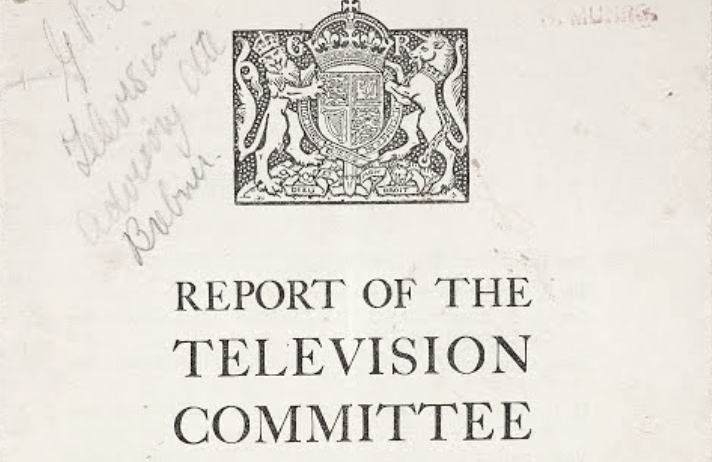
John Wyver writes: The last day of January 1935 was publication day for one of the most consequential documents in British television history: the Report of the Television Committee chaired by Lord Selsdon. Among other matters, this determined that television should be further developed by the BBC and that a ‘high definition’ service should be set up operating with both the Baird and Marconi-EMI technologies.
read more »
30th January 2025
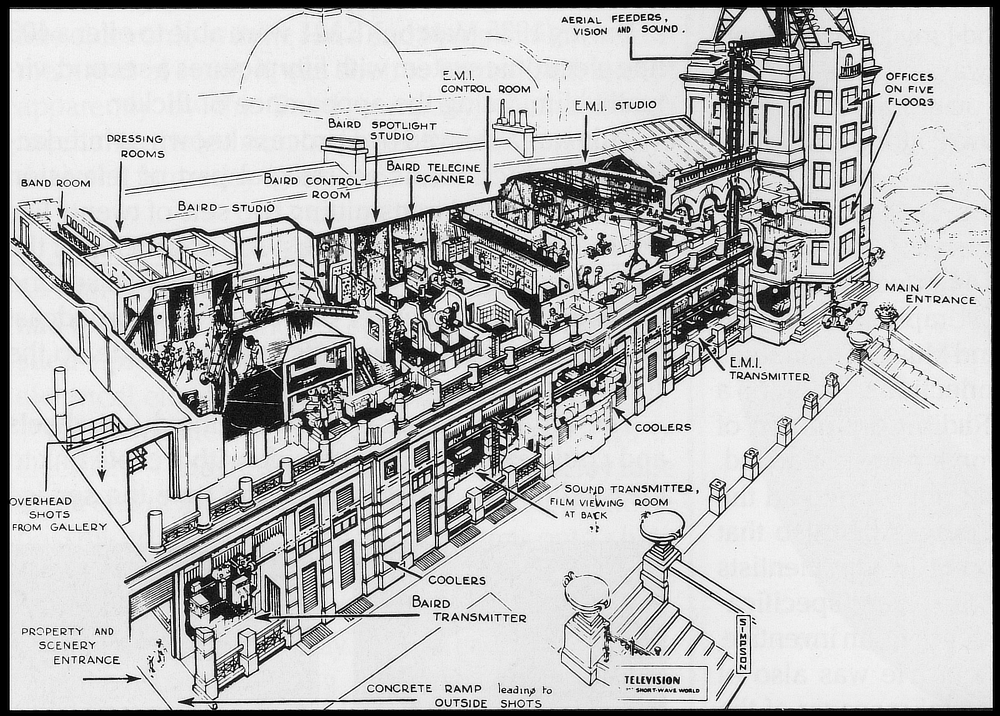
John Wyver writes: another significant moment for the ‘high definition’ service from Alexandra Palace. Saturday 30 January 1937 was the last day on which the Baird system for producing and transmitting 240-line images was used. After this, AP relied solely on the Marconi-EMI 405-line system, and the Baird studio B was effectively moth-balled until the autumn of 1938, and until then was used only for rehearsals and occasional over-spill elements of particularly ambitious productions.
read more »
29th January 2025
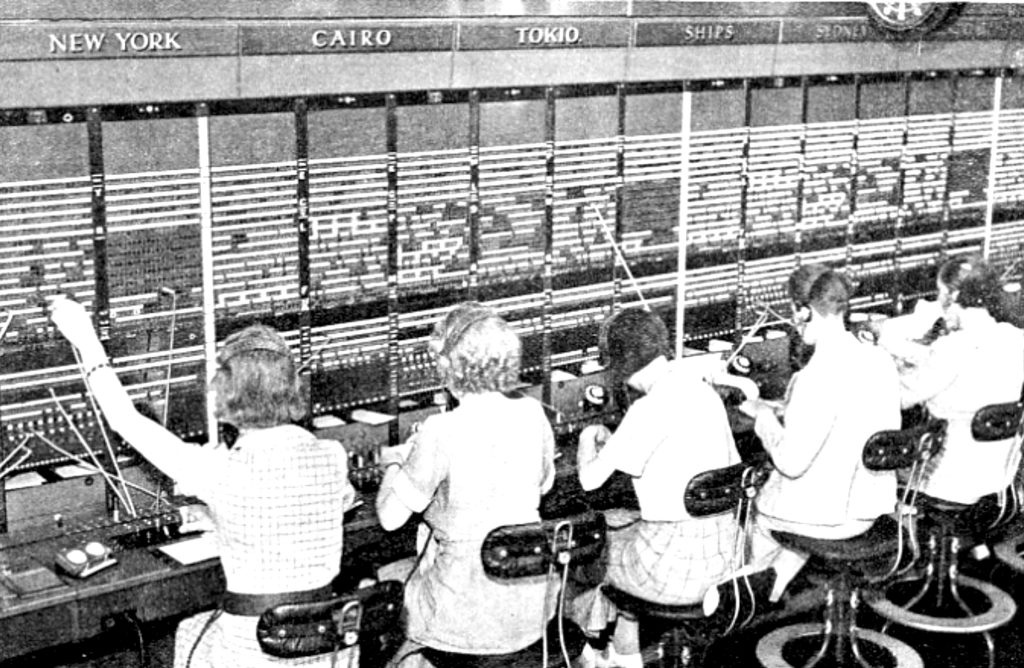
John Wyver writes: A fortnight ago, one of the two mobile outside broadcast units took us to Watford Junction railway station for the first of a Sunday afternoon outing series titled Television Surveys. On Sunday 29 January, while its companion was presumably packing up at the Empire Pool, Wembley, the other unit was at the International Telephone Exchange (in operation above) in London’s Faraday Building for a broadcast that would appear to have been a pure expression of ‘the technological sublime’.
read more »
28th January 2025
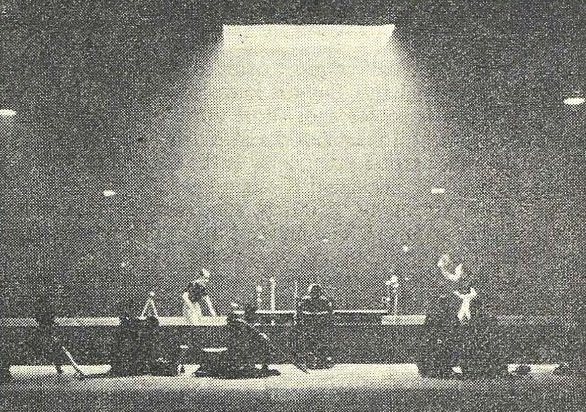
John Wyver writes: Let us return to table tennis on television. A week ago on this blog, we saw a studio demonstration on 22 January 1938. A year on, on Saturday 28 January 1939, we can travel with one of mobile units to the Empire Pool, Wembley [link: a fascinating Guardian article from 1934] for an outside broadcast of part of the men’s singles final played under the auspices of the English Table Tennis Association. Writing in The Listener, Peter Purbeck compared the experience with watching lawn tennis from Wimbledon, and decided that ‘of the two table tennis makes the better television.’
read more »
27th January 2025
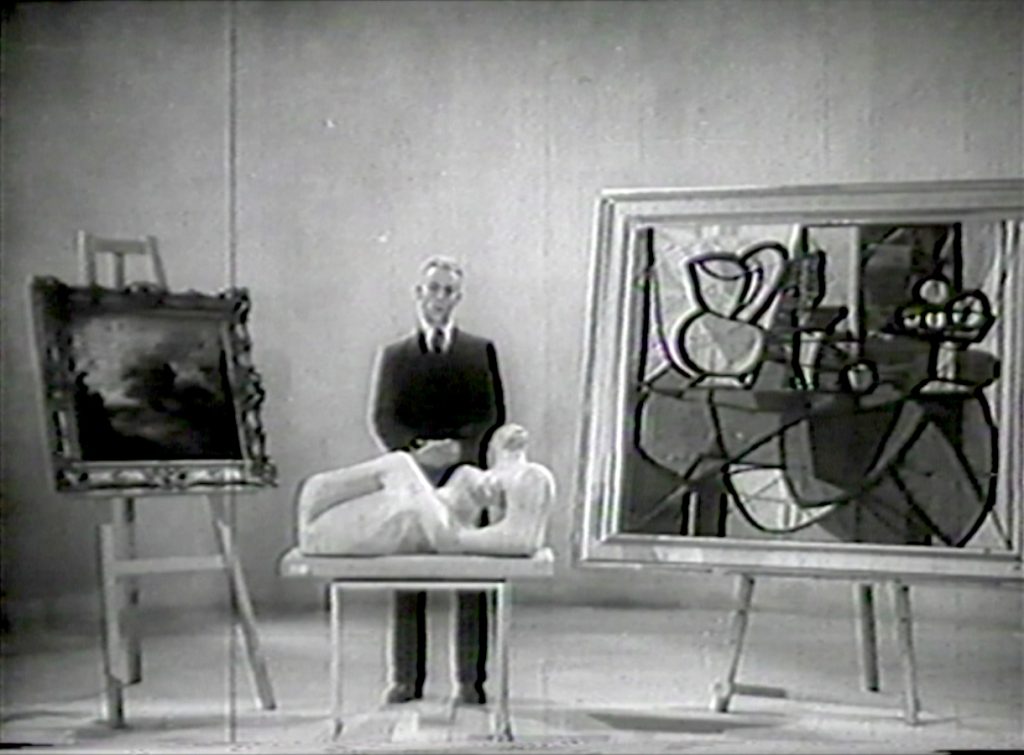
John Wyver writes: At Alexandra Palace on Wednesday 27 January 1937 painter and printmaker John Piper (above) discussed ‘The picture in the modern home’ with architect and designer Serge Chermayeff.
In London Galleries – Art and Modern Architecture, the two modernists reflected on works by, among others, Naum Gabo, Edward Wadsworth, and a figure that the PasB recorded as Lissitsay (sic), but who we would recognise as El Lissitzky. The broadcast was one of a series in which in the first months of the 405-line service Piper introduced a rich range of traditional and contemporary visual art on screen.
read more »
26th January 2025
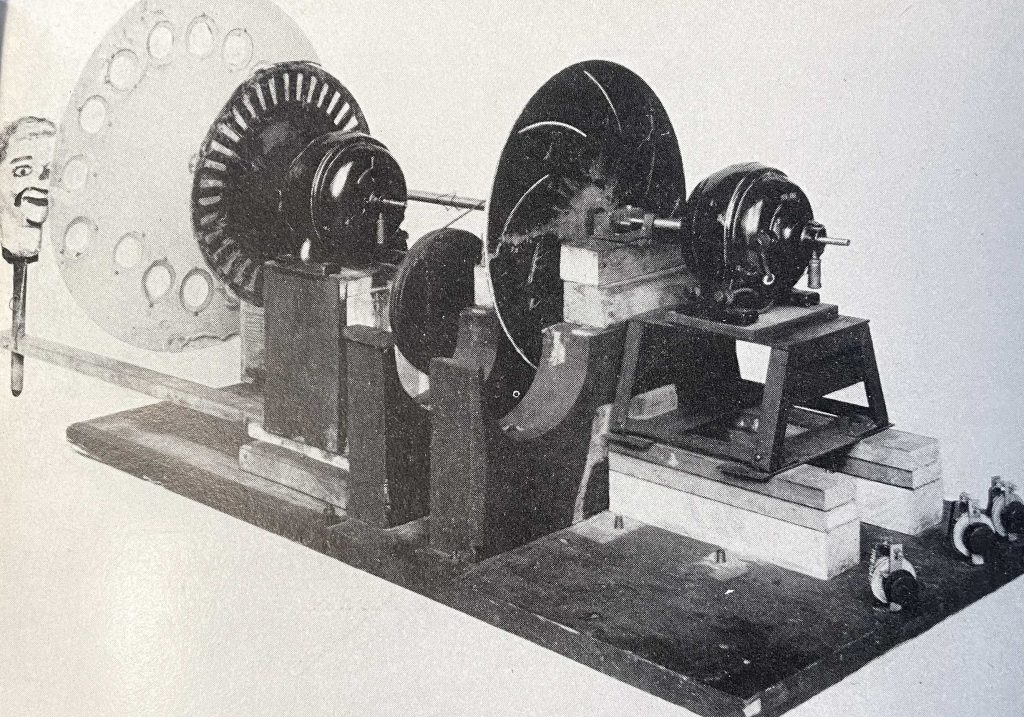
John Wyver writes: This, my friends, is The Big One. Ninety-nine years ago, on the evening of Tuesday 26 January 1926, in rooms above what is now Bar Italia in London’s Soho, John Logie Baird gave the first public presentation of what he called ‘true television’.
Invited guests, along them members of the Royal Institution and their partners, some in full evening dress, climbed the three flights of narrow stone stairs at 22 Frith Street. After waiting in a draughty corridor, they were ushered six at a time into the maverick inventor’s tiny rooms.
read more »
25th January 2025
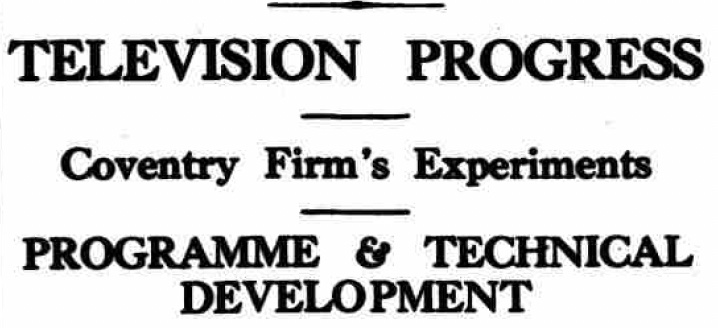
John Wyver writes: Nearly three months after the official opening of the BBC’s ‘high definition’ Television service from Alexandra Palace, The Midland Daily Telegraph ran a round-up feature about the new medium. Published on Monday 25 January 1937, this anonymous and lengthy column touches on many of the key issues facing the AP operation, at the same time as indicating just how uncertain its future was seen to be.
read more »
24th January 2025
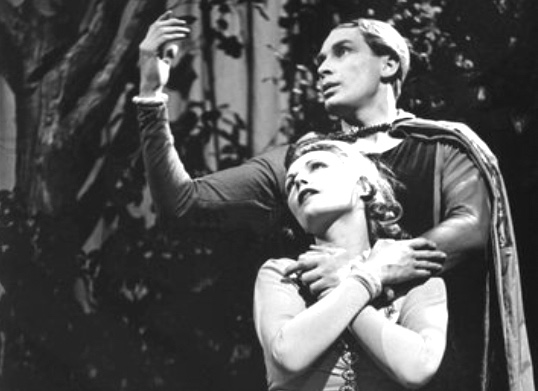
John Wyver writes: the whole of the afternoon schedule on Monday 24 January 1938 was occupied by a presentation of act 2 of Richard Wagner’s music drama Tristan and Isolde. In the evening this was played again, in perhaps the most uncompromising cultural transmission of the pre-war period. Inevitably, the producer responsible was the innovative and uncompromising modernist Dallas Bower. The reaction was, well, mixed.
read more »