Vivienne Westwood 1941-2023

13th January 2023

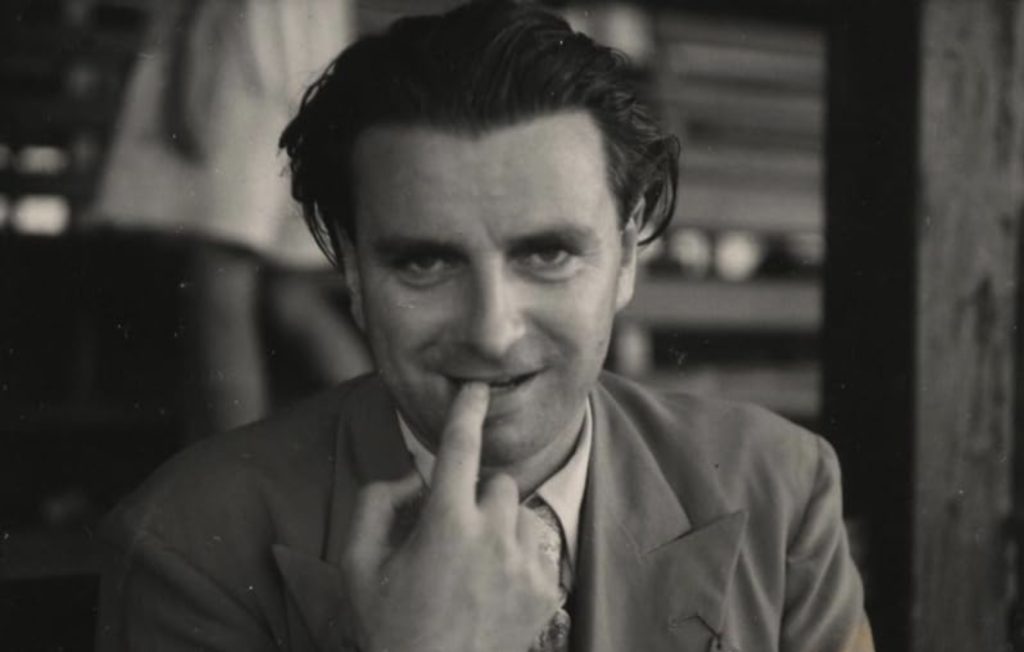
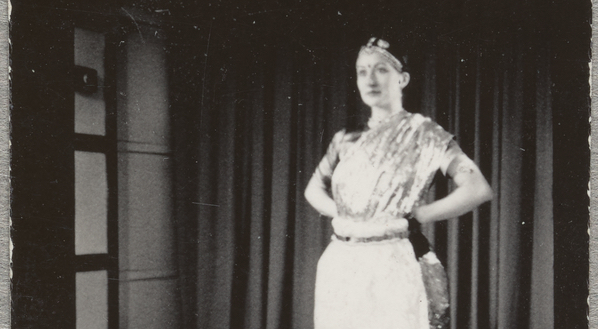
Late last year saw the passing of legendary fashion designer, Vivianne Westwood. Westwood was best known for her eponymous fashion brand and for helping to shape the look of not only punk, but also the New Romantics of the 1980s.

Art Lives: Vivienne Westwood is avalible on DVD

Westwood grew up in Tintwistle just outside Glossop, Derbyshire in a working-class family; her mother had worked in the mills and her father was a factory worker. She attended Grammar school but in 1958, her family moved to Harrow after buying a post office business in the area. Westwood briefly went to Harrow Art School (now the University of Westminster) but left feeling intimated by the art world and worried about future career prospects. A world away from punk and the Paris runway, she became a primary school teacher and married Derek Westwood, a toolmaker at the time but re-trained to become an airline pilot. They had a son together, Ben, in 1963, but separated and divorced in 1966, whereby Westwood moved back in with her parents and began to make jewellery that she sold in Portobello Market. She would meet Malcolm McLaren soon after when she shared a flat with him and her brother, Gordon. McClaren and Westwood subsequently became a romantic couple and had a son together Joe, born in 1967.

read more »

What is London Orbital’s legacy?

4th November 2022

Having finished interviewing Iain Sinclair for our new retrospective film on London Orbital and packed up the filming equipment, we chatted to him as he told us the story of a screening of London Orbital in Milton Keynes, in which only two people turned up. One of the two was a man who had booked to see a screening of another film by Iain, but despite this left before the screening started. The other was a man who had a penchant for running down the hard shoulder of motorways and had used the event as a way to evade the police. He had seen the advert for the screening of a documentary about the M25 and had taken this as a sign. This was not just a sanctuary from the police but divine intervention from the motorway Gods! I brought this up with Chris Petit in my Zoom interview with him and his reply was, “how does he find these people?”

PURCHASE London Orbital on DVD and digitally here

What I loved about the anecdote is that it seems to typify the absurdity of London Orbital. While the initial gesture of London Orbital is itself absurd, who would want to walk or just drive around the M25, a road with no end and no beginning? As Iain reminded us, this was no less absurd than the decision to build the ring road in the first place, a decision that would have made sense in 1956, rather than when construction of the motorway was finally completed in 1986.

London Orbital has been a steady seller for us over the years. It’s undoubtedly the most ‘cult’ film we distribute. Like all cults, its practitioners can look foolish and absurd to outsiders. Iain explained to us how London Orbital’s legacy has been formed by its reconstruction. The man from Milton Keynes was a prophetic figure in this regard. People have taken up and walked their own journeys around the M25 and have remixed the film by adding their own music to it or re-creating the film in their own way. It was this latter trend, which Chris raised in my interview with him unprompted, that he would like to see a shot-for-shot re-make similar to Gus Van Sant’s version of Psycho.

What was so interesting listening to Iain and Chris discuss the legacy of London Orbital is the fact that it went against my thinking of what the film means in 2022. My reading was based on the ideas that London Orbital inhabits, perhaps best typified when I asked both of them if the Ballardian declaration that ‘the future is boring’, was no longer relevant given that the future is doom-laden and fills us with fear. And while both gave very interesting answers to this question, London Orbital’s legacy laid not in the ideas of the film but in its method.

The questions are: how to shoot the M25, how to edit the M25, and how to narrate the M25? With a circular road, what’s your point of entry? These were answered with a method of working, which arguably wouldn’t be possible to do today. As Chris mentions in the new interview, London Orbital was written afterward. There was no shooting schedule, with the film only taking form during the edit, while at the same time the edit informed the filming, with Chris and Iain going out and shooting more material as the film’s editor, Emma Matthews, gave it shape.

Despite the emphasis on the method of London Orbital, I still find myself returning to the ideas of the film. It’s a remark that Chris makes in my interview with him that is germane to this, “London Orbital contains the future in it.” Ballard comments in the film that the M25 marks a transitory zone and I think that the film reflects this, in that it finds itself right in the middle of the legacy of neoliberalism that we are still living with today.

It was made shortly after 9/11 and the war in Afghanistan but just before the invasion of Iraq. Its production was just a few short years before the creation of the surveillance state but just before the Internet transformed our lives and with it, the creation of new forms of surveillance. Indeed, I think about Chris’ comment in the film that new types of surveillance mark “a fundamental revolution in the level and type of voyeurism,” which will result in “the loss of privacy and individuality as previously understood,” speaks directly to us in 2022. Paradoxically then, the film can be seen as both a time capsule of a lost world and an index of our current one.

Tom Allen, November 2022

Remembering Macbeth

1st November 2022

I hope it will not seem immodest if I enthuse here about a screening in Stratford-upon-Avon last Sunday of the Illuminations/Royal Shakespeare Company Macbeth that we made in 2000. This is a film version produced for Channel 4 of the stage show that began in 1999 on the stage of The Swan Theatre, travelled to the States and Japan, and then in the summer of 2000 came to the Young Vic in London.

Macbeth is available on DVD and for download and streaming

Sunday’s event at The Other Place was organised for RSC Patrons and was to remember and celebrate the extraordinary talent of the late Sir Antony Sher, who plays Macbeth. Before the screening I chaired a Q&A with Harriet Walter, who is Lady Macbeth, and Gregory Doran, the stage and screen director of this Macbeth, RSC Artistic Director Emeritus, and also Tony Sher’s husband.

Harriet and Greg were on scintillating form, funny and moving as they thought back to the rehearsal process, remembered the filming and spoke about something of what it was like to work with Tony.  Together we recalled that Chris Smith, then Culture Secretary in the Labour Government, came to see the show at the Young Vic (and oh did we long on Sunday for a Culture Secretary who actually went to the theatre!). He rang Michael Jackson, then Chief Executive at Channel 4, and suggested that the channel might consider filming the highly-praised staging. Michael somehow found a budget of £450,000, Greg and Tony found co-producer Seb Grant and myself at Illuminations, and we pulled the film together in just a few weeks.

Before this I had produced a television version of Richard II, which Deborah Warner directed, and with Seb a film by Phyllida Lloyd of her staging of Benjamin Britten’s Gloriana. With Greg, who had not made a film before, we all knew that we did not want to attempt a multi-camera version shot in the theatre. Instead for the single-camera style we envisaged we sought a single location (to keep the costs down) that had what Greg called “a vivid neutrality”. 

We found all the qualities we were looking for in the Roundhouse in Camden, a former locomotive shed and later arts centre which in the autumn of 2000 had recently been refurbished. Both the glorious high main space and the warren of low caverns underneath were empty, and we made full use of them throughout the 12 days of filming.

The key thing I want to mark here about the screening is how astonishingly good the film revealed itself to be. First, it looked absolutely glorious projected on a really big screen (and it sounded great too). (Credit here to Todd MacDonald who a while back made a new digital transfer from a tape master, resulting in a 60-plusGB file, which is a triumph.) We shot it with a Digibeta tape camera, but from the quality of the images you would honestly not be able to tell. It was pin-sharp on the screen (thanks to Oli Quintrell and the projection team), with deep blacks, and with images, both in the close-ups and the big, high wides, of striking beauty.

The key creative on the film team was DOP Ernie Vincze. The production is set in a world that might be the aftermath of the conflict in former Yugoslavia, and Greg wanted the edgy immediacy of a verité documentary. Ernie had worked in war zones for Granada documentaries, and with his son Chris as assistant he filmed much of Macbeth with the heavy Digibeta camera on his shoulder. Astonishingly, we managed to shoot ten minutes of screen time on each day.

Scenes were done with only the most minimal prep and with Ernie following the action employing all the skills of the brilliant documentary cameraman that he was. There are long sequences shot in single takes where the camera finds exactly the right face at the right moment. And the subtleties, the precision, the intelligence, the understanding and the detail of the performances shine through, with the camera catching the tiniest of side glances and sceptical expressions.

The cast is remarkable, with not only Tony and Harriet at the very top of their respective games, but also Ken Bones as Banquo, the great Joseph O’Conor as Duncan, and Noma Dumezweni and Richard Armitage in small roles. One key to making it all happen against the ridiculous schedule was that they had all lived inside these parts for a year immediately before stepping on to the set.

Fundamental to the lighting was a helium balloon, illuminated from the inside, that Ernie floated into the ceiling of the Roundhouse. He supplemented this enveloping soft light with only a few lamps on stands (as I recall we worked with only a single electrician, Benny Harper, although that can’t actually have been the case.). Much of the time this delivers absolutely gorgeous images, often picking out the edge of an actor’s profile, although there are a few occasions when I wished for a bit more fill on a face to supplement the top light.

With truly brilliant, fast-paced editing, on occasion using jump cuts (as for Stephen Noonan’s dazzling Porter, shot by a row of filthy toilet bowls and complete with uncanny Tony Blair impersonation) the film has a propulsive energy that makes it feel, even 22 years on, remarkably contemporary. From being pitched instantly into the breathless opening of the weird sisters rushing headlong away from a night-vision camera, watching its 120 tight minutes felt extraordinarily exciting, on occasion truly scary, and also just a tiny bit exhausting.

Having not viewed the film properly (apart from choosing the occasional clip) for two decades I was unsure what to expect, and a touch apprehensive, but I think it’s fair to say that all of us in the audience were thrilled. Which is further support for the argument of both the RSC and Illuminations cherishing their moving image archives, and carefully looking after – and making accessible – theatres and digital files that preserve such treasures.

Is Painting Dead? Full show

30th September 2022

As part of our 40th-anniversary celebrations a few months ago, we delved into our archive to highlight some of the famous and, in some cases, infamous moments we’ve brought to the small screen. Chief amongst these was a clip taken from our programme, Is Painting Dead? in which an inebriated Tracey Emin stormed off the set after disagreeing with the other panel members. This clip has proved popular and after a YouTube commentator asked for the full show and we happily obliged. For the first time since the original broadcast, we present to you Is Painting Dead?

Read the full story of the clip here. You can purchase our documentary on Tracey Emin, which is part of our theEYE series.

“Amazon.com has never had any earnings” Jeff Bezos

24th June 2022

The final blog post for our 40th anniversary is an interview with Jeff Bezos circa 1998. This is the first time we’ve made this clip available and it’s a fascinating glimpse of when Amazon was ‘just’ a bookshop but also shows how much Amazon’s outlook remains relevant even now in 2022.

This clip is from The Net (1994-98), which was comprised of four series and which dealt with many aspects of digital communications and pioneered innovative link-ups between television and the internet. The Net was the first series to feature an e-mail address in its closing credits and the first to have an accompanying website.

Madonna f-bombs the Turner Prize

23rd June 2022

What is it about the Turner Prize, live TV, and Illuminations? Tracey Emin walked off during Is Painting Dead? which aired live after the 1997 Turner Prize and then in 2001 Madonna dropped an f-bomb of the mother variant at the end of her presentation speech. She awarded the Turner Prize to Martin Creed for his controversial installation “Work No. 227: The lights going on and off”. A few days later painter and ‘genuine artist’ Jacqueline Crofton hurled eggs at it in protest, only to receive a life ban from all Tate galleries. 

Illuminations filmed the Turner Prize from 1993 – 2005 and while the prize has had an illustrious array of award givers there have been none more high profile than Madonna. Her speech was on her own uneasiness with artistic prizes and with prizing one artist’s work over another’s. The artists were all winners in Madonna’s eyes. She would later explain that her outburst was partially a response to Tate wanting to check her speech beforehand, with Madonna saying, “The real reason is, and this is my perverse sense of humour, that they wanted to read my speech. I got pissed off with them. Then I just got insulted when they told me not to swear.”  It was also because had wanted to be referred to as “Mrs Richie” but had been told this wouldn’t be possible. Her husband at the time was director, Guy Richie.

There was a vain attempt to bleep out the swearword but there’s no doubt that it was audible. Channel 4 issued an apology as it had been broadcast prior to the 9pm watershed. Madonna remained defiant, telling CNN, “As if no one says that word. It’s a cutting edge, contemporary award. People expect that sort of behaviour from me.”

As for Illuminations, once again we were in hot water with the broadcaster and so on our 40th anniversary we give you Madonna and her ‘motherfucker’

Basquiat and Warhol

21st June 2022

Continuing our series of key moments in Illuminations’ history, we are sharing our famous clip of Jean-Michel Basquiat and Andy Warhol together with their collaborative paintings at the Tony Shafrazi Gallery, New York in 1985. It was filmed as part of our State of the Art series which was shown on Channel 4 in 1986 in the UK and then in more than 20 other countries. It is also our most viewed YouTube video on our channel, with roughly 1.4 million views.This HD version was published on YouTube in 2014 with the SD version being released in 2007.

Aside from giving a unique insight into both the thinking and dynamic of both Basquiat and Warhol, there is of course the tragic fate of each artist. The interview for State of the Art would be one of Warhol’s last as he died a little over a year later followed by Basquiat’s tragically early death at just 27 in 1988 and this clip is one of the few filmed interviews with him.

Purchase the full State of the Art on DVD and digitally or purchase individual episodes here.

Exit Emin Stage Right

17th June 2022

In 1997 Illuminations produced the live show, Is Painting Dead? Chaired by Tim Marlow, it featured Norman Rosenthal, Tracey Emin, Matthew Collings, Richard Cork, Jane Harris, Waldemar Januszczak, Martin Maloney, and Roger Scruton to discuss the titular question.

The show itself might have become a historical curiosity, a discussion on the nature of art broadcast live on British TV back when those things were a possibility. It would have been, had it not been for Tracey Emin. Emin had turned up drunk and began to steadily get more and more annoyed with her fellow guests, starting with a “You’re wrong! You’re wrong! You’re wrong!” directed at Roger Scruton, then announced that she was drunk and wanted to speak to her mum and be with her friends. Finally, she angrily and awkwardly removed her microphone, made all the more inelegant by the almost comically placed finger splint attached to her, and stormed out. And thus, not just a piece of TV history was born but a small piece of British cultural history.

The previous week in New York she had fallen out of a taxi drunk and had broken her finger. Emin claimed that the combination of prescription painkillers alongside her alcohol consumption during the 1997 Turner Prize awards dinner, which preceded the recording of the discussion, had rendered her insensible.

In Artrage!: The Story of the BritArt Revolution, Elizabeth Fullerton writes that when she did re-join her friends she had no recollection of the event. Indeed, her then-boyfriend, Mat Collishaw, recounts that she had thought she had missed the TV show and bemoaned the fact that she had lost out on the £500 fee. When a friend called Emin the next morning to congratulate her on her performance, Emin thought her leg was being pulled. The Guardian at the time wrote, “Tuesday’s performance may be hailed as Tracey Emin’s most significant, certainly her most entertaining, contribution to British art.” Emin herself told the South China Morning Post in 2015 that she wasn’t even aware that she was on television.

Emin would go on to be nominated for the 1999 Turner Prize which would cement her public infamy with her piece, Bed, but it was her appearance on Is Painting Dead? that arguably announced her to the world. Illuminations would produce a documentary on Emin as part of our theEYE series, which was released in 2003.

We’ve posted the entire clip on our YouTube channel. Watch below.

Happy Anniversary to us!

15th June 2022

John Wyver writes: Remarkably, Illuminations was incorporated forty years ago today, 15 June 1982. Which makes this our Ruby anniversary. Five months before Channel 4 went on air, co-founder Geoff Dunlop and I bought the defunct Chromeland (which as I recall was a double-glazing concern) off the shelf and changed its Mem and Arts to allow us to operate as an independent media producer. We have survived, just, across four decades, making at least one broadcast television project each year, and I am pretty certain that makes us the oldest, continuously active independent producer in the mediasphere. To celebrate we are going to offer further anniversary posts here and elsewhere ion social media over the next few days.

Ukraine links

6th March 2022

John Wyver writes: To compile the usual Sunday list of links to articles and videos concerned with film, art, performance and writing, seasoned with a sliver or two of politics, seems somehow a touch pointless, even tasteless, given the current horrendous conflict in Ukraine.

I’ve been reading and watching a range of exceptional reports, analyses and speculations, many of them by desperately brave writers and filmmakers, and I thought it might be interesting to compile these into a list that I keep updated over the coming days, adding new elements and removing ones overtaken by events.

So here’s the start of that experiment, with a couple of Twitter threads that I have found especially useful. I welcome additional recommendations, either in the comments below or via email to [email protected].

PS. Yes, I have kept the same image as topped the last post to this blog.

PPS. I’m still collecting my other kinds of links, and I’ll return to these at some point in the future.

TO DONATE:

read more »