23rd January 2025
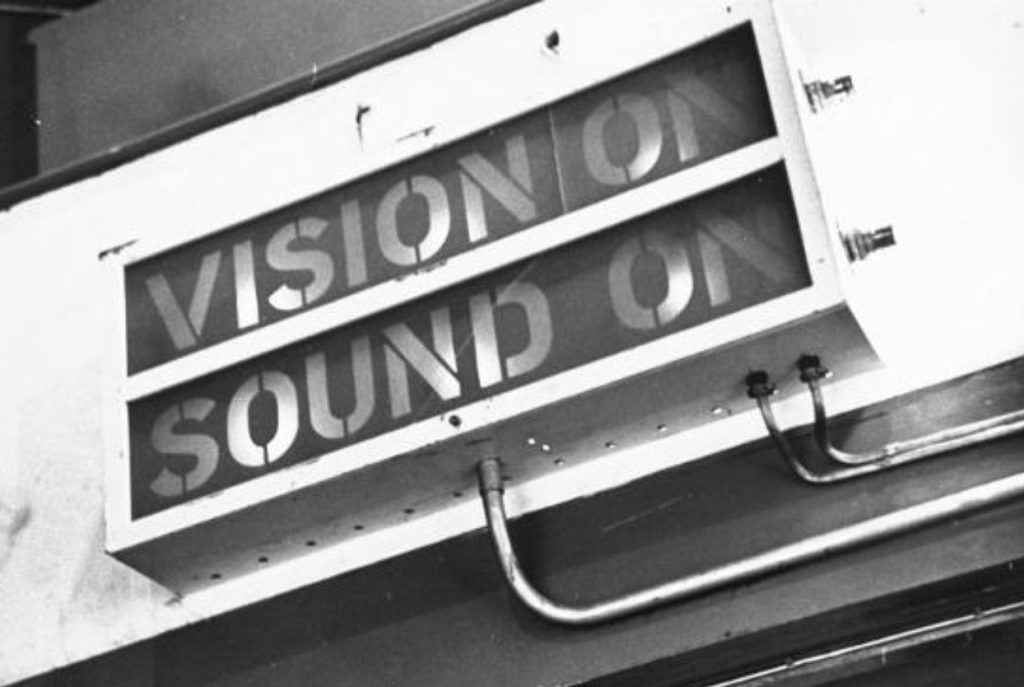
John Wyver writes: First transmitted on the afternoon of Monday 23 January 1939, Rehearsal for a Drama is one of around a dozen plays that premiered on the Television service from Alexandra Palace. Written for the new medium, and set in a television studio at, well, Alexandra Palace, on the evidence of the script it was also a remarkable “meta” moment for early television. Oh, and there’s a mystery attached to it too.
read more »
22nd January 2025
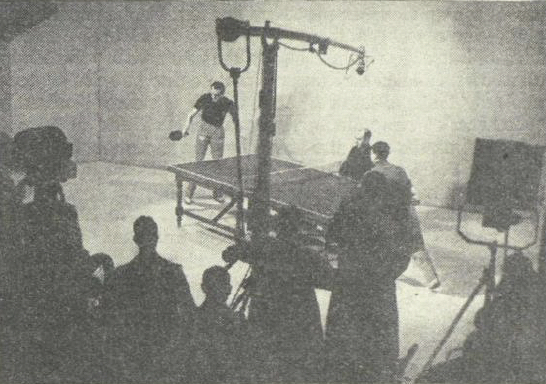
John Wyver writes: one part of Saturday primetime (not that there was such a concept yet) on 22 January 1938 was given over to a 13-minute Table Tennis Demonstration by the great Hungarian-British champion Victor Barna and four members of the England table tennis team, among them a sole woman, Margaret Osborne. This was a second presentation of a transmission that had also run earlier in the week, and of one of these broadcasts we have a richly detailed description in an anonymous Listener column (26 January 1938; from where the image above comes).
read more »
21st January 2025
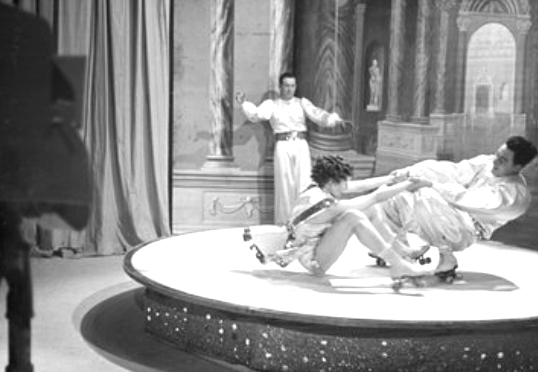
John Wyver writes: This is a cautionary little tale about the perils of live television – and of roller skating. The main offering on the evening of Saturday 21 January 1939 was producer Harry Pringle’s Cabaret bill featuring comedy xylophonist Sid Plummer, funny stories from Gene Plummer, Gene Sheldon’s banjo act and The Four Sensational Macks, seen at AP above. The following Monday a page 10 Manchester Guardian story was headlined, ‘SKATERS FALL FROM TABLE – Television Accident’.
read more »
20th January 2025
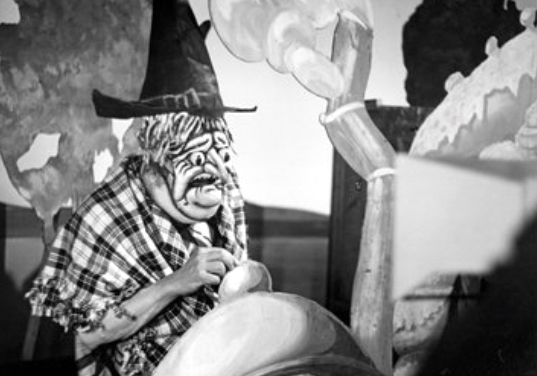
John Wyver writes (a little later than usual, given all of the activity prompted by yesterday’s post and follow-ups): the afternoon of Friday 20 January saw the fourth performance of one of the new medium’s undoubted ‘high culture’ hits.
Billed as ‘a masque to the music of Humperdinck’, this was a staging of a reduced version of Engelbert Humperdinck’s opera Hansel and Gretel, which had been first performed in Weimar in 1893. Stephen Thomas’s presentation involved actors miming before the cameras while singers performed off-stage.
read more »
19th January 2025
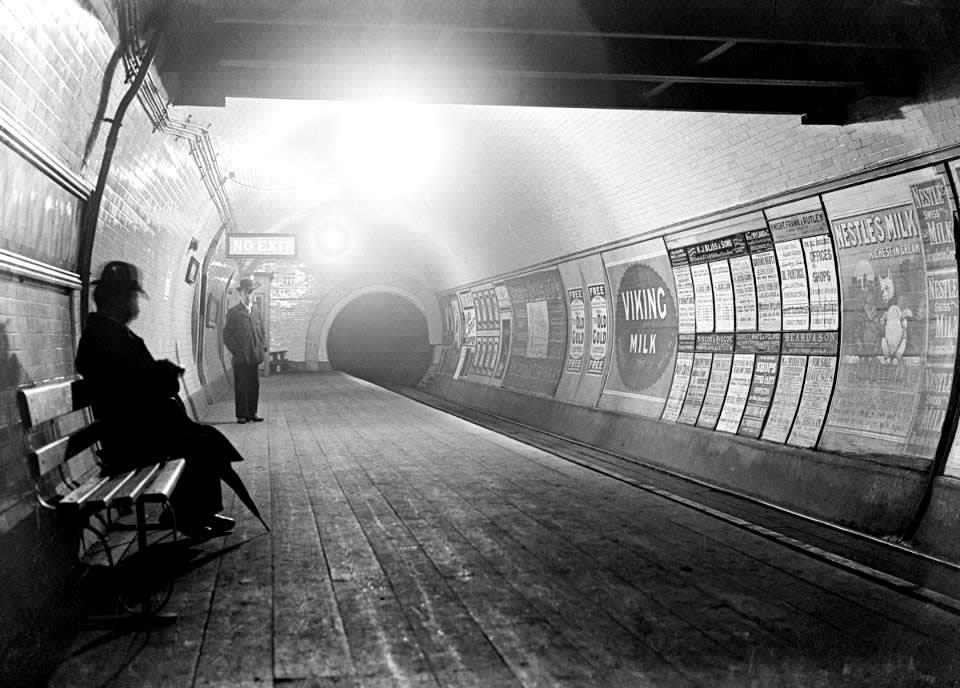
John Wyver writes: A mystery. Afternoon transmissions on Tuesday 19 January 1937 included the 8-minute unbilled drama The Underground Murder Mystery by J. Bissell Thomas. Produced by George More O’Ferrall, this would appear to be the first original script (that is, not adapted from a stage play) broadcast from Alexandra Palace, but – appropriately perhaps – it’s a mystery. No script seems to exist, and even the writer is fairly obscure. Can anyone help with any further information?
read more »
18th January 2025
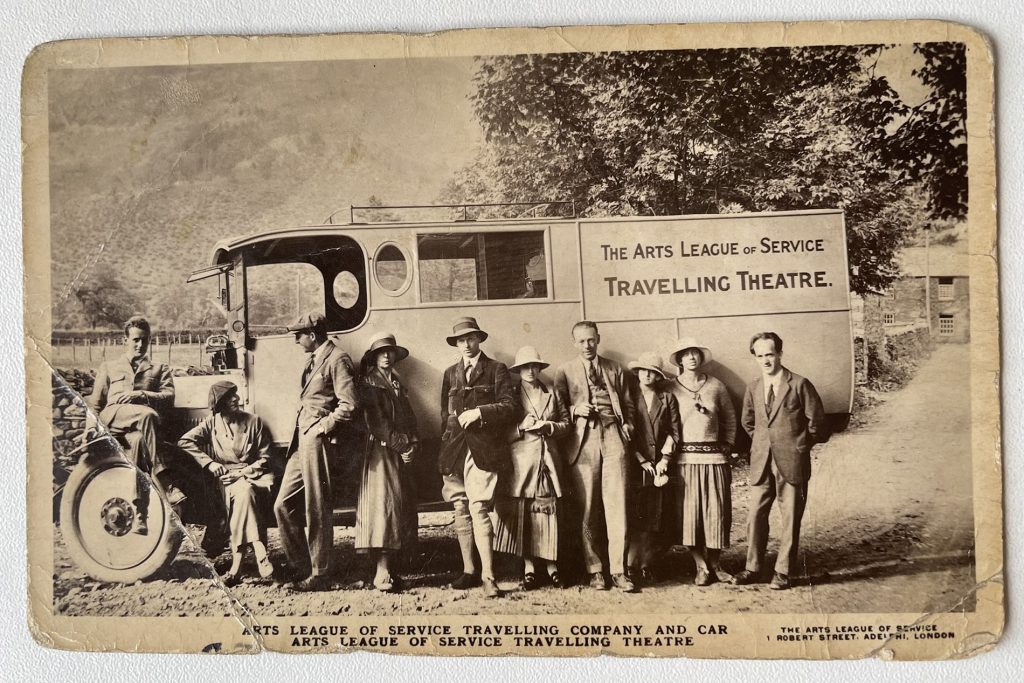
John Wyver writes: at 3.01pm and again at 9.01pm on Monday 18 January 1937, via the Marconi-EMI system, Alexandra Palace transmitted a 15-minute programme of folk songs and sea shanties by the Arts League of Service (ALS). Bunny Churcher, John Rudling, Dennis Hutchinson, Eleanor Elder, and Brandon Acton-Bond performed songs including ‘Polly Oliver’ (arranged by Cecil Sharp) and ‘The Moorish Maid’, while Rosemary Jephson demonstrated Margaret Morris movement exercises to Schubert. And the ALS…?
read more »
17th January 2025
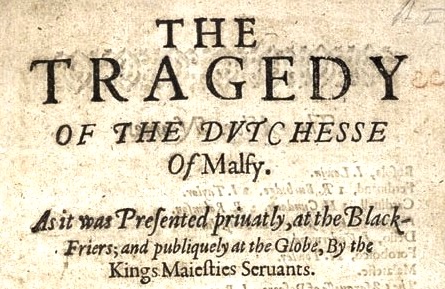
John Wyver writes: the evening of Monday 17 January 1938 saw the first broadcast (with a repeat on the following Friday afternoon) of Royston Morley‘s hour-long adaptation of John Webster’s Jacobean drama, The Duchess of Malfi. The classical stage actor Catherine Lacey played the Duchess, a year before she made her screen debut as a high-heeled nun in The Lady Vanishes; Stephen Haggard, Antonio; Esmé Percy was Bosola; and a 40-year-old John Laurie took the role of Ferdinand of Aragon. The Black actor Robert Adams had a small and unbilled part as a servant.
read more »
16th January 2025
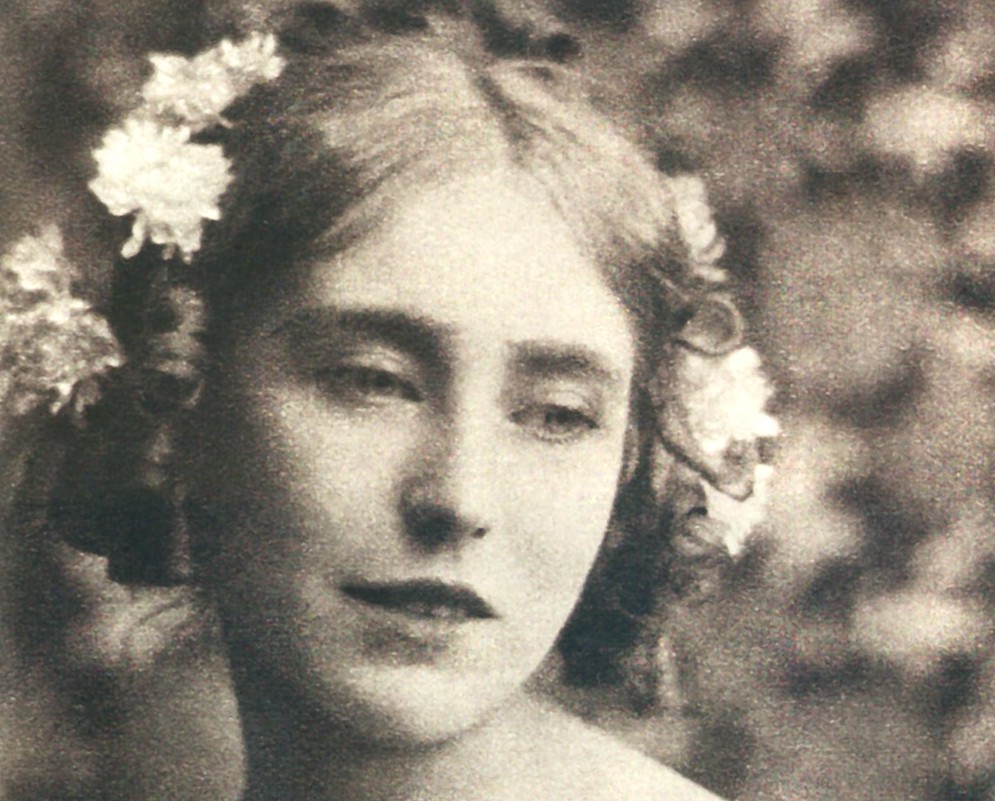
John Wyver writes: on the evening of Wednesday 16 January 1935, a 40-minute, 30-line broadcast featured singers Maisie Seneshall and Harold Scott, along with prima ballerina Lydia Sokolova with Harold Turner as her junior partner. Both Turner and, to a greater extent, Sokolova are important figures in the history of British dance, including in the process by which television contributed significantly to the development of dance in Britain in the pre-war years,
read more »
15th January 2025
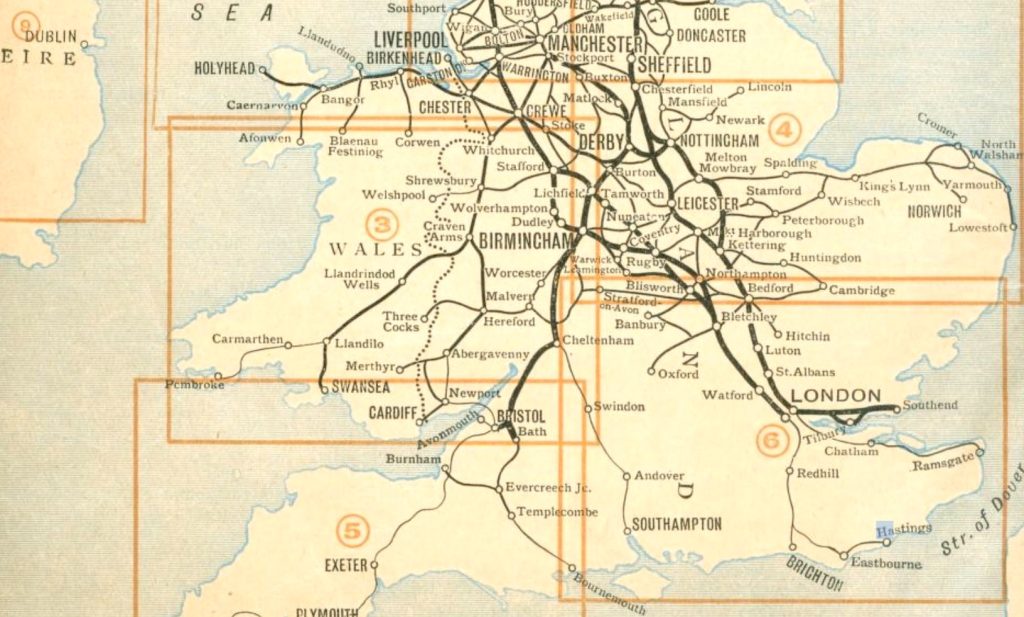
John Wyver writes: Television on the afternoon of Sunday 15 January 1939 featured a half-hour outside broadcast from Watford Junction railway station. This was the first of a series titled Television Surveys conceived to showcase activities in various workplaces in and around London. Hosted by film editor Tod Rich, it showed activities of the London Midland and Scottish Railway at the station. ‘E.H.R.’ in the Observer praised the broadcast as ‘a good and interesting start’.
read more »
14th January 2025
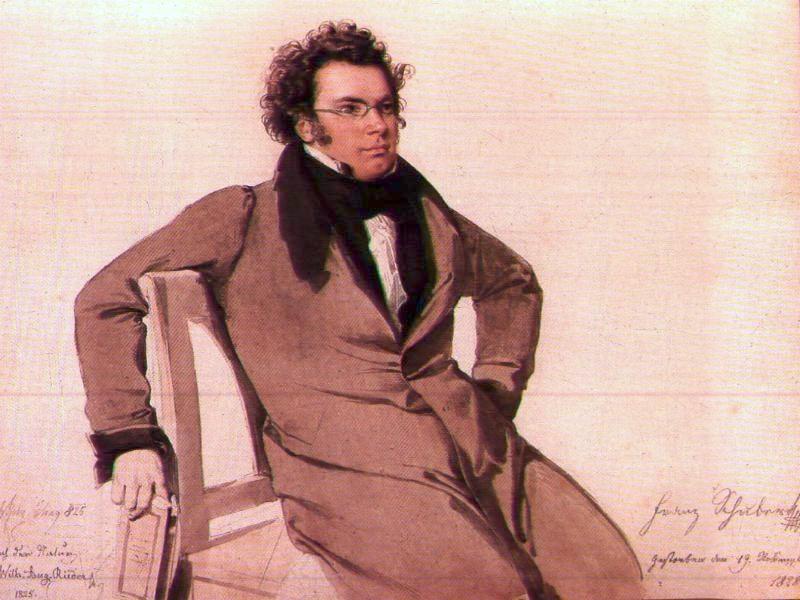
John Wyver writes: the afternoon of Saturday 14 January at 3.30pm saw the second presentation of what was now, given the timing of the the transmission, somewhat incongruously named Schubert Night. I previously noted the first broadcast on 9 January, but it is worth returning to the programme as it is an ambitious early performance and drama hybrids about the life and work of a composer. Moreover, it was written and produced by the intriguing figure of Philip Bate.
read more »