15th May 2017
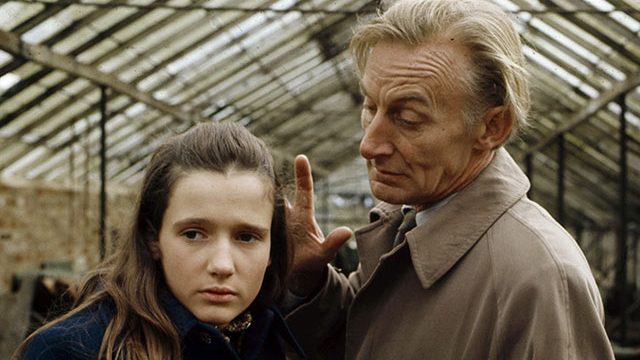
Today the wonderful people at Network release a DVD of 13 half-hour thrillers made by LWT in 1972 as the anthology strand The Frighteners. Their description is as follows:
Featuring the talents of John Thaw, Ian Holm, Warren Clarke, Ian Hendry, Tom Bell, Ray Smith and Robert Urquhart, The Frighteners features thirteen haunting tales of malice and manipulation, vengeance and mounting terror. It features stories from acclaimed novelist and playwright William Trevor, Bouquet of Barbed Wire author Andrea Newman, Get Carter writer/director Mike Hodges and Secret Army co-creator Wilfred Greatorex.
My copy is on its way, and I’ll write again when I’ve taken a look, but irrespective of what I think of the series, the simple fact of the release is well worth celebrating. In part this is because the title is yet one more contribution to Network’s truly wonderful work in making accessible much of the extant drama in ITV’s archives. This is a public service of great value to all of us interested in television history – and the fact that it is being achieved in a commercial context is only one of its remarkable aspects. read more »
15th May 2017
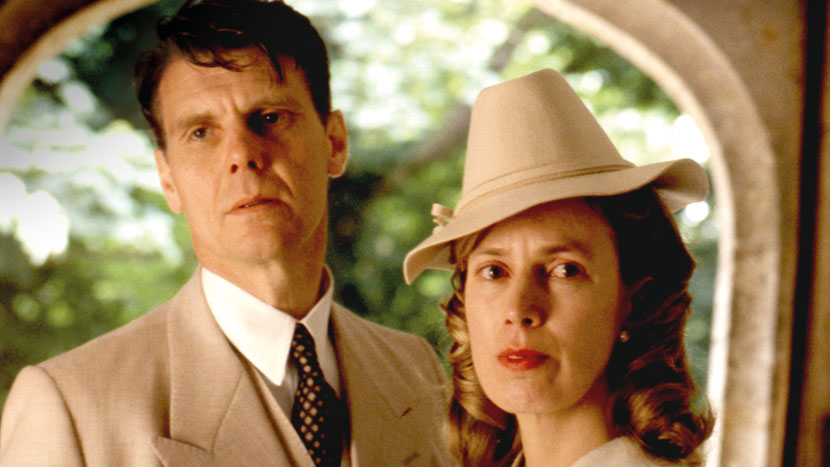
On Tuesday night BFI Southbank screens a film that is, for me, one of the singular masterpieces of television drama, Richard Eyre’s film Country from a script by Trevor Griffiths. Made for BBC Television in 1981, this rarely-seen 80-minute drama scrutinises an upper-class family in the eve of the Labour election victory in 1945. A peerless cast includes James Fox, Leo McKern, Wendy Hiller and Penelope Wilton. Why this film is not widely recognised as one of the key British cultural achievements of the late 20th century is a mystery to me – although of course the fact that it was made for (what was then then, as still it is now to a degree) the less respectable small screen, rather than the cinema, is part of the answer. So too is the fact that the film has never been available on VHS or DVD.
It is a great, complex, powerful, richly imagined work – and the chance to see it on a large screen is one not to be missed. (Although frustratingly I have to, since I will be in Stratford-upon-Avon prepping next week’s live relay of the RSC’s Antony & Cleopatra.) As I noted last week, in 1984 BFI Publishing released my book-length analysis of Trevor Griffiths’s television drama, Powerplays, which I co-authored with my former Time Out colleague Mike Poole. Below is part of what we wrote about Country thirty-plus years ago. read more »
14th May 2017
A selection of links to interesting stuff from the past week, with the usual implied virtual thanks to those who alerted me to many of them.
• Who will be left?: among the many good points that Tom Crewe makes in his LRB analysis of Jeremy Corbyn and today’s Labour party is this: ‘The world we live in now is recognisably the one 1997 (and 2001 and 2005) made.’
• The autocrat’s language: please read Masha Gessen for the New York Review of Books:
Using words to lie destroys language. Using words to cover up lies, however subtly, destroys language. Validating incomprehensible drivel with polite reaction also destroys language. This isn’t merely a question of the prestige of the writing art or the credibility of the journalistic trade: it is about the basic survival of the public sphere.
• Donald Trump after hours: of all the other Trump-related writings from the past week, this is among the most fascinating (and the best written) – an account of a dinner with the President by TIME reporters Michael Scherer and Zeke J. Miller; great photos too by Benjamin Rasmussen.
• He was a crook: The Atlantic revisits Hunter S. Thompson’s glorious obit for Richard Nixon, originally published in Rolling Stone on 16 June 1994.
• The fidget spinner is the perfect toy for the Trump presidency: Rebecca Mead for The New Yorker.
read more »
13th May 2017
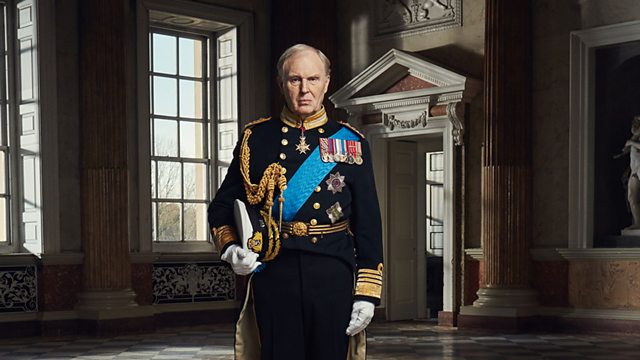
On Wednesday night BBC Two broadcast Rupert Goold’s film of King Charles III with a script by Mike Bartlett. It is on BBC iPlayer for the next four weeks, and if you watch nothing else in that time, make time for this. It’s a wonderful 90 minutes of beautifully achieved, bold, provocative, innovative, smartly subversive television, with a glorious performance from the late Tim Pigott-Smith at its heart. The plaudits have poured in, as I have little doubt they will continue to, and among the thoughtful press responses perhaps the most thoughtful is that by Mark Lawson for the Guardian. (Perhaps the most bizarre is ‘The BBC’s King Charles III inevitably contained plenty of howlers’ for – surprise! – the Mail, although treating the fantasy as a docu-drama is some kind of compliment.) Apart from expressing close-to-boundless enthusiasm for the film, I want here just to add a couple of thoughts about its status as television. read more »
11th May 2017
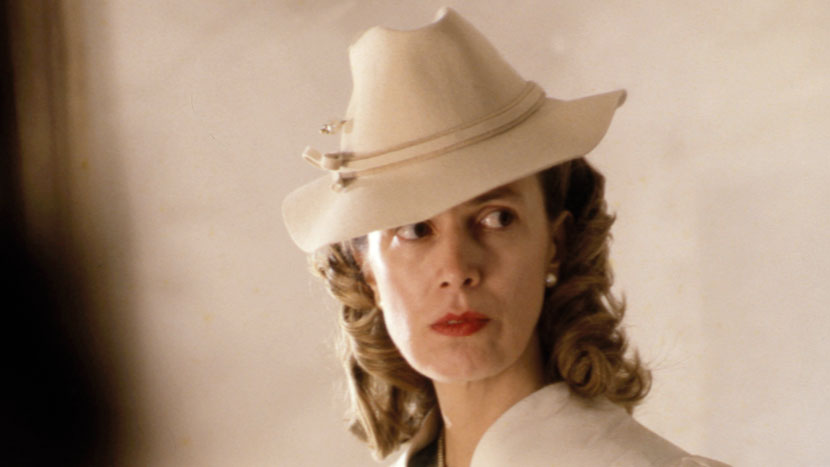
BFI Southbank is midway through a season of the television plays of the radical writer Trevor Griffiths. Tuesday last featured the playwright reflecting on his career (and I was frustrated I couldn’t attend) but still to come are showings of:
Tonight, 18.20, 11 May: Through the Night – an exceptional 1975 BBC studio drama drawing on the experiences of Griffiths’ then-wife being diagnosed and treated for breast cancer, with a remarkable performance by Alison Steadman under Michael Lindsay-Hogg’s direction.
20.30, 16 May: Country (with Penelope Wilton, above) – perhaps Griffiths’ masterpiece, this is an extraordinary 1981 BBC film, directed by Richard Eyre, set in a country house at the end of World War Two as the Labour Party wins the election; it’s hard to argue with season organiser Marcus Prince’s assessment that this is ‘one of the greatest analyses of class power to grace our screens.
18.15, 23 May: Hope in the Year Two + Fall of Eagles: Absolute Beginners – in the former, filmed in 1994, Elijah Moshinsky directs Griffiths’ stalwart Jack Shepherd as French revolutionary figure George Danton; in the latter, the playwright dramatises the Bolshevik/Menshevik split during the Russian Revolution. read more »
7th May 2017
Last weekend my sister Sheila celebrated her 60th birthday in Whitstable, and a lovely occasion it was – so that’s my excuse this time for missing last week’s links. Here’s a selection from the past fortnight, with the usual implied virtual thanks to those who alerted me to many of them.
• Never before in my adult life has the future seemed so bleak for progressives: Will Hutton for the Observer pretty much nails how I (and many of my friends) feel about the world.
• The great British Brexit robbery – how our democracy was hijacked: also for today’s Observer, Carole Cadwalladr reports on the dangers to our democracy.
• Democracy hacked: Kris Shaffer, C.E. Carey, and Ben Starling at Data for Democracy on
a significant, coordinated, online effort to sway the election in favor of the far-right candidate Marine Le Pen, just like we observed in the US presidential election and the Brexit vote in the UK.
• The rise of the alt-left British media: Jim Waterson for BuzzFeedUK on the online initiatives promoting ‘relentlessly pro-Corbyn coverage’. read more »
25th April 2017
I really like the streaming service Mubi.com. I was initially sceptical about its subscription model offering just 30 films at a time, with one dropping off each day and a new one added. But I have been entirely won over by the extraordinary and eclectic mix of movies, their smart curation and the site’s ease-of-use. From the offerings available in the UK today, for example, I really want to see the Hollywood classics directed by Frank Capra, The Bitter Tea of General Yen, 1933, and You Can’t Take It With You, 1938; the arthouse classics La Rupture, 1970, directed by Claude Chabrol, and Fassbinder’s Effi Briest, 1974; and the contemporary rarities Rouge, 2015, Sarah Winchester, Phantom Opera, 2016 and Tony Conrad: Completely in the Present, 2016. Not bad for this month’s £5.99.
I have, however, been really disappointed by a couple of recent viewings, which delivered to me prints that had been mutilated (presumably for television) by having their frame ratios altered significantly. This is a problem for a site that trumpets its commitment to the art of film, and I hope (a) that Mubi.com can be more rigorous in its sourcing of prints in the future, and (b) at the very least it can change its policy to indicate where a film is being streamed in a ratio other than that in which it was made. read more »
25th April 2017
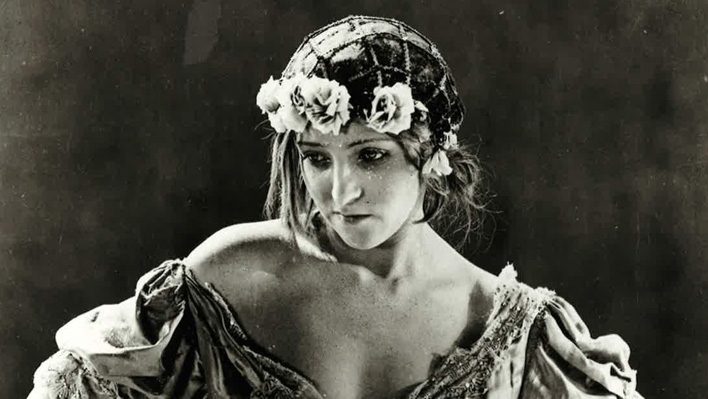
To the Barbican on Sunday for a screening of Henri Fescourt’s glorious Les Misérables, shot in France in 1925-26, and only recently restored with breath-taking tinted and toned visuals. It now runs at its full length, which is 6 hours and then some. Special thanks for this labour of love are due to the CNC Laboratory Paris in collaboration with Pathé and The Jérôme Seydoux-Pathé Foundation.
Special thanks, and deep admiration, needs also to be shown to Neil Brand, who heroically and brilliantly accompanied the film throughout. His rich, romantic piano score balanced drama with dimuendo and the sentimental with the stirring. We started on our journey back to early 19th France at 2pm and with a couple of coffee breaks and an hour for a snatched pizza emerged happy (we had seen and heard something wonderful), sad (Jean Valjean, in whose company we had been pretty much throughout, was dead) and morally cleansed (this is Victor Hugo, mes amis). read more »
23rd April 2017
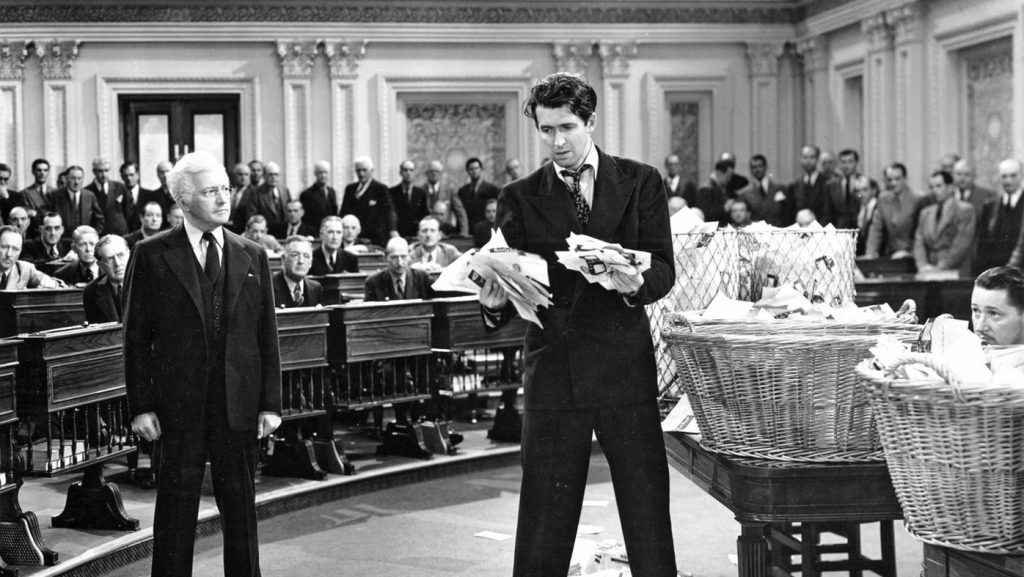
Although I am posting more links on weekdays, Sunday is the day for a miscellany, which is what I offer here with thanks to those who alerted me to many.
• The real madman: Masha Gessen on Putin and Tr*mp for New York Review of Books:
Where Putin’s unpredictable persona is a carefully cultivated one, Trump has given no evidence that his madman act is an act.
• Fairytale prisoner by choice – the photographic eye of Melania Trump: a fascinating, brilliant and ultimately haunting analysis by Kate Imbach of the 470 photographs apparently taken by Melania that she posted to Twitter between June 2012 and June 2015.
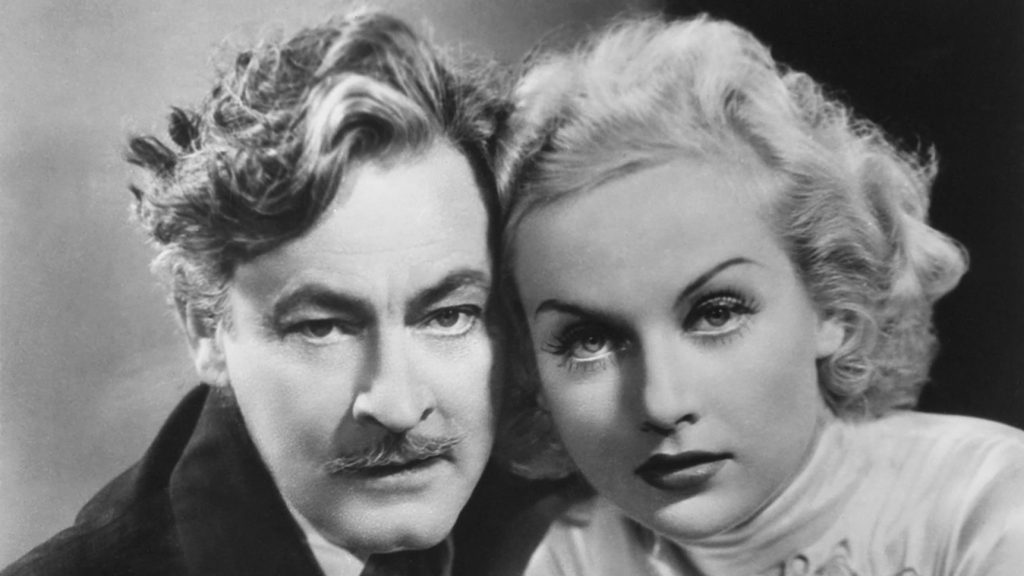
• ‘Tear down the fences’ – watching Capra in the age of Trump: Joe Sommerlad on the unfashionable but highly pertinent films of Frank Capra, including Mr Smith Goes to Washington, 1939 (above). read more »
20th April 2017
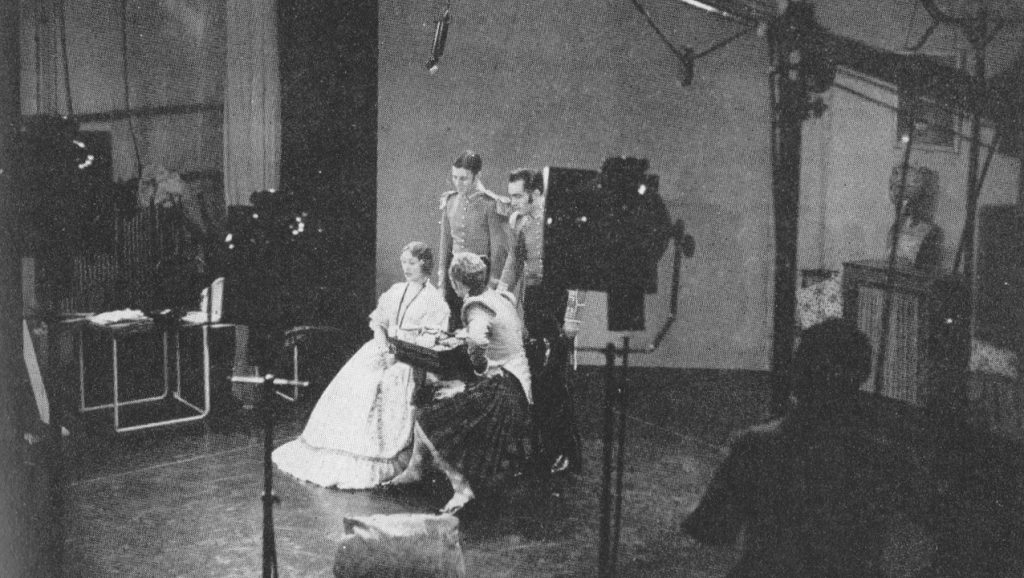
I am delighted that this week the new issue of the Historical Journal of Film, Television and Radio has published my article ‘Exploring the lost television and technique of producer Fred O’Donovan’. The article is developed from a 2015 conference organised by The History of Forgotten Television Drama research project, and the issue features a number of fascinating articles based on papers presented there. Frustratingly, online access to the full article is restricted to those who have institutional access to a subscription (although the issue Introduction is freely accessible), but here is the opening of my contribution. If you would like to know more, do get in touch — John Wyver.
In the history of British television drama few notable creative figures are as forgotten as the actor, film director and pioneer producer Fred O’Donovan. After a distinguished career at Dublin’s Abbey Theatre, after directing Ireland’s first feature film, and after nearly two decades’ work on the London stage, O’Donovan joined BBC Television in early 1938. As one of the first directors of studio drama he earned a ‘Produced by’ credit on more than 60 broadcasts.
These included plays by the major Irish writers J.M. Synge, W.B. Yeats, Bernard Shaw and Sean O’Casey as well as dramas by Eugene O’Neill, Chekhov and Molière. Among the actors with whom he worked were Wendy Hiller, Angela Baddeley, James Mason and Alastair Sim. On his death in the summer of 1952 O’Donovan was 67, and past the BBC’s usual age of retirement, but he was still employed full-time by the Corporation. Indeed he had just returned from overseeing a French television adaptation of Daphne du Maurier’s Rebecca in Paris. read more »