Three things 4.

9th April 2015

(Go here for a note about why I have started to post in this way.)

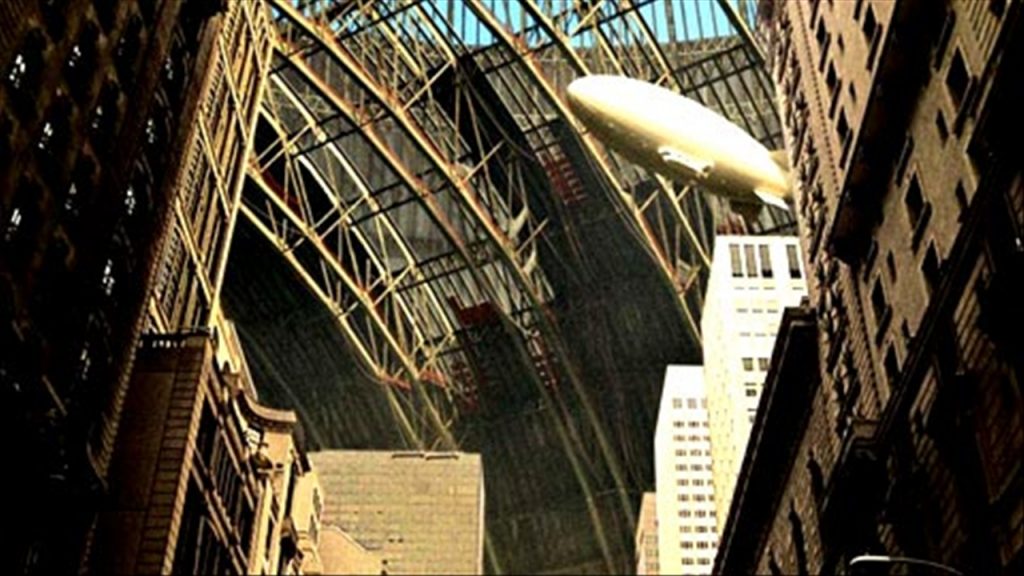
1932 – MGM invents the future (part 1): one of David Bordwell’s exceptional posts about cinema history and poetics, in this case focussing on the first screen adaptation of Eugene O’Neill’s Strange Interlude. 1932 – MGM invents the future (part 2) is just as good.

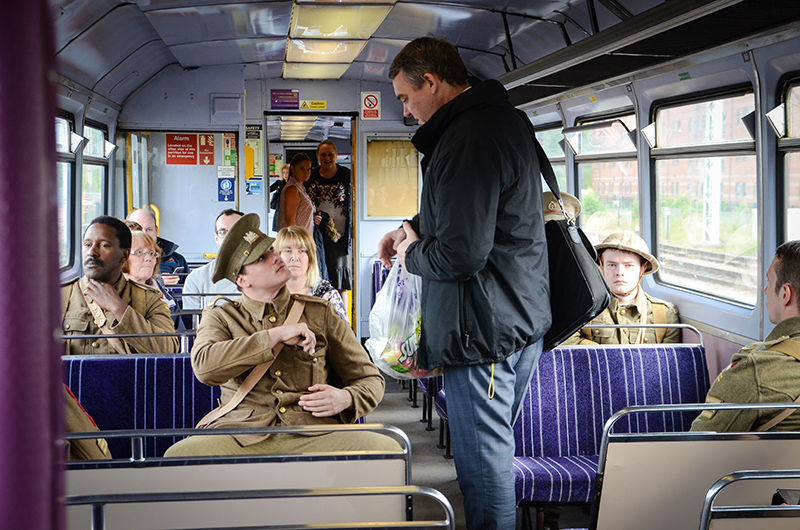
The master writer of the city: Janet Malcolm for The New York Review of Books is simply wonderful on New Yorker writer Joseph Mitchell. Above, Mitchell outside Sloppy Louie’s restaurant with Louis Morino, the subject of the writer’s 1952 New Yorker profile ‘Up in the Old Hotel’; credit: Therese Mitchell/Estate of Joseph Mitchell.

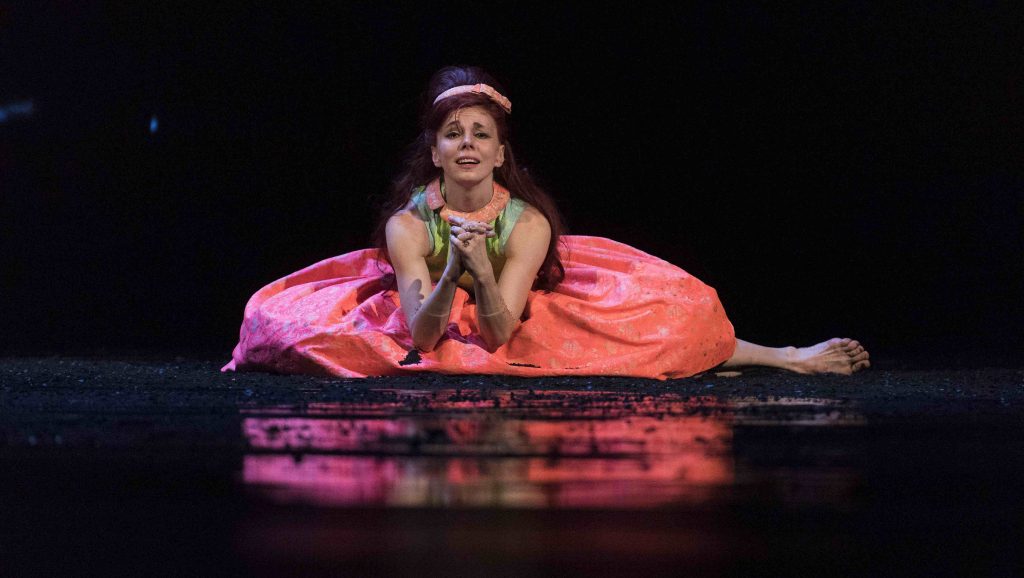
Hakanai de Adrien M / Claire B: this is a truly remarkable dance and digital imaging work; background, an interview and additional images from Jordan Backhus at The Creators Project here.

Three things 3.

8th April 2015

(Go here for a note about why I have started to post in this way.)

Why did we see Don Draper reading Dante’s Inferno in Mad Men? Marta Bausells for the Guardian. The related New York Public Library post by Billy Parrott is here, and the official AMC/NYPL Mad Men Reading List can be downloaded here.

Why has TV storytelling become so complex?: Jason Mittell for The Conversation with a terrific trail for his forthcoming and much-anticipated book.

The Jinx – not my documentary renaissance: Robert Greene for Sight & Sound online on HBO’s much-discussed ‘documentary’ serial. Beverly chills – the ongoing saga of The Jinx by Molly Lambert for Grantland is also an important read. And Anne Helen Petersen’s How The Jinx narratively manipulated its viewers for Buzzfeed is essential.

Three things 2.

7th April 2015

(Go here for a note about why I have started to post in this way.)

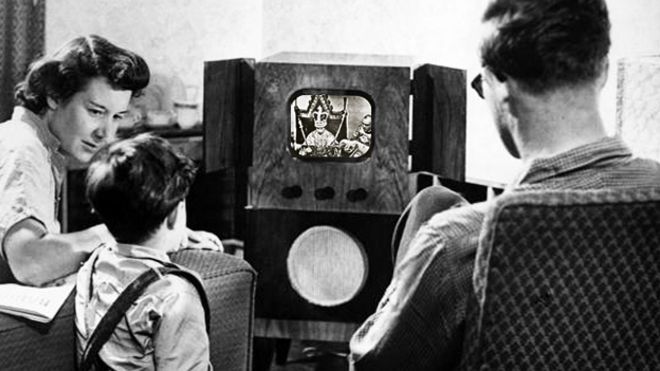
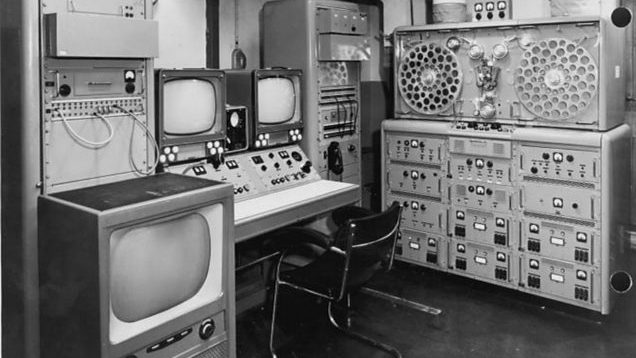
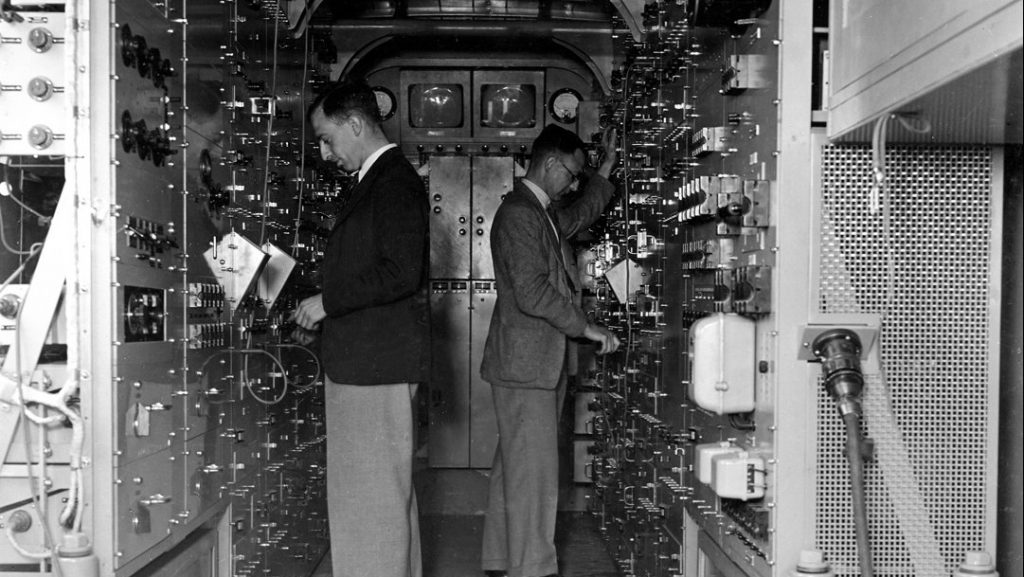
100 Voices That made the BBC – Elections: a glorious archive site about the televising of elections from the BBC and the University of Sussex (kudos to David Hendy) which makes extensive use of the Corporation’s oral history interviews. (The BBC image above is the studio at Alexandra Palace during the 1950 television coverage.)

Karen, an App That Knows You All Too Well: Frank Rose for The New York Times on the new story-telling app from the excellent Blast Theory, to be launched 16 April.

• Robots et cinéma par Johanna Vaude: a smart montage made for ARTE TV.

Three things 1.

6th April 2015

A time there was when I used to post here regularly, including on each Sunday a host of links. In recent months I have fallen out of the habit. You’ve been so busy with other things, I tell myself. You’ve been writing in so many other contexts, I use as an excuse. But I know that @Illuminations has taken much of my focus, and my recommendations tend to go there rather than here. At the same time I like the relative (with much stress) permanence of a blog, when compared with the total transience of Twitter. So I am going to try a different tack, and to post frequently – and every day if I can – just a trio of things that have engaged me or interested or infuriated me. Sometimes they will be linked, oftentimes they won’t. Make of them what you will.

Shakespeare in Teheran: Stephen Greenblatt gives a keynote, muses on the potential for “at-one-ment” offered by the Bard’s writings, and visits the truly glorious Sheik Lotfollah mosque in Isfahan (which I was privileged to see in 2004; it’s my image above); take a look also at the follow-up exchange here.

• Volumetric Cinema: a compelling video essay by Kevin L. Ferguson published by [in]Transition, with detailed notes and reviews here.

Volumetric Cinema from Kevin L. Ferguson on Vimeo.

Mad Men – Gender and Historiography: the Mad Men syllabus, including viewings and readings, by Anne Helen Petersen (from when she was an academic).


Sunday links

22nd February 2015

Unlikely as it may seem, read of the week may be Reeves Wiedeman’s article for Popular Mechanics about how 300,000+ copies of The New York Times reach the streets every day. Below is a selection of other pieces to engage me over the past week, with the usual thanks and apologies to those I follow on Twitter and others who alerted me to some of them.

My own life: Oliver Sachs on learning that he has terminal cancer, from The New York Times (the leadline is courtesy of David Hume):

I cannot pretend I am without fear. But my predominant feeling is one of gratitude. I have loved and been loved; I have been given much and I have given something in return; I have read and traveled and thought and written. I have had an intercourse with the world, the special intercourse of writers and readers. read more »

Sunday links

8th February 2015

Interesting things from the past week and more, with sincere thanks as well as apologies to those who pointed me towards some of them, and who I have failed to acknowledge below.

• Grammys 2015: transcript of Bob Dylan’s MusiCares Person of Year speech: Wow! Do read this. (As reported by Randall Roberts for the Los Angeles Times).

Principle drift: Russell Davies on what the BBC is getting wrong about digital.

Go digital by all means, but don’t bring the venture capitalists in to do it: Cory Doctorow for the Guardian on the irreducible importance of public service being the bedrock of the BBC (and more).

Why no one is celebrating the 100th anniversary of the feature film: Godfrey Cheshire for Vulture on D. W. Griffith’s The Birth of a Nation, which premiered a century ago this week.

The getting of rhythm – room at the bottom: David Bordwell writes on Lea Jacobs’ new book, Film Rhythm after Sound: Technology, Music, and Performance, with a great selection of related clips at University of California Press (click audio/video tab).

Book excerpt – Mise en scène and film style: from classical Hollywood to new media art by Adrian Martin: close analysis of a scene from Otto Preminger’s Anatomy of a Murder (1959), courtesy of RogerEbert.com. read more »

Lost and found @TheRSC?

6th February 2015

Here’s a piece I wrote for the new issue of Picturehouse Recommends about the forthcoming cinema broadcasts of the RSC’s Love’s Labour’s Lost and Love’s Labour’s Won on, respectively 11 February and 4 March. Picturehouse Recommends can be found at Picturehouse cinemas and is mailed to members. (And I freelance as Director, Screen Productions, for the RSC and produce the cinema broadcast.)

After the forthcoming Live from Stratford-upon-Avon cinema showings of Love’s Labour’s Lost and Love’s Labour’s Won in February and March, the Royal Shakespeare Company will be one-sixth of the way through their plan to screen all 36 of the Shakespeare plays included in the famous 1623 edition known as the First Folio.

Except that not one of the two hundred-plus surviving copies of that most precious of books features a play called Love’s Labour’s Won. Mentioned in a 1598 survey of English literature and listed by a bookseller in 1603, Love’s Labour’s Won is the most famous of the many ‘lost’ plays from the Elizabethan and Jacobean theatre. No text with this title has ever been found, but RSC Artistic Director Gregory Doran is among those tantalised by the idea of a play that might be the sequel to the sparkling youthful comedy Love’s Labour’s Lost. read more »

Object Photo online

5th February 2015

Let us now praise MoMA. Or more specifically, a recent website from New York’s Museum of Modern Art that complements – or perhaps we should should say constitutes – an exhibition of modern photographs from the Thomas Walther collection. The interactive display is simply among the very best online presentations of historical images that I’ve encountered. At its core are 341 photographs made between 1909 and 1949 that exemplify many of the key strands of modernist image-making sometimes bundled together as the New Vision.

Artists represented, of which there are 141, include Berenice Abbott, André Kertész, Alvin Langdon Coburn and Edward Weston, as well as a host of lesser-known but richly interesting figures. Each of the images is reproduced with a full catalogue entry, and there are short biographical essays as well as more extensive discursive analyses, such as Quentin Bajac’s The Age of Distraction: Photography and Film (a downloadable .pdf). All of this is connected to an exhibition at the museum, Modern Photographs from the Thomas Walther Collection, 1909-1949, and a book, Object:Photo. Modern Photographs: The Thomas Walther Collection 1909–1949, but given the riches of the web display, these feel almost like add-ons to online, especially if you live in London with only modest book-buying resources. read more »

The Shoemaker’s Holiday today – and in ’38

4th February 2015

In the Swan Theatre in Stratford-upon-Avon is a truly splendid Royal Shakespeare Company production of Thomas Dekker’s 1599 play The Shoemaker’s Holiday. Director Phillip Breen, a spirited cast led by David Troughton and the RSC’s costume department have done the text proud, and Dekker’s early ‘city comedy’ emerges as a fascinating text about class and sexual power and the ruins of war. It runs until early March and is well worth the trip; the ‘onstage trailer’ with audience vox pops below gives a small sense of the production’s pleasures. (I should admit that I work as a freelance producer and consultant for the RSC; our next RSC Live from Stratford-upon-Avon cinema broadcast is of Love’s Labour’s Lost next Wednesday, 11 February.)

Seeing the production renewed my interest in the early television presentation from Alexandra Palace which was broadcast on the evening of Sunday 11 December 1938. No recording exists, of course (the first plays we have are from 1953), no do there seem to be reviews of the television broadcast, but there are traces of other documentation, including a Radio Times billing with the photograph above. Describing the play as ‘a pleasant comedy of the gentle craft’, Radio Times details that the broadcast was based on Nancy’s Price’s production from the Playhouse Theatre.

Television drama in those early days often adapted stage productions, and The Shoemaker’s Holiday had been running at the Playhouse since the end of October. Announcing the forthcoming attraction on 17 October 1938, The Times noted that ‘a permanent Elizabethan set, with balcony and curtains, will be used, and music of the period will be played.’ The Times also informed its readers that Dekker’s play had received only one professional revival since Jacobean days, and that had been in 1926 at the Old Vic. A week later the paper of record was back-tracking a little, since it acknowledged that there had been only one modern professional production in London, since the play had also been given by the Birmingham Repertory Company in 1922 and was frequently revived by amateur groups.

A week or so after that, on 5 November, the anonymous critic for The Times could only be moderately enthusiastic about the play and production:

the play, as a dramatic unity, just fails to emerge from the museum into life. Partly this is the fault of the story, which tries to poise knockabout comedy between Dick Whittington comedy and Enoch Arden pathos; partly it is no-one’s fault, only the fault of time, which has plunged so much homely verbal humour into obscurity. And yet in patches, recurring again and again, the scenes become heartily and gloriously vital.

There was praise too for the cast, including Harold Warrender and Edmund Willard, but no specific mention of director Nancy Price, a figure who had a fascinating career as an actress and occasional writer.

The Observer, on 6 November, was less enthusiastic:

the production had… good intentions and, at moments, something more… this revival gave us glimpses rather than a steady view of a play that was and still is as English and idiosyncratic as the Lord Mayor’s Show.

‘A.D.’ for The Manchester Guardian, however, was good deal more positive:

It must be that Dekker and his rich and riotous play The Shoemaker’s Holiday are things too lusty for these tenuous times. The Playhouse audience was for at least two-thirds of the way as cold as any congregation… The play’s prodigal bounty of language, its exuberance of simile and imagery, its London flavour, and its oaths that are the delight of bookmen – all these things fell on icy ears… The fault is not that of Miss Nancy Price, who has produced freshly and capably… The fault is not that of the players, who all seem to appreciate both the fun and the poetry of the Elizabethan text. The blame is wholly ours if we cannot take to this gay, witty, full-blooded and often beautiful play for the pitiable reasons that it is either too robust for us or too unfamiliar.

 To which, I can only say from the perspective of 2015, hear, hear – although the hugely appreciative audience in the Swan last night seemed to have no such problems.

Scottish Painters from ’59 online

2nd February 2015

Welcome indeed is the appearance today on BBC Arts Online of Ken Russell’s 11-minute film profile from 1959 of the two Scottish painters Robert MacBryde (1913-66) and Robert Colquhoun (1914-62). The film, which was Russell’s first about visual artists, was made for the BBC’s arts magazine series Monitor and originally transmitted on 25 October 1959 (for background, see Michael Brooke at BFI ScreenOnline). The documentary is not exactly unknown, but its circulation has been restricted to dedicated researchers in the past 50 years. As a consequence it is an excellent initiative to see it released like in this way (although quite why the film leader has been included I’m not sure). More… please.

Publication online is linked to an important retrospective of the two artists, who were lovers and hard-drinking partners, at the Scottish National Gallery of Modern Art in Edinburgh (until 24 May). The film is being screened in the exhibition which (given how hard it has sometimes been in the past to access BBC archival material for such uses) is similarly welcome. Barry Didcock wrote a very good piece about the artists and the show for The Herald; Jackie Wullschlager penned a short, very positive review for the Financial Times:

Modernist but legible, expressive, energetic, such paintings were what the London art scene, mired in the romanticism of Minton and Graham Sutherland, was waiting for in the 1940s – but the last thing it wanted as abstraction, then pop, ruled a decade later. It is a pleasure to rediscover them now.

Ken Russell would be part of pop’s domination of the art scene in the 1960s, but MacBryde and Colquhoun were among the first painters he encountered when working as a gallery assistant in post-war London. His short film is a quiet and reflective tribute to them, and offers little sense of their bohemian ways and, at the time, ‘deviant’ sexuality. Beginning with a journey into ‘deep’ England, past a parish church and through the hanging fronds of trees, the camera arrives at a Tudor cottage in Suffolk which the two Roberts have apparently rented as a studio for just a pound a week.

Russell takes their paintings seriously, accompanying shots of a range of canvases, with careful moves in and out, by voice-over comments from the artists and by a Debussy arrangement of the music of Erik Satie. The artworks have their own space and place in the film, and Russell – ever the enfant terrible – clearly enjoys the quiet joke when MacBryde defaces and cuts up a page from the BBC’s magazine The Listener to help him make a painting.

Much of the film features the recorded voices of the artists, but at this early stage Russell, or Monitor’s editor Huw Wheldon, believed that a narrating voice was necessary to anchor the images, and here Scottish actor Allan McClelland does the honours. Another notable credit is that of the film editor Allan Tyrer, who would cut many of Russell’s later films including Pop Goes the Easel (1962) as well as supervise the editing of Kenneth Clark’s Civilisation (1969).

One shot particularly leaps out for me, which is a brief image of a cloaked woman walking away from the camera on a seashore. It is included to give a sense of the peasant people of Scotland who made such an impression on Colquhoun during his childhood and who he frequently depicted in his paintings. In the years after making Scottish Painters, Russell would fight Wheldon and others to be allowed to use in his films ‘recon’ or dramatised sequences of artists, eventually triumphing with the technique in Elgar (1962). But here, in however modest a manner, he is already experimenting with the idea.

PS. Since writing this I have found two other very good pieces online: Richard Warren’s blog has the rich miscellany Colquhoun and MacBryde: encounters with the Two Roberts, and complementing the Ken Russell film at BBC Arts Online is William Cook’s article about the lives of the painters. Each is handsomely illustrated with artworks and contextual photographs.