
More Comrades
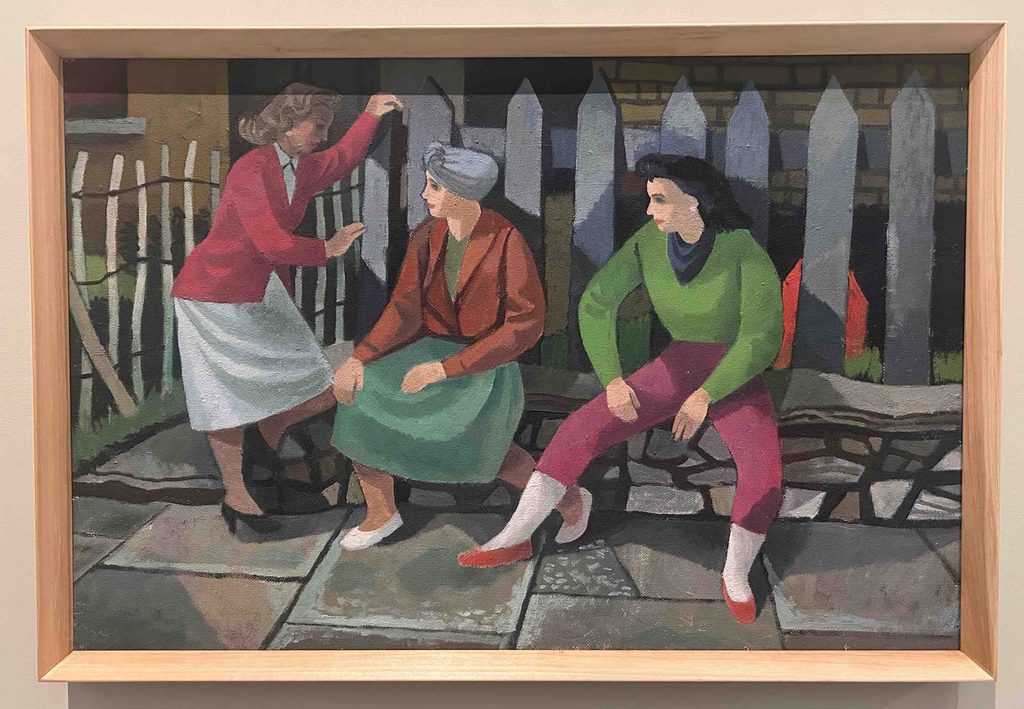
John Wyver writes: As yesterday’s post indicates I was very taken with the Towner Eastbourne’s exhibition Comrades in Art: Artists Against Fascism, which closes tomorrow, Sunday. Here are another ten images from the show which especially struck me, including, above, Cliff Rowe’s ‘Three women talking’, c 1950, from the collections (as are so many of the great loans) from the People’s History Museum, Manchester. Captions follow each of the selections below. Apologies for the reflections in some of my photos, and for the slightly wonky framing.
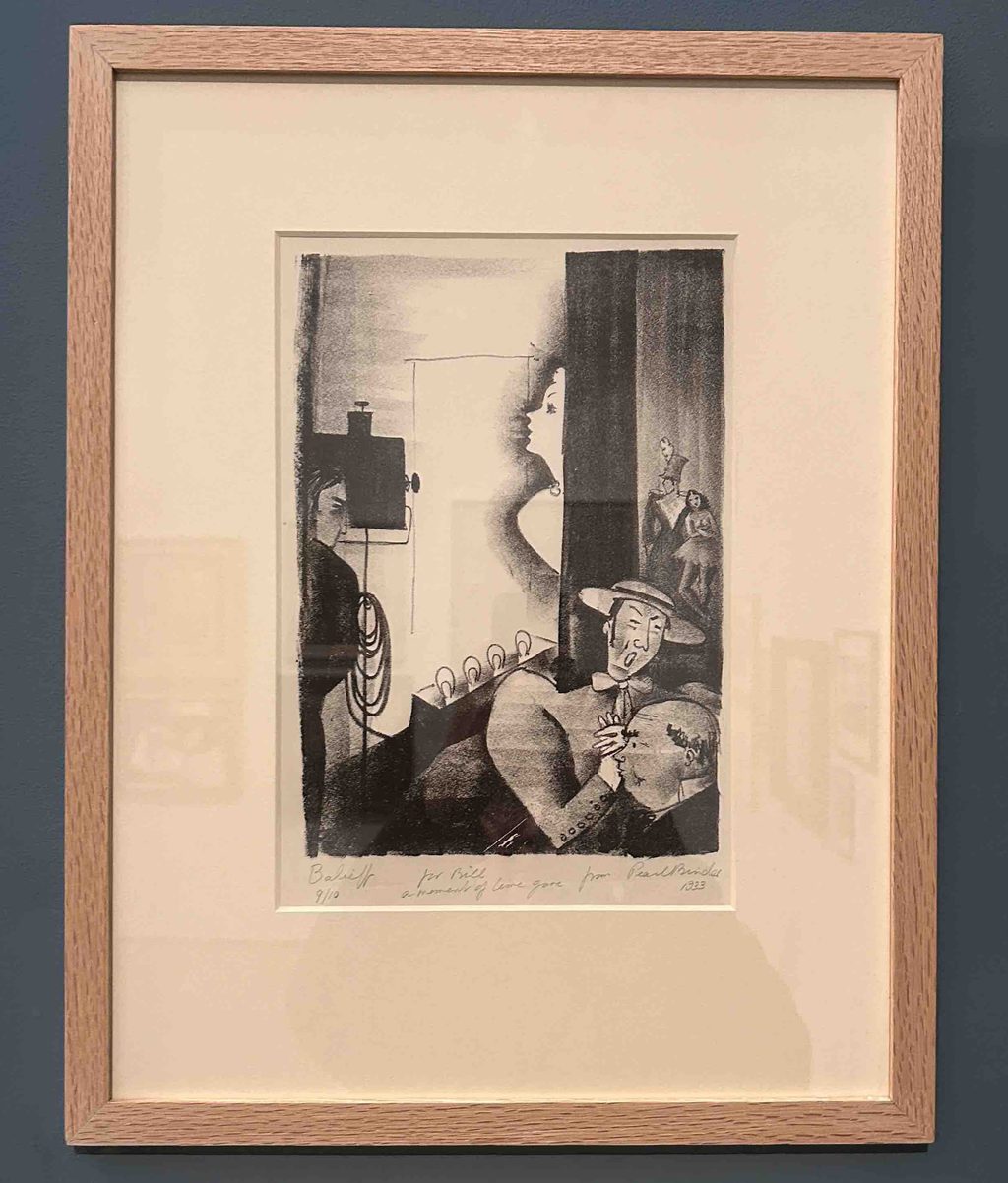
The exhibition reveals Pearl Binder to have been a wonderful graphic artist, as is evidenced by ‘On Stage at the Cambridge Arts Theatre’, from Phillip Godfrey’s 1933 book Backstage: A Survey of the Contemporary English Theatre from Behind the Scenes. A note here is about work by Binder featured in the show from the University of Brighton Design Archives.
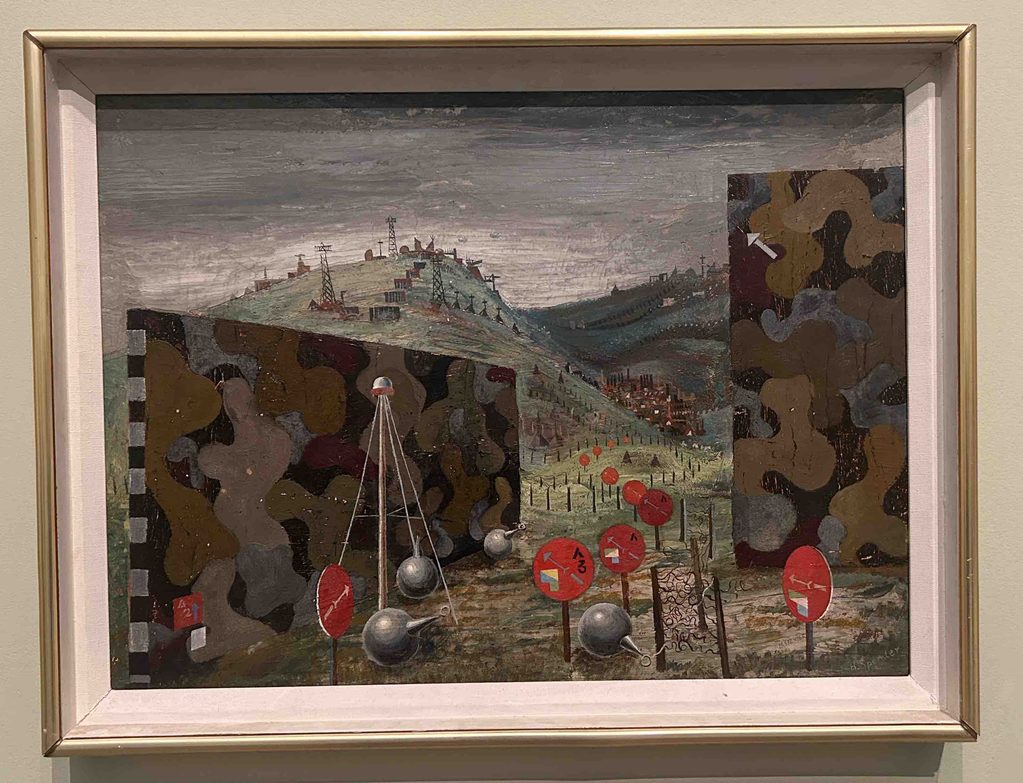
Humphrey Spender’s immensely striking ‘Salisbury Plain, Wartime’, 1941, is from a private collection, and is a relatively rare oil by an artist far better known as a photographer, especially with Mass Observation in 1930s. As the wall label notes,
Appointed an Official War Photographer while working in the Royal Army Service Corps, Spender would eventually abandon the medium in the mid-1950s to concentrate on textile design, teaching at the RCA from 1953 to 1975. This is one of at least three Salisbury Plain landscapes Spender completed based on his time in the RASC, two of which are in the IWM collection.
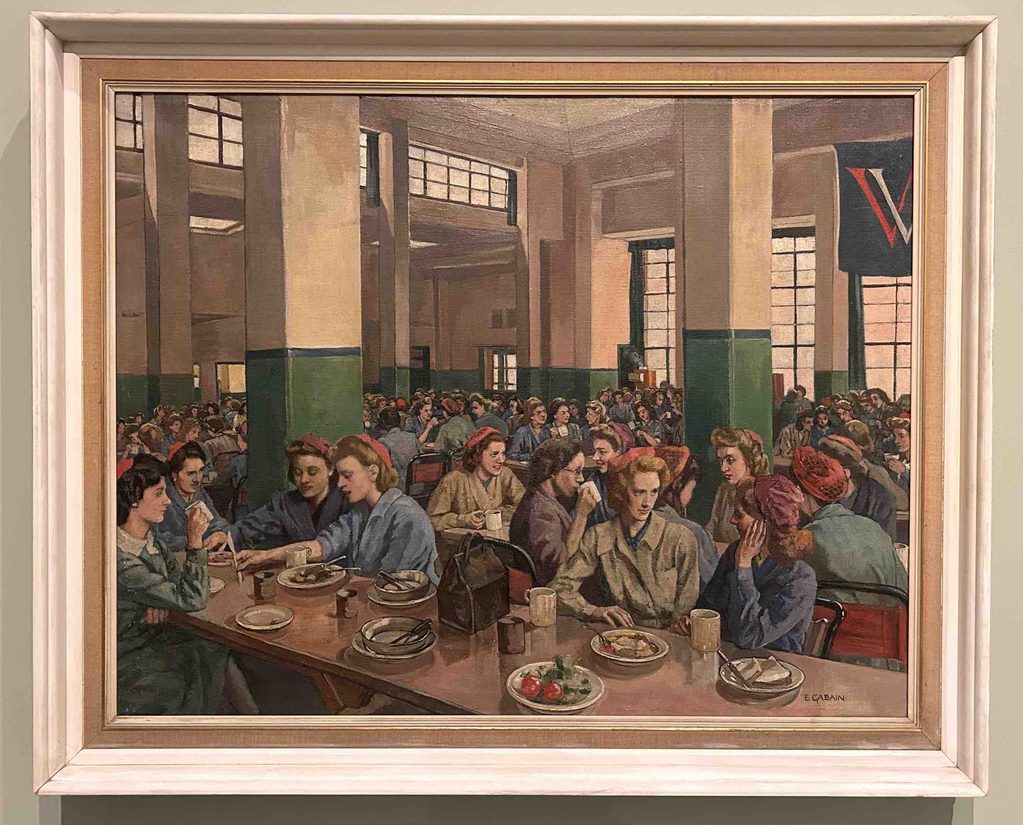
”Women Workers in Canteen at Williams and Williams, Chester’ is a c.1943 painting by Ethel Gabain, an artist who I had not encountered before, but who I most certainly should have (do click on the link to her Wikipoedia page). The War Artists’ Advisory Committee acquired some 38 of her works during the war, although not this wonderful painting that could be a scene from the Frank Launder and Sidney Gilliatt film Millions Like Us, also from 1943.
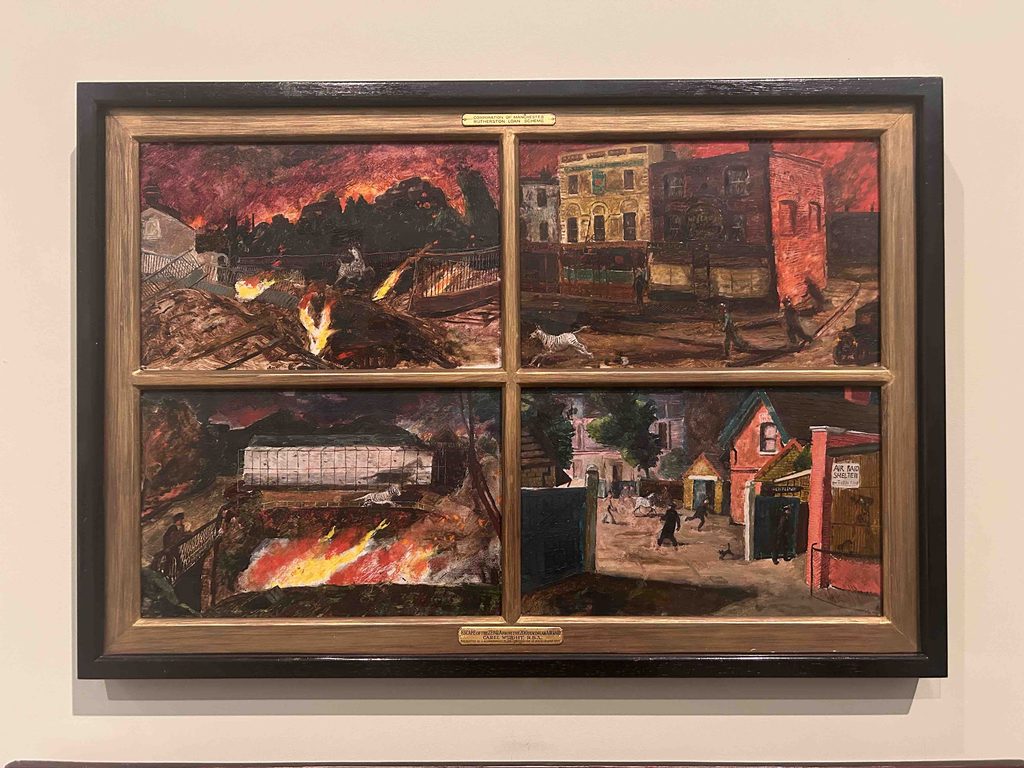
I loved Carel Weight’s surreal narrative ‘Escape of the Zebra from the Zoo during an Air Raid’, 1941; apparently the animal’s capture in Camden was widely reported. Purchased by the War Artists’ Advisory Committee, this is now in the collection of Manchester Art Galleries.
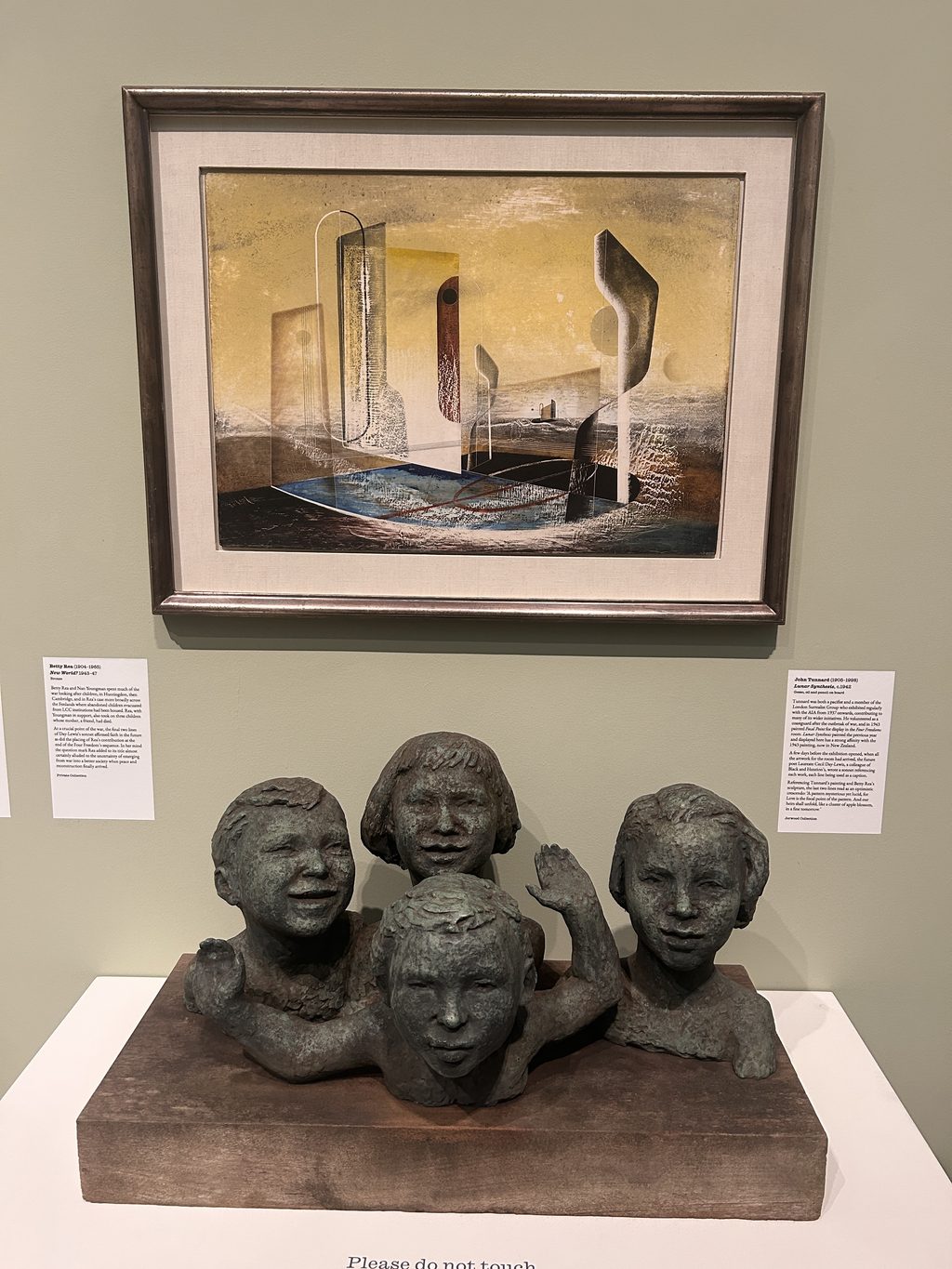
Betty Rea’s sculpture ‘New World?’, 1943-47, looks forward, somewhat tentatively to the post-war years, and is shown at Eastbourne below John Tunnard’s ‘Lunar Synthesis’, c. 1942. Tunnard was a pacifist and a member of the London Surrealist Group who showed frequently with the AIA; Rea was central to the AIA’s organisation and cohesion, such as it was, in its later years.
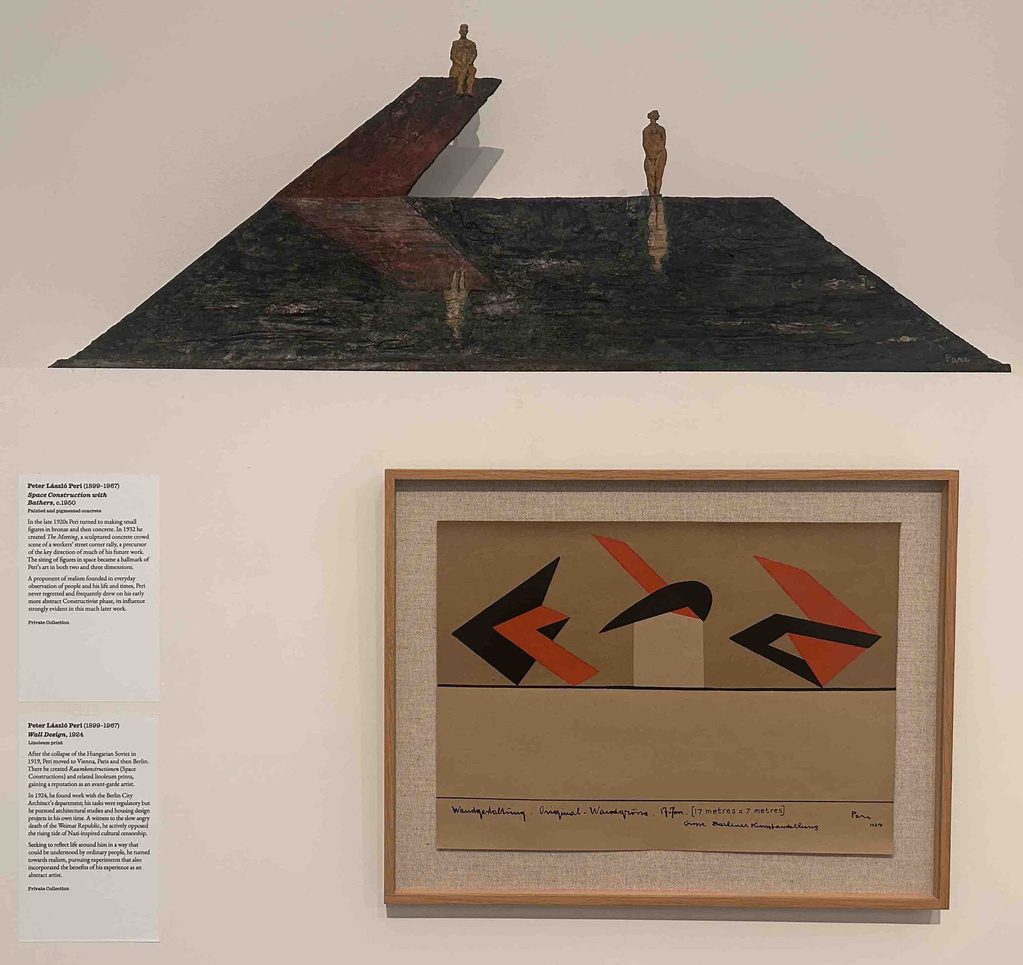
Peter LászIó Peri’s ‘Space Construction with Bathers’, c. 1950, above, for which the label reads:
In the late 1920s Peri turned to making small figures in bronze and then concrete. In 1932 he created The Meeting, a sculptured concrete crowd scene of a workers’ street corner rally, a precursor of the key direction of much of his future work. The siting of figures in space became a hallmark of Peri’s art in both two and three dimensions. A proponent of realism founded in everyday observation of people and his life and times, Peri never regretted and frequently drew on his early more abstract Constructivist phase, its influence strongly evident in this much later work.
Beneath this work in painted and pigmented concrete is Peri’s print ‘Wall Design’, 1924.
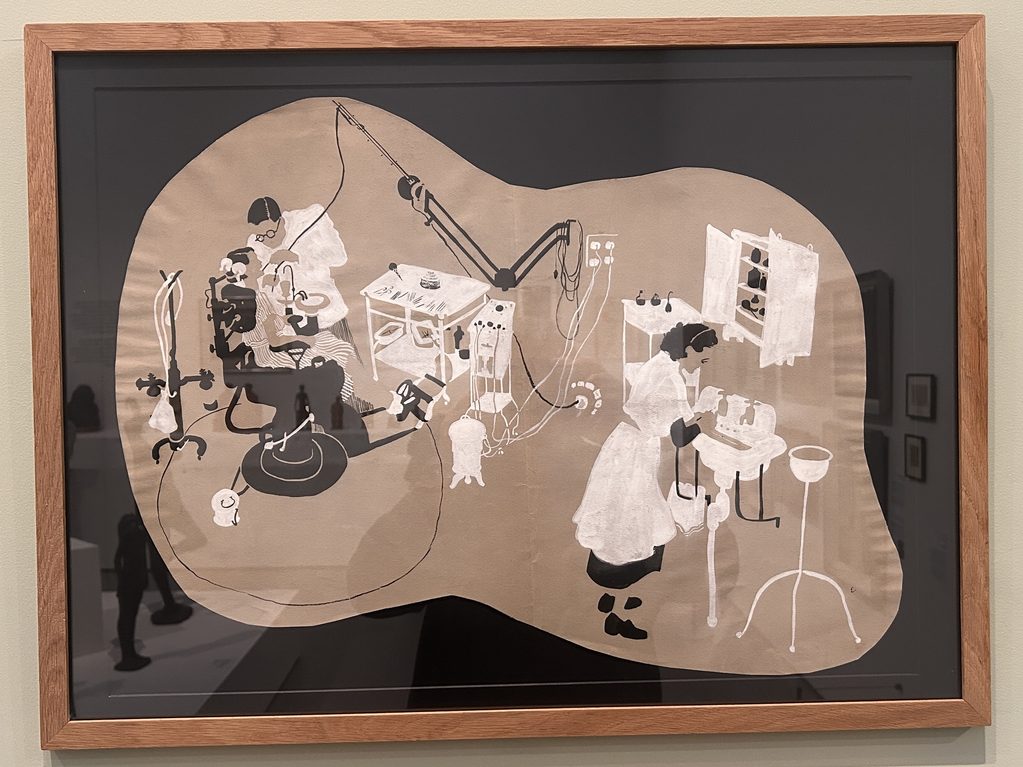
Edith Simon’s ‘Dental Surgery’, from the mid-1940s, is one of a number of works in the exhibition that celebrate the health service and other aspects of the modern welfare state introduced by the Labour government of 1945-1951.
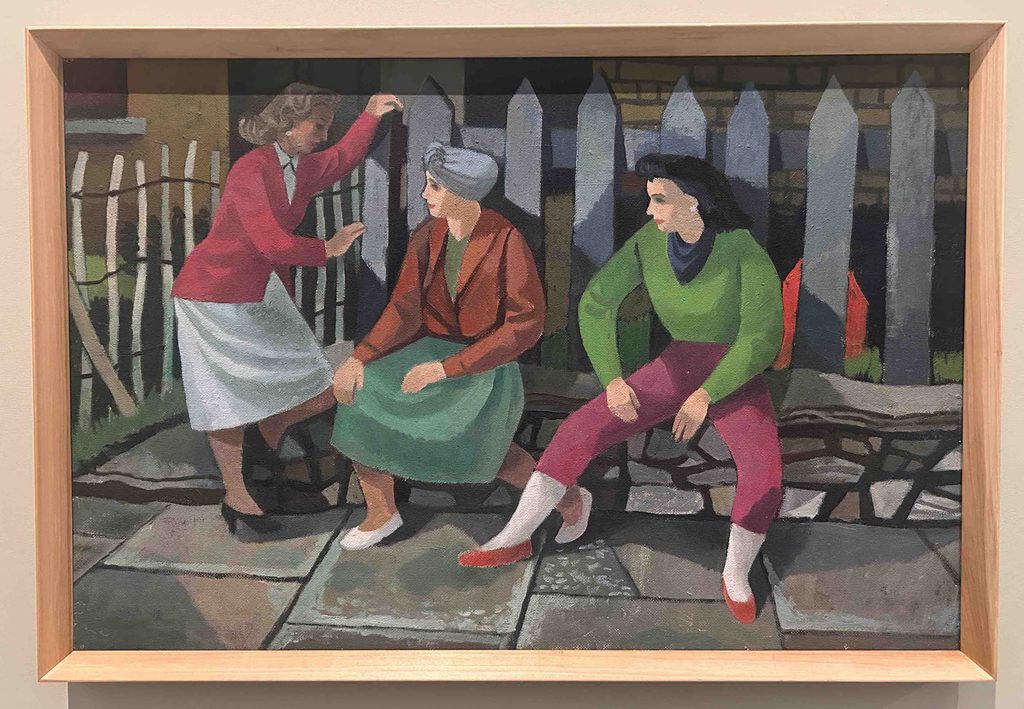
Cliff Rowe’s bright, optimistic street scene is another artwork that seems to speak of a new world after the dark decades of the 1930s and 1940s. This is another painting from the collection of the People’s History Museum.
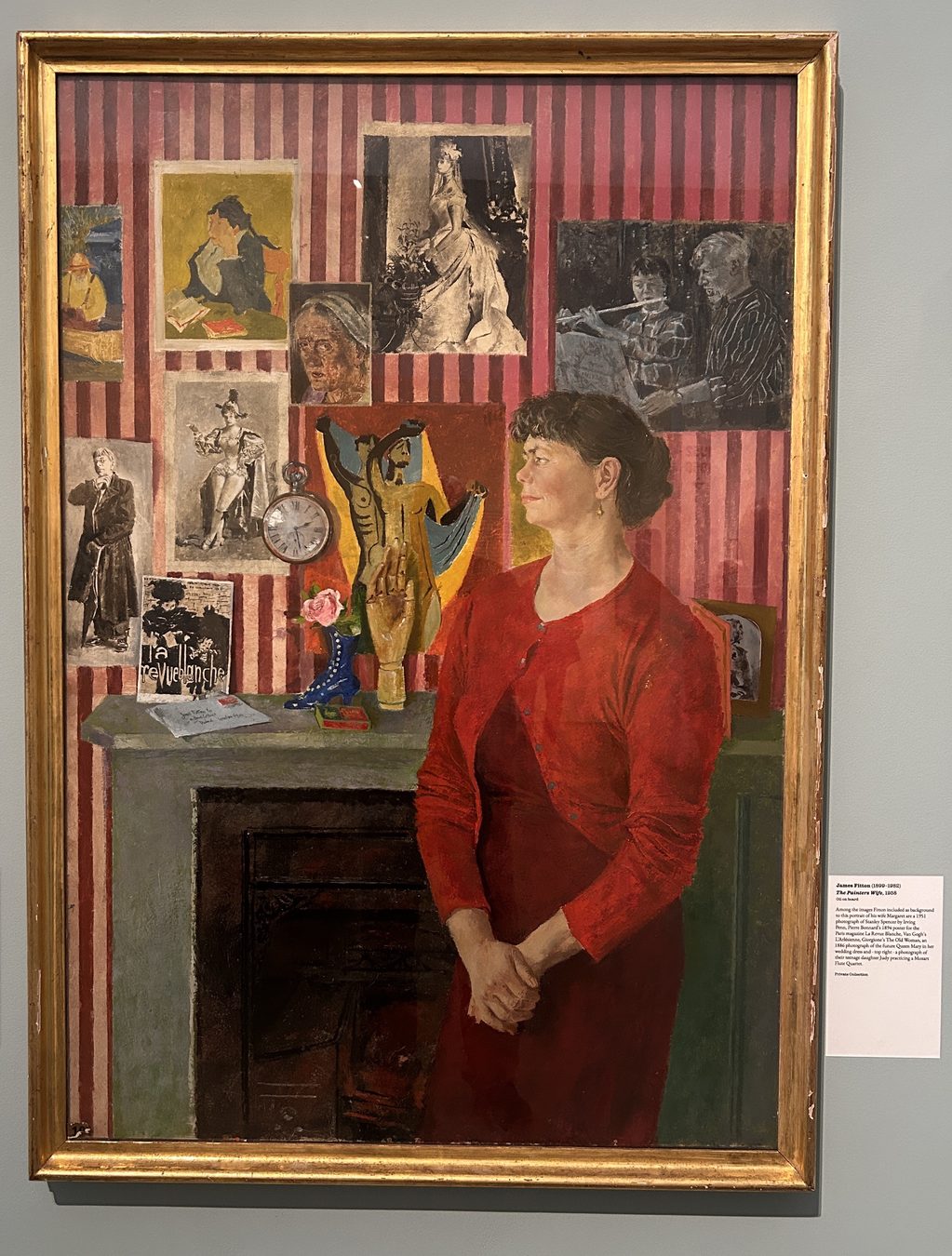
James Fitton’s ‘The Painters Wife’, 1958, which could almost be a contemporaneous Peter Blake composition, includes as background to this portrait of his wife Margaret, as the wall label usefully notes,
a 1951 photograph of Stanley Spencer by Irving Penn, Pierre Bonnard’s 1894 poster for the Paris magazine La Revue Blanche, Van Gogh’s L’Arlésienne, Giorgione’s The Old Woman, an 1886 photograph of the future Queen Mary in her wedding dress and – top right – a photograph of their teenage daughter Judy practicing a Mozart Flute Quartet.
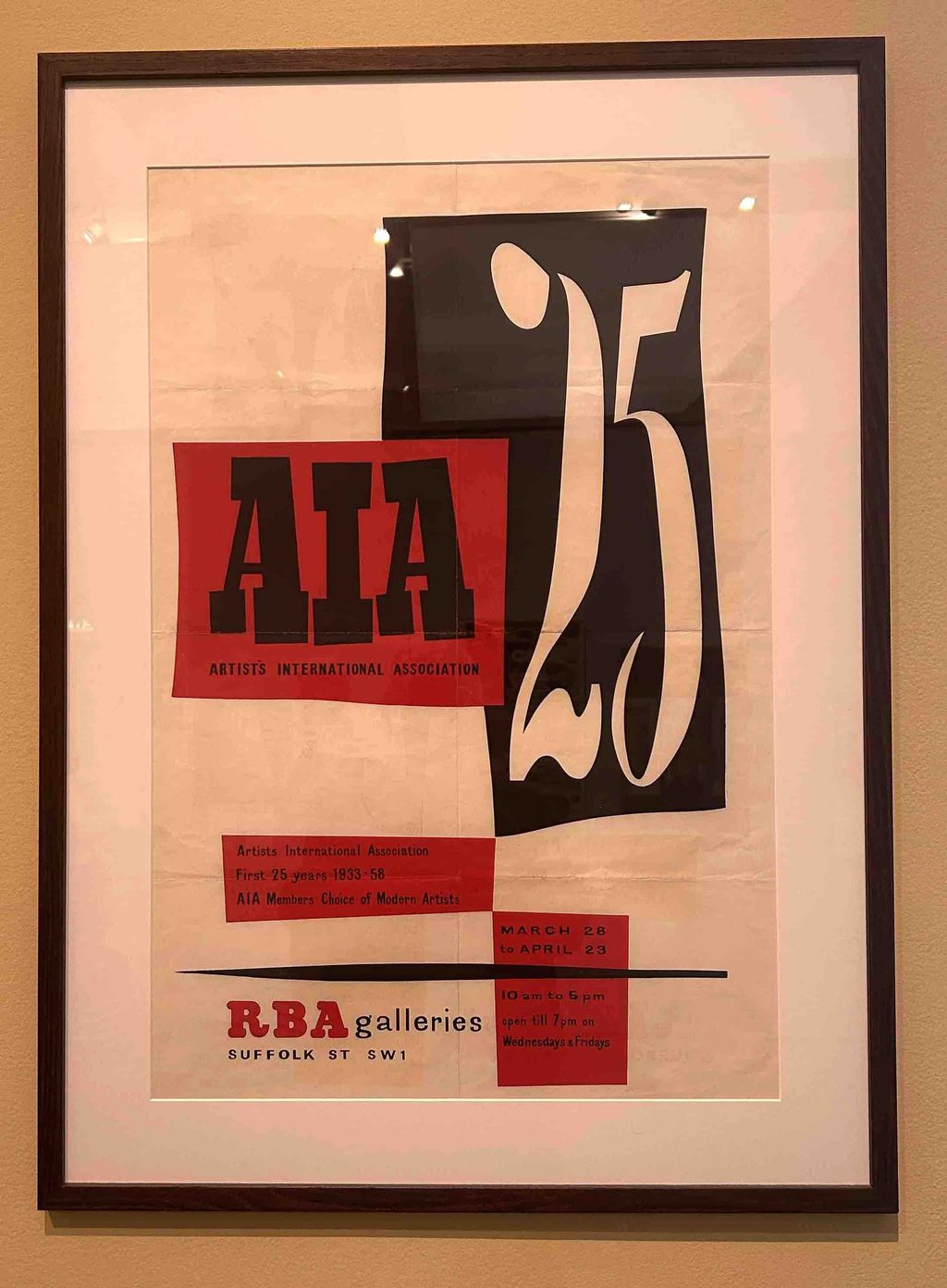
And finally this is James Boswell’s poster for AIA 25, a silver jubilee show in 1958:
170 artworks by AIA members, arranged historically, testified to the organisation’s anti-fascist origins, wartime activities and post-war trajectory. In an echo of Soho Square 1935, an international section brought together 42 works by contemporary foreign artists, chosen via a poll of 300 professional members.
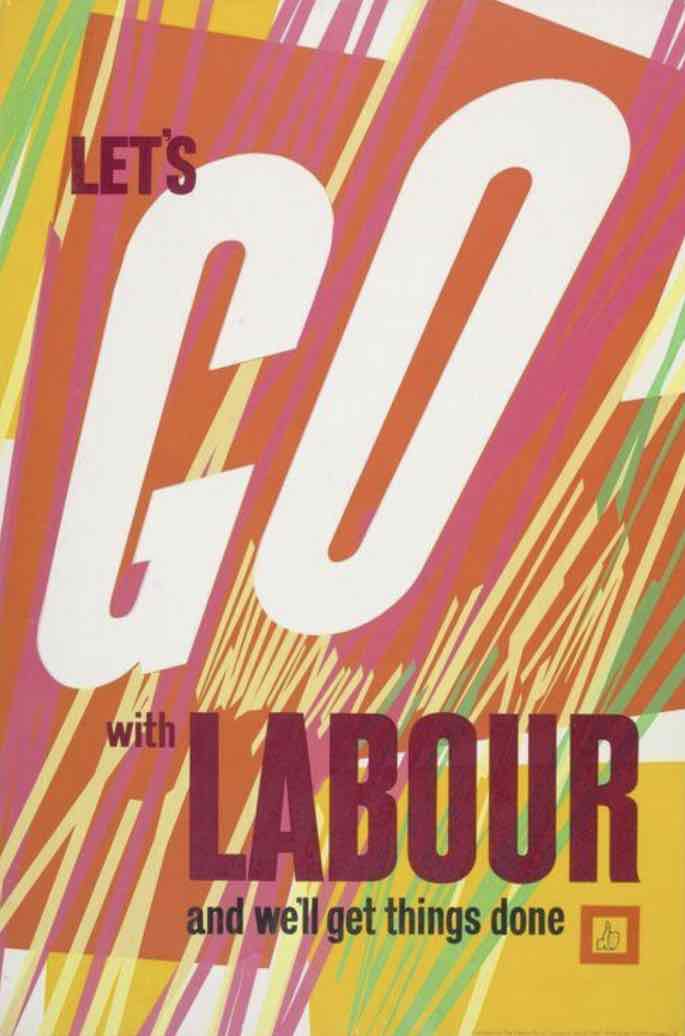
Six years later, Boswell designed the celebrated dynamic artwork for Harold Wilson’s ‘Let’s Go with Labour’ campaign in the 1964 election.
Leave a Reply