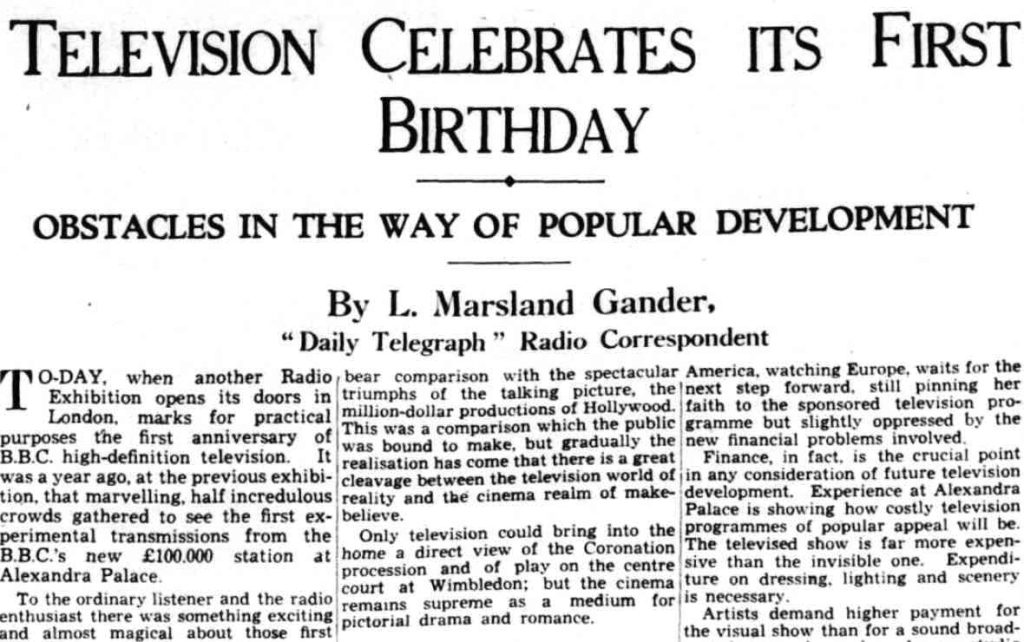
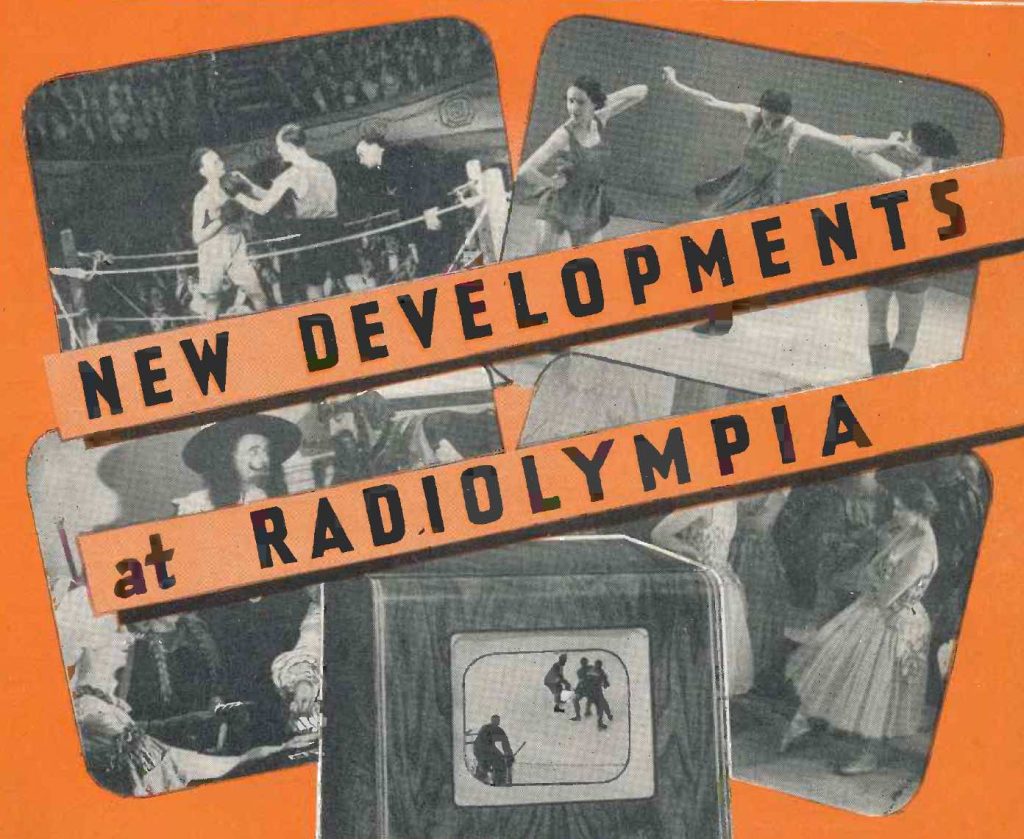
John Wyver writes: Having noted the first activity in at Alexandra Palace in 1936 yesterday, today we make a jump on a year on to an article that marked what was claimed as television’s ‘first birthday’. Never mind that regular transmissions by the 30-line system went back to 1928, which were acknowledged briefly, this was a celebration on 25 August 1937 of what the ‘marvelling, half-incredulous crowds’ saw at Radiolympia a year before.
The author was the well-informed L. Marsland Gander, still by-lined as the Daily Telegraph‘s ‘Radio Correspondent’, who recalled his own first directly personal experience of the new medium:
Some days before the exhibition I had had the unforgettable experience in my own home of abstracting living pictures from the air, pictures that had been projected through space from this same station [that is, AP] nine miles away. They had been reproduced on my screen only a split second after leaving the transmitting aerial at Muswell Hill.
John Wyver writes: The Scotsman was among the newspapers that on the morning of Monday 24 August 1936 carried news of the previous day’s press preview of the BBC’s television operations at Alexandra Palace. Cecil Madden had hosted, with singer Rita Grant making a contribution, and the event was followed by a further encounter with the press on Tuesday, just ahead of the test tranmissions to Radiolympia that began on Wednesday 26.
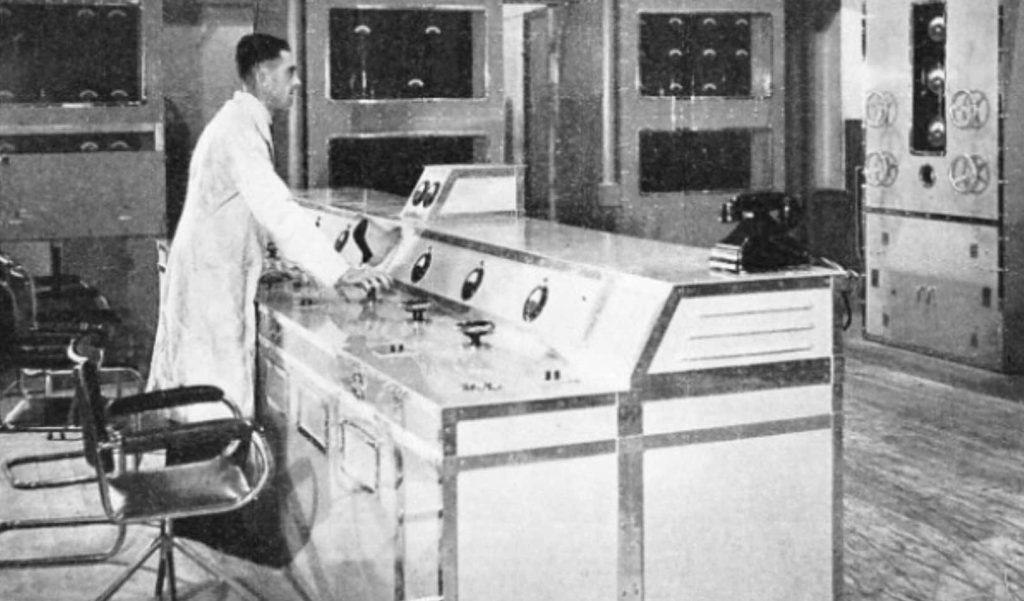
In the absence of any actual programmes being ready for the press, the Scotsman correspondent focussed on the wonders of the technology:
One was immediately impressed by the solidly constructed machinery and apparatus, and the immense voltages used for the operation of the water-cooled valves. Two generators coupled together supply 10,000 volts for anode operation, another produces 5,000 volts for auxiliary anodes, and a smaller one supplies a mere 200 anodes for filament heating. It will be seen from these figures that the installations are on a grand scale.
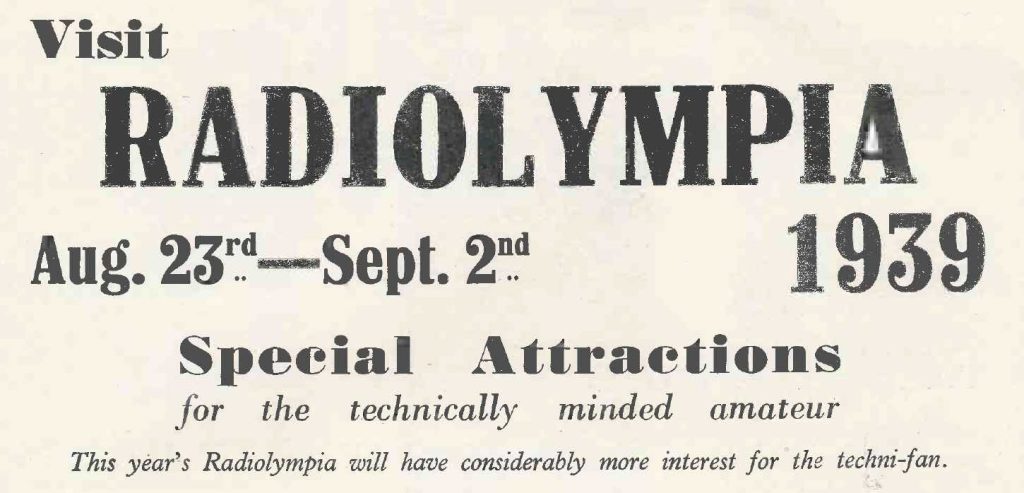
John Wyver writes: Late August means it’s time for the annual trade show Radiolympia. Manufacturers and consumers gathered for a week or so in west London to look at the latest radio and television receivers and to be entertained by the BBC. 1938’s Radiolympia, which we will also visit in the coming days, had been significant for the boost it gave to sales of televisions, and there were similar hopes for 1939. Although, of course, there was also the profound awareness of the likelihood of war.
One of the popular attractions in 1938, both at the fair and in the broadcasts made from there, was the daily ‘Come and Be Televised’ hour, which was repeated in 1939. On the first morning, Wednesday 23 August, Jasmine Bligh spoke with, among others, Mr G.H. Ripley about bookbinding, Miss V. Batchelor with her Welsh corgi puppy, and memory pianist Mr. W. Whittaker.
John Wyver writes: At just after 11pm on Monday 22 August 1932, the BBC began a television service using Baird company 30-line technology. Baird Television Ltd had been broadcasting since November 1929, at times with limited BBC support, but now responsibility for transmissions lay fully with the BBC. Looking back, John Logie Baird believed that handing control of the 30-line service to the BBC was a mistake:
We had in Long Acre [where his company was based], in effect, a rival broadcasting system to the BBC, with our own independent production being received by the public. This came to an end when the BBC took us over and I often regretted this and thought that we would have been better to have continued operating independently.
The decision was taken before Gaumont-British’s purchase of the majority stake in the Baird company, but since the new owners were interested in selling receivers, not in subsidising a programme service, the conglomerate approved. By the spring of 1932 it was agreed that initially there would be four half-hour broadcasts each week, and that although the BBC could change the number of transmissions the service would continue until at least 31 March 1934.
The inventor’s reservations aside, ‘to us in the rank and file of the Baird Company,’ engineer Tony Bridgewater recalled, ‘the attainment of this long-sought milestone in the advancement of television was a welcome relief and satisfaction. We felt that our activities had suddenly become respectable.’
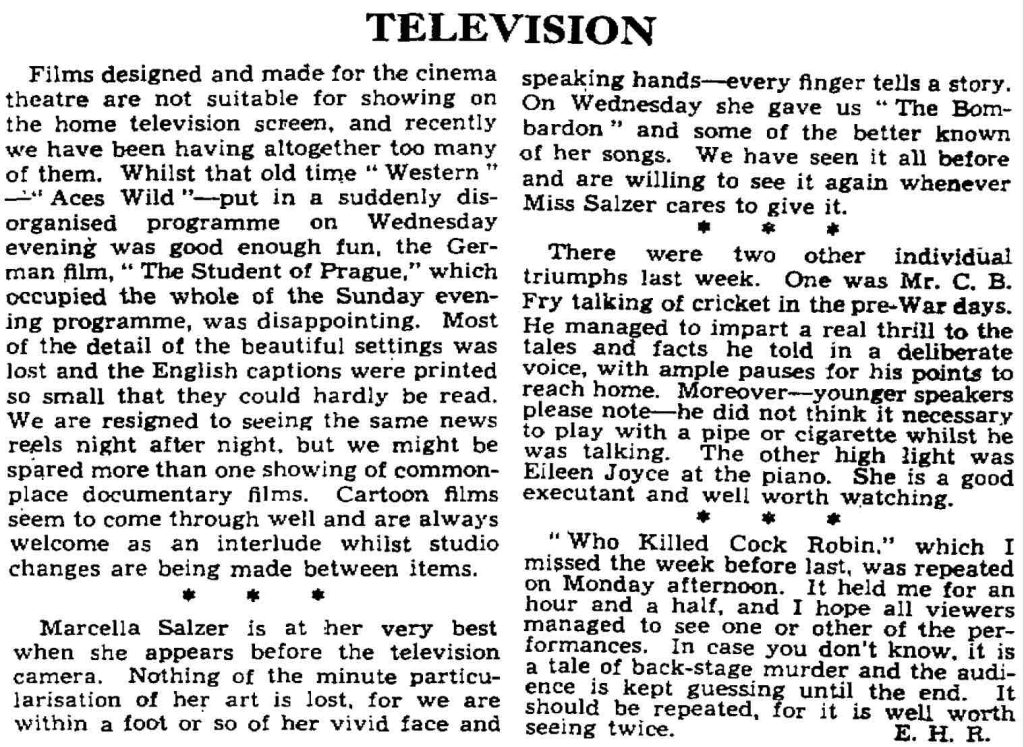
John Wyver writes: In 1938 and 1939 there were only two regular commentators on television’s output from Alexandra Palace. Anonymous writers for The Times contributed reviews, as on occasion did L. Marsland Gander for the Telegraph and Jonah Barrington for the Daily Express. But both of the latter writers were newsmen more than critics, and it was left to Grace Wyndham Goldie in The Listener and ‘E.H.R.’ for the Observer to pen weekly columns of plaudits, brickbats and occasional sustained analysis.
Wyndham Goldie was by far the more intellectual of the pair, and also the tougher, although she could rise to heights of enthusiasm on occasion. E.H.R. was reflective, measured, somewhat superficial and broadly supportive of the new medium. We have read quite a lot of G.W.G in these posts over the past months, and I thought it might be interesting to consider by way of comparison a full column of her Sunday colleague. More or less at random, I have chosen the one published on Sunday 21 August 1938.
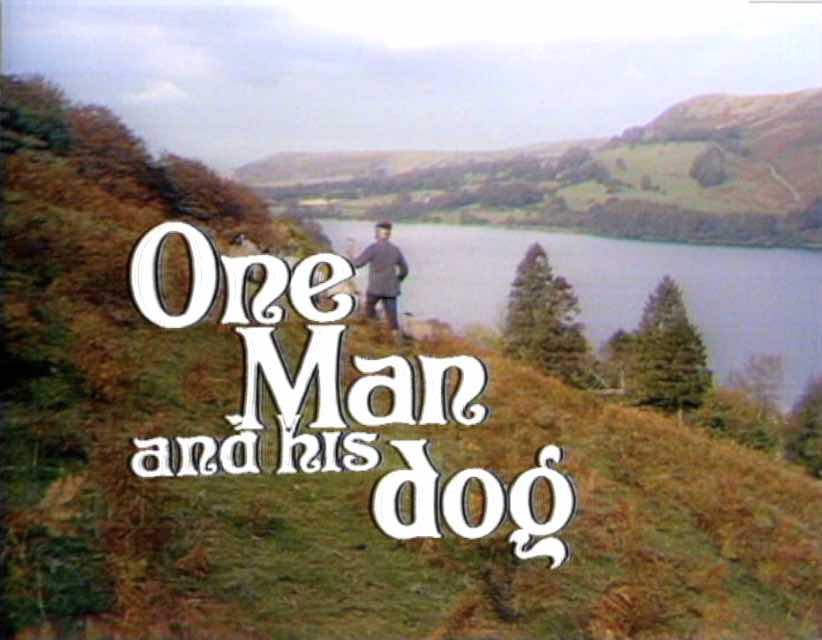
John Wyver writes: Somewhat distracted today, so only a very brief and late OTD. The afternoon of Friday 20 August 1937 saw a ‘local OB’ from Alexandra Park titled Sheepdog Trial. Billed as ‘a demonstration of canine intelligence’, the 20-minute broadcast produced by Moultrie Kelsall featured Percy Watson, his four dogs and ten sheep. Like all such ‘local OBs’ this was realised by taking one or more cabled Emitron cameras out of the studio and operating them in the nearby parkland.
Nearly 40 years later the popular One Man and His Dog, with Phil Drabble, started on BBC2, and ran from February 1976 until it became an annual edition of Countryfile in 2013. The header image is from the title sequence of the 1978 series. File under ‘nothing new’, ‘sun’, etc.
Incidentally, today’s distractions include the campaign against the service changes to access at the BBC’s Written Archives Centre in Caversham. For more on this, and for the chance to add your support to the open letter of concern, please go to https://tinyurl.com/bbcwaccampaign.
[OTD post no. 246; part of a long-running series leading up to the publication on 8 January 2026 of my book Magic Rays of Light: The Early Years of Television in Britain, which can now be pre-ordered from Bloomsbury here.]
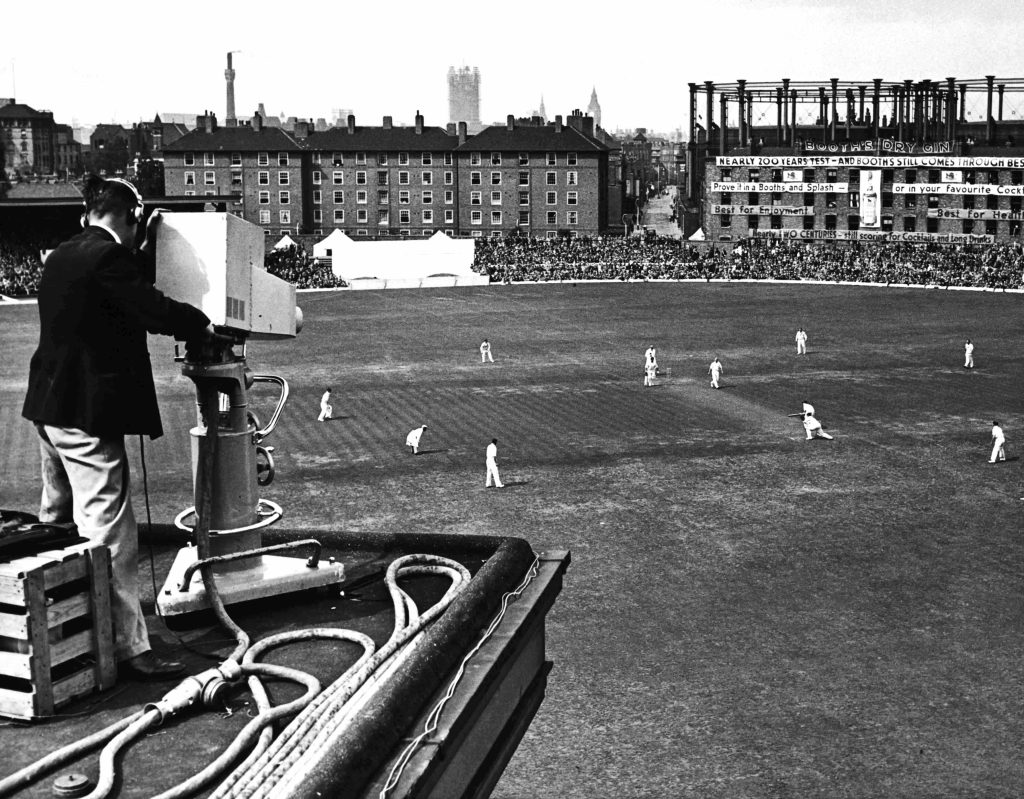
John Wyver writes: On Saturday 19 August 1939, two weeks and a day before the declaration of war, one of the BBC’s OB units was at the Oval for the first day’s play (of just three) in the final Test match between England and the West Indies. Transmissions started with an establishing shot of the iconic gasometers at 11.30am. An hour of play was shown then, followed by a further hour at 2.30pm, and then 35 minutes running up to tea at 4.30pm. The final session ran from 5.30 to stumps an hour later.
Debutant [Tyrell] Johnson took the wicket of Walter Keeton with his first delivery in Test cricket, but Norman Oldfield made 80 on his first appearance for England, and with [Len] Hutton making 73 and [Joe] Hardstaff 94, England were all out for 352 before the end of the first day.
The great Learie Constantine, who would be knighted in 1962 and become the first Black peer in 1969, took 5 England wickets for a tidy 75 runs in just 17.3 overs. In response, on the second day and the morning of the third, West Indies posted an impressive 498, aided by a very fine 137 from Bam Bam Weekes.
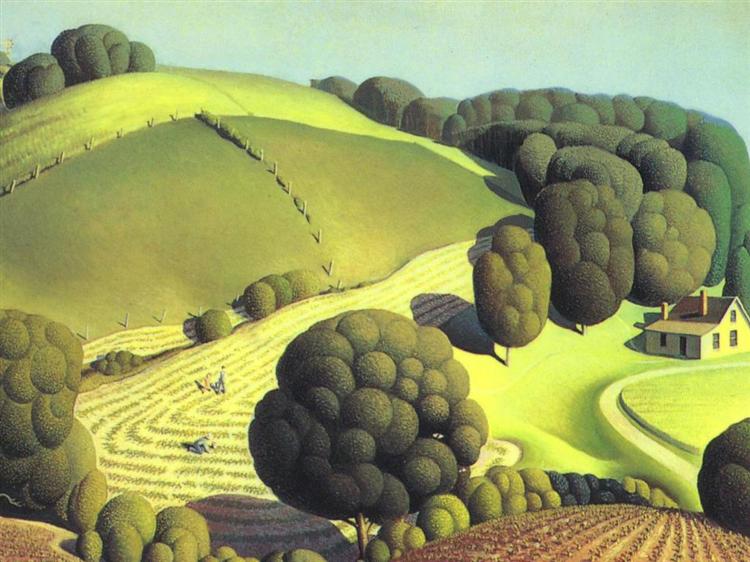
John Wyver writes: Looking back to the programmes of August 1939 you can’t escape the sense of the impending war, now (as it were) little more than a fortnight away. And yet AP copntinued to turn out intriguing transmissions, including the early arts broadcast American Painting on the evening of Friday 18.
This 22-minute programme, produced by Andrew Miller Jones, was introduced by British art historian and museum director William George Constable, who since the previous year had been curator of painting at Boston’s Museum of Fine Arts. Constable had studied at the Slade just after the First World War, in which he had been badly injured, and worked at the Wallace Collection, National Gallery and then as the first director of the Courtauld Institute of Art.
The selected artworks, which would have been shown as black and white photographs, were described by poet and critic Geoffrey Grigson, and editor at the time of the influential magazine New Verse. Immediately after the coming war, he was to found London’s Institute of Contemporary Arts with, among others, Herbert Read and Roland Penrose.
John Wyver writes: ‘Television set for £23’, promised a 17 August 1939 Daily Telegraph article penned by the paper’s well-informed radio correspondent L. Marsland Gander. He was writing ten days ahead of the popular trade fair Radiolympia which attracted thousands of listeners and lookers-in as well as those professionally involved with the broadcast industry.
Radiolympia the previous year had been an important moment for television, with blanket broadcasting from the Olympia exhibition halls followed by a significant uptake in sales. Gander was positive about the attractions for 1939, but awareness of the ever-more-likely declaration of war (which would cause the fair to shut early) is indicated by his note that at the forthcoming show, ‘the Navy, Army and Air Force have their own exhibits for the first time.’
John Wyver writes: After a three week break. a full schedule began again from AP on the afternoon of Monday 16 August 1937. Two afternoons of Davis Cup tennis and some test broadcasts had been the only offering for lookers-in during the ‘holiday’. Andrew Martin provides the background to this in his 2017 blog post:
The service was still in its infancy, and engineers at Alexandra Palace needed to carry out maintenance on equipment which they were still working out how to use… It was decided to take the single studio (Studio A) then in use out of service for a few weeks. The break also saw the end of the Radio Times Television Supplement, which was glossy, lavishly illustrated and expensive to produce; indeed there were no television listings at all in the magazine during the three weeks.
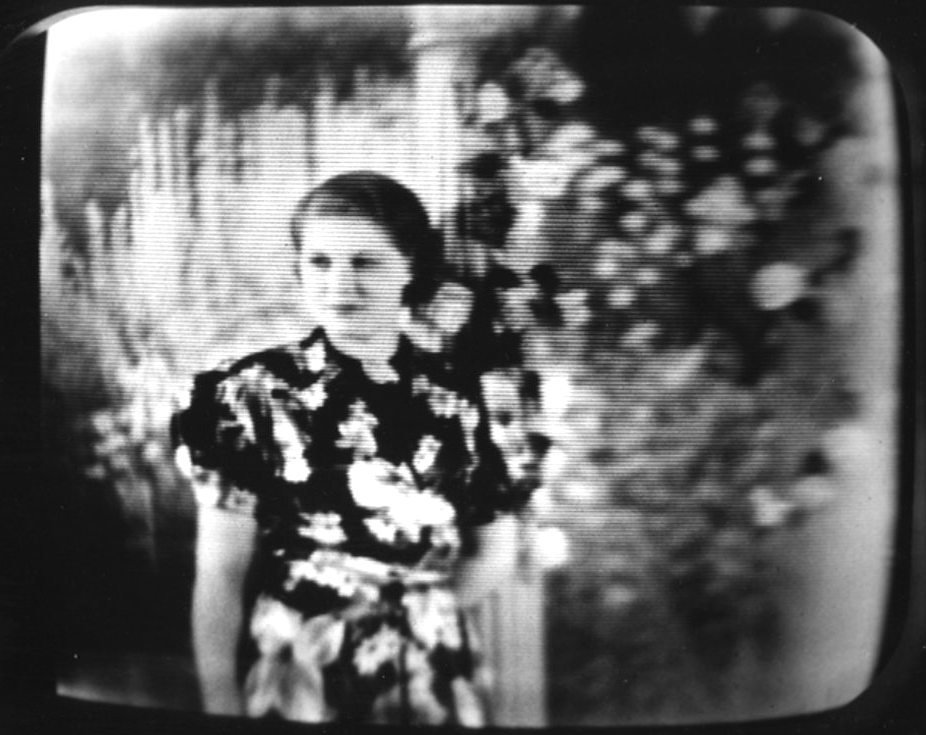
At 3pm on the Monday afternoon announcer Jasmine Bligh, pictured below in a BBC photograph taken off-screen in August 1937, welcomed back viewers to a schedule that began with an edition of Gaumont-British News.