15th August 2025
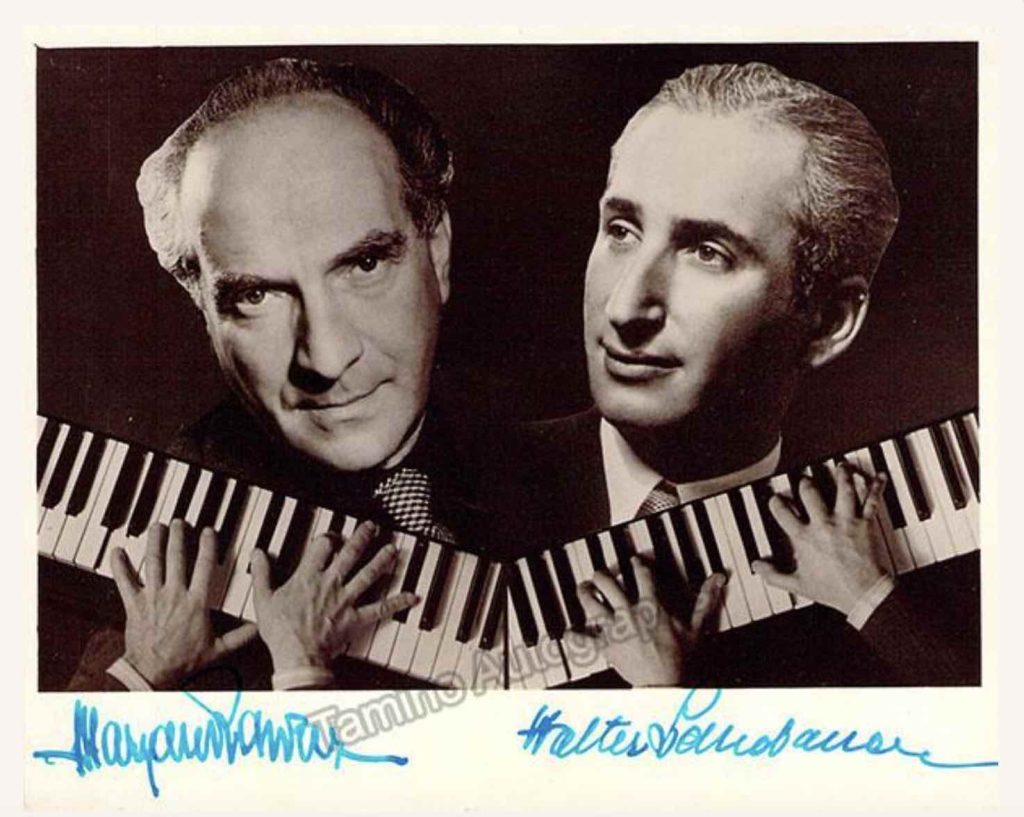
John Wyver writes: Late on the evening of Monday 15 August 1938 (well, late for AP, in fact 10.12pm), Marjan Rawicz and Walter Landauer gave a short recital on two pianos. They were also studio guests the following afternoon, presumably because once the crew had brought in two concert grands for the cameras, AP was keen to derive the most value from them. Their programme both times was composed of Frank Churchill’s compositions from the soundtrack of the previous year’s Disney animation Snow White and the Seven Dwarfs.
read more »
14th August 2025
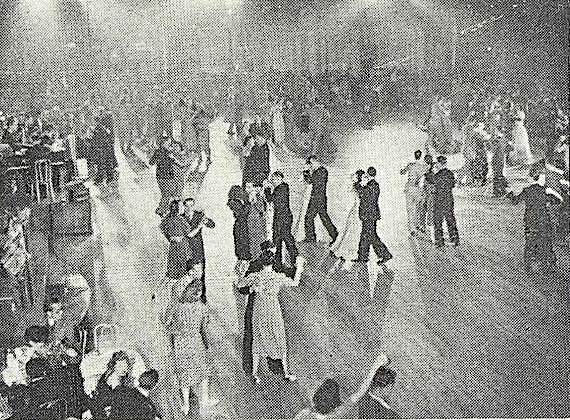
John Wyver writes: Late evening on Monday 15 August 1939 saw a mobile control unit in Hammersmith for an hour-long outside broadcast from the Palais. Viewers saw dancing including the ‘Palais Glide’, ‘Big Apple’, , ‘Jitter Bug’, and ‘Boops-a-Daisy’, as well as a crooning competition. Leslie Mitchell was the commentator and the music was courtesy of Oscar Rabin and his Band.
Our essential guide to pre-war television, Grace Wyndham Goldie writing in the Listener, included the broadcast in a state-of-the-art article about television at the end of the third year of the 405-line service:
There can, I think, be no doubt that the technical achievements of television production are far outstripping any advance in the quality of the programmes. Just consider the progress of the last twelve months. Where has it been? Why, in camera handling, lighting, scenic-designing, costuming and make-up (though not perhaps in wigging), grouping and setting and every kind of detail of method.
read more »
13th August 2025
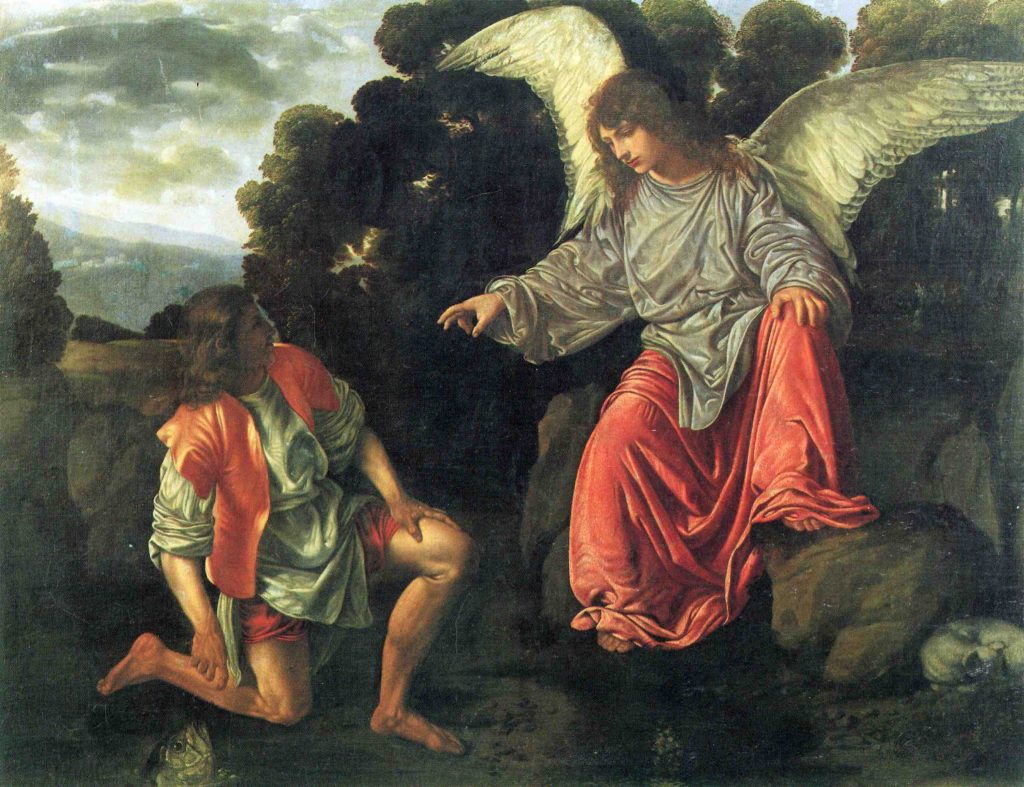
John Wyver writes: The evening schedule of Sunday 13 August 1939, with the war little more than a fortnight away, was taken up with a production of James Bridie’s fantasy Tobias the Angel. Frank Napier’s production for the Regent’s Park Open Air theatre was transplanted by George More O’Ferrall to the AP studio, with Leslie French as Tobias and Robert Eddison as the Archangel Gabriel.
The plot of Bridie’s 1930 comedy, according to Concord Theatricals, is as follows:
Tobias is the son of Tobit, a blind old Jewish beggar who lives in a hovel in Nineveh with his wife Anna. The disguised archangel Raphael, who has been hospitably received by Tobit, volunteers to accompany Tobias on a journey to Media.
They stop in Ecbatana at the home of Sarah, whom Tobias marries despite a warning that seven previous bridegrooms were murdered by the demon Asmoday (Asmodeus). After driving off this menace, Raphael escorts the couple to Nineveh, where he cures Tobit’s blindness. Raphael then reveals himself as the mighty Archangel and disappears.
read more »
12th August 2025
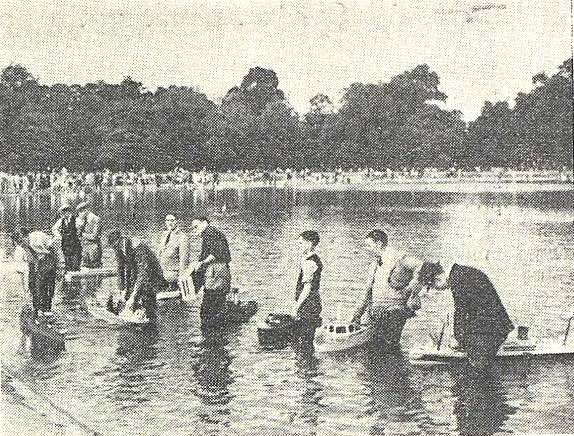
John Wyver writes: The afternoon of Saturday 12 August 1939, three weeks before the declaration of war, saw one of the BBC’s mobile control units in Kensington Gardens for a leisurely hour-long outside broadcast from the edges of the Round Pond. Four commentators – Elizabeth Cowell, Edward Halliday, J.C. Smith and H.B. Tucker – were on hand to talk to model aeroplane and boat enthusiasts, as well as those fishing for tiddlers.
The broadcast prompted one of Grace Wyndham Goldie’s finest Listener columns, which I reproduce here in full:
Last Saturday, we had a highly amusing programme about Kensington Gardens. It was one of those valuable experiments in actuality, Television Surveys. lt began with a ‘close shot ‘ of Mr Halliday who was telling Miss Cowell about Kensington Palace. The gardens, he said, were permeated (for him) with the spirit of Queen Victoria; the southern Wren front was better architecturally than the eastern Kent front; and so on. Miss Cowell appeared enthralled. And then, taking his arm, began to stroll forwards.
read more »
11th August 2025
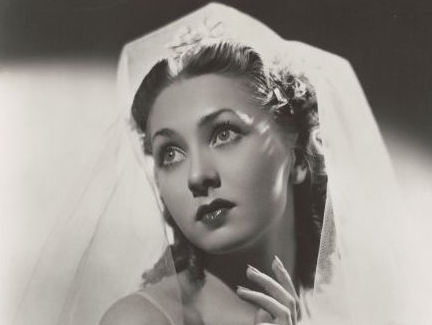
John Wyver writes: My fascination with the ballet stars who appeared on early television continues. This time, I am featuring a performance just before the war by the famed Ballet Russe de Monte Carlo star Irina Baronova. Late evening on Friday 11 August 1939 a recital produced by Philip Bate and titled Pas Seul showcased Baronova dancing ‘Traumes Wirren’ to Schumann and, in a duet with Boris Runanin, ‘Unter Donner und Blitz’ to Strauss.
Baronova was still only 20 years old, but she was known as one of legendary trio of ‘baby ballerinas’, along with Tamara Toumanova and Tatiana Riabouchinska, who were so-christened in 1932 by the English critic Arnold Haskell.
read more »
10th August 2025

John Wyver writes: In the line-up for the Baird 30-line transmission on the morning of 10 August 1931, along with jazz drummer L. Ash-Lyons and monologist Janet Barrow was Avril Coleridge-Taylor giving for the third time on television a demonstration of classical dancing. Now increasingly celebrated as a composer, with two of her short compositions played last week at the BBC Proms, Coleridge-Taylor would appear to be the first person of colour to appear on television in Britain. *
Born in 1903, Avril Coleridge-Taylor (above) was the daughter of feted composer Samuel Coleridge-Taylor, who was himself the son of Daniel Peter Hughes Taylor, a Creole man from Sierra Leone. Samuel was apparently known by white musicians in New York as the ‘African Mahler’ when he toured the United States in the early 1900s. He was especially famous for his immensely popular trilogy of cantatas ‘The Song of Hiawatha’, the first section of which premiered in 1898.
read more »
9th August 2025
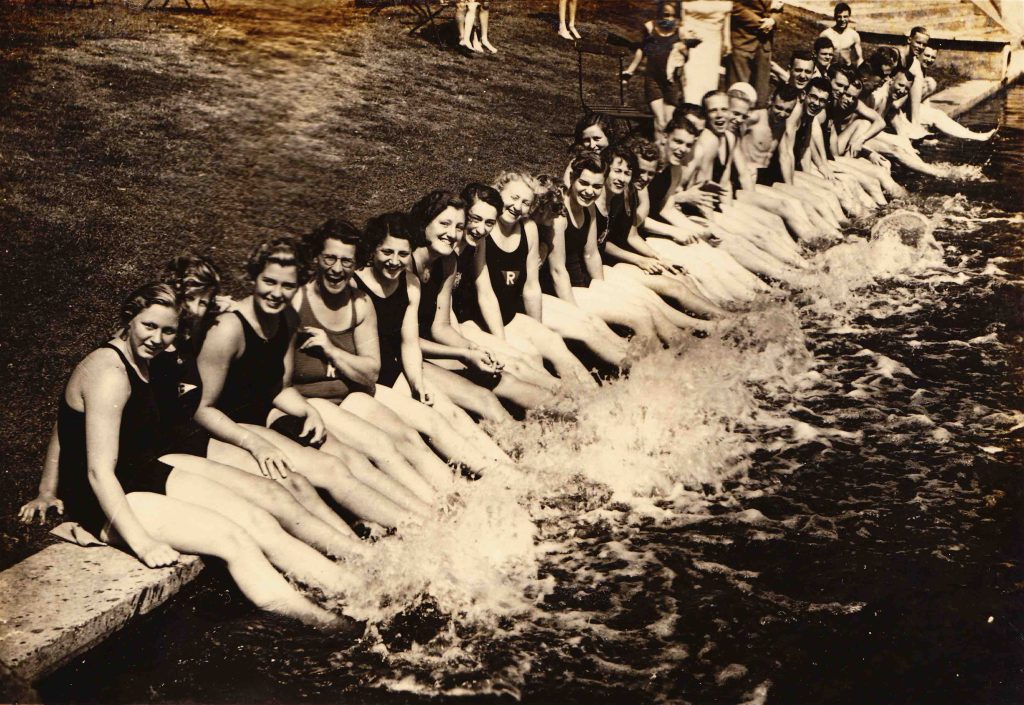
John Wyver writes: Monday 9 August 1938 was the first day of the BBC’s mobile control unit being at the Empire Pool, Wembley (now Wembley Arena) for the European Swimming Championships. Two afternoon visits continued each day throughout the week, with Olympic champion sprinter Harold Abrahams as one of the main commentators.
On this first day viewers saw 100m backstroke heats and a water polo match between Germany and Belgium; later in the week there was lots of diving (presumably relatively easy to capture on camera), more races, and several further water polo contests. Great Britain ended up fifth in the medals table, with Betty Slade bringing home our sole gold in the 3 metre springboard competition. Hungary won the men’s water polo.
read more »
8th August 2025
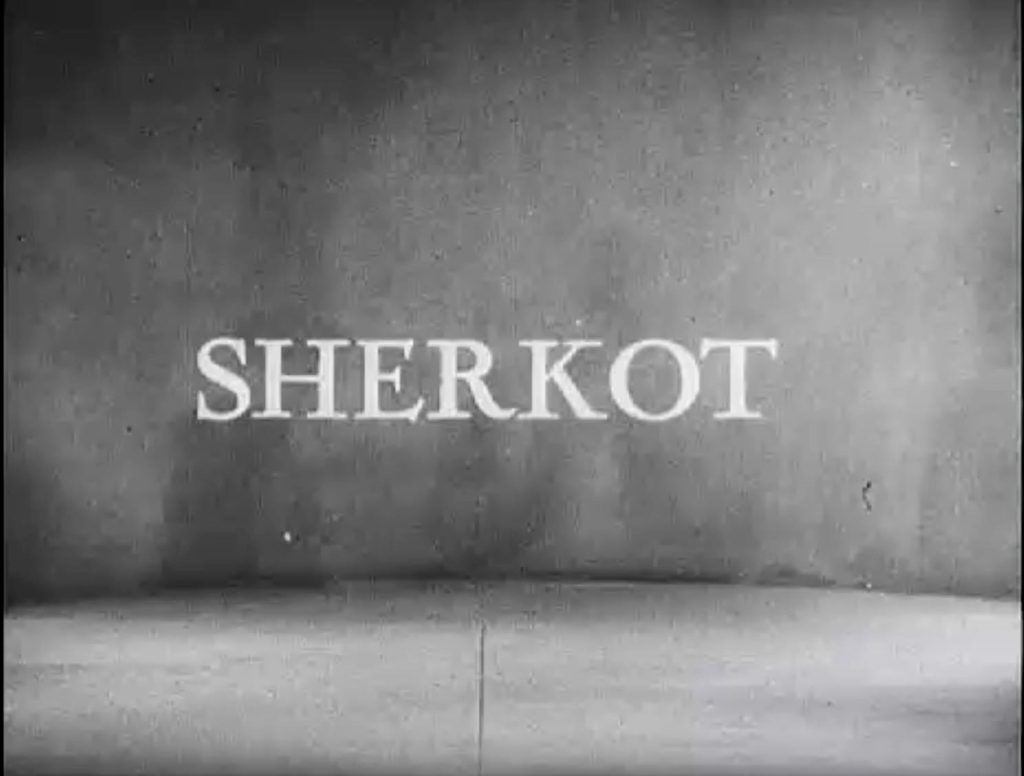
John Wyver writes: Intimate Interlude on the evening of Tuesday 8 August 1939 offered a bill featuring Mexican magician Kantu and Polish dancers Halima and Konarski, along with the mime artist Sherkot. As a vaudevillian whose act was almost entirely visual, although heavily reliant on a synchronous score featuing drum beats and symbol crashes, Sherkot was one of television’s artists who not had the chance to shine previously on radio
A bemused Keaton-esque clown, Sherkot performed the actions by sportsmen throwing, twirling and catching imaginary balls and the like. He appeared at least four times in live broadcasts from Alexandra Palace, but he was also featured by producer Dallas Bower in the BBC Television Demonstration Film, shot of 35mm film, which was shown every weekday morning from the summer of 1937 through to wartime shutdown.
read more »
7th August 2025
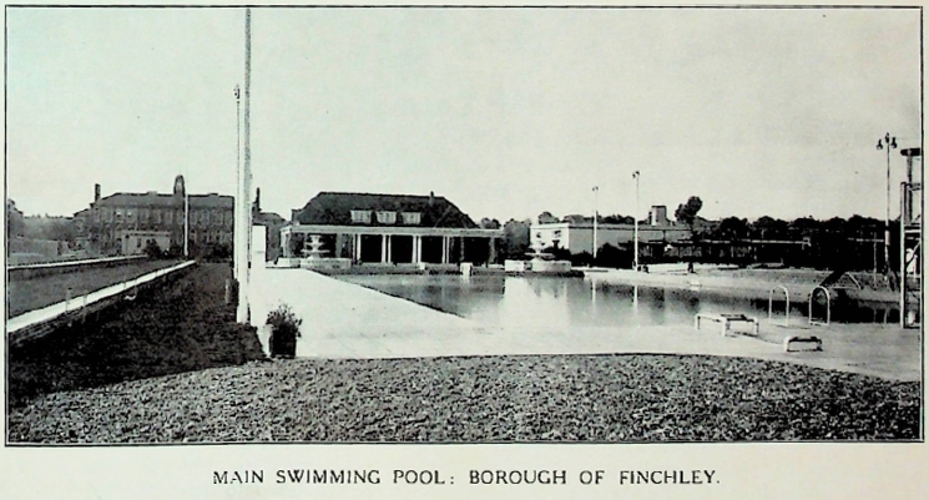
John Wyver writes: You can sense from Alexandra Palace’s schedules that August was the cruellest month for those running the service in 1938 and 1939 (and remember that Television shut down for three weeks in 1937). Producers and crews were presumably on their holidays, ideas appear to be in short supply, and it was clearly a struggle to fill the hours. Even the programme titles have a slightly desperate air, as in Make Sure of a Wet Bank Holiday! on the afternoon of 7 August 1939.
A 40-minute outside broadcast from Finchley Open Air Swimming Pool, this transmission was introduced by Leslie Mitchell and Elizabeth Cowell. Mitchell talked to four young women who told him they were chorus girls rehearsing a new Jessie Matthews show, and he interviewed Monica Waldack, Finchley Bathing Beauty Queen.
Elizabeth Cowell was consigned to the children’s pool to see what entertainment the little ones could provide, and apart from a two-minute loss of vision in the middle of the broadcast, other attractions included Highgate Diving Club member Mr Fitzjohn on the greasy pole and Mr Diplock smoking a pipe under water. Perhaps you had to be there.
read more »
6th August 2025
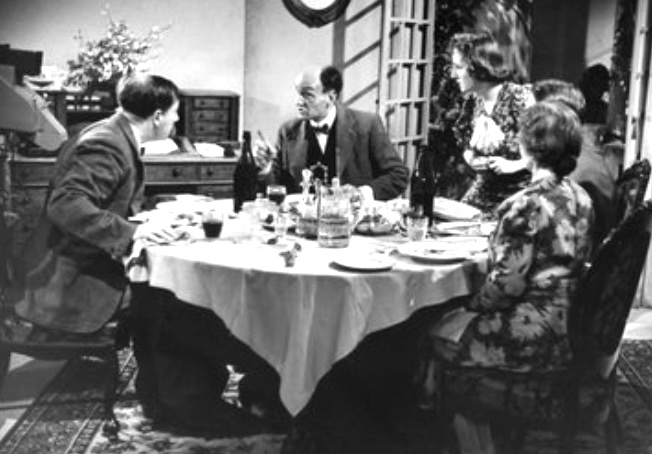
John Wyver writes: The evening of the next day was to be devoted to the Russian ballet, and so the week’s headline drama was played on Saturday 6 August 1938, rather than the traditional Sabbath. The play was J.B. Priestley’s comedy-drama from 1933, Laburnum Grove. Michael Barry adapted and produced, with a fine cast that included Maurice Denham, Rosemary Lomax, Kitty de Legh, Charles Victor and Susan Richards.
‘E.H.R.’ for the Observer noted that the play had previously been given on radio, and that this production
showed how much more enjoyable is a play when it can be seen as well as heard.
read more »