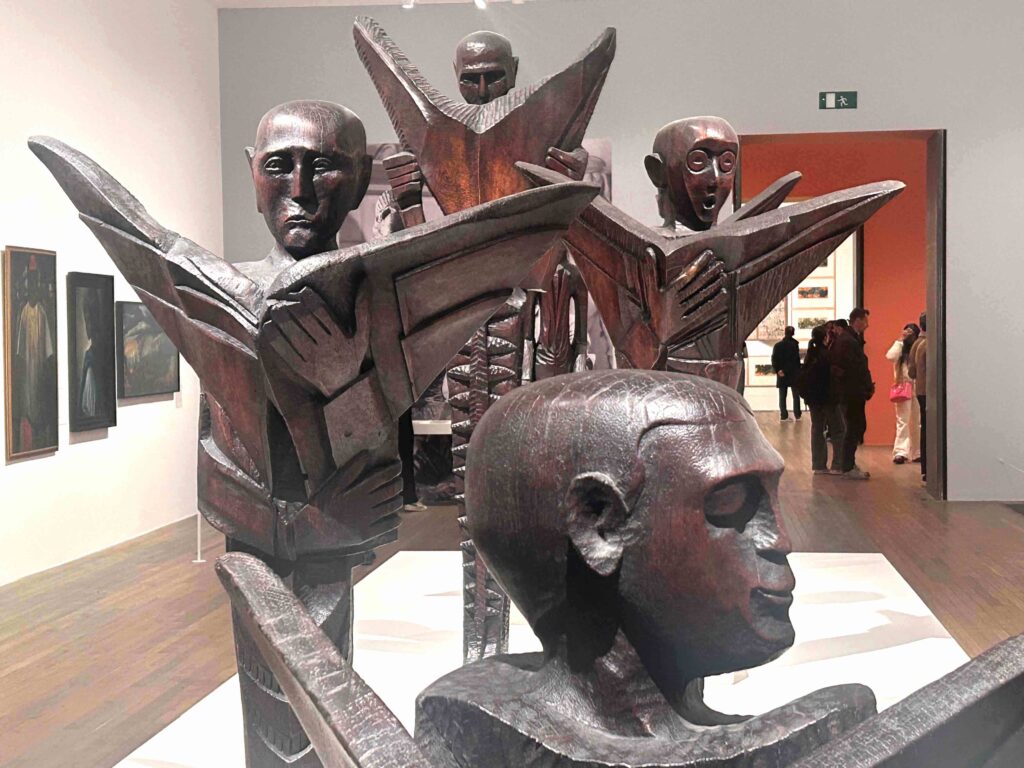
John Wyver writes: To Tate Modern for the richly interesting Nigerian Modernism exhibition (until 10 May) which is packed with the work of artists of whom I knew nothing. The second room is devoted to the art of Ben Enwonwu (1917-1994), with numerous paintings, and with its central island dominated by seven immensely striking wooden sculptures (detail above) commissioned by the Daily Mirror in 1960.
Hailing him as ‘arguably the most influential African artist of the 20th century,’ Wikipedia notes that ‘his pioneering career opened the way for the postcolonial proliferation and increased visibility of modern African art.’ For a more detailed discussion of his work, life and ideas, see Tate’s online essay by Bea Gassmann de Sousa, ‘Decolonising Nigerian Modernism: Ben Enwonwu’s “Identity in Politics”‘.
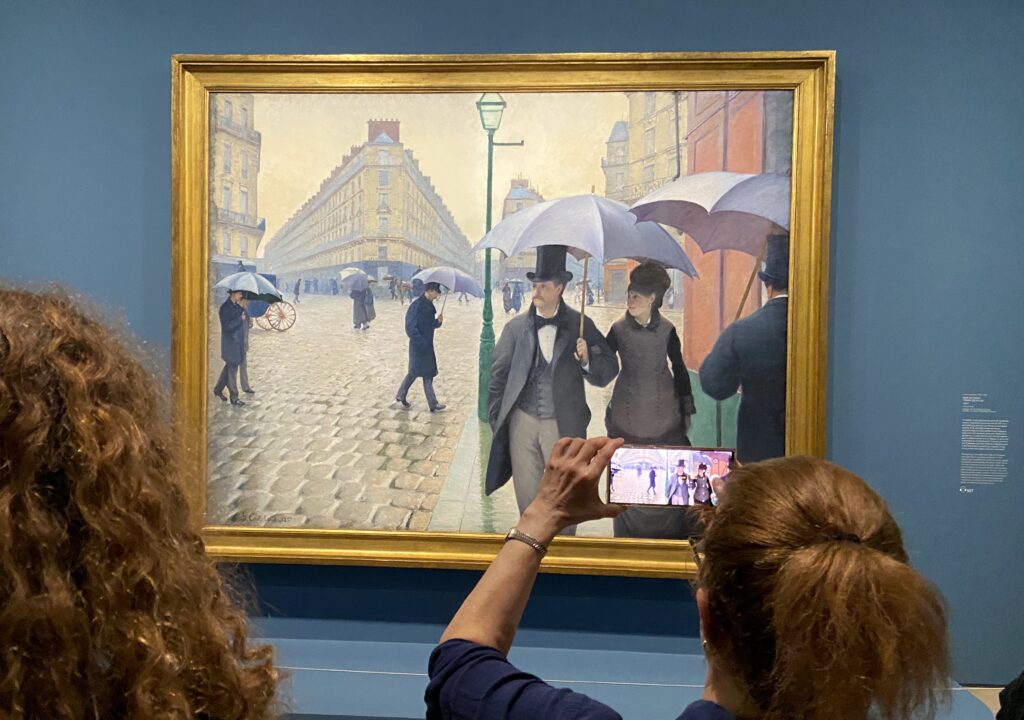
John Wyver writes: late to posting this today, but here is a selection of articles and video that have engaged and enriched my week, and amongst which I hope you find something interesting; for the header image, see the link below to Tom Crewe’s LRB essay on the paintings of Gustave Caillebotte.
• Early television and its future: first off, here’s a wonderful find, thanks to my friend Billy Smart who has flagged it in a blog post comment (more such, please, from Billy and others!); this is Elaine Grand on Good Afternoon (Thames; 23 March 1977) speaking with writer and critic Clive James and, remarkably, with the television pioneer Grace Wyndham Goldie, who recalls pre-war television from Alexandra Palace.
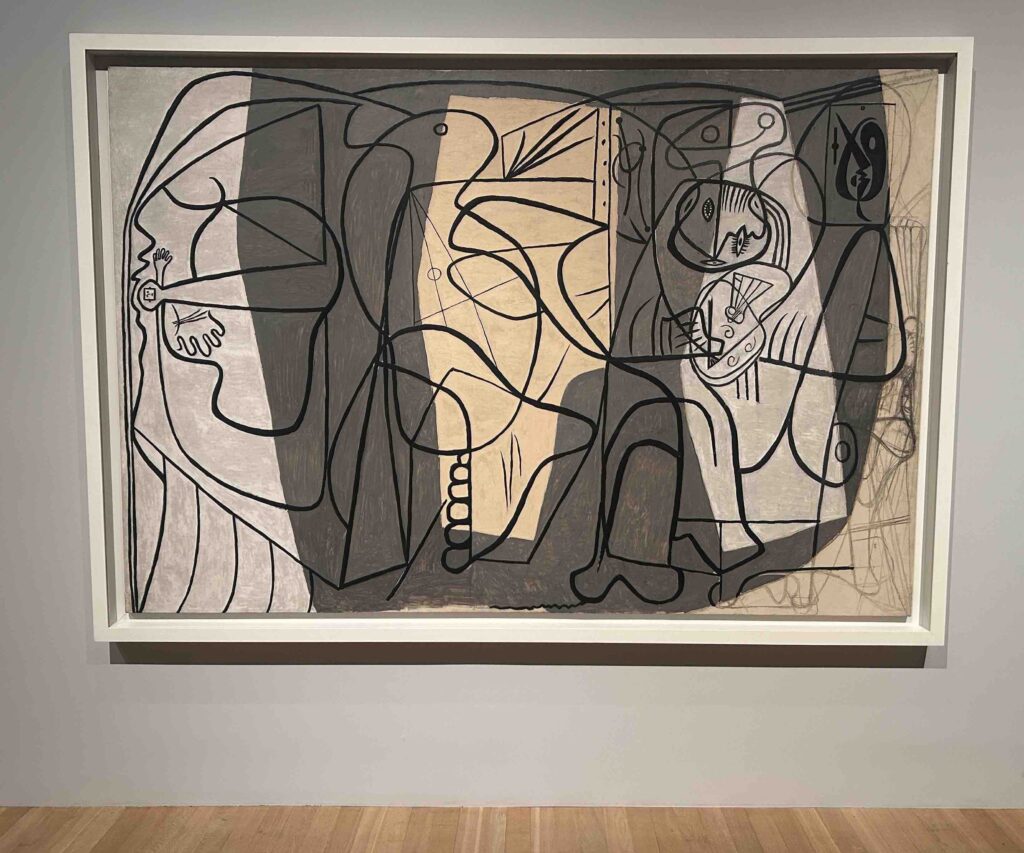
John Wyver writes: the week’s recommendations of articles and audio that I have found interesting and useful and enriching over the past week. Among my recent cultural highlights was Tate Modern’s Theatre Picasso exhibition (on until 12 April), which features the header image, the master’s extraordinary ‘The Painter and his Model’, 1926.
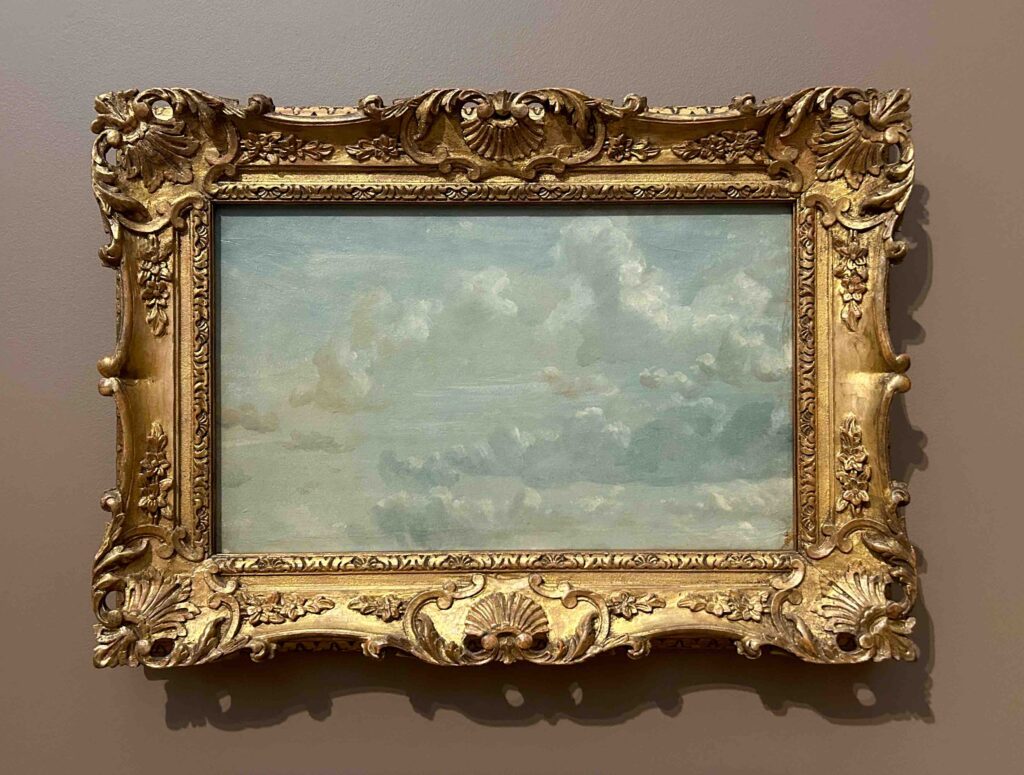
John Wyver writes: Posted late in the day, for which apologies, but here is the usual miscellany of articles and audio that I have found engaging and enriching this week. The header image is John Constable’s ‘Cloud Study’, 1822, usually seen as part of the Courtauld collection but currently one of the many joys in Tate Britain’s glorious and deservedly popular Turner & Constable: Rivals & Originals (until 12 April). I had the great pleasure of a Member’s Hours viewing this weekend, which is really the way to see it, as otherwise it is rammed – and also sold out on many days.
• Stay classy: the most entertaining essay I read all week – Andrew O’Hagan for LRB [£; limited free access] about the Andrew formerly known as the Prince, and about Virginia Roberts Giuffre and the other victims of Epstein and his world.
John Wyver writes: In 2007 the great Polish director Andrzej Wajda, then in his early eighties, released Katyń, a historical drama about the massacre across thrtee months in 1940 of at least 14,000 Polish officers and intelligentsia. This lavish, grim, powerful film was screened on Tuesday as part of the BFI Southbank season Andrzej Wajda: Portraits of History and Humanity that is just drawing to a close.
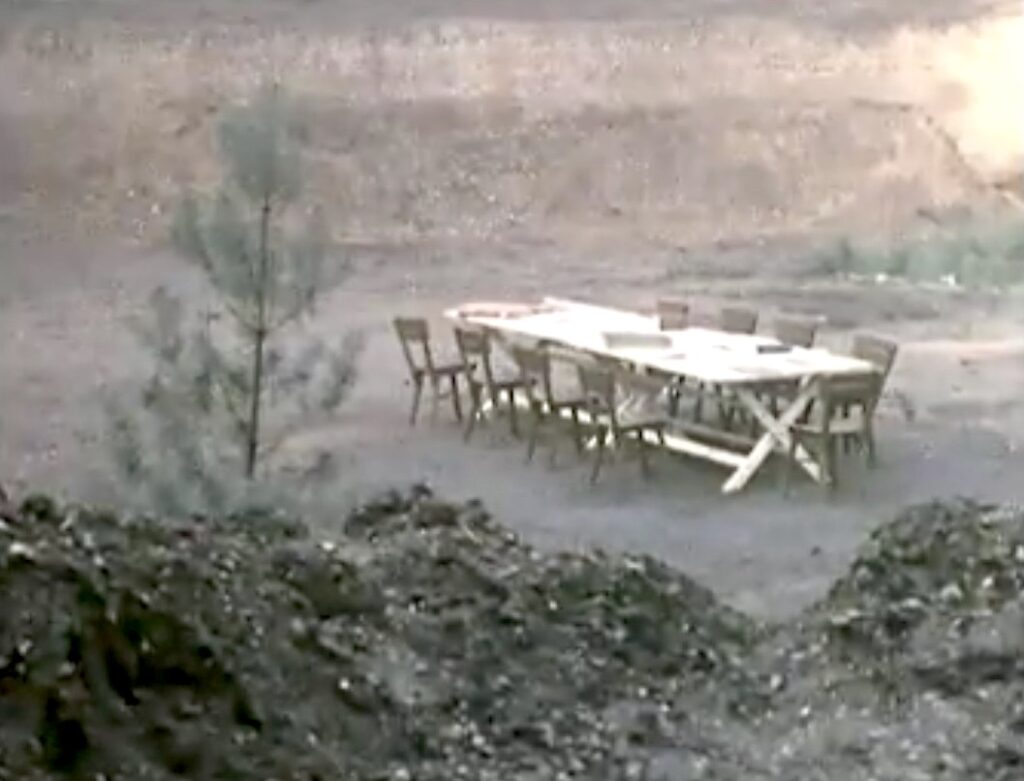
Nearly forty years earlier the Hungarian documentary filmmaker Robert Vas also made a film, ‘…the issue should be avoided’, about the Katyn Forest massacre. This ‘documentary investigation’, produced for BBC television, is an exceptional example of Vas’ rigorous approach to history on film, and is one of the productions to be considered in the symposium Robert Vas in Context on Friday 27 March. Tickets for the event, which are free, on Friday 27 March at Birkbeck, University of London, can be booked here.
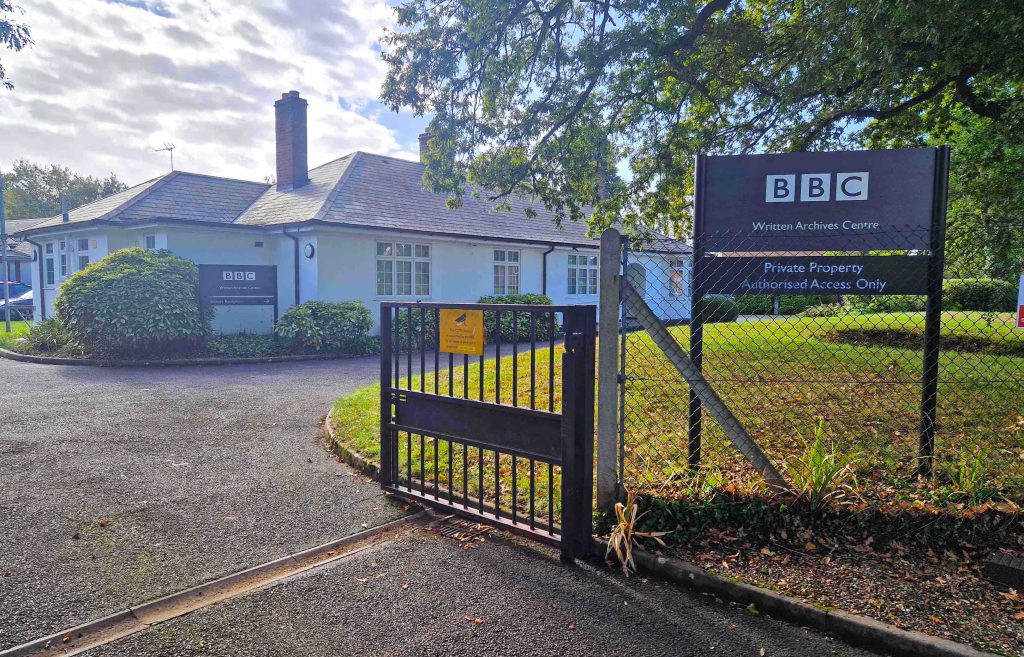
The campaign submission is a substantial document detailing the concerns of the 600 signatories to our open letter and raising key issues relating to questions of trust and transparency on the part of the BBC. Do please take a look at the full submission, which can be viewed and downloaded here, while below I reproduce the Introduction which also acts as an executive summary.
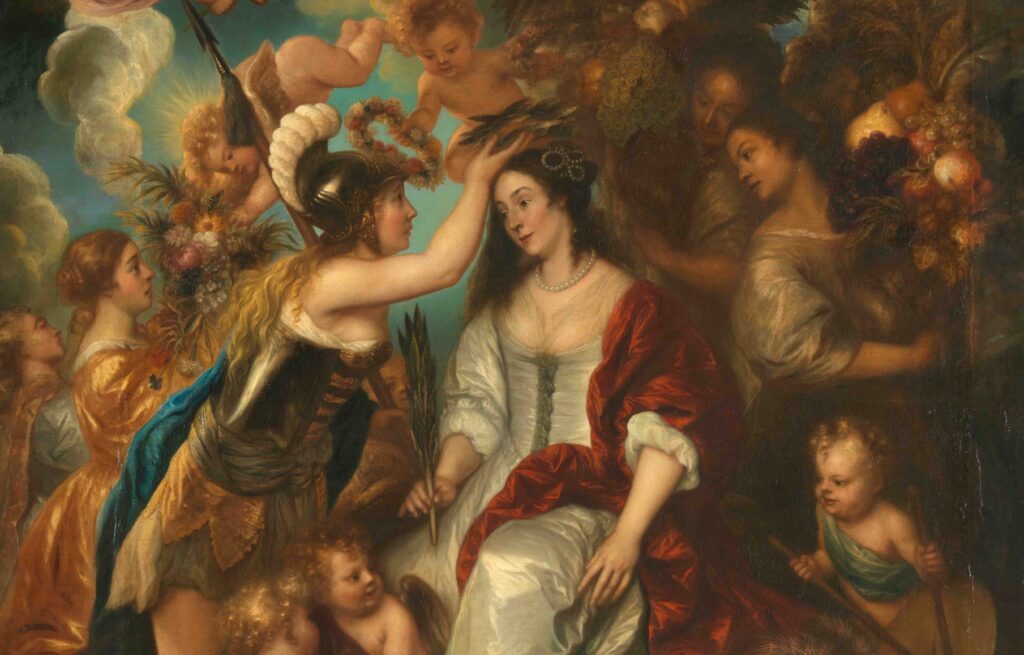
John Wyver writes: as usual, stuff that I found in the past week that helped me get through these strange and terrible times; the header image is a detail from Jan Lievens’ 1652 ‘Allegory of Peace’, from the collection of Amsterdam’s Rijksmuseum. Seemed right this week.
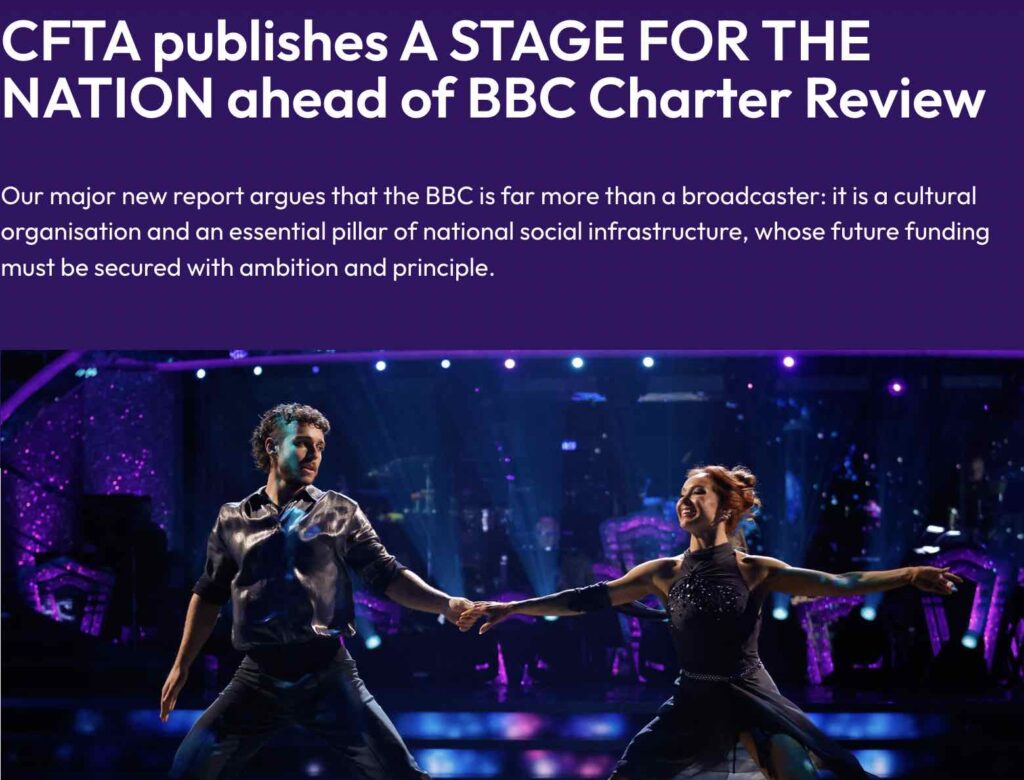
It is also perfectly possible to submit a standalone response, which is what the BBC WAC Campaign is doing (more of which, next week) and what the BBC itself has done with A BBC for All [link to .pdf], which is summarised here. So too has the Campaign for the Arts, with a report titled A Stage for the Nation [link to .pdf].
Both documents are detailed and well worth careful attention, but here I want to focus on just one narrow area of both. What follows, in somewhat polemical form, considers each report’s address to the decimation – that’s my polemical characterisation – of the arts on television over the past decade.
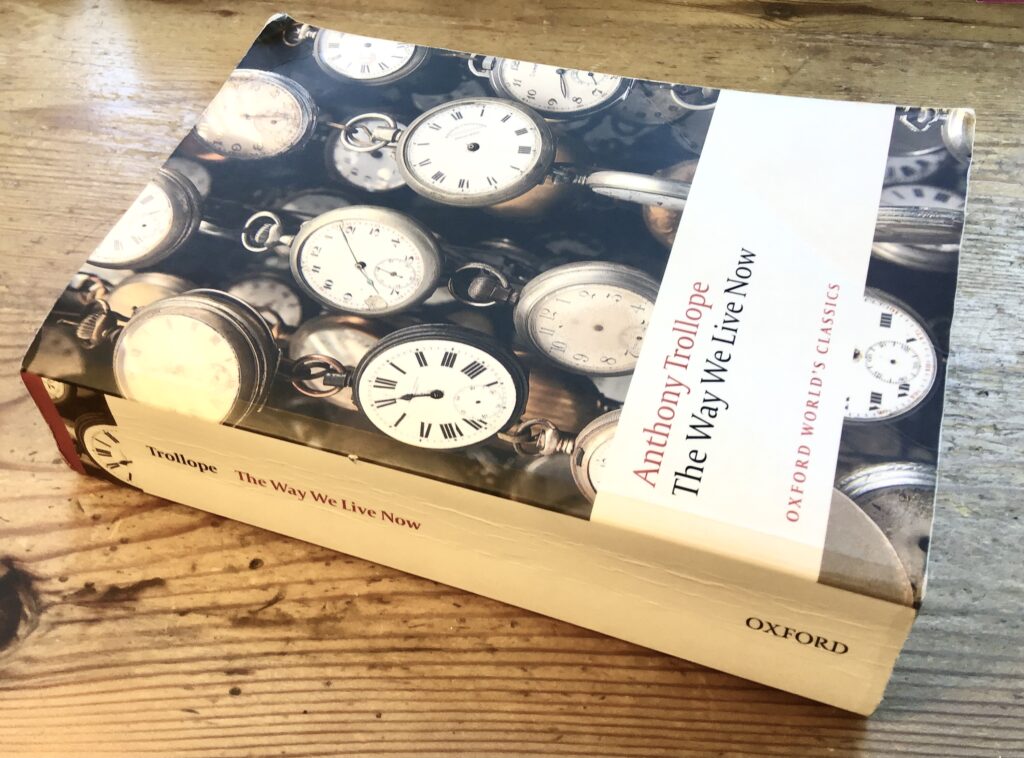
John Wyver writes: I have today finished reading Anthony Trollope’s 1875 tale of Victorian capitalism, class and love, The Way We Live Now. This is a wonderful chronicle of greed, perfidy and romance, crammed with compelling characters, including of course the robber baron Augustus Melmotte, but also among many others Sir Felix Carbury, Mrs Hurtle, Paul Montague, and one who I most identify with, Roger Carbury. Moreover, the resonances with today’s world of tech bros, market manipulation and Tr*mp are ever present.
But it is not Trollope’s tale that I intend to reflect on here. Rather, on this World Book Day, I want to acknowledge, just briefly, my physical paperback from the excellent Oxford World’s Classics series, and to recognise how, after more or less a month of it accompanying me in bed, at mealtimes, on tube journeys and trains, in various waiting rooms, and in a pub of two, this copy bears a precious history of our relationship.