13th December 2024
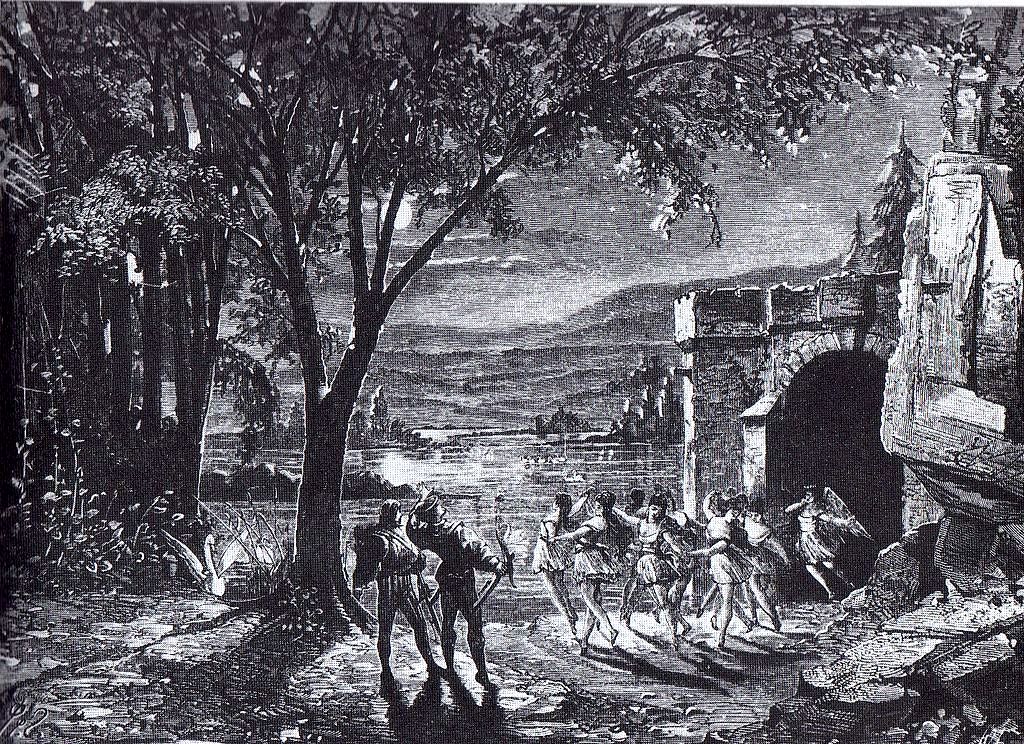
John Wyver writes: Presented on the afternoon of Monday 13 December 1937 was the most ambitious television ballet to date, act 2 of, as it was billed, Le lac des cygnes, or Swan Lake to the rest of us. The troupe was the Vic-Wells Ballet Company, from which chrysalis the Royal Ballet would emerge post-war, and this was their production that had premiered in November 1934. Studio manager and now producer D.H. Munro was at the control desk.
read more »
12th December 2024
John Wyver writes: the afternoon and evening of Saturday 12 December 1936, just six weeks into the BBC Television service from Alexandra Palace, witnessed a spectacular demonstration on the terrace just outside the studio. Celebrated First World War pilot and now producer Cecil Lewis had been charged with organising ‘local’ outside broadcasts. With the enthusiasm of a true believer, he arranged with the Territorial Army for the Battalion 61st (11th London) Anti-Aircraft Brigade, R.A., and the 36th Middlesex Anti-Aircraft, R.E., to be put through their paces.
read more »
11th December 2024
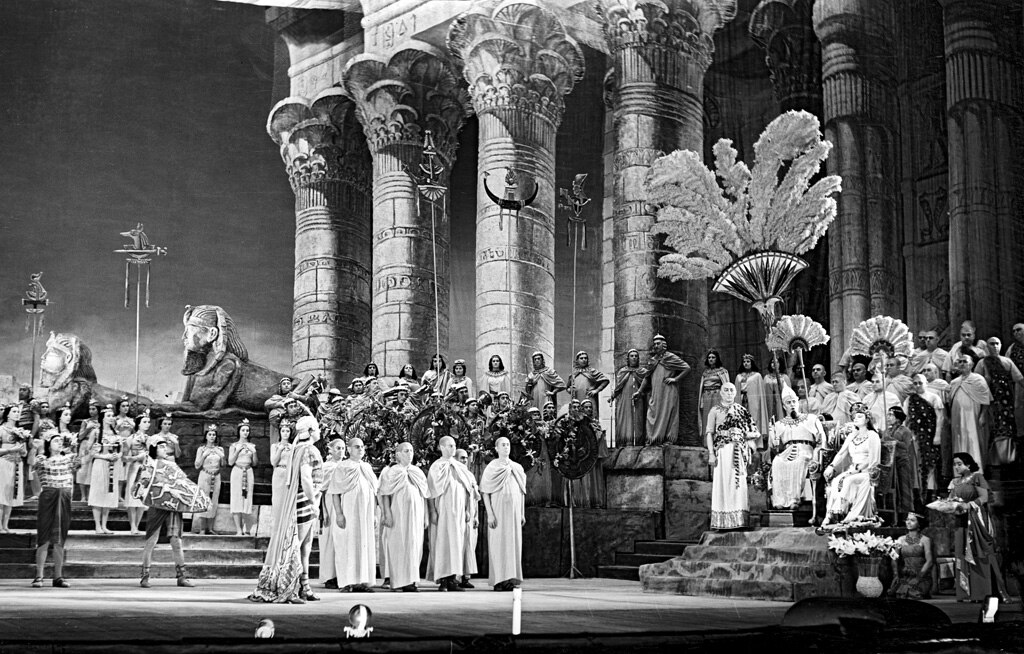
John Wyver writes: the evening of Saturday 11 December 1937 featured an ambitious half-hour broadcast of act 3 of Verdi’s Aida given by the Matania Operatic Society. Opera was an important element of the transmissions from Alexandra Palace, although this broadcast under producer Dallas Bower, a little over a year into the service, was one of the first presentations of ‘grand’ opera.
Gwaladys Garside (Amneris), Dorothy Stanton (Aida), Alec John (Radames) and Joseph Satariano (Amonasro), reputable singers all, led the cast of ten and the ever-versatile BBC Television Orchestra under Hyam (‘Bumps’) Greenbaum was augmented by seven additional players. As for the Matania Operatic Company, I’ve found not a single archival trace, so if anyone can give me a lead to who or what they were I would be most grateful. (For the avoidance of doubt, the image is NOT from the television broadcast, but rather – and simply because I liked it – of the Bolshoi Theatre Aida in 1957; more details below.)
read more »
10th December 2024
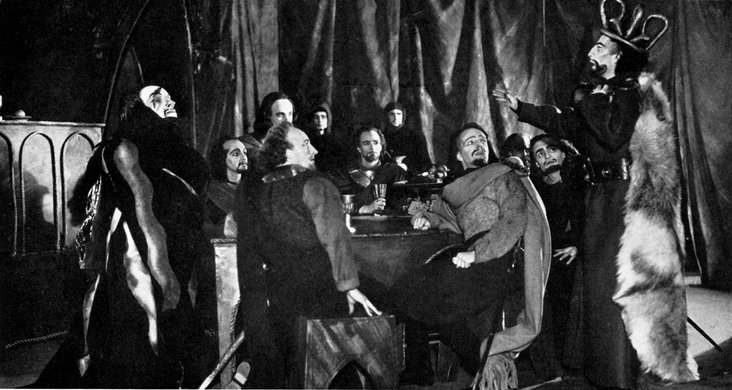
John Wyver writes: this day in early British television might be celebrated for the Thursday afternoon in 1936 which featured the first relay of a sound broadcast on the Alexandra Palace service. At 15.59 that day the National Programme announcement was carried of the abdication of King Edward VIII. But I’ve chosen to focus on the troubles a year earlier of an earlier, fictional king, Macbeth. The Friday afternoon of 10 December 1937 saw the broadcast of Scenes from Macbeth, a brief transfer from the Old Vic of part of Michel Saint-Denis’ production with Laurence Olivier and Judith Anderson (above).
read more »
9th December 2024
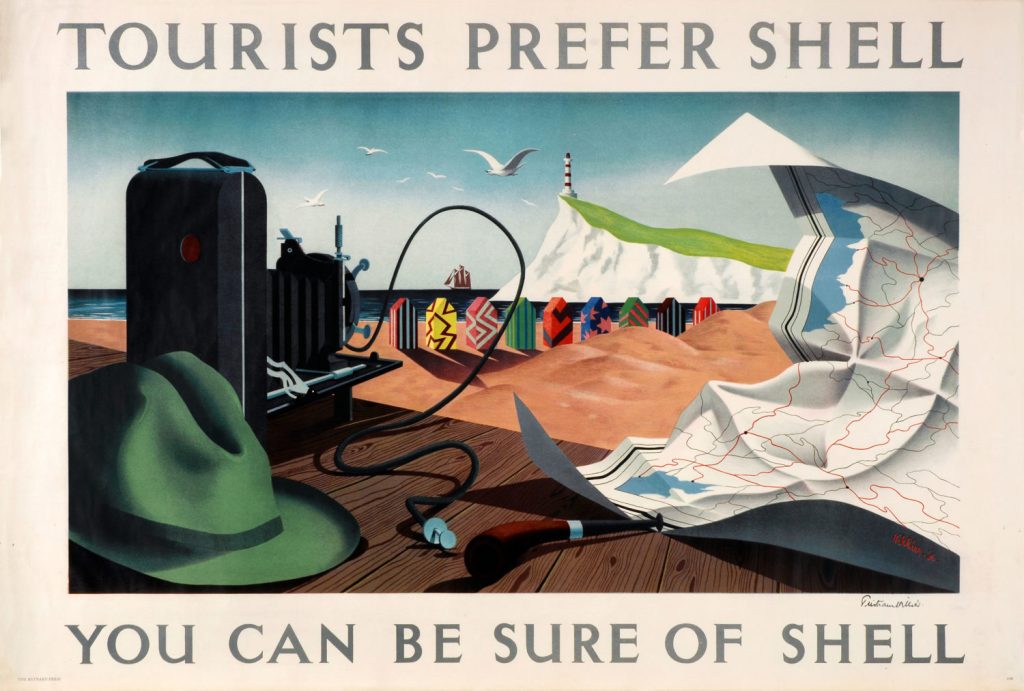
John Wyver writes: The Christmas quotient of programming was ramped up on the evening of Friday 9 December 1938 with a 10-minute broadcast, Presents for the Children no 1, presented by the well-regarded painter Edward Halliday. The artist recommended a number of prints that were appropriate for the room that the middle-classes still called the nursery, including Tristram Hiller’s 1936 slightly surreal (and glorious) poster ‘Tourists Prefer Shell’ (above).
read more »
8th December 2024
John Wyver writes: a second selection, after too long a break, of articles, video and audio that have especially engaged me over the past week and more.
• Advent Sunday in old money – day 7: professional designer Martin Cater is one of many creating an online Advent calendar, and in his case he is writing delightfully and in a very personal way about different aspects of the popular culture of Christmas. Over the first week, he has cast his eye over tins of biscuits, artificial Christmas trees, fairy lights, sweets, decorations, baubles, and yesterday’s link is about visits to Santa’s grotto – for those of us of a certain age there’s so much here to enjoy (with thanks to Billy Smart for the tip).
read more »
8th December 2024
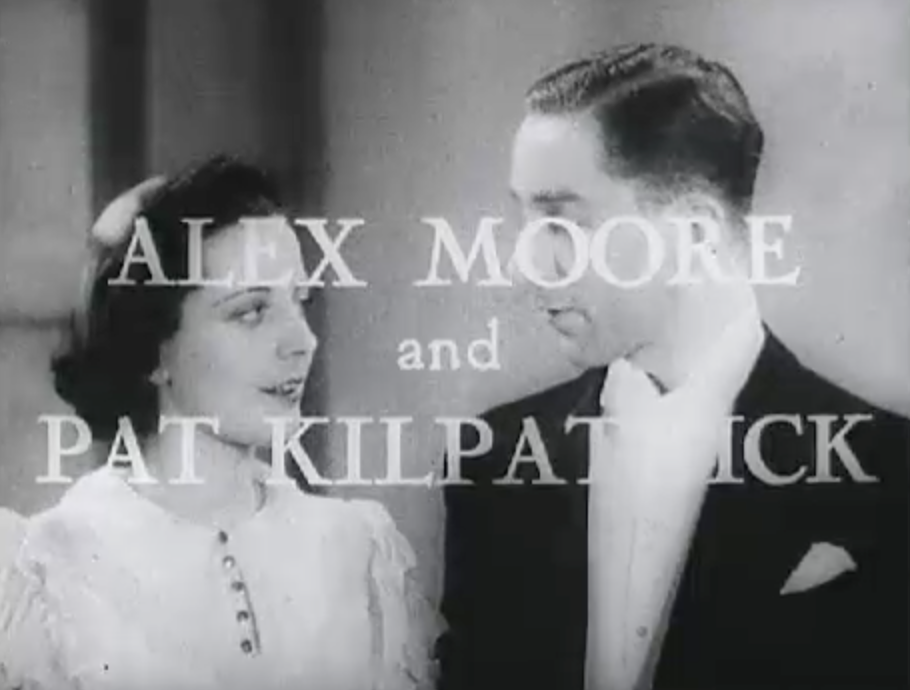
John Wyver writes: We might celebrate the television of 8 December 1937 for the one and only appearance of the Trapp Family Singers led by George von Trapp. Formed after winning a singing competition in Salzburg the previous year, the siblings and their father were now on a European tour. They would flee Austria in 1938, settle in the United States, and eventually inspire the 1959 Broadway hit The Sound of Music and the spectacularly successfui film six years later.
read more »
7th December 2024
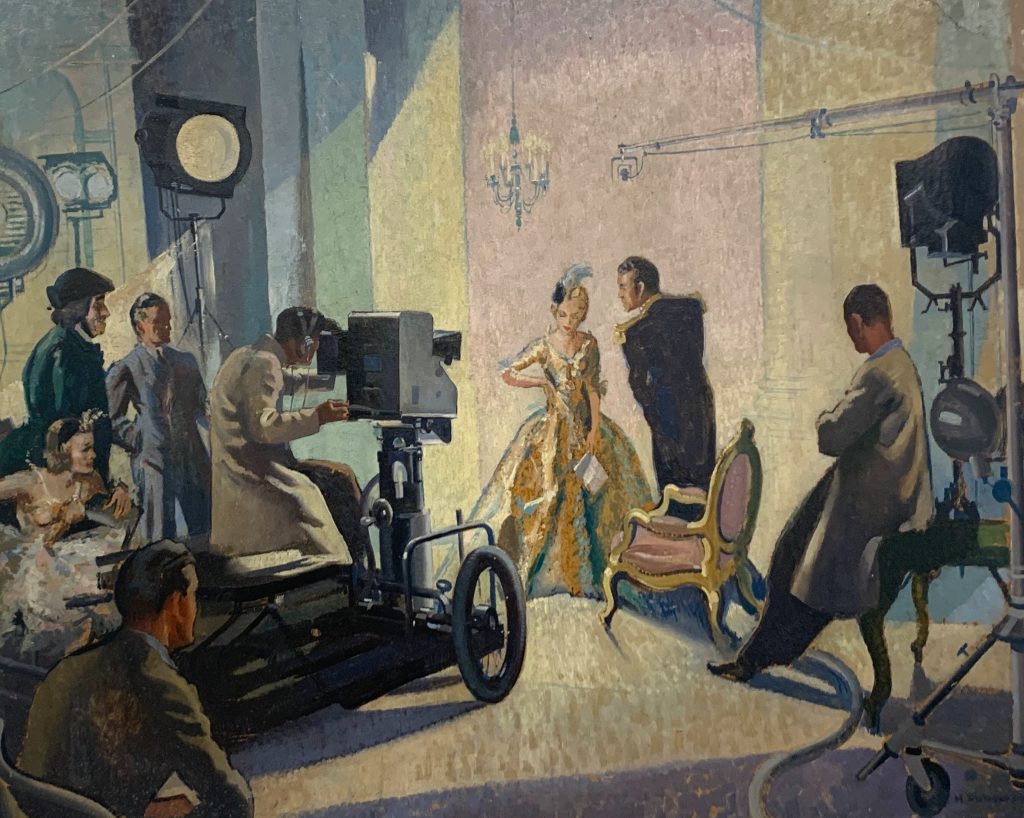
John Wyver writes: On this day, Tuesday 7 December 1937, Harry Rutherford squeezed himself into a corner of the crowded Studio A at Alexandra Palace, or so I believe, and made preliminary sketches for his painting ‘Starlight’, the most vivid and alluring image of pre-war television (above).
The contrast between the brightly illuminated elegance of the costumed couple, and the dark mysteries of the dolly-mounted Emitron, the delicate fishing-rod mic, and the looming lamps, is perfectly judged. The finished painting currently graces the reading room of the BBC Written Archives Centre at Caversham, although I fear it fails to receive the attention that it deserves from researchers focussed on their scholarly missions.
read more »
6th December 2024
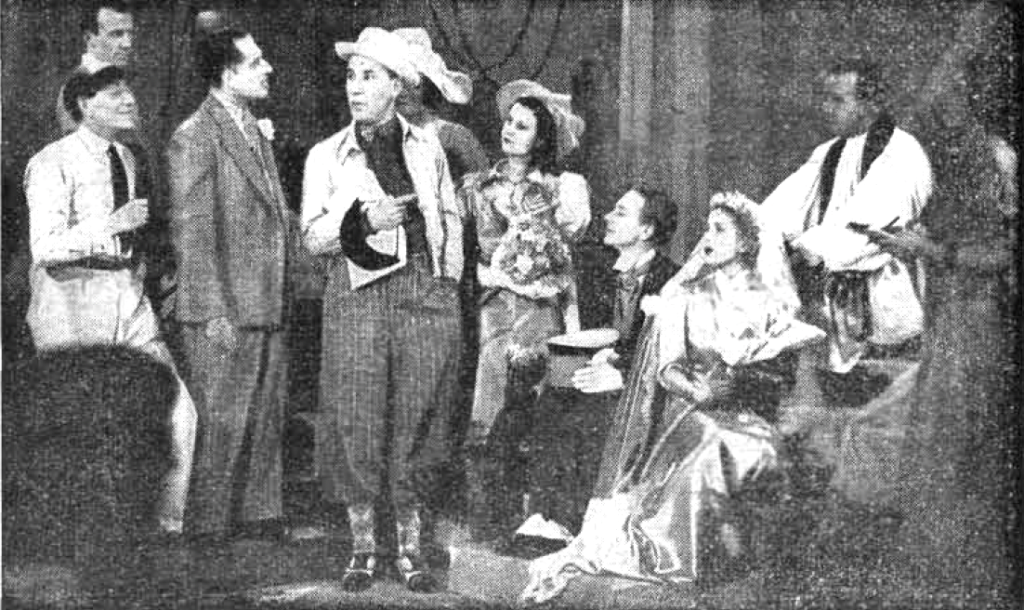
John Wyver writes: The afternoon of 6 December 1937 saw the first presentation from Alexandra Palace of what became the most popular production among pre-war dramas. Once in a Lifetime by Moss Hart and George Kaufman, adapted for television by producer Eric Crozier (there’s a production shot above), was played six times, including this matinee, with its last outing in early 1939. A satire about Hollwood, which premiered in New York in 1930, and now given a year and a month after the start of the AP service, this was also the most ambitious television staging to date, and the first programme to run continuously for the hitherto unimaginable length of 90 minutes.
read more »
5th December 2024
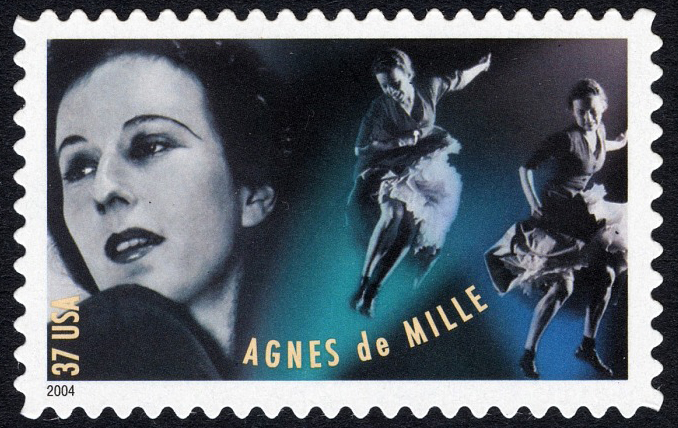
John Wyver writes: There are some surprising names among those who appeared on the 30-line Television service operated by the BBC between 1932 and 1935. Tuesday 5 December 1933 saw the first of two appearances by the then 28-year-old Agnes de Mille, the great American dancer and Broadway choreographer. On this occasion the PasB described her simply as ‘the character dancer’, and she shared a high end variety bill with soprano Vivian Lambelet (not the focus here, but the link will take you to a fascinating article by Christopher Reynolds) and Russian tenor Maxim Turganoff. Seventy years later, and a decade after her death, de Mille appeared on the 2004 37c US postage stamp that is pictured.
read more »