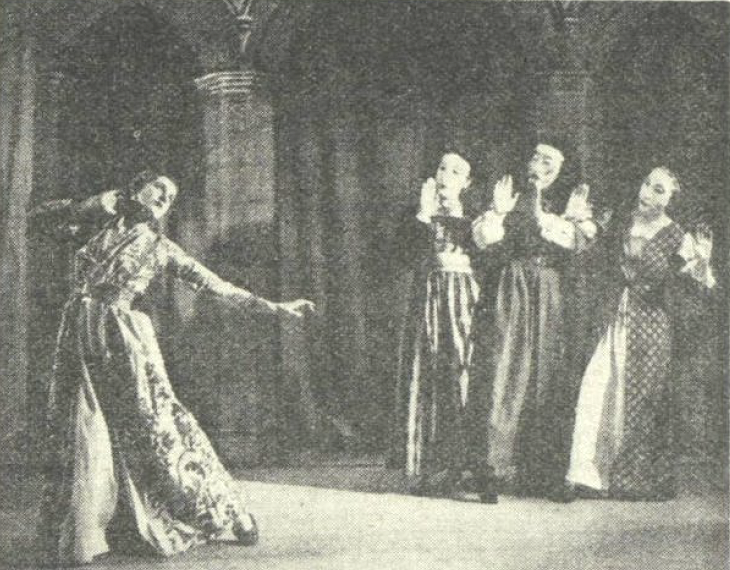
John Wyver writes: One of the true eccentricities of performance presented from Alexandra Palace in the later 1930s was the cycle of masques staged by H.D.C. Pepler. On this day, 4 December 1937, mime and mask artist Pepler, working with producer Stephen Thomas, with whom he regularly collaborated, presented a masque based on Coleridge’s poem The Rime of the Ancient Mariner. Working with an original score by Cyril Clarke, and with the poem read by Dennis Arundell, a cast of ten, including Pepler himself, and some in masks that Pepler had made, mimed and danced with rhythmic movements for a half-hour afternoon show. (The image is from an earlier Pepler and Thomas masque, The Eve of St Agnes, which we’ll get to.)
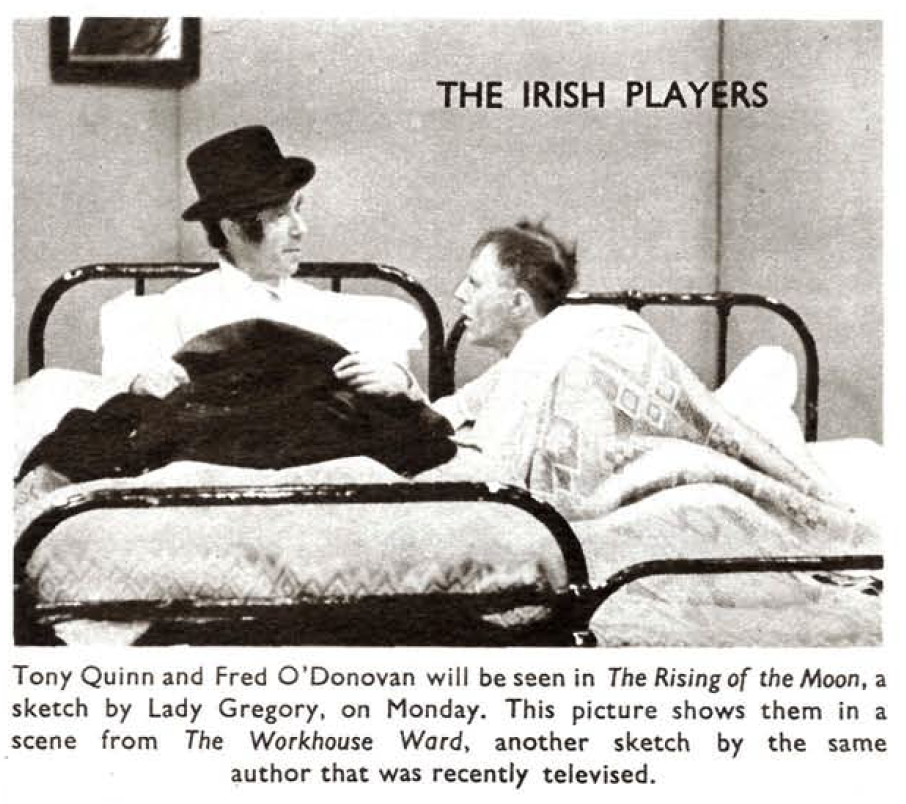
John Wyver writes: on the afternoon of this day, Friday 3 December 1937, four members of The Irish Players came to Alexandra Palace at short notice to play Lady Gregory‘s one-act drama The Rising of the Moon. They were a late replacement for Laurence Olivier and Judith Anderson who were booked to give scenes from Michel Saint-Denis’s Old Vic production of Macbeth. But that theatre’s powerhouse, Lilian Baylis, had died just a week before and those giving the Scottish play, to which we will return, postponed their visit. Remarkably, The Rising of the Moon is one of the very few pre-war television dramas of which we have something like a moving image record.
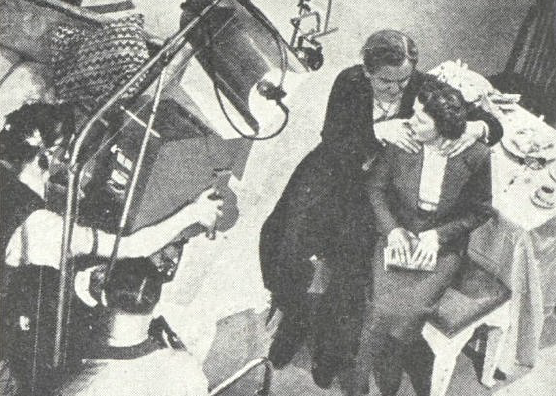
John Wyver writes: ‘First let me say that… Love From a Stranger was, beyond all possible doubt, a winner on the television screen. This play is, as you know, a flesh-creeping affair.’ That’s Grace Wyndham Goldie writing on George More O’Ferrall’s presentation (above) of Frank Vosper’s play adapted from an Agatha Christie short story, first shown on this day, Friday 2 December 1938. The 70-minute drama starring Edna Best and Henry Oscar was played from 9.10pm.
John Wyver writes: I have been in the habit, although not recently, of posting twelve links at the weekend of articles, including audio and video, that have especially engaged me during the past week. Now that I have come back to the blog, and now that it’s December already, I am going to return to making this selection also, at least for today. I tend to avoid well-known sources, and occasionally embrace challenging academic contributions, but in general expect (comparatively) long reads on film, the visual arts, performance, digital culture and literature, plus the occasional dash of explicit politics. Oh, and the Boss.
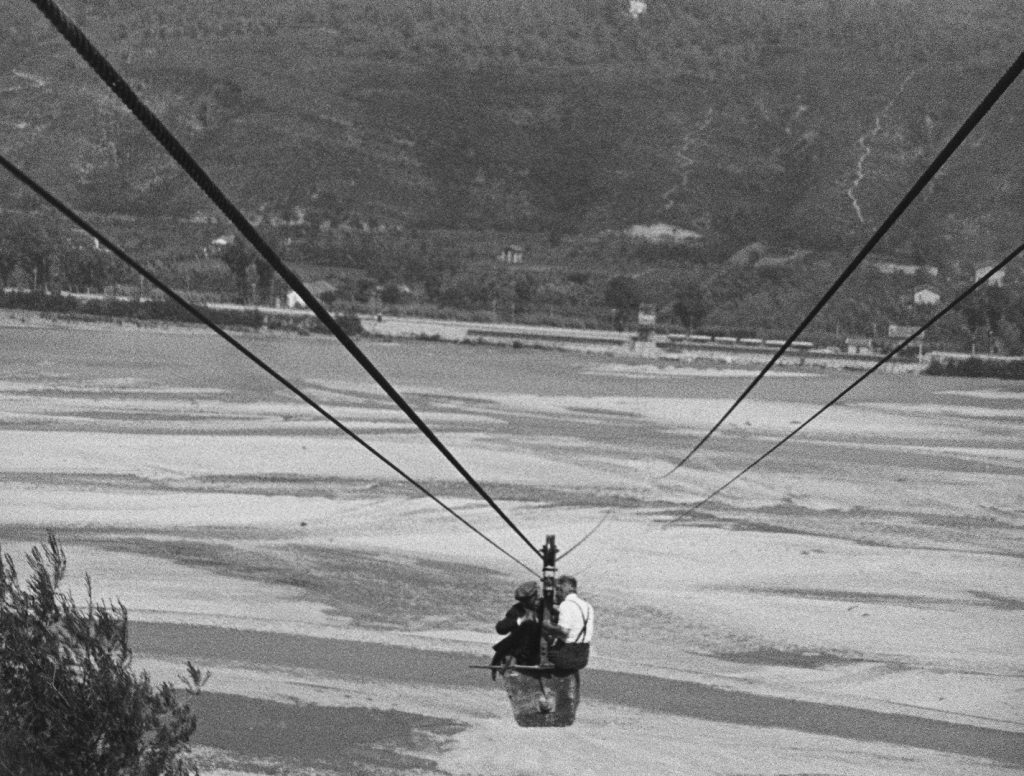
• Crime, conspiracy and the prospect of chaos: four filmic triumphs from Louis Feuillade: Geoff Andrew’s tribute to the master of French silent film is engaging and erudite, and linked to a Blu-ray box set from Eureka that Andrew hails as ‘a marvellous chance to discover four cinematic treasures from a major filmmaker too often neglected. They are exciting, mysterious, sinister, surreal, chilling, witty, tender, sexy, funny, innocent, sophisticated, timely… and ceaselessly imaginative and entertaining.’ Indeed. Above is a shot from Tih Minh (1918), and this is the trailer…
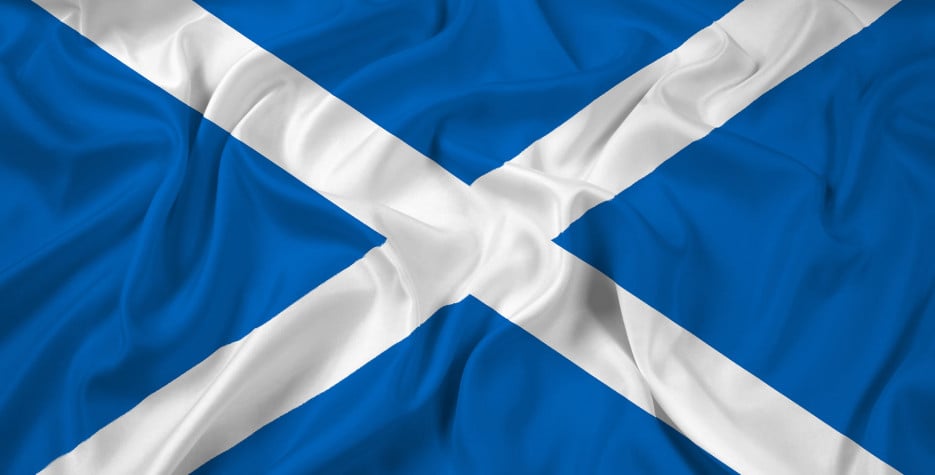
John Wyver writes: on this St Andrew’s Day in 1932, the 30-line Television service, which for the three months past had been operated by the BBC, presented an ambitious Scotland-themed variety show. Woolwich-born Helen McKay (real name: Ruby Ellen Northover) sang Scottish songs, as did renowned actually Scottish opera singer William Heughan, and Ernest MacPherson contributed violin solos including ‘Loch Lomond’. But I suspect the highlight was an appearance by Pipers of the Scots Guards, although it’s not entirely clear quite how many turned up.
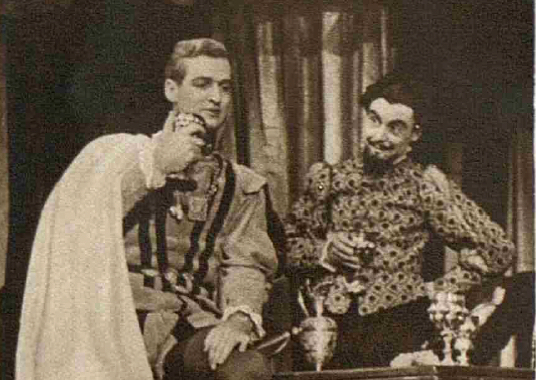
John Wyver writes: OTD, Monday 29 November 1937, from the BBC’s ‘high definition’ Television service… more Shakespeare. Scenes from Cymbeline, broadcast from 3.39pm to 4.24pm, and then again from 9.31pm to 9.55pm, was a presentation of minimally restaged elements of André van Gyseghem‘s production at London’s Embassy Theatre, which had opened 13 days previously. The image above, taken from The Sphere, 11 December 1937, shows Geoffrey Toone as Posthumus and Mario Francelli as Philario.
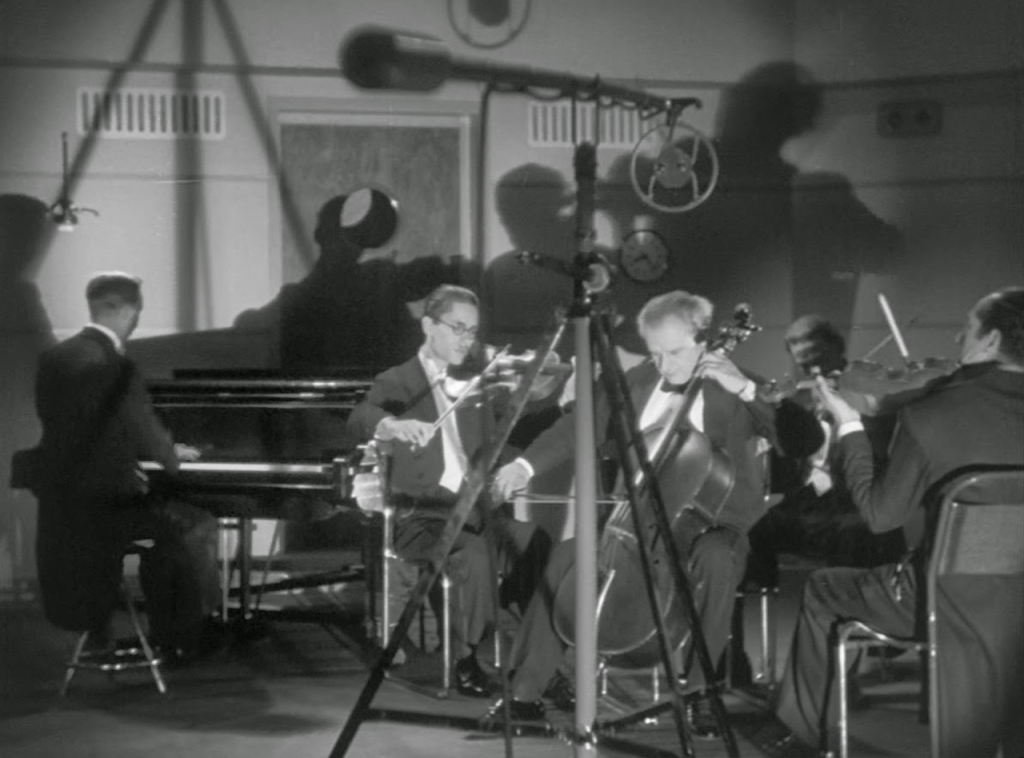
John Wyver writes: on the afternoon of this day in 1931, Saturday 28 November, the National Programme of the BBC’s Sound service broadcast a light music recital in a studio at Savoy Hill given by the Gershom Parkington Quintet and tenor Trevor Watkins. The concert on the radio, via the Daventry transmitter, ran from 3.30pm to 4.45pm, but from the start until 4.06pm it was also broadcast by the Baird company’s 30-line television service.
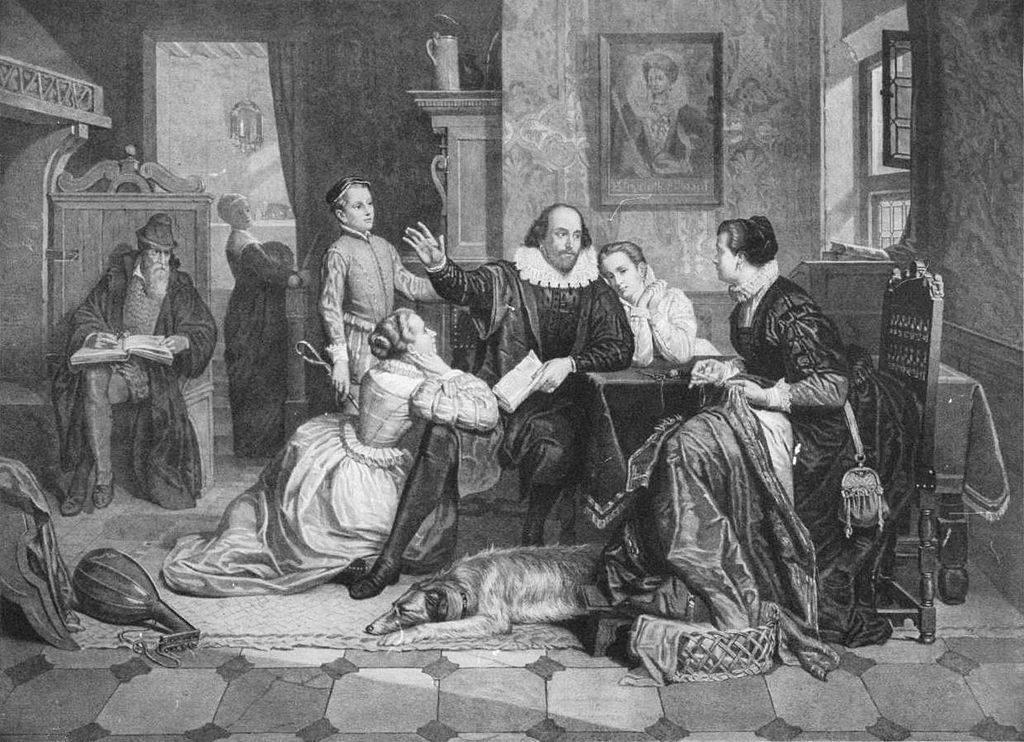
John Wyver writes: OTD in early British television, on 27 November 1938, the Birmingham Repertory Theatre Company made its television debut with its production of The Wooing of Anne Hathaway. The tradition of a major drama production each Sunday evening was already well-established, with a mix of classics and respectable contemporary plays suitable for the Sabbath. Transmission was from 9.05pm to 10.45pm.
John Wyver writes: A blog post – many months after the last one, and with much to catch up on. I have been prompted to return, at least temporarily, by a kind suggestion from Lawrence Napper on Facebook. Over the past week and more I have been posting on Bluesky On this day (OTD) threads about pre-war television broadcasts which have been researched for my forthcoming book Magic Rays of Light: British Television Between the Wars.
Lawrence suggested that these short threads might work better, and remain accessible longer, as blog posts, and so here we are. I’ll reflect more on Bluesky vs blogging in future posts, but for the moment I’ll just say that these posts, to which I’ll link from social media, will likely often be brief and may seem insubstantial. I hope, however, that collectively they add up to something – and of course that they will prompt interest in the eventual publication in late 2025 of my book. That said, to mark the return here, today’s post is a kind of double-header.
John Wyver writes: welcome to the fifth Postcard (with two more scheduled) from my and my wife Clare Paterson’s recent mid-west road trip, in this case embracing our visits, for two nights in each city, to Indianapolis and St Louis. The first four Postcards are here, here, here and here.