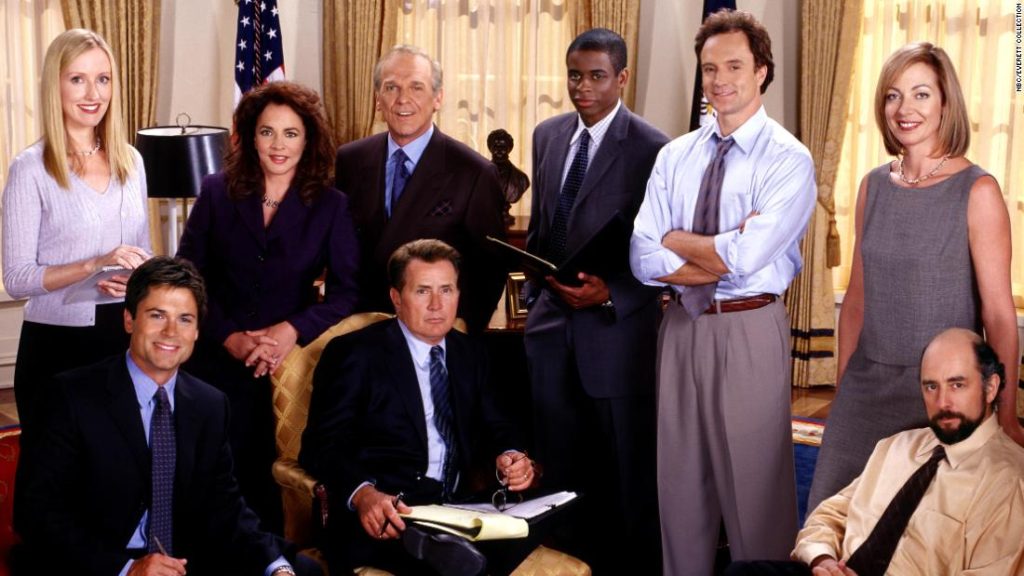
John Wyver writes: Regular readers of the blog might have noticed that tomorrow night, Monday 12 October, our documentary Drama Out of a Crisis: A Celebration of Play for Today is premiered on BBC Four. Preparations for that have been all-involving, so forgive me if this week’s Links is a little less extensive than usual; as for the header image, see this CNN story and go to And finally… below.
• Britain at the end of history: Robert Saunders is excellent on Margaret Thatcher’s failed attempt to prevent the reunification of Germany 30 years ago:
This left her weakened internationally and isolated at home. It contributed to her downfall in 1990 and had lasting consequences for Britain’s relations with the European Union. Thirty years on, it offers a cautionary tale for British diplomacy after Brexit: not least in its tendency to exaggerate British influence; to vest too much in displays of ‘strength’ and ‘resolve’; and to blame others for its mistakes.
• The 1619 Chronicles: a truly remarkable column from Bret Stephens at The New York Times about history, truth, transparency, honesty, slavery and, centrally, The New York Times.
• Inside the Lincoln Project’s war against Trump: great writing by Paige Williams for The New Yorker on the former Republicans fighting with videos and more for truth, justice and the American way – including this week’s brilliant ‘Covita’:
John Wyver writes: With transmission on Monday evening (9pm, BBC Four, in case you’re in any doubt) hurtling towards us I’m returning to this series of posts reflecting on the production process of our documentary about Play for Today, Drama Out of a Crisis. I’ve already considered aspects of Starting Out, The Interviews and The Archive, and here I want to explore the distinctive graphics of the programme.
From the very beginning, I knew that the film needed an overall graphic design. In part, I simply enjoy sophisticated screen graphics and I think they can add immeasurably to a film. Too often, however, they seem as if they were one of the last elements to be considered, once almost everything else was in place. I was determined that would not be the case on this project.
John Wyver writes: yet another weird week, and yet another more-or-less sensible list of links to stuff that interested or engaged me over the past seven days. My thanks, as always, to those that I follow on Twitter for their great recommendations, a number of which I pass on here. And I begin with a clutch of important pieces about free expression:
Framing the right’s problem with the BBC as an assault on fair play or open recruitment, or even impartiality, is to miss the point. The real project is bigger, more serious and more alarming.
Believing that an economy whose organising principle is profit isn’t humanity’s endpoint is a legitimate opinion to be debated in a functioning democracy; but as Martha Spurrier, director of Liberty, tells me, this diktat “is a heavyhanded attempt to stop free speech and prevent free thought. It’s asking teachers – people interested in expanding minds – to become enforcers of politicians’ desire to quell dissent, criticism and debate.”
• The Philip Guston show should be reinstated: for The New York Times, Jason Farago on the absurdity of the postponement’ of the Guston retrospective at Tate Modern and elsewhere – and the robust response by nearly 100 artists, curators and others.
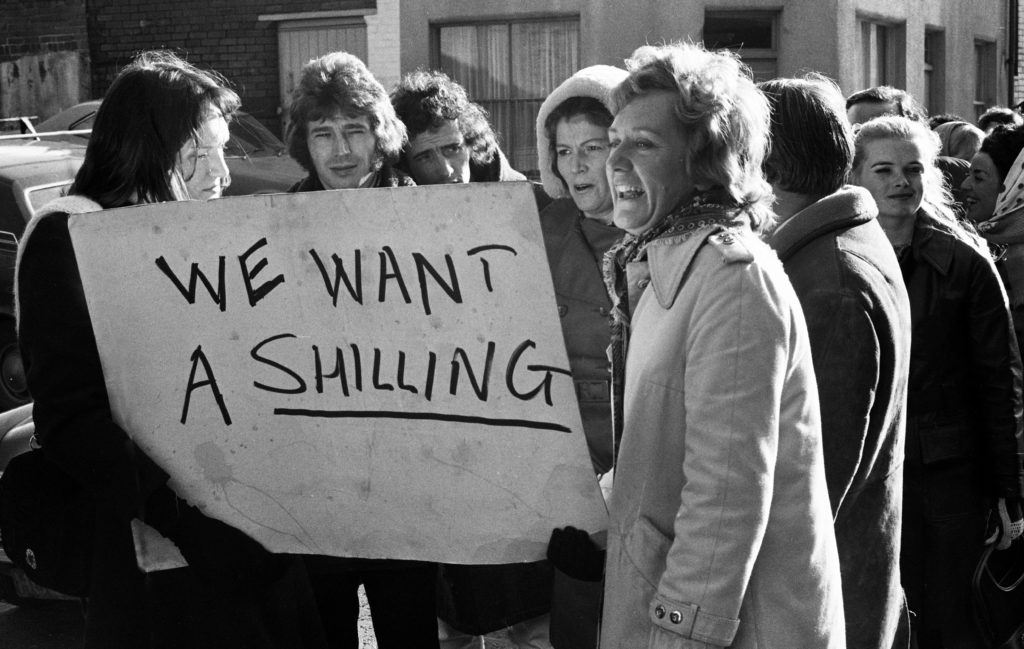
John Wyver writes: with Monday 12 October now confirmed for BBC Four’s initial transmission of Drama out of a Crisis: A Celebration of Play for Today, I’m going to continue my series of posts about the making of the documentary. The first two are here (‘Starting Out’) and here (‘The Interviews’), and in these notes I want to reflect further on the use that editor Todd MacDonald and I made of the archive resources – including the exceptional drama Leeds United! (wr. Colin Welland, dir. Roy Battersby, 1974), pictured above.
John Wyver writes: another week, another clutch of links to articles and videos and the occasional Twitter feed that I have found of interest – as always, I compiled this from the online sites I visit regularly and from all sorts of stuff that pops up in my Twitter timeline.
• End of the line for universities: historian Glen O’Hara at his Public Policy and the Past blog with a grim but important analysis of the current state of higher education in Britain.
… constructing and distributing a vaccine may solve a set of political and economic problems while also creating a set of new ones. We imagined that an effective inoculation would be a cause of celebration. It may turn out to be a symbol of global injustice and a trigger for grievance across the world.
• It’s not hypocrisy: Lili Loofbourow is great for Slate on the past week in America, but not only on that but on our situation here too:
We are overdue for a real reckoning with what it means to be degraded by our own leadership. And make no mistake: It is degrading when people lie to you openly and obviously. Leaving the polity aside for a moment, it’s the kind of emotion we humans aren’t great at coping with… [And] if you can’t cover it with cynicism, it simply hurts.
• Short cuts – woke conspiracies: a rapid-response piece by Will Davies for LRB about culture wars, the BBC and the nationalist and libertarian right, made all the more urgent by this morning’s speculation about Charles Moore and Paul Dacre.
John Wyver writes: with the 50th anniversary of the first Play for Today broadcast in 1970 fast approaching, and with our BBC Four documentary about the strand, Drama Out of a Crisis: A Celebration of Play for Today, scheduled at 21.00 on Monday 12 October, this is a page drawing together the various related activities. I aim to keep this updated (and welcome further suggestions), and once we’re past 15 October it may remain useful as a list of resources.
The events that I know about are listed in what I believe to be chronological order. Note also that, in addition to @Illuminations, the dedicated Twitter feed @PlayforToday_20 carries news as well as lively discussions about the series and individual productions, and I expect this to become even busier in the coming days.
John Wyver writes: this is the second of a series of posts, which began here, in which I am chronicling the making of our BBC Four documentary, Drama Out of a Crisis: A Celebration of Play for Today. The 90-minute film will be broadcast in mid-October to mark the 50th anniversary of the start of this important strand of single dramas that ran on BBC1 from 1970 to 1984. As before, although there is nothing by way of a narrative spoiler, you may prefer to wait to see the film before reading this.
Any such film about the history of television and film almost inevitably features both archive extracts and interviews, and there is a long tradition of such productions in which innumerable small variations in the use of both elements have been employed. I’ll discuss our use of the archive in a couple of future posts, but here I want to muse about our filming and editing of the interviews, including with filmmaker Ken Loach, above.
John Wyver writes: welcome to another clutch of links to articles and videos and the occasional Twitter thread that have engaged me over the past week; thanks, as usual, to those in my social media timelines that selflessly share good stuff that then finds it way here.
• Buying myself back – When does a model own her own image?: maybe you’ve read model and actor Emily Ratajkowski’s essay already, but if you haven’t get to The Cut right now (where it is illustrated with the image above) – it’s a compelling contemporary tale about copyright, consent and control.
• On constructing the “ideal” woman: … and this is a fascinating response by medieval historian Eleanor Janega, with some remarkable images.
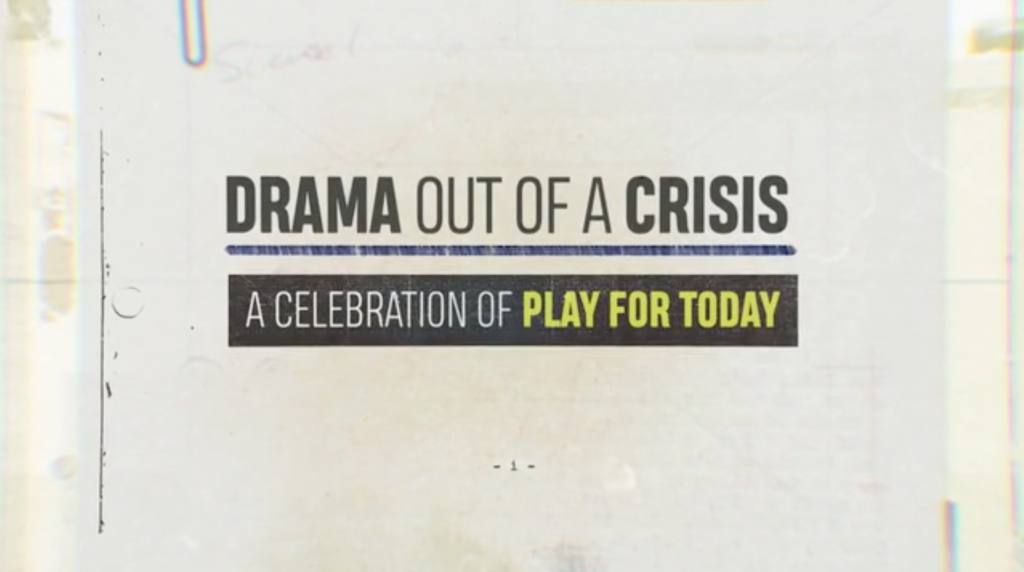
John Wyver writes: Illuminations has delivered to the BBC our 90-minute documentary Drama Out of a Crisis: A Celebration of Play for Today which marks the 50th anniversary of the start of the Play for Today series. (The header image is the main title card, created as part of the film’s graphic design by Ian Cross.) The first Play for Today was The Long Distance Piano Player, shown on BBC1 on Thursday 15 October 1970. Some 300 single dramas followed over the next fourteen years, and all but 37 still exist.
The documentary, which features interviews with some of those who made the series together with a veritable cornucopia of excerpts, will be shown on BBC Four around the time of the anniversary. Other planned activities in a full programme of events include repeat screenings of a number of the plays on BBC Four, a Radio 4 documentary, a BFI Southbank season from mid-October to the end of November, the release of seven titles on a BFI Blu-ray box set, an online academic conference and more.
While I’m cautious about self-justification and/or vainglorious puffery, I think that the documentary, which I have written and directed, and which has been brilliantly edited by Todd MacDonald, has a number of interesting and innovative aspects. To start a discussion of those, I am going to write a series of posts over the coming couple of weeks that explore different aspects of the production process, including working with archival elements, our distinctive graphics, and the edit and visual language of the film. I’m not sure it’s possible for there to be spoilers in such a chronicle of how a film was made, but you may prefer to take a look at the documentary first (which will be on BBC iPlayer for a year after transmission) and then return here.
John Wyver writes: we’re in the midst of the online edit for Drama Out of a Crisis: A Celebration of Play for Today, to be seen on BBC Four in mid-October (and watch out for more about that here over the coming days), but there’s time to breathe and to compile this week’s links – thanks, as usual, to those in my Twitter who share great stuff.
• The descent into political insanity: no apologies for kicking things off with Chris Grey’s latest, endeavouring to make sense of an extraordinary week through the #Brexit looking glass:
This represents a very serious moment, not just in the history of Brexit but in modern British political history more generally, and it is vital not to be inured to its significance by the continual outrageous acts of the Brexit governments.
culture-war skirmishes… are how rightwing electoral prospects are now advanced; not through policies or promises of a better life, but by fostering a sense of threat, a fantasy that something profoundly pure and British is constantly at risk of extinction.