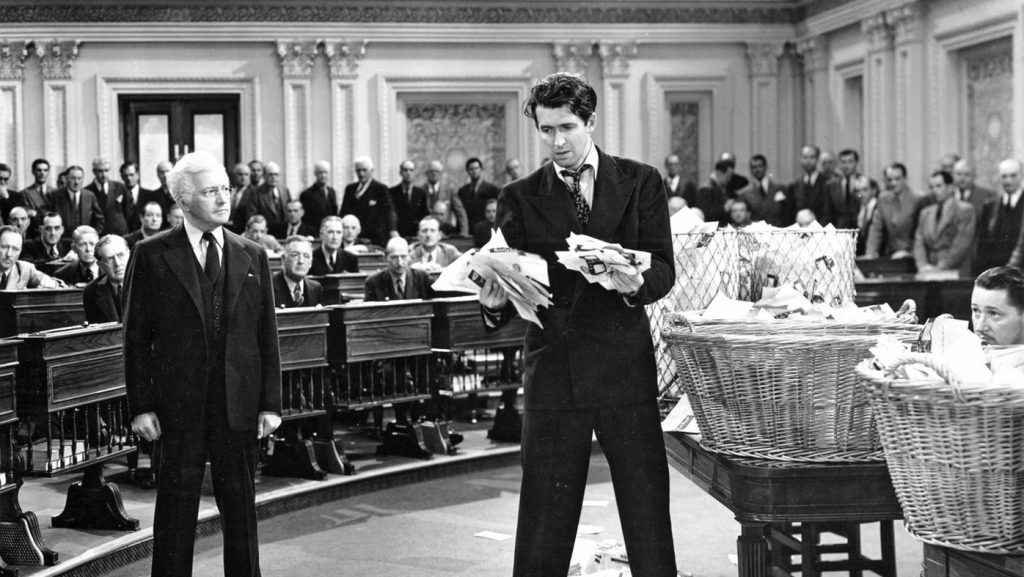
I really like the streaming service Mubi.com. I was initially sceptical about its subscription model offering just 30 films at a time, with one dropping off each day and a new one added. But I have been entirely won over by the extraordinary and eclectic mix of movies, their smart curation and the site’s ease-of-use. From the offerings available in the UK today, for example, I really want to see the Hollywood classics directed by Frank Capra, The Bitter Tea of General Yen, 1933, and You Can’t Take It With You, 1938; the arthouse classics La Rupture, 1970, directed by Claude Chabrol, and Fassbinder’s Effi Briest, 1974; and the contemporary rarities Rouge, 2015, Sarah Winchester, Phantom Opera, 2016 and Tony Conrad: Completely in the Present, 2016. Not bad for this month’s £5.99.
I have, however, been really disappointed by a couple of recent viewings, which delivered to me prints that had been mutilated (presumably for television) by having their frame ratios altered significantly. This is a problem for a site that trumpets its commitment to the art of film, and I hope (a) that Mubi.com can be more rigorous in its sourcing of prints in the future, and (b) at the very least it can change its policy to indicate where a film is being streamed in a ratio other than that in which it was made. read more »
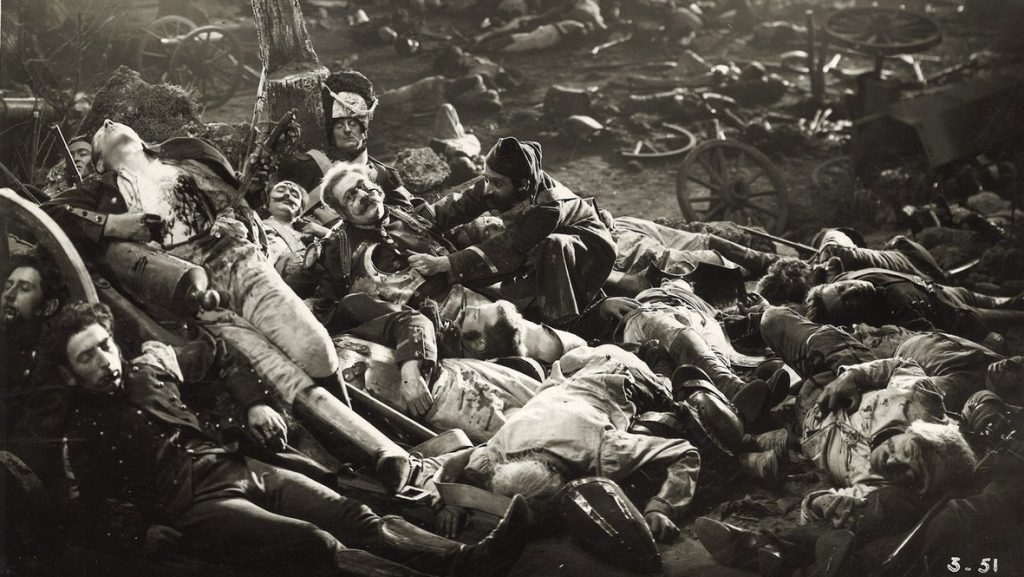
To the Barbican on Sunday for a screening of Henri Fescourt’s glorious Les Misérables, shot in France in 1925-26, and only recently restored with breath-taking tinted and toned visuals. It now runs at its full length, which is 6 hours and then some. Special thanks for this labour of love are due to the CNC Laboratory Paris in collaboration with Pathé and The Jérôme Seydoux-Pathé Foundation.
Special thanks, and deep admiration, needs also to be shown to Neil Brand, who heroically and brilliantly accompanied the film throughout. His rich, romantic piano score balanced drama with dimuendo and the sentimental with the stirring. We started on our journey back to early 19th France at 2pm and with a couple of coffee breaks and an hour for a snatched pizza emerged happy (we had seen and heard something wonderful), sad (Jean Valjean, in whose company we had been pretty much throughout, was dead) and morally cleansed (this is Victor Hugo, mes amis). read more »
Although I am posting more links on weekdays, Sunday is the day for a miscellany, which is what I offer here with thanks to those who alerted me to many.
• The real madman: Masha Gessen on Putin and Tr*mp for New York Review of Books:
Where Putin’s unpredictable persona is a carefully cultivated one, Trump has given no evidence that his madman act is an act.
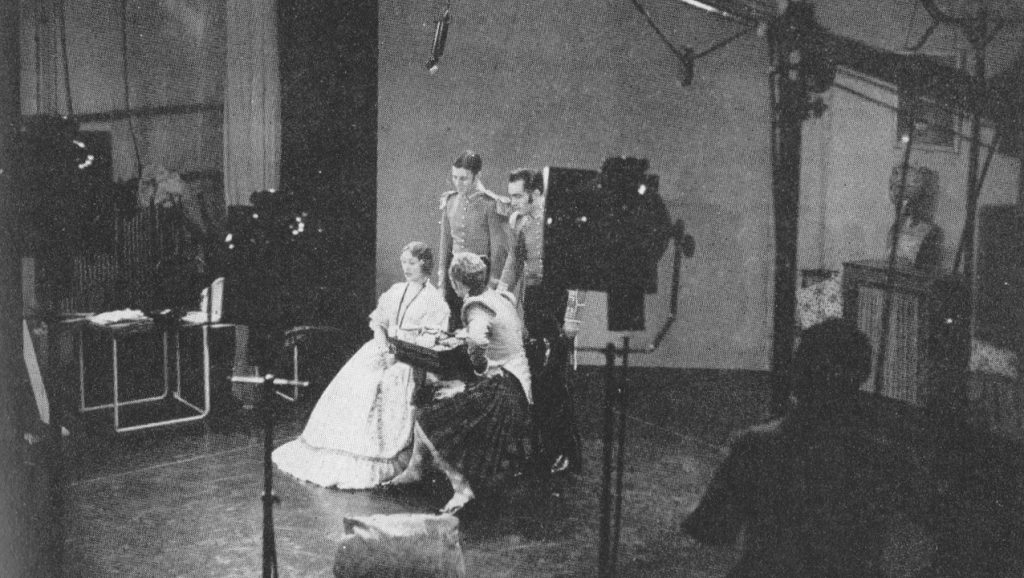
In the history of British television drama few notable creative figures are as forgotten as the actor, film director and pioneer producer Fred O’Donovan. After a distinguished career at Dublin’s Abbey Theatre, after directing Ireland’s first feature film, and after nearly two decades’ work on the London stage, O’Donovan joined BBC Television in early 1938. As one of the first directors of studio drama he earned a ‘Produced by’ credit on more than 60 broadcasts.
These included plays by the major Irish writers J.M. Synge, W.B. Yeats, Bernard Shaw and Sean O’Casey as well as dramas by Eugene O’Neill, Chekhov and Molière. Among the actors with whom he worked were Wendy Hiller, Angela Baddeley, James Mason and Alastair Sim. On his death in the summer of 1952 O’Donovan was 67, and past the BBC’s usual age of retirement, but he was still employed full-time by the Corporation. Indeed he had just returned from overseeing a French television adaptation of Daphne du Maurier’s Rebecca in Paris. read more »
Cheek by Jowl are currently livestreaming their production of The Winter’s Tale from the Barbican. Below is a bunch of background links and now I am intending to live blog through the evening. The stream will have subtitles in English, French and Spanish, and a recording will be available online until 7 May. It will also be available on BBC iPlayer from 23 April for 30 days.
Read from the bottom up – and do please join in the conversation using the Comments box. read more »
On Sunday 23 April Barbican cinema presents a six-hour screening of a recently restored version of Henri Fescourt’s 1925 film Les Misérables from Victor Hugo’s novel. As the Barbican promises the new print has ‘all the riches of the various colour techniques employed by Fescourt in 1925 (tinting, toning, and mordanting).’ As if that weren’t enough, the legendary Neil Brand is at the piano with a full score. It’s an unmissable event, and tickets are still available. I’ll be there – and to get us all ready for it, here’s some reading prep.
• Pordenone post no 5: Pamela Hutchinson reports from a 2015 screening of the restoration at Le Giornate del Cinema Muto:
… it is a faithful, and skilful, adaptation of an uncontainable novel. I was captivated by its visual elegance but also its well crafted story, which builds almost unbearable tension despite its bountiful events, characters and subplots… Neil Brand took on the Herculean task of accompanying the whole film. He played, and played, and played, such sensitive and sumptuous music, I could barely believe it was the work of one man and one piano alone. Matching the film’s scale and singularities note for note, Brand’s score was the triumph that the film deserves.
I have been wrestling with how best to contribute regularly to this blog while I am much preoccupied with a number of productions and several more extended pieces of writing. Sunday links columns like this have been the only ones that I have managed to post recently, at least until the last couple of days. Now I am going to try a variant through the week, contributing each day one or more groups of – as it were – linked links. There will be times when I’ll feel I can write something a little more substantial, but for the present I want to try to find a rhythm that involves one or two short posts each day. And Sundays links will become perhaps be even more of a miscellany than it has been in the past. Meanwhile, enjoy Easter Sunday with these…
• Somerdale to Skarbimierz: James Meek for London Review of Books on Cadbury’s, globalisation and the disconnect between economics and culture – if you read any of my recommendations this week, make it this one even if (or rather, because) it runs to more than 13,000 words.
• Lessons from Hitler’s rise: Christopher R. Browning for New York Review of Books on Volker Ullrich’s 2013 book Hitler: Ascent 1889–1939:
To begin I would stipulate emphatically that Trump is not Hitler and the American Republic in the early twenty-first century is not Weimar. There are many stark differences between both the men and the historical conditions in which they ascended to power. Nonetheless there are sufficient areas of similarity in some regards to make the book chilling and insightful reading about not just the past but also the present.