Lots of post-referendum reading this week, but – with two exceptions – not here. These are links to other bits and pieces that I have found interesting the past seven days. Thanks as always to those who have pointed me towards some of them, via Twitter and in other ways, and apologies for the absence of name-checks.
• What sort of crisis is this?: again, I’m trying to avoid Brexit links, but this thoughtful, subtle and far-reaching analysis by Will Davies (I linked to his earlier post last week) is entirely exceptional. Be afraid, be very afraid.
When Trump says “I will build a wall and Mexico will pay for it” or Boris Johnson and Michael Gove say “We send the EU £350 million a week – let’s fund our NHS instead”, they are actually saying “Colourless green ideas sleep furiously.” Their claims have the form and grammar of traditional political promises, but they bear no relation to anything they actually intend to do.
The problem with pure nonsense is that is cannot be contradicted…
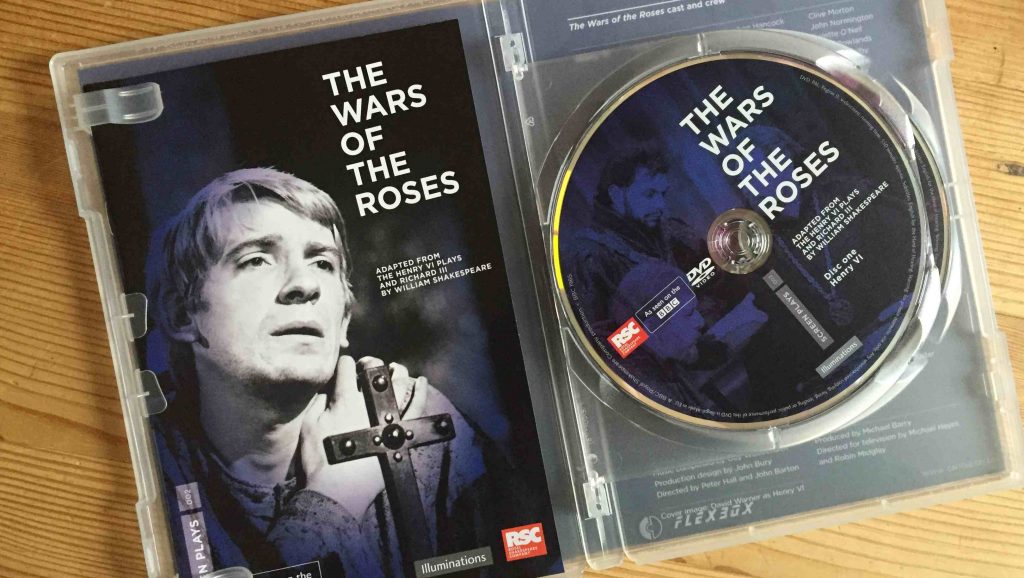
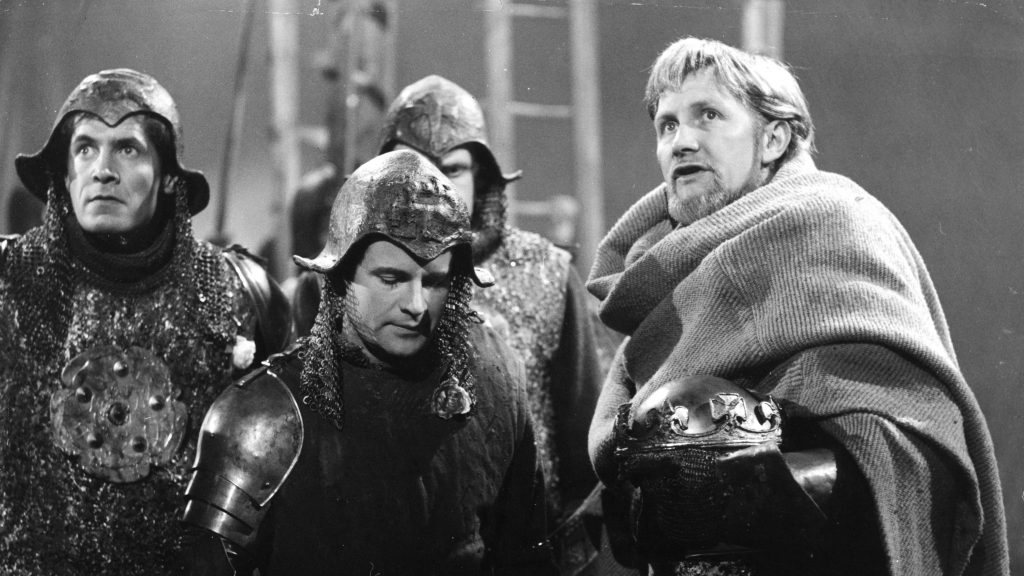
A nation split in two, bitter struggles over national identity and the country’s relationship with Europe, factional fighting for control of the ruling party, roiling discontent barely suppressed in the streets… This is England in 2016, perhaps, and most certainly England in the mid-15th century. For it is the background to William Shakespeare’s great cycle of history plays that culminates with the Henry VI trilogy and Richard III. In 1963 Peter Hall and John Barton triumphantly adapted these plays as The Wars of the Roses for the Royal Shakespeare Company, and the following year BBC Television recorded them on the stage in Stratford-upon-Avon. read more »
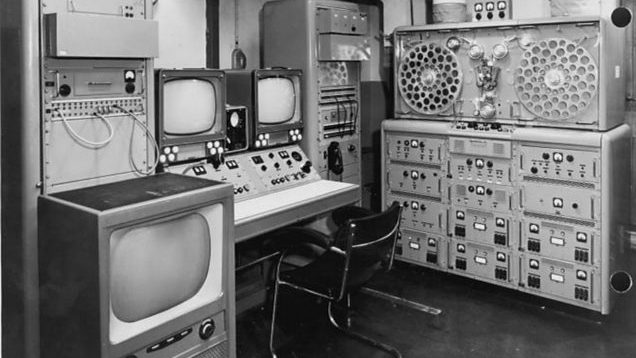
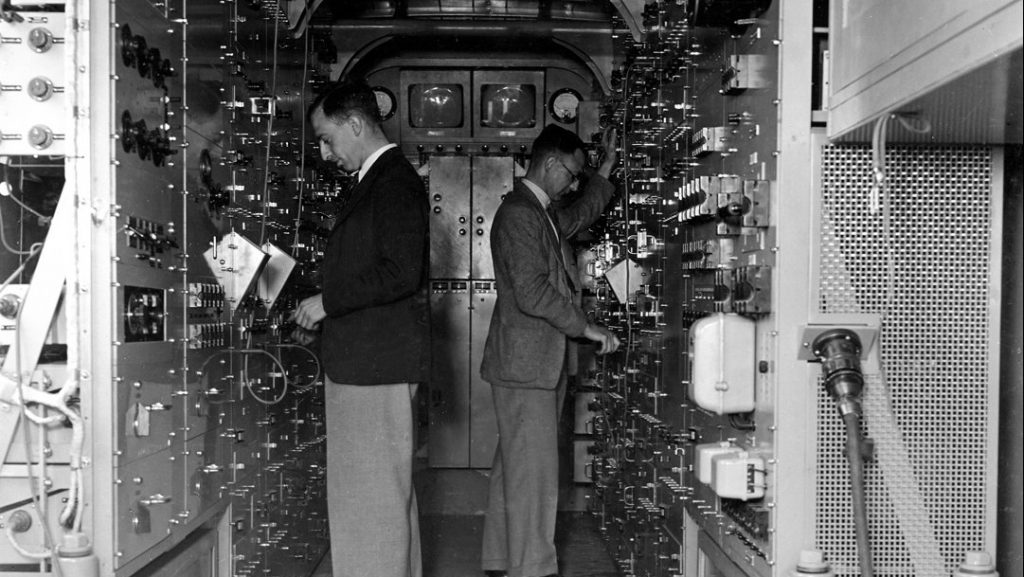
Last week BBC ArchiveTweeted a wonderful image (detail above, full picture below) of the mobile television van at Wimbledon in 1937, the first year that BBC Television covered the championships. Inspired by that, and driven by my interest in broadcasts before World War Two, this post explores what was shown and how it was received. The initial transmissions in 1937 – the first outside broadcasts of any sports event – were an immediate triumph, and tennis coverage quickly became one of the recognised successes of the new service. No wonder in September last year the BBC was so keen to reaffirm its relationship with the All England Club. read more »
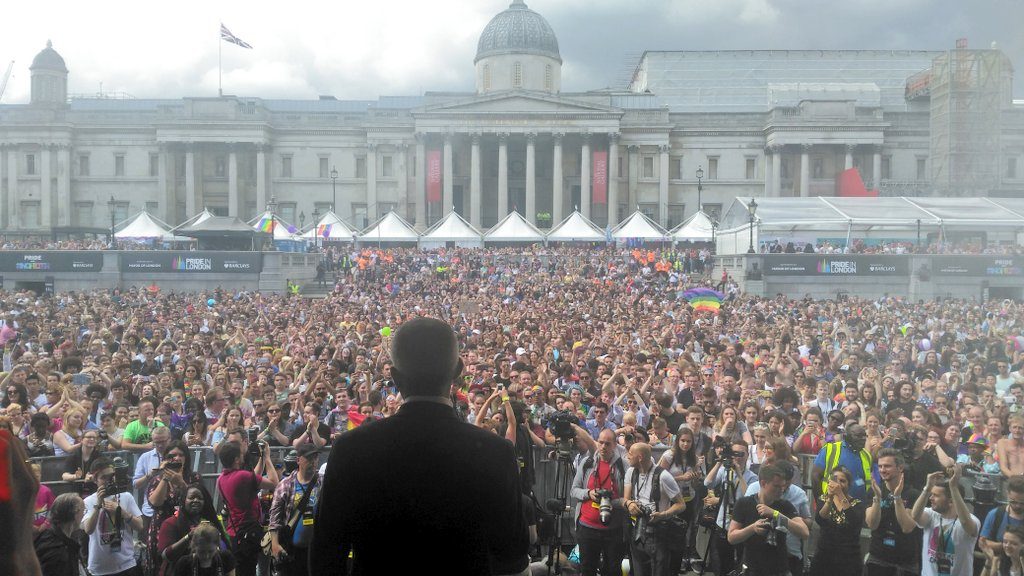
The official Twitter account of Sadiq Khan sent out this image yesterday at 4.30pm. It shows the Mayor of London at the Pride rally in Trafalgar Square, and as @dannybrown commented this morning ‘This is like the poster for the film, where the shopkeepers son fixes the racist country.’ Despite looking as if it was taken on a not-so-great mobile phone (or maybe that’s part of its greatness), this is an astonishing image of the moment. read more »
Inevitably much of this week’s reading has been dominated by the many excellent pieces about the referendum and its fall-out (especially from the Guardian, which has been playing a blinder), but here are links to a selection of other bits and pieces that I have found interesting the past seven days. Thanks to those who have pointed me towards some of them, via Twitter and in other ways, and apologies for the absence of name-checks.
• Thoughts on the sociology of Brexit: I initially intended not to post any post-mortem links, but this is an outstanding analysis from Dr Will Davies thePolitical Economy Research Centre at Goldsmiths. read more »
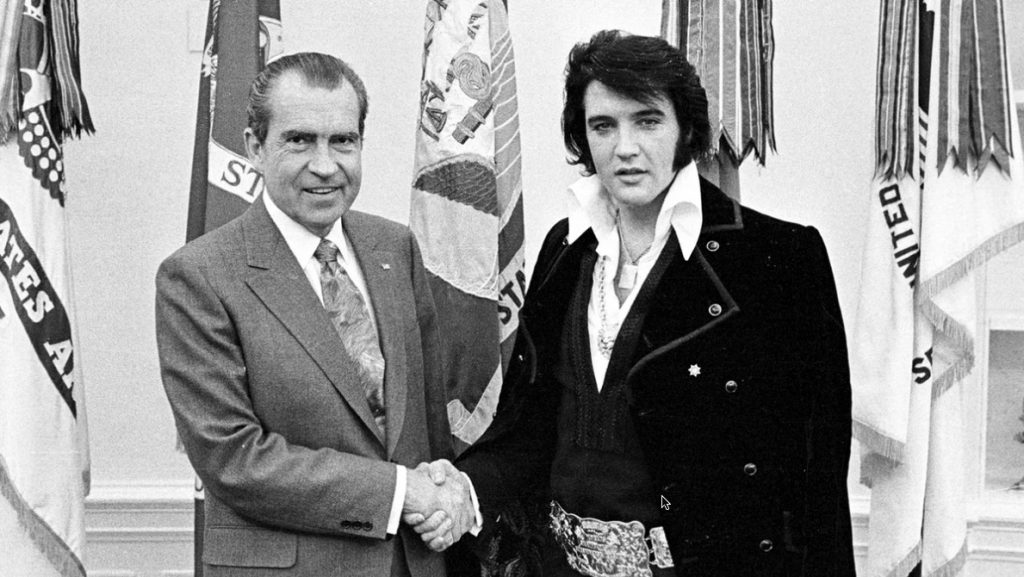
Linda Zuck writes: Friday sees the release in the UK of Elvis and Nixon. Starring Michael Shannon as Elvis and Kevin Spacey, practiced presidential impersonator, as Nixon, the film is the truly bizarre story of the day in December 1970 when the leader of the western world met the king of rock ‘n’ roll. Elvis had turned up unannounced at the White House to meet President Richard Nixon and the encounter was documented by the official White House photographer. If the movie doesn’t entirely do the story justice (here the review at Roger Ebert’s site) I’d like to think the documentary about the encounter Illuminations made (and that I produced) over twenty years ago certainly did. read more »
Links spotted or recommended to me (for which thanks, and apologies for the lack of name-checks) over the past week.
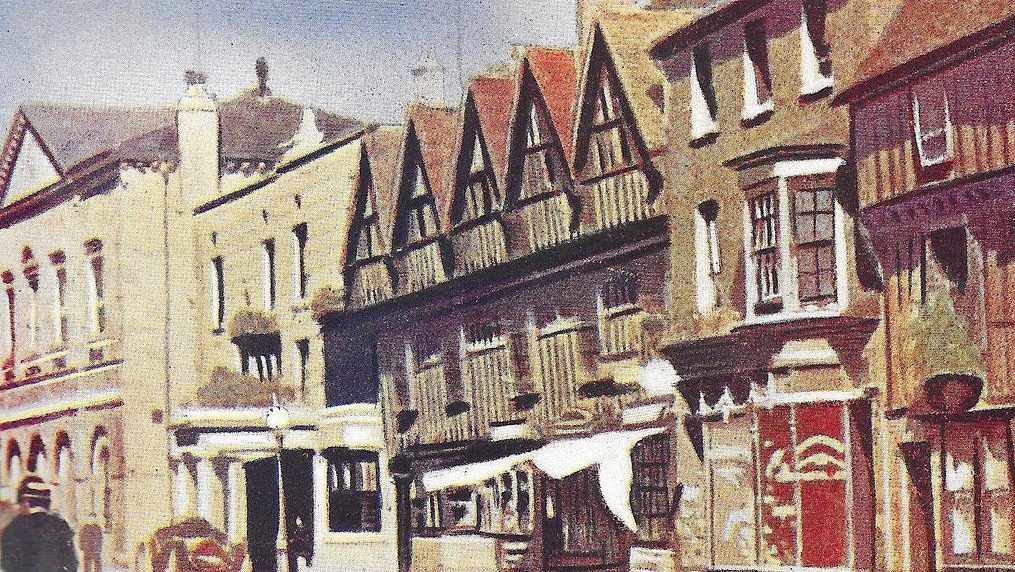
• Lost colours: The estimable Luke McKernan has added to his flickr site a wealth of images from filmmaker Charles Urban’s 1912 Catalogue of Kinemacolor Film Subjects, and has written this erudite background post as context. The images are rich, resonant and remarkable, like the one above (edited to a 16:9 frame) advertising Shakespeare Land, produced in 1910 by the Natural Color Kinematograph Company. The scene in Stratford-upon-Avon looks much the same today. read more »
With just over a week until our release of the 1965 BBC-Royal Shakespeare Company production The Wars of the Roses as a 3-disc DVD box set, we are delighted to present here The Making of The Wars of the Roses. This is the 20-minute ‘extra’ film to be included in the set. David Warner (who takes the role of the king in Henry VI) and Janet Suzman (Joan la Pucelle and Lady Anne) recall the theatre and screen productions of this ground-breaking adaptation, and speak about working with the stage directors Peter Hall and John Barton.