29th September 2018
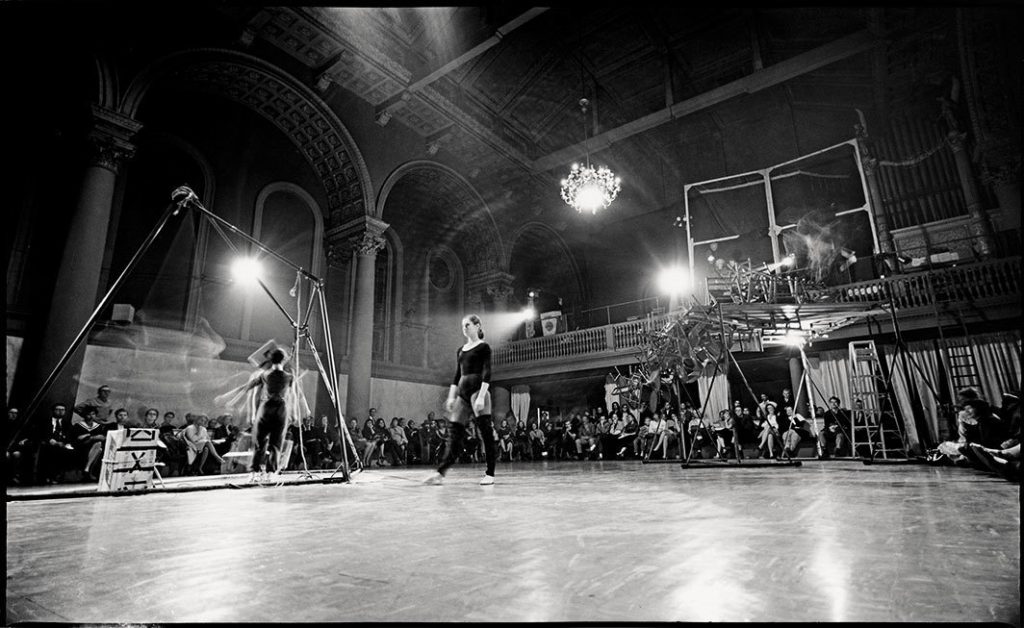
I’m not sure I’m ready – or have time – to return to contributing frequent posts, but I am interested to see if I can occasionally draw together notes and pointers about topics that are engaging me. I want to dive more deeply into certain things than I’m able to do by simply linking to articles on a Sunday. If only for me to learn more about the topics. So here’s a first assembly, which I hope to add to, of some elements linked in this case to Judson Dance Theater.
Judson Dance Theater: The Work is Never Done is a recently opened exhibition and ambitious events programme at MoMA in New York until 3 February. Judson Dance Theater was, as Wikipedia currently tells us, ‘a collective of dancers, composers, and visual artists who performed at the Judson Memorial Church in Greenwich Village in Manhattan… between 1962 and 1964. The artists involved were avant garde experimentalists who rejected the confines of Modern dance practice and theory, inventing as they did the precepts of Postmodern dance.’ Among those involved were Yvonne Rainer, Merce Cunningham, Lucinda Childs, Trisha Brown and Robert Morris. read more »
23rd September 2018
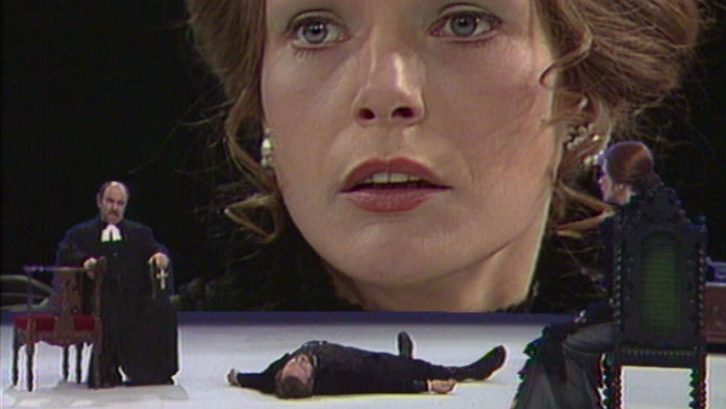
No post last week – apologies – but I’m delighted to offer here a new group of links to stuff that I’ve found interesting over the past week and more. Many thanks to those who alerted me to some, on Twitter and elsewhere.
• The plot to subvert an election: a genuinely astonishing feat of reporting – and of presentation – by Scott Shane and Mark Mazzetti for The New York Times about the 2016 race and ‘the most effective foreign interference in an American election in history.’
• A warning from Europe – the worst is yet to come: Anne Appelbaum for The Atlantic is an essential read about Poland and Hungary, and what recent events in both countries portend. read more »
23rd September 2018
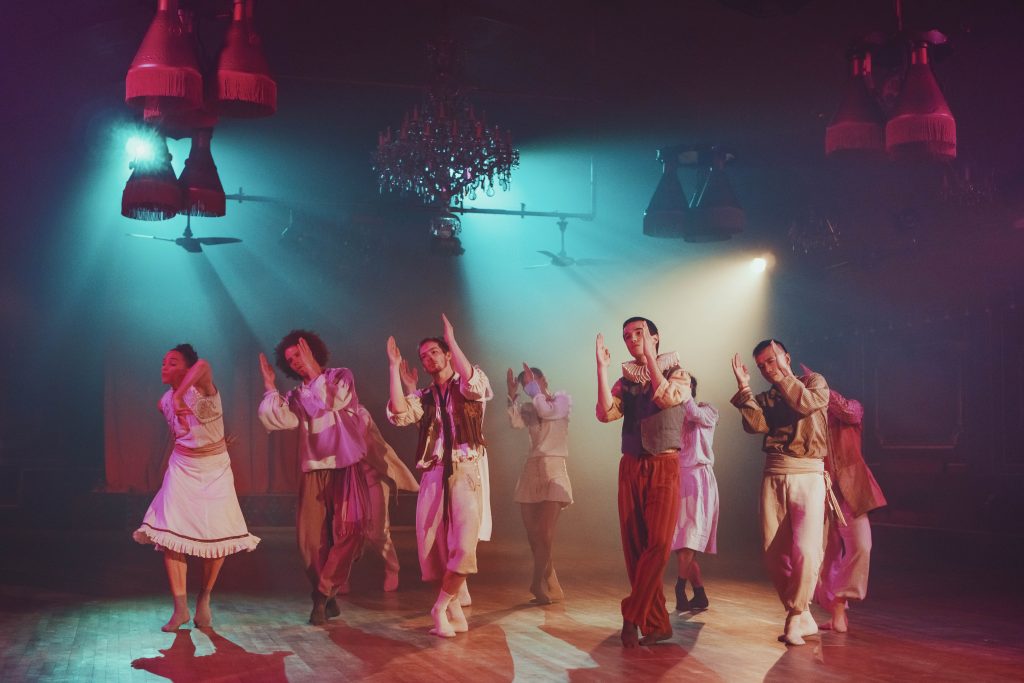
Last night’s BBC Two broadcast of Performance Live: Hofesh Shechter’s Clowns, our co-production with Hofesh Shechter Company, received a barnstorming reception on Twitter. Below is a selection of responses, together with three more of Todd MacDonald’s exceptional production images. And the film itself is now on BBC iPlayer for the next 29 days.
 read more »
21st September 2018
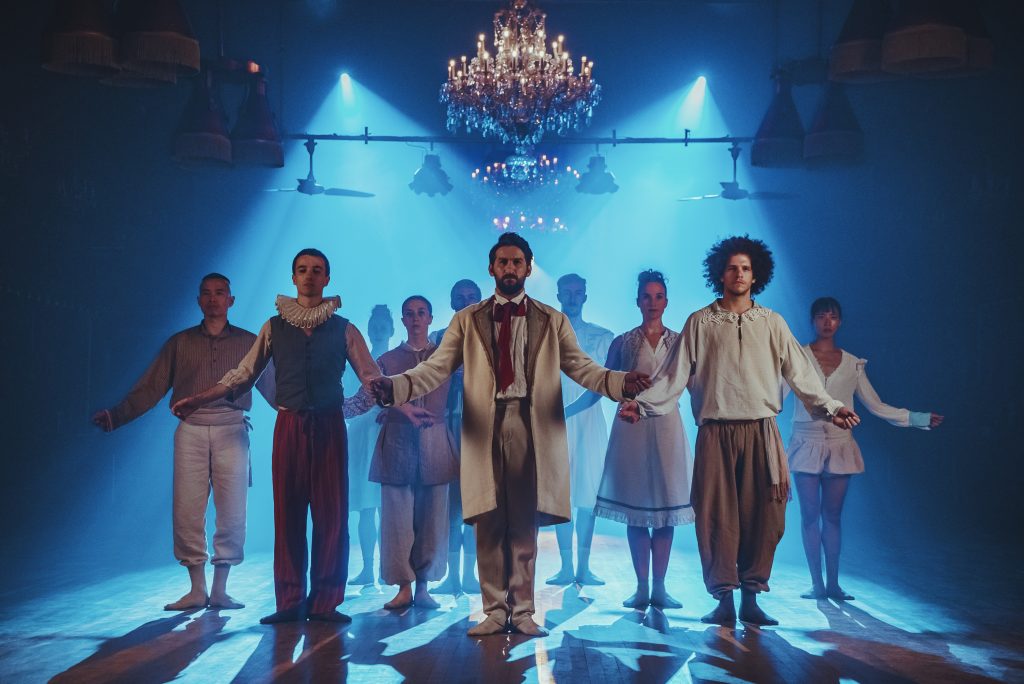
One of the highlights of the summer was working with Hofesh Shechter to film his half-hour dance work Clowns. The film is first screened tomorrow night, 22 September, on BBC Two at 10.30pm, and will then be on BBC iPlayer for 30 days – link to follow. We are thrilled to have collaborated with Hofesh Shechter Company to help create what I think is a genuinely innovative and bold film for the screen.
Hofesh Shechter’s Clowns was commissioned by the BBC as part of the Performance Live strand – a partnership between BBC Arts, Arts Council England and Battersea Arts Centre, showcasing some of the most exciting artists working in performance today. With cinematographer Sebastian Cort, we shot the film over five days on location at Rivoli Ballroom in South London. The editor was Todd MacDonald, who also took these striking images. Henny Finch and I are the producers. read more »
9th September 2018
A slightly fuller list of links (and a perhaps moderately more considered one) after last week’s tentative return to this format, with a clutch of articles that I have found fascinating and enriching. Many thanks to all those who alerted me to these, on Twitter and elsewhere. (But I still can’t work out how to embed videos in the current iteration of WordPress, despite having done so many times in the past.)
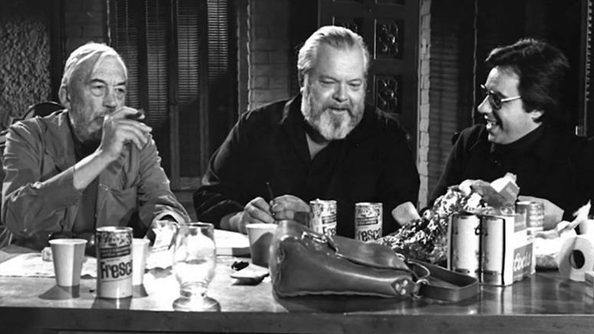
• Venice 2018: Welles and The Other Side of the Wind: there’s no-one I’m more interested in reading on the ‘new’ Orson Welles feature than David Bordwell – and he doesn’t disappoint. Above, John Huston, Orson Welles and Peter Bogdanovich on the set of The Other Side of the Wind.
• “We cannot live without Ford” – an interview with Tag Gallagher: a terrific exchange between the biographer and critic and Jake Rutkowski at FilmInt., which takes off from Gallagher’s re-working as a digital publication of his great study of the great director – John Ford, Himself and his Movies, available for Kindle here for (currently) just £4.69. read more »
2nd September 2018
Summer’s over and – yes – I’ve delivered the first draft manuscript of my book. (It’s about film and television adaptations of RSC stage productions.) So let’s see if I can return to my weekly list of links to things that I have found stimulating to read or watch in recent days. Thanks to all those who recommended these on Twitter and elsewhere. One note: in the period since I last posted either WordPress has changed so as not to permit the embedding of Youtube videos or I’m doing something stupid – could be either, but as you’ll see there are no videos included below.
• Venice 2018: First impressions, First Man and Big films on the big screen: two rich reports from the festival by Kristin Thompson and David Bordwell.
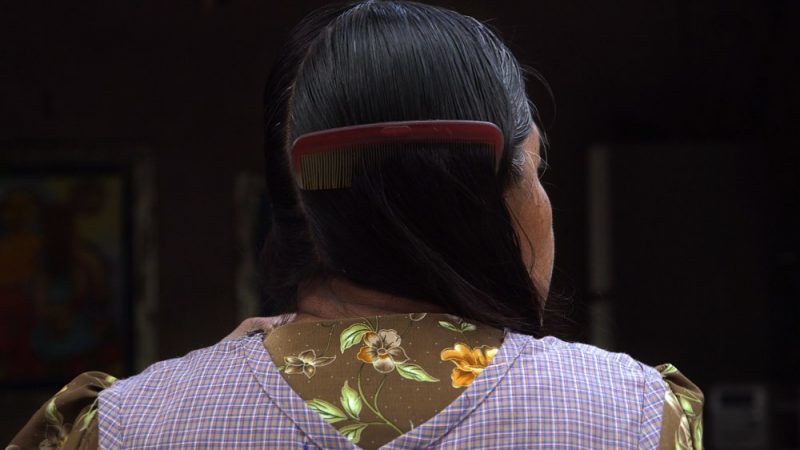
• The fabric of freedom – Laura Huertas Millán’s ethnographic filmmaking: Matt Turner for Sight & Sound on the French-Canadian filmmaker, including La Libertad, 2017 (above).
• Ontology of the memed image: at Mubi.com, Ben Flanagan looks at how studios are increasingly using gifs in their marketing and asks, ‘How can the meme be used to rediscover the history of cinema?” read more »
23rd July 2018
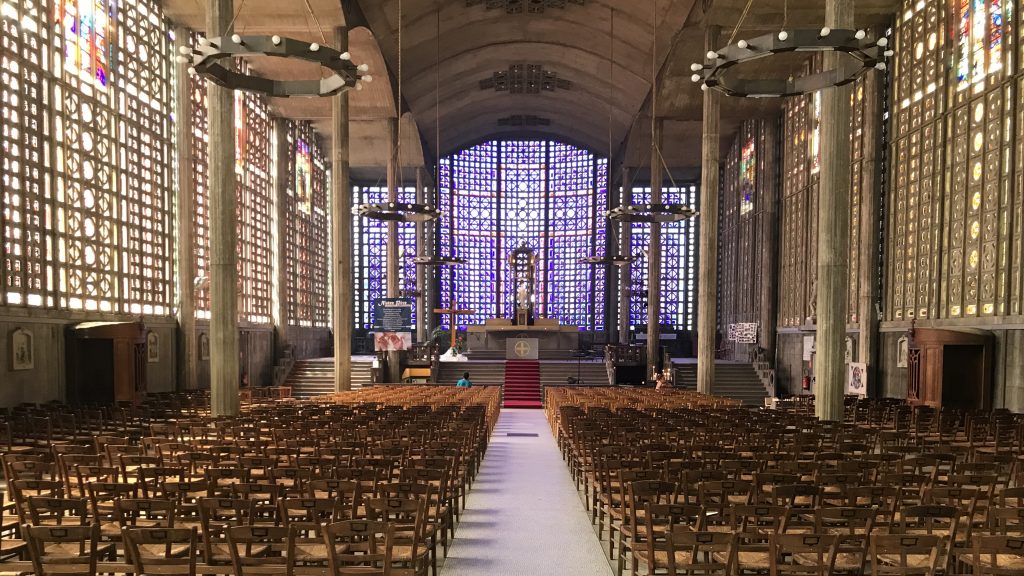
One of several reasons that I stopped blogging many months ago was my questioning of why anyone in the world might be interested. Especially in a post like this which is essentially what-I-did-on-a-two-day-break-in-Paris. But if I think that essentially I’m primarily writing for myself, and collecting and collating a bunch of links that others just might find interesting, then I guess it’s ok.
So after a fairly intesive period of production, including filming a forthcoming contemporary dance film for television and last week’s Romeo and Juliet for RSC Live from Stratford-upon-Avon, I treated myself to a night in Paris to see a clutch of exhibitions as well as to visit an architectural masterpiece that I had long wanted to visit, above: Église Notre-Dame du Raincy.
Pictures of that follow first, and the brief thoughts (which might spill over into a separate post) on those shows: Guernica at Musée Picasso-Paris, U.A.M.: A Modern Adventure and Coding the World at the Centre Pompidou, The Water Lillies: American Abstract Art and the last Monet at the Musée de l’Orangerie, Mary Cassatt (on its last day), and then Sabine Weiss: the Cities, the Street, the Other back at the Pompidou, plus not nearly enough time in that great museum’s own collection. read more »
19th April 2018
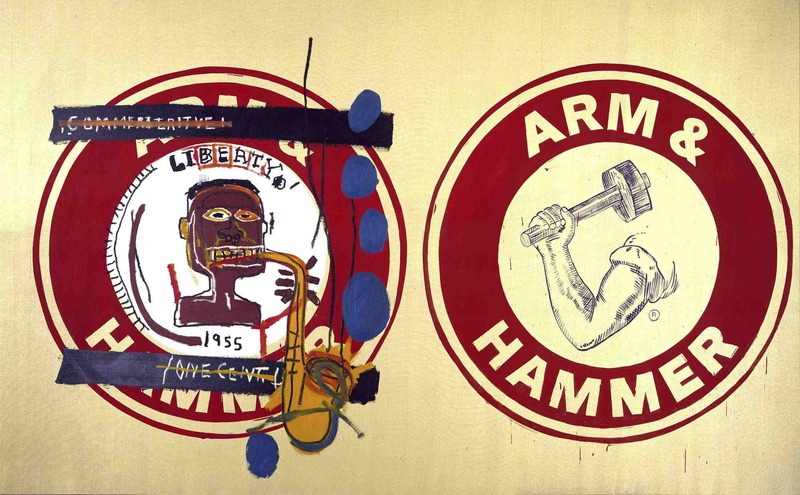
Our colleague TOM ALLEN reflects on postmodernism and history, on the ideas of Frederic Jameson and Karl Marx, and on the art of Vincent Van Gogh, Andy Warhol and Jean-Michel Basquiat.
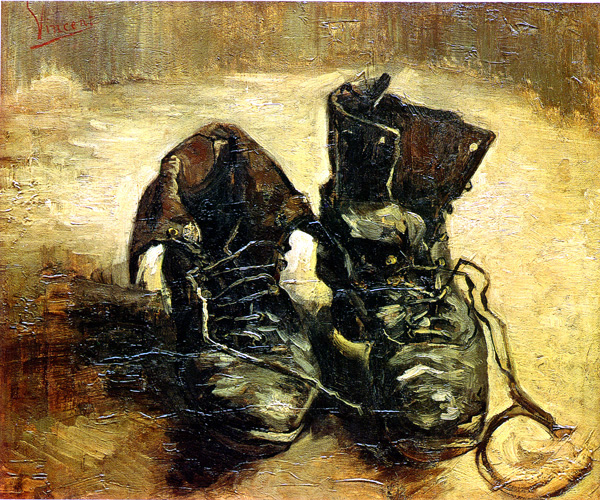
I was recently re-reading the first chapter of Frederic Jameson’s book Postmodernism, or, The Cultural Logic of Late Capitalism. Jameson contrasts Vincent Van Gogh’s “A Pair of Shoes” (1886-87) with Andy Warhol’s “Diamond Dust Shoes” (1980) as an example of the difference between modernism and postmodernism, and what I found striking about this distinction was how we could use this definition as a way to understand the artistic relationship between Andy Warhol and Jean-Michel Basquiat.
 read more »
24th February 2018
My new approach to Links seemed to work reasonably well, at least for a few days. So this is version 2, with some of the previous links, and many new ones – although I am still uncertain about when and how to jump from an old page to a new one. Anyway, in eight categories I am listing up to five recommended links. I add to them as and when I feel like it, and when I post a new one, one of the others will drop off. New links from the most recent updating are indicated, and I sign off this introduction with the time and date when I last visited.
These are the things that I’ve been reading and thinking about in the past few days… 11.50, 24 February 2017. read more »
15th February 2018
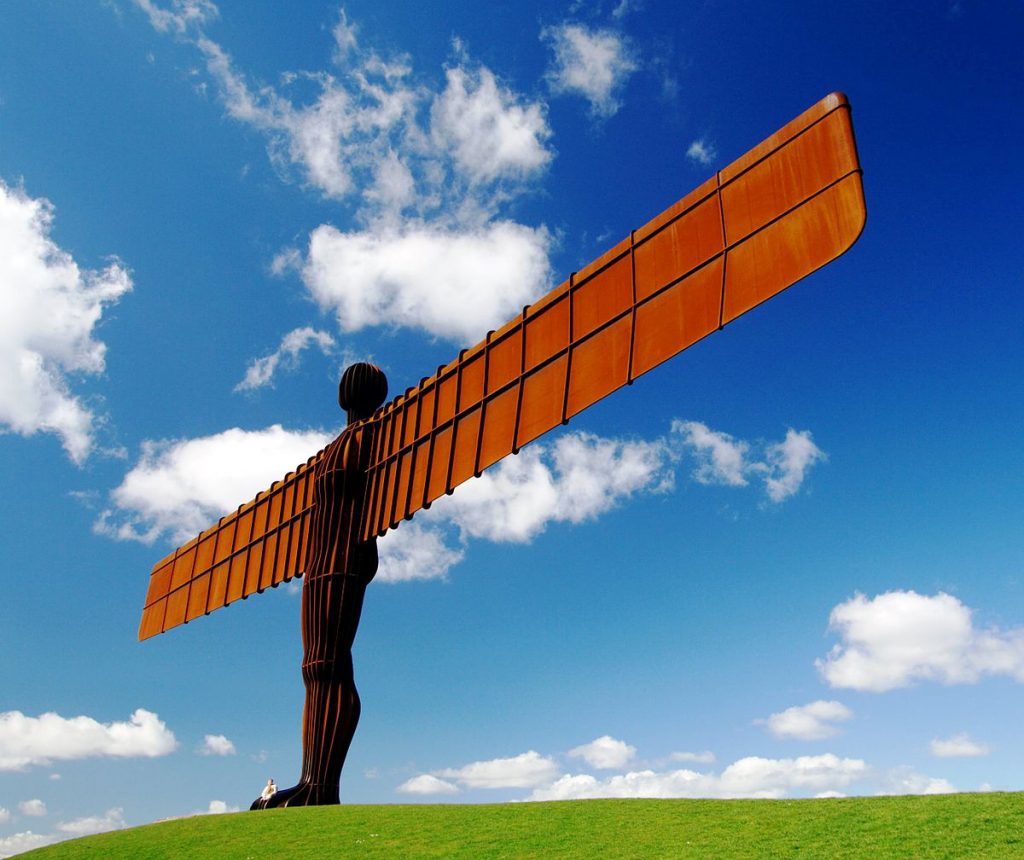
Today marks the twenty-year anniversary of the installation of Antony Gormley’s work The Angel of the North. Gormley’s work is now iconic and the Angel is probably his most famous work. It is estimated to be seen by 33 million road and rail travellers every year or 90,000 drivers a day, which works out as more than one person every second.
The Angel, which Gormley has described as a ‘totem poll for the North East’, measures 20 meters high and 54 meters wide from wing tip to wing tip, and was made from corten weathering steel by the Teeside manufacturer Hartlepool Steel Fabrications. It sits on a hilltop overlooking the A1 motorway over what was formally a coal mine.
Despite its iconic status now, the project was initially greeted with hostility and doubt: not least of all by the artist himself who at first turned down the project saying, ‘I don’t do sculptures for motorways’. There was local opposition too; some locals claimed it would spoil the view alongside the usual voices that lamented the waste of the £800,000 it would eventually cost. read more »