One of the most interesting strands of moving image criticism today is the the fast-developing form of the short audio-visual essay. Made possible by the availability of films on DVD and as downloads, by desktop editing systems, by “fair use” copyright provisions as long as the result is for criticism and study, and by film scholars increasingly adept at the techniques of those they study, these essays can be rich and resonant. As is today’s example: Visconti: Art and Ambiguity, made by Pasquale Iannone, a specialist in Italian cinema, for the US-based arthouse streaming service Fandor.
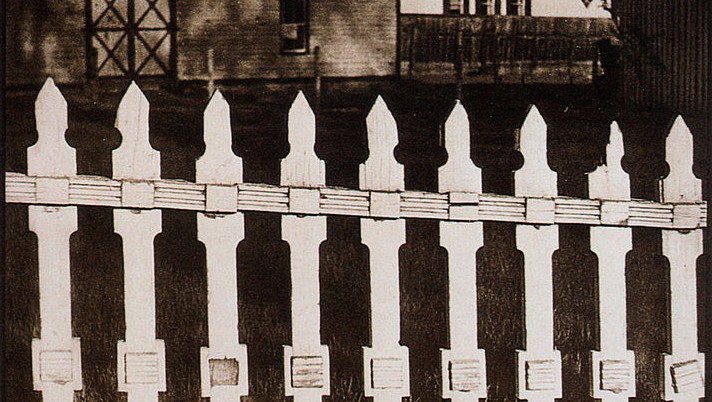
One of the exhibitions in London that I am most looking forward to is the Paul Strand retrospective that has just opened at the V&A (until 3 July). Subtitled ‘Film and Photography for the 20th Century’, the show was organised in 2014 by the Philadelphia Museum of Art and features some 200 prints and other objects from the photographer’s long career working around the world. As with so many exhibitions now, a wealth of background information and related material is available online, from the V&A and from many other sources. So here is a selection of readings and viewings as a kind of Strand 101 course to prepare for a visit to South Kensington.
After far too long, as you can now see, we have finally re-launched our website. The process has involved a tricky transition from a previous developer and a previous CMS. So now we are faced with how best to use this new blog, and whether we need to transition to a new approach. I intend to offer some thoughts about that over the holiday weekend, but just a way of easing myself back into contributions – which I intend to be as regular as I can make them – here are some links to stuff that has engaged me over the past week. read more »
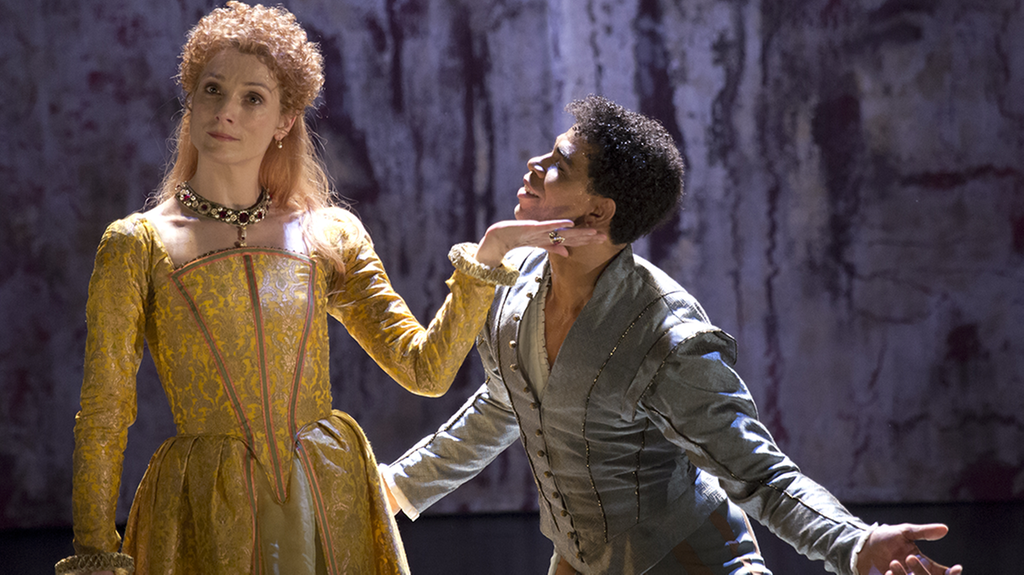
Tonight at 8pm Sky Arts premieres our latest contribution to the Hot Ticket strand, Elizabeth, which is a co-production with the Royal Opera House. If I can be immodest for a moment, it is a truly gorgeous dance performance with Carlos Acosta and Zenaida Yanowsky, beautifully choreographed by Will Tuckett and expertly transferred to the screen by Ross MacGibbon. Created by Will Tuckett with playwright and librettist Alasdair Middleton (who co-directed for the stage), Elizabethwas presented in the Linbury studio theatre last month, and tonight’s recording was shot during one of the scheduled performances. This taping was then enhanced with a further day’s shoot without an audience.
As Will Tuckett has explained, ‘Elizabeth’s love of dance, the arts and her quick-witted, wicked sense of humour are all evident in her own writing… I felt that dance could provide another take on how these elements and this extraordinary woman could be viewed’. Middleton’s script draws on Elizabeth’s writings and those of her contemporaries, among them Sir Walter Raleigh, François, Duc d’Anjou, and Robert Devereux. The commissioned score by Martin Yates, written for cello and baritone in a modern reimagining of a typical Tudor-period ensemble, re-creates the structures and harmonies of music by the great Elizabethan composers, including John Dowland, Thomas Tallis and Thomas Morley.
Elizabeth was created in 2013 for a gala performance at the Old Royal Naval College’s Painted Hall in Greenwich, birthplace of its illustrious subject. It is revived now in 2016 as the Royal Opera House’s first contribution to the worldwide celebrations of Shakespeare’s 400th anniversary, a tribute to the political and cultural atmosphere that gave rise to Shakespeare’s genius. Elizabeth is the final show in the Linbury Studio Theatre before it closes for extensive renovation as part of the Open Up project – again highly suitable, given the many works Tuckett has created over the Linbury’s history. And finally, last but certainly not least, this run of Elizabeth marks the final time Carlos Acosta will perform with The Royal Ballet as Principal Guest Artist, as he retires from ballet at the end of the Season.
Elizabeth is someone that Yanowsky was born to play. As anyone who has caught her grand nymph in Sylvia or splendidly psychotic pianist in The Lesson will testify, she is particularly adept at parts that demand an intelligent, imperious, even slightly scary authority. Her physical loftiness helps, too…
Acosta looks spiffing in the various waistcoats that Fullerton gives him. If he struggles to differentiate except in pretty broad brushstrokes between Elizabeth’s longtime favourite Robert Dudley, the lusty François, duc d’Anjou, and the ultimately seditious Earl of Essex, some of the blame here must also go to Tuckett. But Tuckett’s steps do allow Acosta to show off plenty of physical bravura, and his Walter Raleigh is utterly hilarious. This ridiculous, libidinous, pelvis-thrusting buccaneer affectionately channels the late Rik Mayall’s wonderful Lord Flashheart (from the Elizabethan-set second series of Blackadder), and provides welcome light relief.
As a choreographer, Will Tuckett has always been pleasingly difficult to pigeonhole. From the rambunctious surrealism of Mr Bear Squash–You-All-Flat to the sleazy glitter of The Soldier’s Tale, Tuckett almost never repeats himself. His latest piece, Elizabeth, is true to form: a polished, period tapestry of dance, music, song and text that looks like nothing else he’s made…
Middleton has assembled a fascinating collage of voices – some of them reverent, some gossipy, some antagonistic – that present the story of Elizabeth’s reign from an illuminating range of perspectives. The actors circle tightly around Yanowsky, as she reacts with intimate, humorous or fearful emotion to their different tones of voice, giving us a strikingly visceral sense of the tightrope Elizabeth walked in maintaining her crown. Elegantly performed and intelligently crafted, this is dance theatre of quiet but passionate depth.
Perhaps the best, and certainly the most exciting, television I’ve seen since the start of the year was Grease: Live! screened last week on ITV2. This FOX TV show, which had been truly live in the States the previous Sunday, was reprised here “as live”, and even as a recording it made close-to-perfect television. Frustratingly, it does not appear to be available via ITV’s catch-up service, but in the States at least there’s to be a DVD in March. Last week, too, a host of clips seemed to be legally available through Youtube, but these have now been geo-blocked, so you have to go to round-ups like this to get a sense of the show.
For the end of 2015, when this blog has been less than it should have been, and for the start of 2016, when we intend it to be more than it has been, we offer five short lists of five cultural highlights from the past year. Each of the five of us at Illuminations is contributing five things, whether movies, television series, books, exhibitions or whatever, that have meant something significant to us during the year. The final choice isLouise Machin‘s, again offered in no particular order.
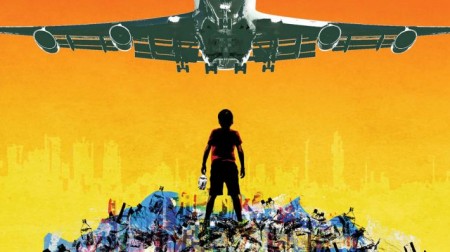
Depicting the endless grind of Mumbai slum life, this is a beautifully spirited adaptation by David Hare of Katherine Boo’s award-winning book, starring Meera Syal and Shane Zaza amongst others. The Annawadi slum is situated right alongside the city’s international airport and operates as a kind of chaotic underworld where young scavengers survive by stealing, picking through and sorting the detritus from the airport and hotels nearby. Centred on a violent dispute within the slum, David Hare’s play reveals an extraordinary story, mixed with hope and despair, in particular of the resilience of the Muslim family, the Husains, in the face of disaster. The play gets away from sentimentalising slum life and focuses beautifully on the possibility of goodness in a world of desperate deprivation.
For the end of 2015, when this blog has been less than it should have been, and for the start of 2016, when it will be more than it has been, we offer five short lists of five cultural highlights from the past year. Each of the five of us at Illuminations is contributing five things, whether movies, television series, books, exhibitions or whatever, that have meant something significant to us during the year. Today’s choice isTodd MacDonald‘s, again offered in no particular order.
Listening to paintings, looking at a beautiful image and hearing it sing, wandering around an artwork and soaking up its story, ‘hear’ the painting and ’see’ the sound. The NG commissioned six musicians and sound artists to select and respond to a painting from their collection, creating an airy and celestial immersive exhibit that allowed for you to focus on specific works for longer than you might do normally. Through Chris Watson’s sweeping natural atmosphere amongst Gallen-Kallela’s Lake Keitele, Nico Muhly’s chiming flood surrounding The Wilton Diptych and Jamie XX’s shimmering pulses dancing with Van Rysselberghe’s Coastal Scene we watched these paintings come to life.
This man made his way into my musical mainstay as the front man of punk rock band Thrice. Two years ago when that band broke up, I wrote their farewell London gig into my top moments of 2013. This however was a totally different experience of the sound and musicality that has defined Thrice since my early teenage years. Just him and an acoustic guitar in the expanse of Union Chapel where his raspy voice echoed around the space like a frisbee made of china had the air of a very privileged moment.
• Oresteia, Almeida Theatre
Rob Icke’s new version of Oresteia was easily the most exhilarating theatre I saw this year. We were whipped through a tale of love, sacrifice, betrayal, loss, revenge and justice by the seat of our pants. Agamemnon does the unthinkable and the stage right doors fly open and a fierce gale blasts across the stage. The once so solid family life and home now flailing debris in a blinding beam of light. We watch their ultimately futile attempt to chase after the pieces.
I know virtually nothing about jazz but it’s not hard to notice outstanding musicianship. Basement Tapes lead by Fergus Ireland on double bass were technically unbelievable and having re-watched both Birdman and Whiplash coincidentally in the run up to this gig (films with a heavy jazz presence on the soundtrack) made it an even more hypnotising encounter.
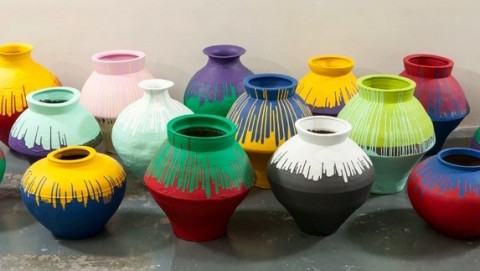
• Ai Weiwei, Royal Academy of Arts
This show was massive in so many ways: for the artist being allowed to travel to London after being held in China under house arrest for over four years, for the RA the scale of the work filled all of their 11 galleries and the volume of people coming through the doors to see it was unwavering in its three months on show, but also for me as our Illuminations documentary for Sky Arts about the exhibition became the first piece of television that I directed. It was an honour to encounter this man and his work so intimately.
Note that the video is part of our Sky Arts documentary directed by Todd and Aneil Karia.
For the end of 2015, when this blog has been less than it should have been, and for the start of 2016, when it will be more than it has been, we offer five short lists of five cultural highlights from the past year. Each of the five of us at Illuminations is contributing five things, whether movies, television series, books, exhibitions or whatever, that have meant something significant to us during the year. Today’s choice isTom Allen‘s, again offered in no particular order.
• Thesis on History by Walter Benjamin/Fire Alarm by Michael Löwy
I’ve included these together as Benjamin’s short essay is wonderfully explored in Löwy‘s slim book. I’ve often struggled with Benjamin due to his almost aphoristic prose, but Löwy picks apart key passages as well as historicising the essay in the context of the rise of Nazism in Benjamin’s native Germany and his unease with Stalinism in the Soviet Union. Moreover, Löwy key point is – and this is perhaps central to my previous misunderstanding of Benjamin – that the use of Marxism, Jewish mysticism, and Romanticism aren’t antithetical to one another in Benjamin’s thinking, rather they complement one another to elucidate a theory of history that is materialist, a rejection of historical progress, and an attempt to theorise history from below.
I’ve not read much fiction this year, sadly, but W.G. Sebald’s Rings of Saturn was astounding. The metaphor of the rings of Saturn sums up the book; whereby one can only speculate as to what kind of disaster must have happened in order for Saturn to gain it’s rings. The notion of history in the book is ‘post modern’ inasmuch as history is understood as a falsification of perspective (this, he shares with Joyce incidentally), but his work doesn’t imply an irrationalism and relativism that postmodernism is so often is accused of. It’s of no great surprise that Benjamin is a huge of influence on Sebald as they both share a similar notion that what history is, is ultimately negativity. In one particular striking passage, Sebald reflects on the impossibility of remembering a battlefield writes and that perhaps what history is at it’s most fundamental level is a pile of corpses.
‘picks apart the thinking that has framed the ‘war on terror’ the past fifteen years from both conservatives and liberals as they are both predicated on the same flawed thinking; one that refuses to engage with the political (read: Western foreign policy) rather that cultural or religious roots of terrorism. Alongside this alternative thinking on causes and origins of extremism, Kundani illustrates the systematic targeting of Muslims by their governments in the US and UK and the rise of Islamophobia with groups like the EDL.
What if Ulysses focused primarily on Stephen Dedalus, rather than Leopold Bloom and he was a folk music in New York 1960s? Ok, so this isn’t exactly the premise of the film, but there are certainly direct references as well as thematic overlaps; both Davis and Stephen are failed or failing artists and both are exiled in their own city, although Stephen is far more sympathetic in my opinion than Davies. A friend of mine, whose theory I’m about to steal, thinks that the film is an allegory of the of the failure of the 60s both culturally and politically. The entry of a certain well-known folk singer at the end is then a reminder of how the ’60s itself is a constructed fantasy while the ‘truth’ of the decade lies with Davies and his failure. Also, Justin Timberlake should do more folk music.
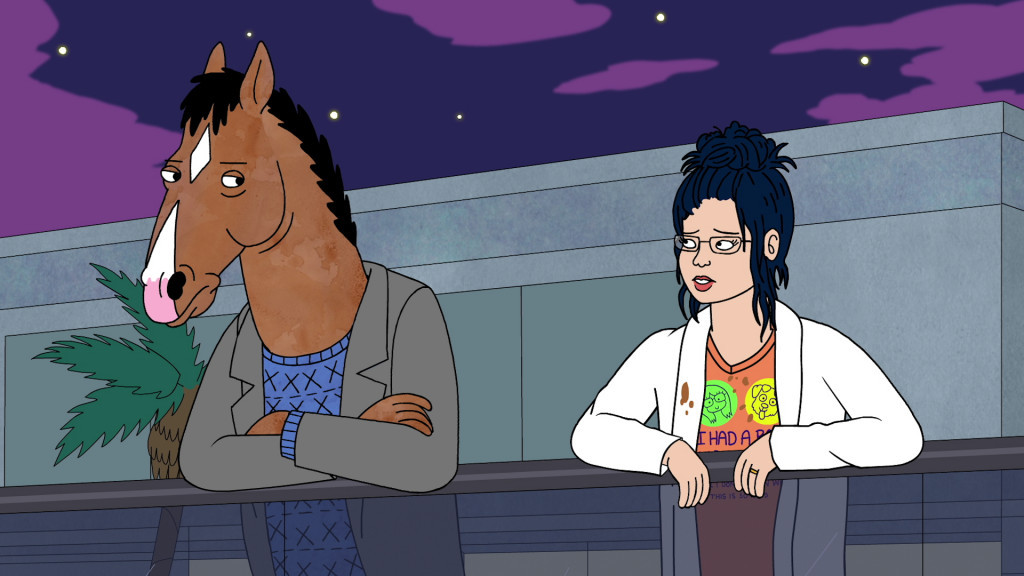
I’ve Todd to thank for this as he first recommended it. A sitcom (see lead image) that focuses on a middle-aged actor who made his name and money in a hackneyed ’90s sitcom. He’s also a cartoon horse. The first few episodes are laugh out loud funny but as the series(s) on Netflix progresses it becomes quite dark as it explores BoJack’s depression which gives it a surprising emotional weight I don’t normally associate with sitcoms, let alone animated ones.
For the end of 2015, when this blog has been less than it should have been, and for the start of 2016, when I intend it to be more than it has been, we offer five short lists of five cultural highlights from the past year. Each of the five of us at Illuminations is putting forward five things, whether movies, television series, books, exhibitions or whatever, that have meant something significant to us during the year. Today’s choice is John Wyver’s, again offered in no particular order.
• The Affair
The past year has been especially rich in series drama on television. The genre-bending Fortitude from Sky was a favourite earlier on, The Good Wife was as great as ever – no, make that greater – and I hugely enjoyed Unreal in the summer; the first episode has to be amongst the most caustic presentations of television that the medium has ever hosted. And this autumn has been exceptional, with London Spy and The Last Panthers both falling into the flawed-but-compelling category, and series 3 of The Bridge and series 5 of Homeland both being close to flawless. Perhaps best of all have been the two series of Showtime’s The Affair, shown here on Sky Atlantic, which is contemporary drama at the highest level, with richly complex characters, a supremely confident sexiness, and super-smart plotting. Plus, the final episode of series 1 closed with a sequence which was so unexpected and so disorienting that it remains the moment I best remember from a whole year of watching the small screen.
For the end of 2015, when this blog has been less than it should have been, and for the start of 2016, when I intend it to be more than it has been, we offer five short lists of five cultural highlights from the past year. Each of the five of us at Illuminations has outlined five things, whether movies, television series, books, exhibitions or whatever, that have meant something significant to us during the year. Up first is Linda Zuck’s choice, offered in no particular order.
• P’tit Quinquin
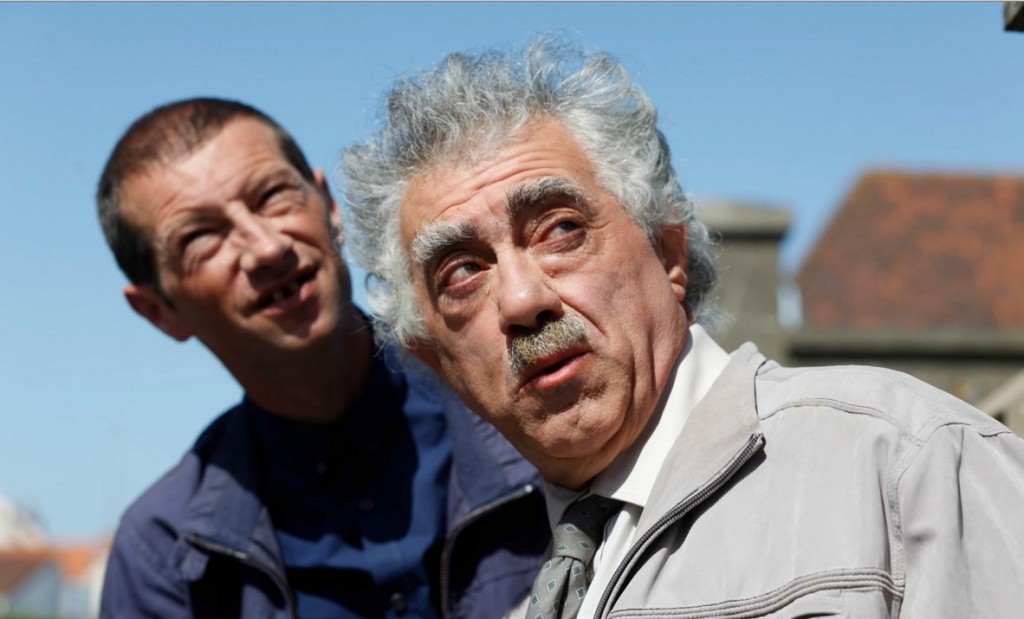
Made as a French TV mini-series for ARTE, Bruno Dumont’s French black comedy thriller P’tit Quinquin (featured image) was shown at a few British cinemas earlier this year. It concerns a series of unexplained grisly murders in rural northern France, two incompetent cops trying to investigate them, and young P’tit Quinquin, an adolescent boy with a misshapen face — he is our unlikely hero. Superb characterisation and performances, outrageous and weird comedic moments disrupted by reflections on life, death, racism and evil. There are many scenes that have stayed with me.