John Wyver writes: I’m not sure quite how the holidays and any additional lockdown strictures will impact Sunday links over the next couple of Sundays, so make the most of this clutch of stuff that has engaged me over the past week; thanks as always to those in Twitter feed who point me in the direction of such interesting articles.
John Wyver writes: this week’s selections begin with an exceptional profile from The New Yorker; see also the Guardian longread below the break, which is as good as anything the fabled US magazine publishes.
• On Succession, Jeremy Strong doesn’t get the joke: a classic New Yorker profile by Michael Schulman of the actor who incarnates Kendall Roy (above); his 40th birthday party episode of the current series is breathtakingly good…
John Wyver writes: another Sunday, another lot of links, starting out with a couple of essential lists to help you catch up with the year’s highlights.
• The 50 best films of 2021: who can resist this essential offer from Sight & Sound, compiling the choices of more than 100 critics and contributors?
• The 10 best TV series of 2021: also from Sight & Sound, and I voted in this one; four of my five choices made the cut, including The Underground Railroad (above).
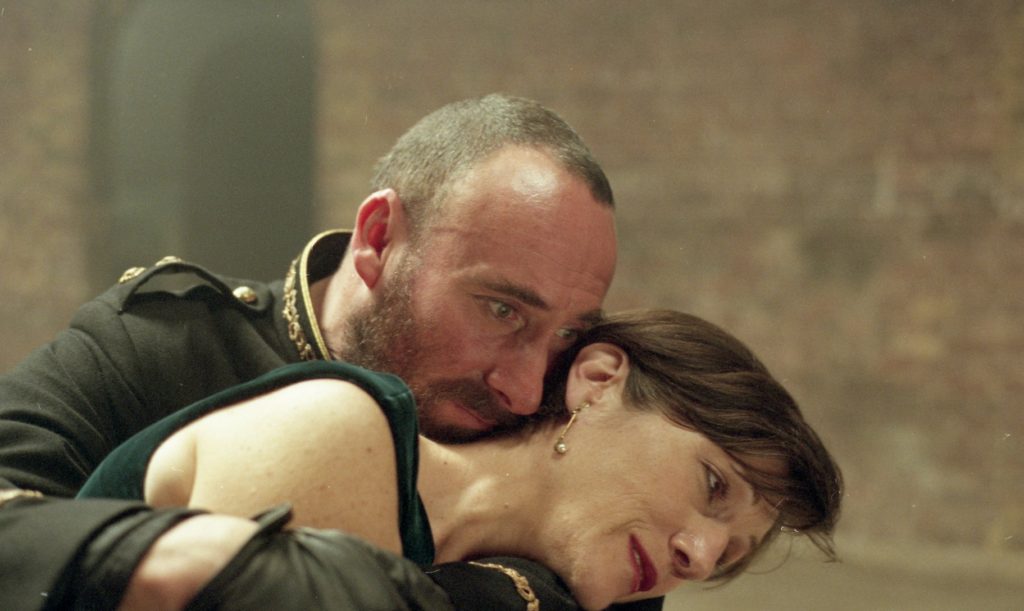
The then minister at DCMS, Chris Smith, had been thrilled by the production, and had recommended to Channel 4’s chief executive Michael Jackson that a television version should be made. Tony’s agent had been guided to me, and to my producing colleague Seb Grant, by another client, who knew what we had managed to do with low-cost screen versions of Richard II, directed by Deborah Warner, and Phyllida Lloyd’s production of Benjamin Britten’s opera Gloriana. Might, the agent enquired, we be interested in helping bring Macbeth to the screen?
John Wyver writes: As you may have noticed, I have almost immediately failed to fulfil my resolution to write three non-links posts each week. There’s just SO much else to write at the moment: a grant application, a television series outline, a conference paper, a promised article, a book proposal. Apologies. But at least I can – just about – keep pushing out Sunday links. Here’s this week’s, with my usual thanks to those who I follow on Twitter for their great recommendations.
• A landmark reckoning with America’s racial past and present: an important and authoritative review by Adam Hochschild for The New York Times of the book version, incorporating revisions, extensive citations and new material, of The 1619 Project:
Despite what demagogues claim, honoring the story told in The 1619 Project and rectifying the great wrongs in it need not threaten or diminish anyone else’s experience, for they are all strands of a larger American story. Whether that fragile cloth holds together today, in the face of blatant defiance of election results and the rule of law, depends on our respect for every strand in the weave.
• Inventing the science of race [£, but single access via free registration]: a remarkable essay by Henry Louis Gates Jr. and Andrew S. Curran for The New York Review about slavery and the Enlightenment.
John Wyver writes: this week’s links. That’s it, that’s the introduction – apart from an expression of thanks to those in my Twitter timeline for some great recommendations.
John Wyver writes: despite, or because of, the disappointing compromise in Glasgow last night, the state of the world is no better this weekend than last, but instead of gloom-and-doom political pieces I thought I’d begin this week’s list of links with two highly recommended articles about Black filmmaking in the United States. Included are some fine links brought to my attention by Billy Smart – thanks for those!
• How Black horror became America’s most powerful cinematic genre: a fascinating, expansive New York Times essay by Gabrielle Bellot spinning off from films including Jordan Peele’s Get Out, 2017 and Us, 2019, and the recent sequel to Candyman to explore a long tradition of story-telling and artistic practice – and of racism; to accompany this, the Times has commissioned artworks by by Renee Cox and Danielle McKinney.
John Wyver writes: Todd Haynes’ music documentary The Velvet Underground, about the legendary band and the cultural context of the United States in the 1960s and ’70s, has had a limited theatrical release and is now available on Apple+. I’m not proposing here to contribute a full review of the film, but I do want to use the above framegrab to reflect on what I think is interesting about the film – and also what troubles me about it.
By way of introduction, this is the official trailer:
And here are a couple of interviews with filmmaker Todd Haynes, both of which engage with the clearance and use of archive elements:
John Wyver writes: I’m pleased that I seem to have re-started regular Sunday links, and now my aim is to return to posting more regularly on topics that I’ve mused about before, including television and film, archives in particular, stage works on screen, plus occasional thoughts about books and exhibitions.
Like most blogs, this one goes through periods of inactivity. Pressure of ‘proper’ work is a key reason, and somehow this year has thankfully been very busy so far. But I’ve just delivered a couple of pieces of writing, one of which proved to be ridiculously problematic for no very good reason.
Plus, on Friday, my colleague Amanda Wrigley and I submitted the index and replies to production queries for our edited collection Screen Plays. A volume of essays about theatre plays on British television, this has been far too long in the making, but now is due from Manchester University Press in the early summer of next year.
I have no more production responsibilities in the run-up to Xmas, and rather wonderfully I’m carving out time to read and research, and to work towards a long-term book project about early television in Britain. So it seems like a good moment to try posting again regularly, and my self-imposed target is three times a week in addition to Sunday links. I’ll offer some thoughts about random elements of culture that I encounter as well, perhaps, as elements of my early television research – watch out for the first of those later in the week.
I’m also going to post at various lengths, and not worry if I don’t have a lengthy argument to develop. At times I’m keen simply to offer one or two inconsequential paragraphs, or just a little more, as I’m doing today. Indulge me – or ignore me – as you wish.
John Wyver writes: back now in the groove, here’s a new collection of articles and a video or two that have engaged me over the past week. As ever, I am most grateful to those in my Twitter feed who pointed me in the direction of many of them.
• Volume control – how creating my library brought order in a world of chaos: given what a sh*t-sh*w the past week has been, I needed something lovely to start with – and this totally delightful piece is just the thing; Lucy Mangan for the Guardian on creating a personal library. Needless to say, I am deeply envious.
• Boris Johnson’s claim that the Roman empire fell due to “uncontrolled immigration” is wrong – and dangerous: I know we’ve had several news cycles since this, but it’s important; our shambles of a Prime Minister made me angry at pretty much every moment of the past week, first in Rome and then in Glasgow, and then once again in Westminster. Here, Rachel Cunliffe for New Statesman rips apart his sub-Ladybird history guff from the Coliseum…
• … and for one more essential contribution on the Paterson scandal, here’s the peerless broadcaster James O’Brien on LBC:
Listeners are branding this James O'Brien’s finest monologue yet as he explains in forensic detail why the Owen Paterson scandal has hit the public so hard.@mrjamesobpic.twitter.com/rWQ1cumV7V