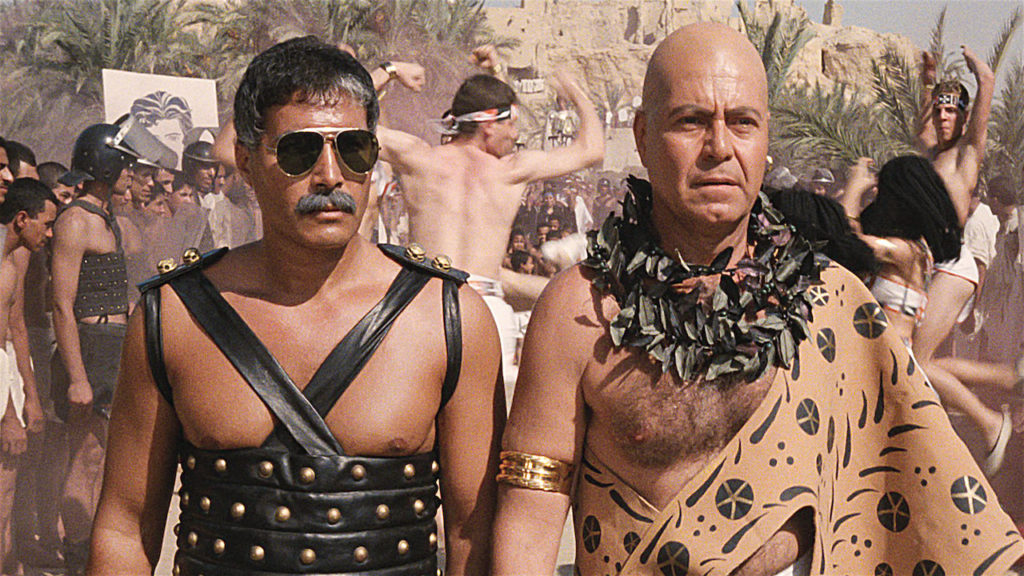
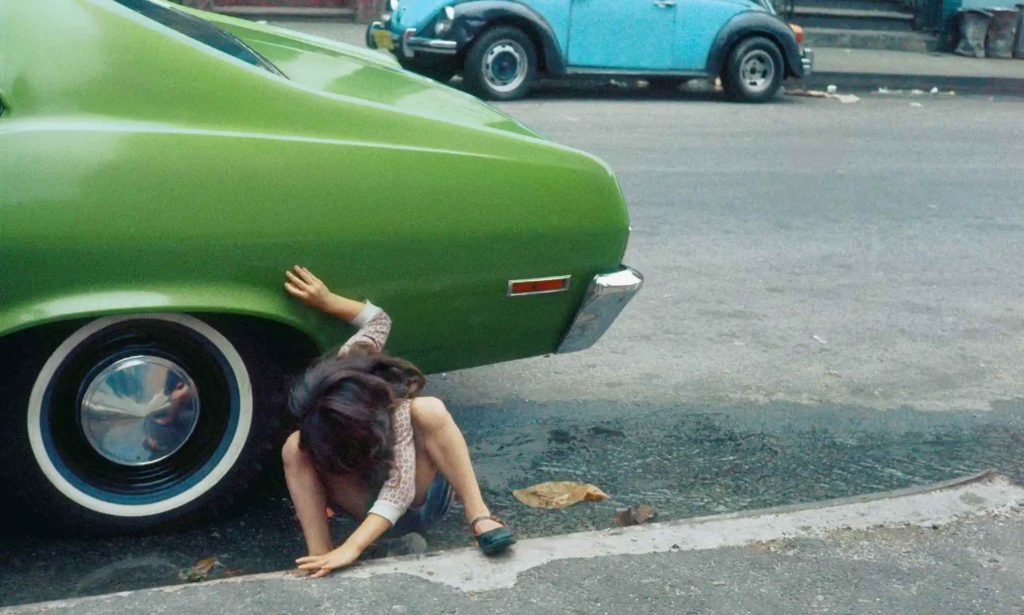
John Wyver writes: As you may have noticed, I have almost immediately failed to fulfil my resolution to write three non-links posts each week. There’s just SO much else to write at the moment: a grant application, a television series outline, a conference paper, a promised article, a book proposal. Apologies. But at least I can – just about – keep pushing out Sunday links. Here’s this week’s, with my usual thanks to those who I follow on Twitter for their great recommendations.
• A landmark reckoning with America’s racial past and present: an important and authoritative review by Adam Hochschild for The New York Times of the book version, incorporating revisions, extensive citations and new material, of The 1619 Project:
Despite what demagogues claim, honoring the story told in The 1619 Project and rectifying the great wrongs in it need not threaten or diminish anyone else’s experience, for they are all strands of a larger American story. Whether that fragile cloth holds together today, in the face of blatant defiance of election results and the rule of law, depends on our respect for every strand in the weave.
• Inventing the science of race [£, but single access via free registration]: a remarkable essay by Henry Louis Gates Jr. and Andrew S. Curran for The New York Review about slavery and the Enlightenment.
John Wyver writes: this week’s links. That’s it, that’s the introduction – apart from an expression of thanks to those in my Twitter timeline for some great recommendations.
John Wyver writes: despite, or because of, the disappointing compromise in Glasgow last night, the state of the world is no better this weekend than last, but instead of gloom-and-doom political pieces I thought I’d begin this week’s list of links with two highly recommended articles about Black filmmaking in the United States. Included are some fine links brought to my attention by Billy Smart – thanks for those!
• How Black horror became America’s most powerful cinematic genre: a fascinating, expansive New York Times essay by Gabrielle Bellot spinning off from films including Jordan Peele’s Get Out, 2017 and Us, 2019, and the recent sequel to Candyman to explore a long tradition of story-telling and artistic practice – and of racism; to accompany this, the Times has commissioned artworks by by Renee Cox and Danielle McKinney.
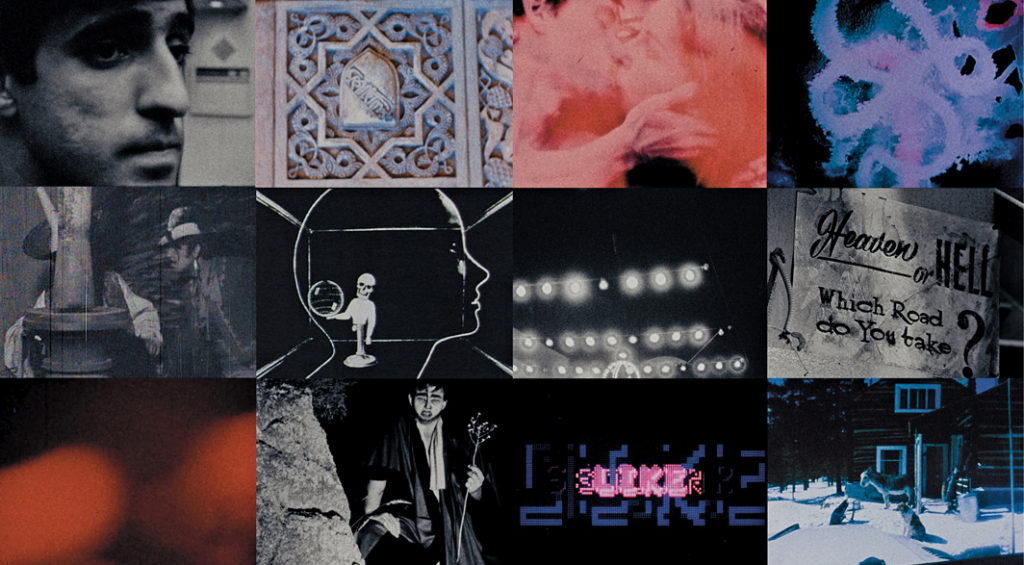
John Wyver writes: Todd Haynes’ music documentary The Velvet Underground, about the legendary band and the cultural context of the United States in the 1960s and ’70s, has had a limited theatrical release and is now available on Apple+. I’m not proposing here to contribute a full review of the film, but I do want to use the above framegrab to reflect on what I think is interesting about the film – and also what troubles me about it.
By way of introduction, this is the official trailer:
And here are a couple of interviews with filmmaker Todd Haynes, both of which engage with the clearance and use of archive elements:
John Wyver writes: I’m pleased that I seem to have re-started regular Sunday links, and now my aim is to return to posting more regularly on topics that I’ve mused about before, including television and film, archives in particular, stage works on screen, plus occasional thoughts about books and exhibitions.
Like most blogs, this one goes through periods of inactivity. Pressure of ‘proper’ work is a key reason, and somehow this year has thankfully been very busy so far. But I’ve just delivered a couple of pieces of writing, one of which proved to be ridiculously problematic for no very good reason.
Plus, on Friday, my colleague Amanda Wrigley and I submitted the index and replies to production queries for our edited collection Screen Plays. A volume of essays about theatre plays on British television, this has been far too long in the making, but now is due from Manchester University Press in the early summer of next year.
I have no more production responsibilities in the run-up to Xmas, and rather wonderfully I’m carving out time to read and research, and to work towards a long-term book project about early television in Britain. So it seems like a good moment to try posting again regularly, and my self-imposed target is three times a week in addition to Sunday links. I’ll offer some thoughts about random elements of culture that I encounter as well, perhaps, as elements of my early television research – watch out for the first of those later in the week.
I’m also going to post at various lengths, and not worry if I don’t have a lengthy argument to develop. At times I’m keen simply to offer one or two inconsequential paragraphs, or just a little more, as I’m doing today. Indulge me – or ignore me – as you wish.
John Wyver writes: back now in the groove, here’s a new collection of articles and a video or two that have engaged me over the past week. As ever, I am most grateful to those in my Twitter feed who pointed me in the direction of many of them.
• Volume control – how creating my library brought order in a world of chaos: given what a sh*t-sh*w the past week has been, I needed something lovely to start with – and this totally delightful piece is just the thing; Lucy Mangan for the Guardian on creating a personal library. Needless to say, I am deeply envious.
• Boris Johnson’s claim that the Roman empire fell due to “uncontrolled immigration” is wrong – and dangerous: I know we’ve had several news cycles since this, but it’s important; our shambles of a Prime Minister made me angry at pretty much every moment of the past week, first in Rome and then in Glasgow, and then once again in Westminster. Here, Rachel Cunliffe for New Statesman rips apart his sub-Ladybird history guff from the Coliseum…
• … and for one more essential contribution on the Paterson scandal, here’s the peerless broadcaster James O’Brien on LBC:
Listeners are branding this James O'Brien’s finest monologue yet as he explains in forensic detail why the Owen Paterson scandal has hit the public so hard.@mrjamesobpic.twitter.com/rWQ1cumV7V
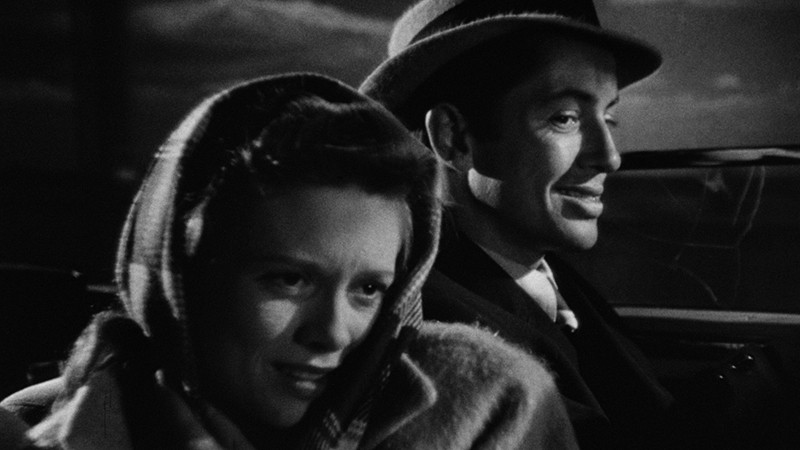
• Multimedia lectures on film (Ep. 1) – They Live by Night (Nicholas Ray, 1948): this is a fascinating initiative by Cristina Álvarez López and Adrian Martin, a dynamic critical double act who have appeared in a number of previous Sunday lists (added to which, Adrian asked very nicely for a plug here); it’s a deeply smart extended (51 minutes) video essay about Ray’s noir thriller, pictured above, with Cathy O’Donnell and Farley Granger that you can rent for $8 or buy for $15. A great idea that I really hope finds a paying audience.
• No connection: Leo Robson for NLR’s Sidecar offers a dense but really good read on Wes Anderson’s The French Dispatch, referencing (especially) the ideas of Frederic Jameson but also Pauline Kael, the Coens, late Godard and more.
John Wyver writes: along with everything else, including a nasty cough with a slew of negative tests and a fall that left me with a wounded knee, I had been struggling for weeks, indeed months, to finish the draft of a long-overdue journal article. For some reason, I simply couldn’t finish it, and I would stare at my screen unable to tackle that but also unable to work towards anything else.
Which is at least part of the reason for Sunday links being on hiatus over the past months – for which I apologise. I have finally submitted a decent draft of the article, and so here we are, with a first autumnal selection of things that have interested me over the past weeks.
Of course there are a thousand things I could list, and this selection is fairly random – I’ll try to be a bit more structured in the coming weeks – and I’ll probably add to this list, as well as trying to do another this coming Sunday. But this might just get me back into the habit of posting here again. Thanks as always to those who I follow on Twitter for recommendations.
• Interview – You’ll be my mirror: Todd Haynes talks interestingly with Amy Taubin for Artforum about his new documentary The Velvet Underground, about which I have lots of thoughts, and which also might get me posting more extended reflections in the next few days.
• Where does James Bond go from here? [£ but limited free access]: this is among the best pieces I’ve read about No Time to Die (which I enjoyed enormously) – by Bilge Ebiri for Vulture.
• Britain’s temporary post-war studios: a fascinating piece by Richard Farmer at the Studiotec blog.
• The horror gem that kicks off Three Cases of Murder: Laura Kern for Criterion’s The Current on Wendy Toye’s contribution to the 1955 British anthology film.
John Wyver writes: … and we’re back, if somewhat late in the day. I’ve finally submitted a draft of my article, and have only one further piece promised. Quite soon, really very soon, I can spend some more time with my books, and I can try to contribute bulging batches of links each week. In the meantime, here’s today’s selection of stuff that has interested me in the past few days (with some more to be added in a while), with my usual expression of gratitude for recommendations from those I follow on Twitter…
• Inside the Capitol riot – an exclusive video investigation: this really is remarkable – a 40-minute documentary from The New York Times forensically examining thousands of videos shot on 6 January; much of the material was shot by the rioters but there’s also police bodycam footage, lots of social media elements and more. It’s brilliantly compiled, and there are really interesting uses (above) of the visual language of split-screens (which is a current obsession of mine). An appropriate Independence Day watch.
I also want here and in subsequent posts to return to discussing the archive material in the film and other aspects of our approach to the production. There’s so much that I’m keen to explicate and explore, but it’s going to take some time to work that through into posts here. If this seems of interest, I hope you’ll stick with us.
Let’s concentrate here on the film’s fifth chapter, ‘Adorning with Art’, and in particular on one of the main archive sources, An Act of Faith. This part is the most substantial section, and the one that editor Todd Macdonald, designer Ian Cross and I worked on first. It was quickly clear that we had such riches that the film overall needed a longer running time than the 60 minutes at which it was originally commissioned. In discussions with BBC commissioning editor Mark Bell we settled on a 75-minute duration, which is relatively rare for a television documentary, but which continues to feel like a pleasing length.