John Wyver writes: maybe it’s lockdown lassitude, but Links is a little late this week, and is still a work in progress; nonetheless, with my usual thanks to those on my Twitter feed, here is another selection of articles and videos that have engaged and informed me over recent days.
• Brexit unhinged: I feel like I should start every set of recommendations with Chris Grey’s Friday blog post, which is the smartest and best-informed exploration of the Brexit process that I know of (and there’s a book on the way) – I’ve been following him throughout this whole, hideous story and my admiration for his writing is unbounded; here’s this week’s takeaway:
So two months in things aren’t looking at all good. The government is reduced to planting disingenuous stories in the press about the success of Brexit, its ministers and backbenchers don’t understand or don’t accept the Brexit deals they voted for, and it now again proposes to break international law by flouting part of what it agreed to. Relations with the EU are more fraught than ever. The Northern Ireland peace process is under strain. The Ultras are proposing a trade war with the EU, whilst trade with the EU is in chaos with SMEs especially suffering, billions of pounds of assets have fled the UK, the Brexiters’ iconic fishing industry is close to collapse, and many of the new restrictions on trade haven’t even been implemented yet. We’re not even at the end of the beginning, and, no, vaccines don’t give Brexiters a get out of jail free card.
John Wyver writes: one more lockdown week, one more list of links to richly interesting reads, along with a small number of videos. My thanks to all those on Twitter and elsewhere who have made recommendations.
• The 50 most beautiful cinemas in the world: an absolutely wonderful, beautifully illustrated list from Time Out – I’ve been inside just 5, and seen the exteriors of 3 more; a mission to visit every one might be appropriate for The After.
John Wyver writes: more links for lockdown, drawn from things that have engaged and enraged me this week; many are drawn from Twitter recommendations, while others come from my regular reading including the Guardian, LRB and New Statesman.
• Q&A | ‘We need to defend the freedom to research our histories in all their nuance’: a very good interview with Corinne Fowler, professor of postcolonial literature at the University of Leicester, by Geraldine Kendall Adams for the Museums Association, who ‘has been singled out for criticism by senior government figures and the press following the publication of a landmark report on links to slavery and colonialism at National Trust properties, which she co-authored.’
John Wyver writes: another lockdown weekend, another list of links to articles and videos that have engaged me over the past seven days; my thanks as always to all those in my Twitter timeline who share interesting, informative and – very occasionally – just plain silly stuff.
• The acrobatic grace of Cary Grant: for Criterion’s The Current, Angelica Jade Bastién on how the star could combine a ‘suave, glistening surface with pratfalls and acrobatics, perfectly timed, that allow him to be silly, even foolish, but retaining an assured sensibility that means he never becomes the fool.’
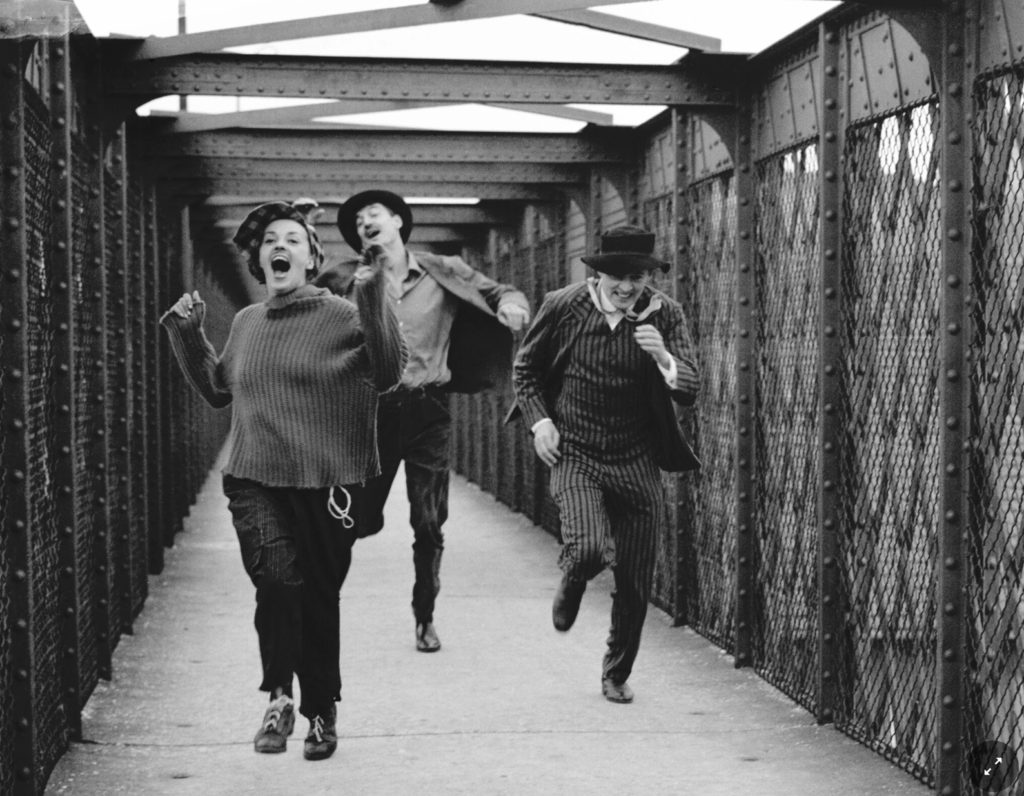
• Mon Oncle d’Amérique – on Unforgiven: for Reverse Shot, Julien Allen is terrific on Clint Eastwood’s 1992 western (above), and on story-telling, uncertainty and America.
• Tokyo rising: how Japan’s new wave rose – and broke: this week Sight & Sound re-upped this really good essay by Donald Richie about the generation of filmmakers who emerged from the upheavals of the 1960s; originally published in 2001.
• The drenching richness of Andrei Tarkovsky: Alex Ross for The New Yorker thoughtfully reassesses the films of the great Russian director – which also gives me an excuse to show Kyle Kallgren’s 2018 video essay Nostalghia Critique, which is about Tarkovsky (he makes an appearance) but also copyright, Youtube and existential despair.
John Wyver writes: another collection of pointers to the past week’s interesting articles and videos, gathered from my Twitter timeline and elsewhere, and with the help of friends also.
• All American end zones: for Super Bowl Sunday, Thomas Quist at Mubi.com Notebook on American football films.
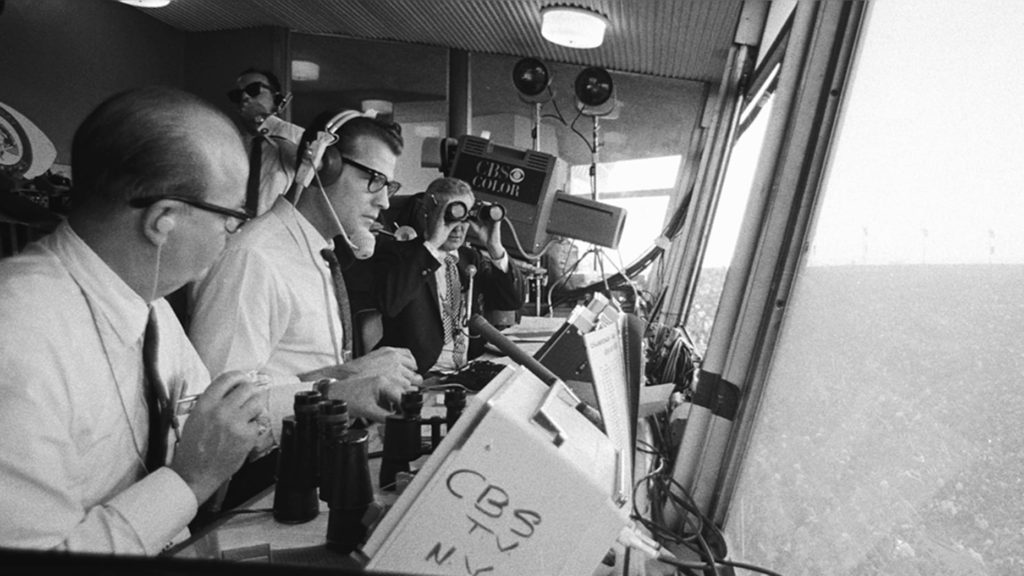
• The first Super Bowl was broadcast on two networks, but you’re not allowed to watch it today: … and from Brian Flood at Fox News, the fascinating tale of the legal wranglings about access to the archival recording of the first Super Bowl back in 1967. Pictured, CBS announcer Ray Scott at that first game. Wearing headset is commentator Frank Gifford. (Credit: CBS via Getty Images.)
John Wyver writes: each week to make this selection I highlight interesting-looking stuff as it rolls through my Twitter feed before returning to it later to read and assess, and I supplement these choices with a regular rosta of journals and sites to check – and the final result today is…
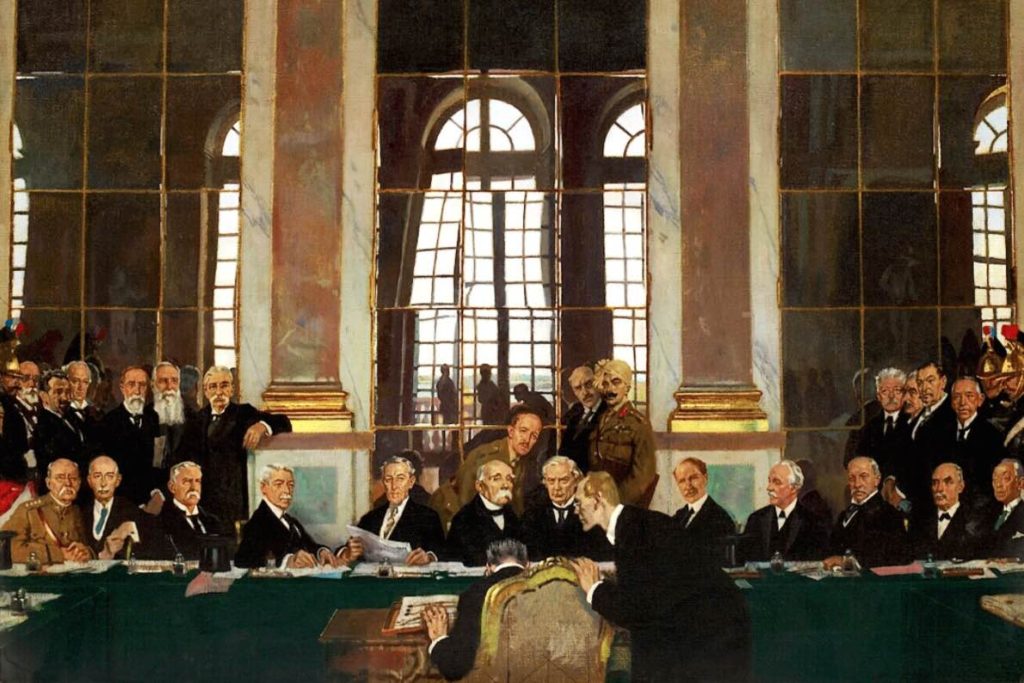
• From Versailles to the War on Terror: Julia Elyachar rounds off a six-part Public Books essay series about the Treaty of Versailles and today with a brilliant analysis of the dissolution of the Ottoman Empire; editor Joanne Randa Nucho introduces the series here, with links to the other essays – and the header is a detail from William Orpen’s The Signing of Peace in the Hall of Mirrors, Versailles, 28th June 1919 (1919). Imperial War Museum London / Wikimedia Commons.
• Senses of Cinema 97: a new edition of the online journal, as welcome as ever, and especially so for the ‘World Poll 2020″ which begins with the Introduction by Fiona Villella and in 8 sections gathers together the recommendations of many of the best and brightest writers on film from around the world…
John Wyver writes: A good week, on the whole, for the United States, but a less wonderful one, perhaps, for the rest of us – anyway, here’s some stuff that I found interesting, with my thanks to those who pointed me towards much of it, via Twitter and in other ways.
‘We’re drawn back to the Civil War because its great issues—especially the great issues of Reconstruction—are still with us: the nature of federalism; the relationship between the states and the federal government; what government means in people’s lives; how centralized government should be; how energetic, how interventionist government should be; and race and racism.’
• ‘God, Guns, & Trump’ – anatomy of the crowd [£, but limited free access]: a fine essay for The New York Review by Rebecca Lee Sanchez with photographs by Radcliffe Roye about the body language of those who lost the election and those who stormed the Capitol.
• Norse code: for Reverse Code, Carly A. Kocurek on how the videogame Assassin’s Creed Valhalla ‘borrows from a century-old history curriculum—and reinforces white supremacy’.
• France knows how this ends: there has been so much good Inauguration-linked writing this week, including this by James McAuley for The Atlantic about the parallels between this moment in the States and the fin de siècle ‘defining psychodrama’ of France’s Third Republic that was the Dreyfus Affair.
Last night at the Lincoln Memorial reflecting pool in Washington D.C. nurse Lori Marie Key, who works at St. Mary Mercy Hospital in Livonia, Michigan, sings ‘Amazing Grace’ at a memorial for COVID-19 lives lost. Video from WTVR CBS 6.
John Wyver writes: after last Sunday when this selection more or less ignored explicitly political elements they elbow themselves to the fore once again this week, although my choice is of pieces you may not have encountered previously — many thanks, as ever, for recommendations via Twitter and in other ways.
• The breakaway [£, but limited free access]: I don’t ultimately agree with his conclusion, which in any case remains somewhat open, but this is a brilliant 11,271 words by Perry Anderson about Britain and Europe for LRB.
• Vikings, Crusaders, Confederates: … as is Matthew Gabrielle for Perspectives on History from the American Historical Association; and the following thread is an especially valuable complement…