For the end of the annus horribilis of 2016, here is our second list of five cultural highlights from the past year. Each of the five of us at Illuminations has chosen five things, whether movies, television series, books, exhibitions or whatever, that have meant something significant to us during the year. This second selection is Todd Macdonald’s.
Play On for the Almeida Theatre
I have been involved with some really exciting projects this year with Illuminations but working on Play On with the Almeida has to have been my favourite and most fulfilling. In partnership with Arsenal in the Community, this was an initiative in which four writers collaborated with forty young people who hadn’t previously been involved in theatre to create new plays and monologues based on their stories and experiences. These texts were then performed by both professional actors and some of the young people themselves on the Almeida stage. I worked as a filmmaker documenting the process, and I was blown away by the enthusiasm and engagement that the project cultivated. The work the Almeida are doing in the community to open up access to the theatre is inspiring on so many levels, and the resulting film from this project is one that I feel very privileged to have been able to make.
For the end of the annus horribilis of 2016, when once again this blog has been less than it should have been, we offer five short lists of five cultural highlights from the past year. Each of the five of us at Illuminations has chosen five things, whether movies, television series, books, exhibitions or whatever, that have meant something significant to us during the year. Up first is Linda Zuck’s choice, offered in no particular order.
A completely compelling epic 5-part, nearly 8-hour, series directed by Ezra Edelman, who is the son of the towering rights activist and lawyer Marian Wright Edelman. Chronicling the O.J. Simpson story and using it to reflect American society in the last 50 years, this is an extraordinary and thought-provoking masterpiece of journalism about race, domestic abuse, celebrity, civil rights, the LAPD, the legal process and murder.
Three short stories of intersecting lives in small town Montana with superb performances from Michelle Williams, Laura Dern and Kristen Stewart, directed by Kelly Reichardt. Normal women with mundane lives whose stories nonetheless powerfully transcend the everyday. The third story is so achingly poignant and poetic that you are left quietly devastated.
Georgia O’Keeffe, Tate
Tate Modern’s major retrospective of Georgia O’Keeffe’s work was a terrific show. Her work was pioneering and her output was prolific. Her achievements made it possible for women to envisage a career as an artist. The New Mexican landscape paintings were mesmerising.
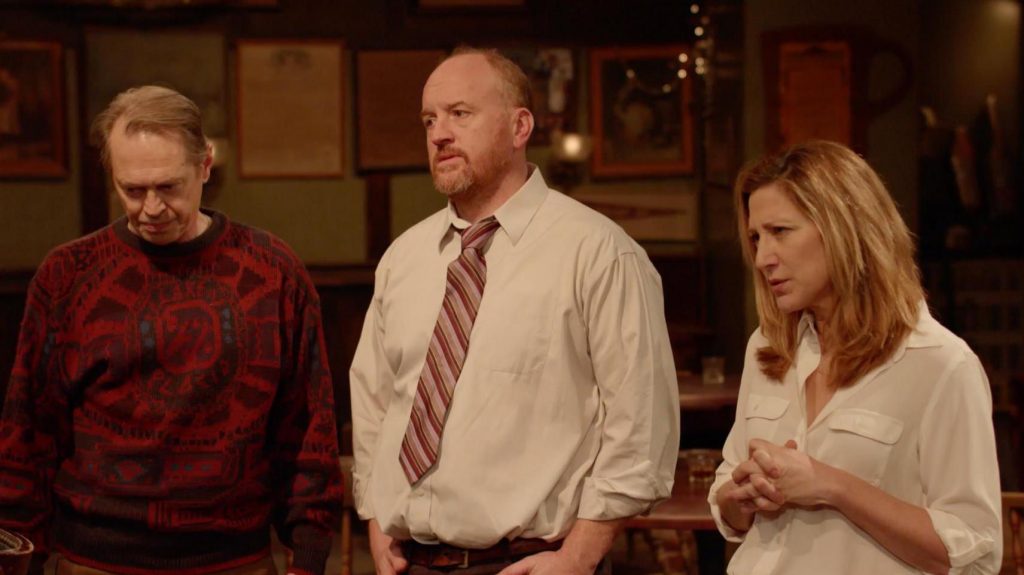
Created as a web series, directed, written and financed by Louis C.K. so as to avoid any interference with his artistic vision, and with powerful performances from the main ensemble cast Alan Alda, Steve Buscemi, Edie Falco and Jessica Lange, Horace and Pete is set in a bar run by a dysfunctional family in Brooklyn. It is by turns funny, shocking and extremely dark with lingering silences and Masterpiece Theatre moments — for example, a completely riveting 9-minute monologue in Episode 3 from a woman whose identity you’re not sure of until the reveal. It is deliberately shot like filmed plays from the 1950s. As Ian Crouch asked in The New Yorker, was it even really television?
Sadly there won’t be a second season, and here’s why.
Chronicled by his friend and college room mate, this is the true story of the life of a remarkable young man who escaped crime-ridden Newark to attend Yale. As a stellar student and much-liked by everyone, his trajectory should have been ever upward. But once he returned to the hood, his life spiralled downwards, leaving a host of unanswered questions. A haunting and tragic story, beautifully written.
One reason to be cheerful during this endlessly unnerving Brexit+Trump interregnum is a little seasonal gift from BBC Genome and its blog. BBC Genome is the invaluable and all-round essential website featuring all of the BBC’s radio and television listings between 1923 and 2009. And its blog is a treasure trove of trivia and broadcasting history. As one entry in this year’s advent calendar it has made available a .pdf of the 1941 Christmas Radio Times, complete with editorial matter, programme details and advertisements. And what a rich, resonant document this is, conjuring up the traces of Christmas past from 75 years ago. Download it now and dive in with me – I’m going to pick out bits and pieces through the rest of this afternoon and into the evening. read more »
I failed to post the past two Sunday links, and nor have I contributed general entries across the past three weeks. Although it’s no excuse it has been an exceptionally busy time for the company, mostly because we have been preparing a new performance recording which will be announced shortly. We got the first part of that in the digital “can” yesterday, and can now start to breathe again. I also spent a few days in Paris and I go to Munich tomorrow.
But it’s back to the blog today, with notes on my travels to come next week, together with exciting news of our latest DVD release, Richard II. For now, here is an extended edition of Sunday links (to be created through today), accompanied by the usual apology for not crediting those who brought many of these great articles and videos to my attention. And I don’t see how I can avoid starting with a handful of Trump-related pieces; if nothing else the crisis in the States is prompting some exceptional writing (and I make no excuses for including several pieces from New York Review of Books).
• Trump – the choice we face: a fascinatingly personal NYRB piece by Masha Gessen about compromise and resistance and the way forward.
Civil rights are now on trial, though before we can fight to reassert the march toward equality, we must regain control of the truth. If that seems melodramatic, I would encourage you to dump a bucket of ice over your head while listening to ‘Duel of the Fates’. Donald Trump is our President now; it’s time to wake up.
The weekly round-up of links to things that I’ve found interesting and stimulating over the past few days, with apologies to those who I failed to credit for bringing them to my attention.
Last night, for the London opening of the Chichester Festival Theatre production of Half a Sixpence, the production’s publicists employed an up-to-the-minute medium in a manner that mimicked the early years of television. Working with Facebook Live, Half a Sixpence first of all streamed a half-hour or so of red carpet intro before curtain up. And then from late on in the performance itself, the closing minutes were shown live online, from ‘Flash, Bang, Wallop’ to the curtain calls.
Rights restrictions, I assume, account for why there’s no available recording of the second part of the stream, but you can see here Michael Underwood valiantly trying to whip up some excitement in front of the Noel Coward Theatre. All of which is pretty much exactly what the BBC television service did from the Palace Theatre nearly 80 years ago. read more »
I was going start by committing to a boycott this week of Trump and Brexit. After all, and especially after this week, what is there to say? But I have included a couple of exceptional pieces, before I get to links to other things that I’ve found interesting and stimulating over the past truly hideous few days.
• The nightmare begins: Adam Shatz, London Review of Books, a really good analysis – and do also read Joan Scott’s response in the Comments.
And then there’s this, from Saturday Night Live, with Kate McKinnon as Hillary performing the late Leonard Cohen’s “Hallelujah”. You’ll have seen it already, but watch it again – and weep.
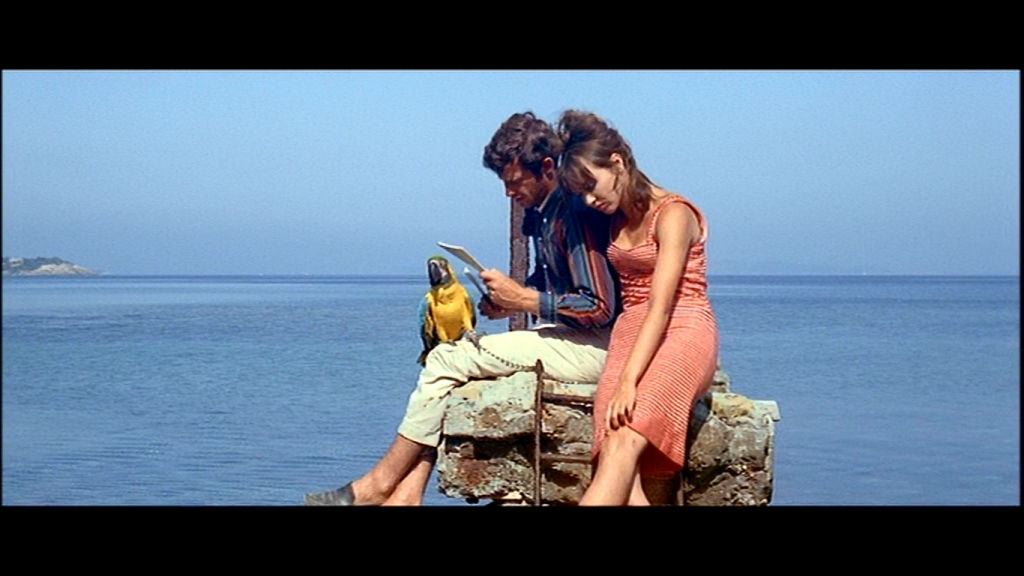
Raoul Coutard, the cinematographer best-known for his radical work on many of the key features films of the French new wave, has died at the age of 92. Coutard shot many of the films (including the heart-breakingly beautiful Pierrot le fou, 1965, above) that meant the most to me as I was discovering cinema in the 1970s and ’80s; below I have embedded a dozen of these. The Guardian obituary by James S Williams is here. ‘Light of day: Raoul Coutard on shooting film for Jean-Luc Godard’, a 1965 text by Coutard edited Michel Cournot, has been republished as a tribute on the Sight & Sound website. And Film Comment here has a 2012 interview with the cinematographer.
‘The greatest song ever written about America… and what’s so great about it is, it gets right to the heart of what our country is supposed to be about.”
Live at the Memorial Coliseum in Los Angeles, 30 September, 1985.

 .
.