John Wyver writes: Two years ago I compiled a list of stuff – books, films, journalism, television, exhibitions, online elements – that I had enjoyed, appreciated, learned from and generally been cheered by over the previous twelve months. Herewith, this year’s selection (and instead of a Sunday Dozen, which will be back next week) — and yes, I missed 2022. The order is (largely) random.
What compiling this year’s list made me realise is (a) that while I listen to a lot of music, it’s mostly via certain radio strands (on BBC Sounds), a couple of which are listed below, and that I acquire only a very few CDs (and yes, I do still listen like that); and (b) I’ve read a lot of books, but more research-related non-fiction than fiction, and only a few have made it to the list.
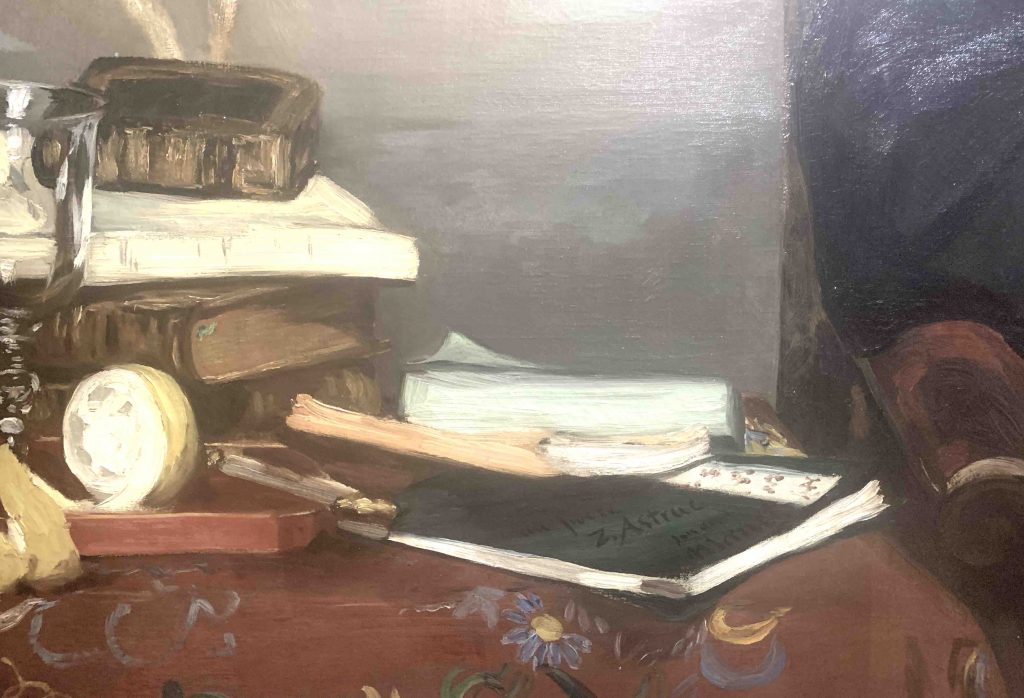
The image is a detail from Édouard Manet’s ‘Portrait de Zacharie Astruc’, 1866, oil on canvas, seen (and photographed, poorly) in the Musée d’Orsay’s Manet/Degas exhibition.
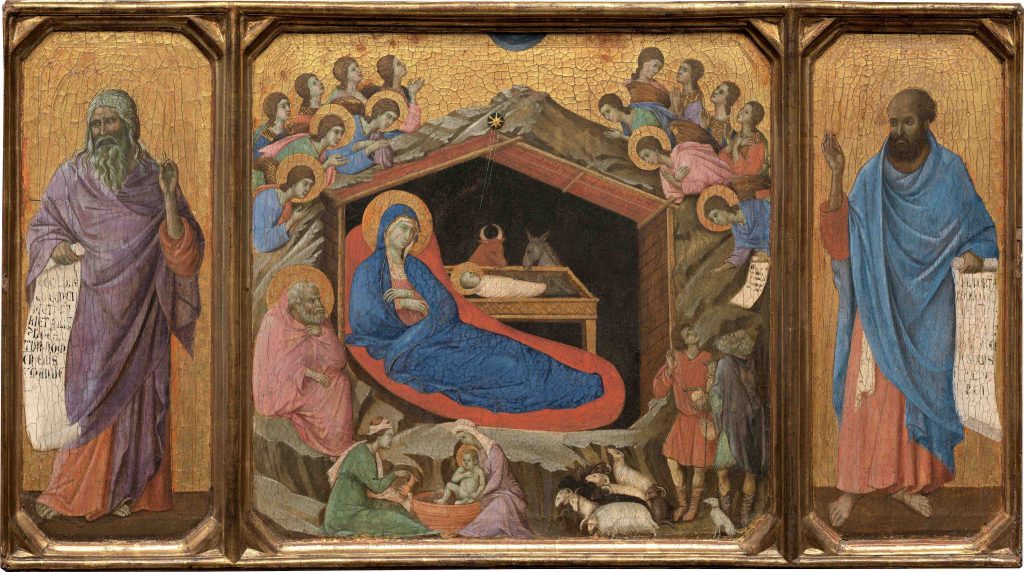
John Wyver writes: a tiny present in the form of a short selection of readings and listenings, some seasonal and some not, that caught my attention over the past week. The image is ‘The Nativity with the Prophets Isaiah and Ezekiel‘, 1308-1311, by the Sienese painter Duccio di Buoninsegna, tempera on poplar panel, courtesy of the truly enlightened open access policy of the National Gallery of Art, Washington.
Happy Christmas!
• Pluralistic: 2024’s public domain is a banger: this, my friends, is how a links post should be done, from the maestro Cory Doctorow — about copyright, the public domain and sex, basically. There is also a very good edition of Free Thinking from this past week about the same subject (although mostly without the sex), with guests David Bellos, author of Who Owns This Sentence? – A History of Copyrights and Wrongs, Katie McGettigan, lecturer in C19th American literature and Hayleigh Bosher, Reader in Intellectual Property Law at Brunel University London. Pleasingly, it’s only minutes into the discussion of copyright before one of the guests comes out with the all-too-familiar mantra, ‘There are a lot of grey areas really’.
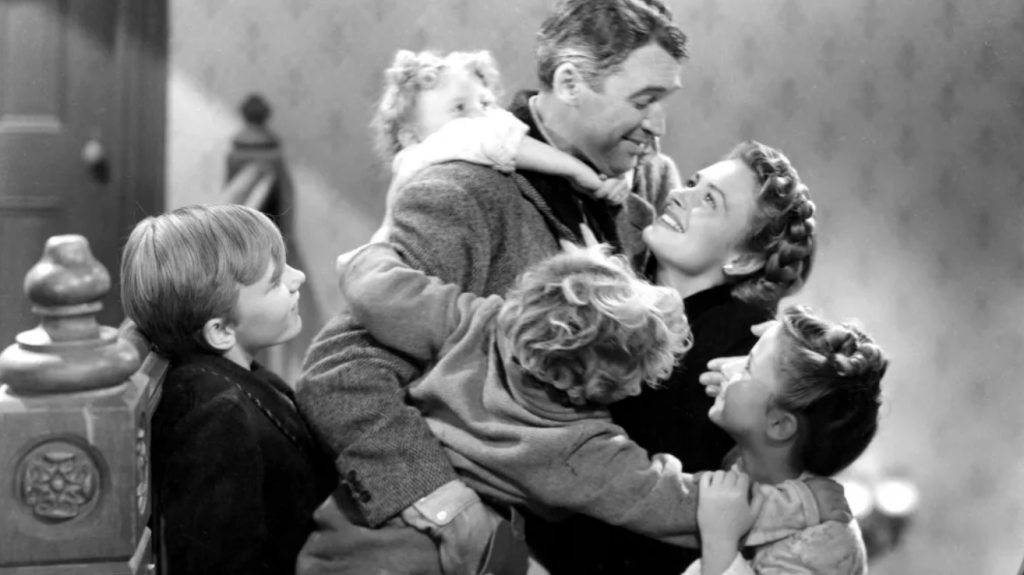
John Wyver writes: taking this one week at a time, but nonetheless I’m pleased to offer a second selection of articles, podcasts and broadcasts that engaged or informed or challenged me during the past week. There is some hard-edged politics below, but there are lighter, seasonal recommendations too. For the image above, see the penultimate entry.
• Seeing genocide: the curator, filmmaker and theoriest Ariella Aïsha Azoulay’s overwhelmingly powerful essay for Boston Review about photography, history and the Israel-Hamas conflict.
• Deeper into Ozu: to celebrate the 120th anniversary of the great Japanese filmmaker’s birth, Criterion commissioned six writers each to discuss one of his lesser-known works; it’s a delightful miscellany whether you know anything about his cinema or not, and will hopefully convince you to watch more.
John Wyver writes: It’s a long time since I compiled the weekly ‘Sunday links’ – indeed it’s a long time since I wrote anything substantial here. But with the changing circumstances for the company (see News, below), I’m minded, if I can find the time and energy, to start again. So for this weekend anyway, under a new title, here is a selection, supplemented by what I hope are useful additional links, of just twelve articles, downloads, broadcasts and podcasts that in the past week I found surprising and engaging and challenging. The order is entirely random.
I aim to make a similar selection each Sunday from now on, concentrating not so much on the mainstream, but rather on the cracks and crevices of our media world. And as far as possible I’ll choose things that are freely accessible, although some may require a free sign-up. See what you think, and if you find the selection useful, do please share on social – or just tell a friend. (For details of the glorious image above, see the second item.)
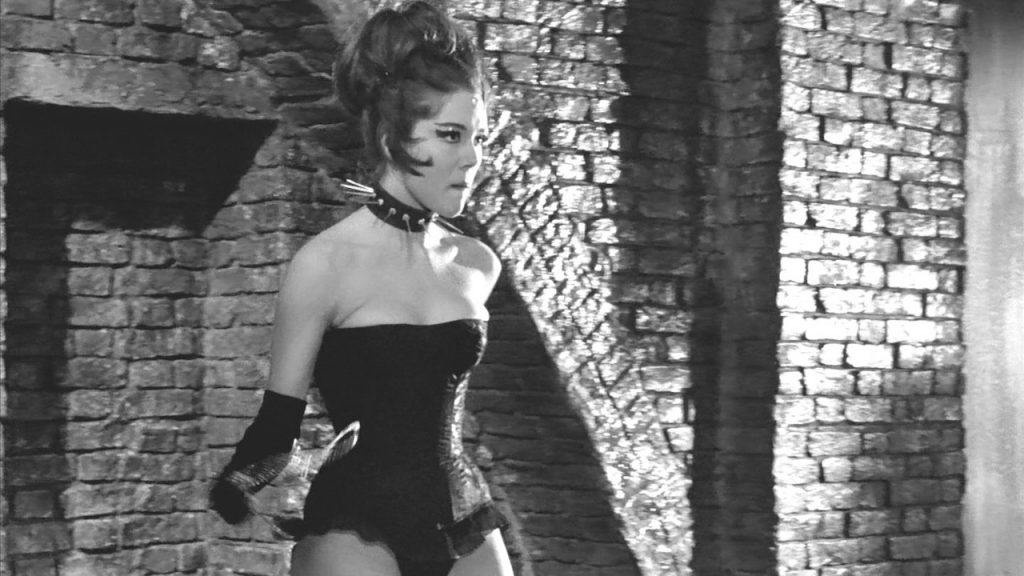
In the new year a season at BFI Southbank is showcasing the weird and wonderful history of the Scala Cinema, and as part of this programmer (and our friend) Dick Fiddy has organised an afternoon on Saturday 13 January dedicated to the memory of the screenings organised there by Wider Television Access (WTVA). The programme features two classic ITC episodes, The Saint: Teresa (1963), with Roger Moore and Lana Morris, directed by Roy Ward Baker, and The Avengers: A Touch of Brimstone (1965, above), with Patrick Macnee, Diana Rigg, Peter Wyngarde and Carole Cleveland, directed by James Hill.
A group of those who felt that television history at the time was ill-served, WTVA is a key part of the pre-history of Illuminations, since it was in this context that the two current partners, John Wyver and Linda Zuck, first met. The success of the WTVA screenings that we, along with colleagues and other cultists, programmed led directly to our early Channel 4 commission, Six into One: The Prisoner File, and then later to The A-Z of TV, 1,001 Nights of TV and of course the series of TV Heaven. As we aim to breathe a little life back into this blog, we will try to fill in something of this history and our memories of the Scala showings. Be seeing you!
Late last year saw the passing of legendary fashion designer, Vivianne Westwood. Westwood was best known for her eponymous fashion brand and for helping to shape the look of not only punk, but also the New Romantics of the 1980s.
Westwood grew up in Tintwistle just outside Glossop, Derbyshire in a working-class family; her mother had worked in the mills and her father was a factory worker. She attended Grammar school but in 1958, her family moved to Harrow after buying a post office business in the area. Westwood briefly went to Harrow Art School (now the University of Westminster) but left feeling intimated by the art world and worried about future career prospects. A world away from punk and the Paris runway, she became a primary school teacher and married Derek Westwood, a toolmaker at the time but re-trained to become an airline pilot. They had a son together, Ben, in 1963, but separated and divorced in 1966, whereby Westwood moved back in with her parents and began to make jewellery that she sold in Portobello Market. She would meet Malcolm McLaren soon after when she shared a flat with him and her brother, Gordon. McClaren and Westwood subsequently became a romantic couple and had a son together Joe, born in 1967.
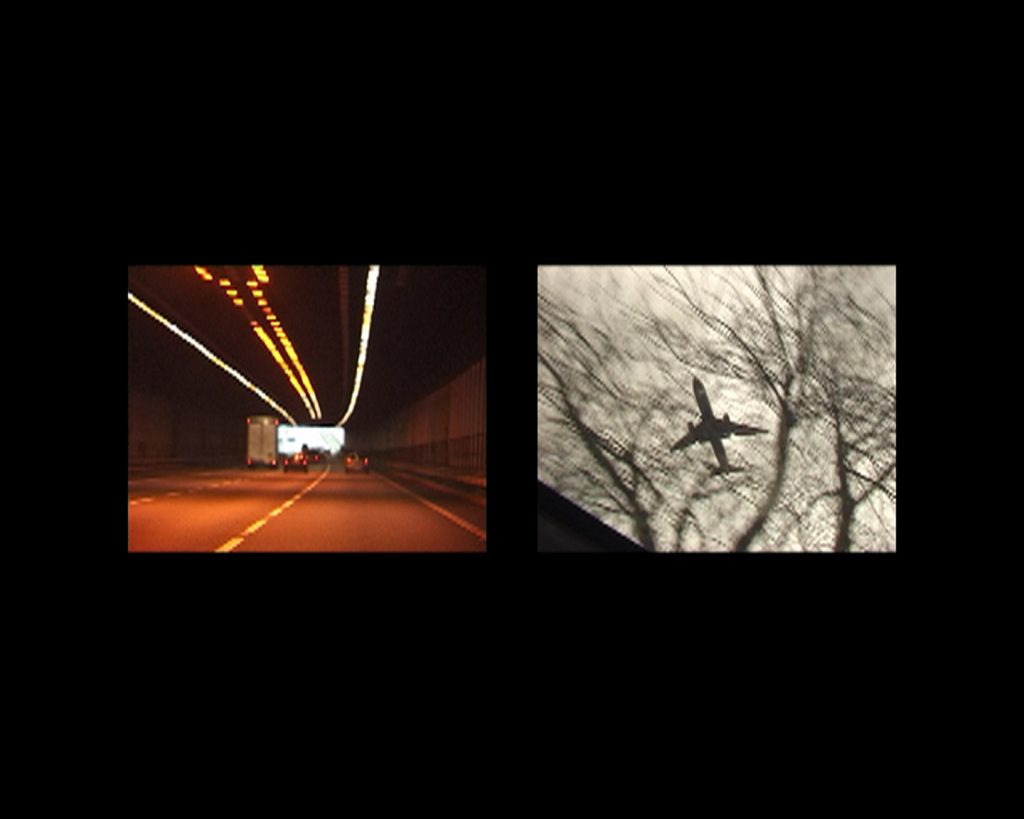
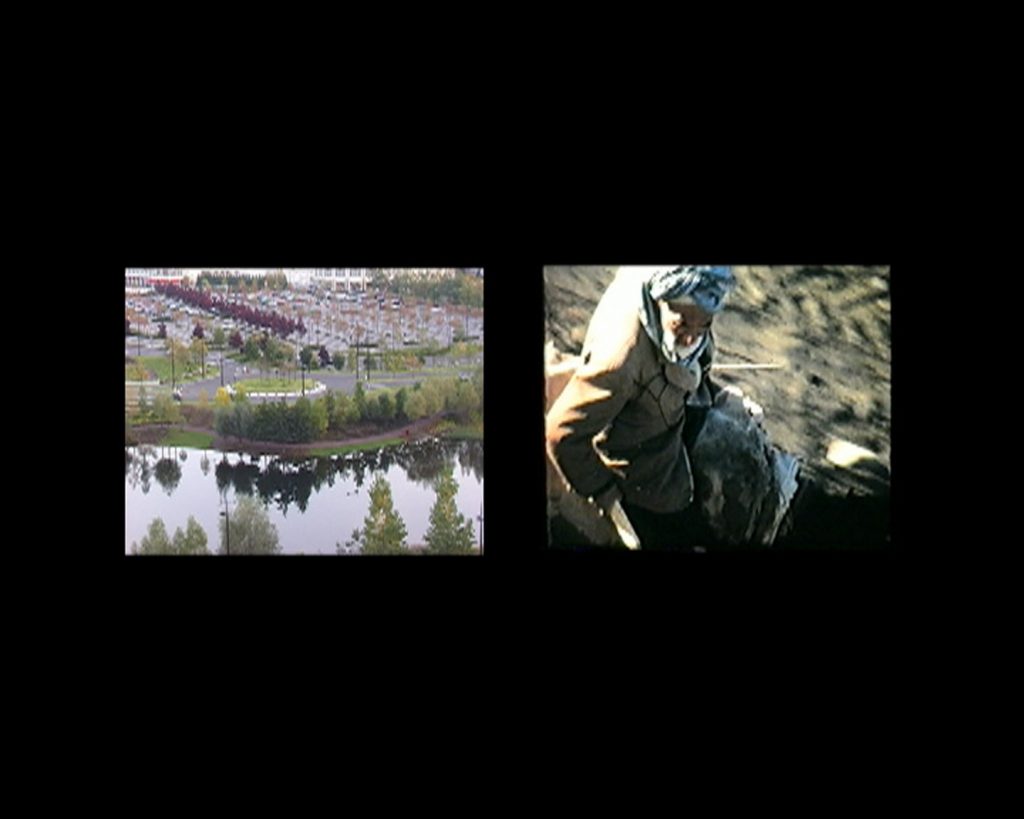
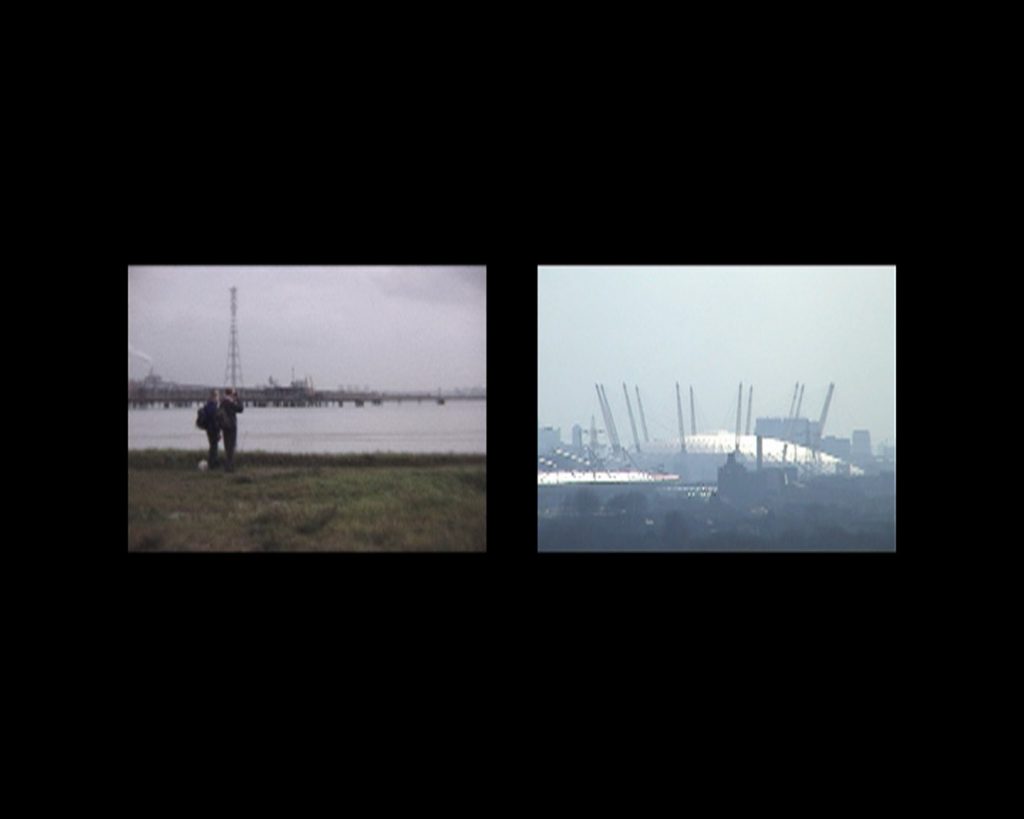
Having finished interviewing Iain Sinclair for our new retrospective film on London Orbital and packed up the filming equipment, we chatted to him as he told us the story of a screening of London Orbital in Milton Keynes, in which only two people turned up. One of the two was a man who had booked to see a screening of another film by Iain, but despite this left before the screening started. The other was a man who had a penchant for running down the hard shoulder of motorways and had used the event as a way to evade the police. He had seen the advert for the screening of a documentary about the M25 and had taken this as a sign. This was not just a sanctuary from the police but divine intervention from the motorway Gods! I brought this up with Chris Petit in my Zoom interview with him and his reply was, “how does he find these people?”
What I loved about the anecdote is that it seems to typify the absurdity of London Orbital. While the initial gesture of London Orbital is itself absurd, who would want to walk or just drive around the M25, a road with no end and no beginning? As Iain reminded us, this was no less absurd than the decision to build the ring road in the first place, a decision that would have made sense in 1956, rather than when construction of the motorway was finally completed in 1986.
London Orbital has been a steady seller for us over the years. It’s undoubtedly the most ‘cult’ film we distribute. Like all cults, its practitioners can look foolish and absurd to outsiders. Iain explained to us how London Orbital’s legacy has been formed by its reconstruction. The man from Milton Keynes was a prophetic figure in this regard. People have taken up and walked their own journeys around the M25 and have remixed the film by adding their own music to it or re-creating the film in their own way. It was this latter trend, which Chris raised in my interview with him unprompted, that he would like to see a shot-for-shot re-make similar to Gus Van Sant’s version of Psycho.
What was so interesting listening to Iain and Chris discuss the legacy of London Orbital is the fact that it went against my thinking of what the film means in 2022. My reading was based on the ideas that London Orbital inhabits, perhaps best typified when I asked both of them if the Ballardian declaration that ‘the future is boring’, was no longer relevant given that the future is doom-laden and fills us with fear. And while both gave very interesting answers to this question, London Orbital’s legacy laid not in the ideas of the film but in its method.
The questions are: how to shoot the M25, how to edit the M25, and how to narrate the M25? With a circular road, what’s your point of entry? These were answered with a method of working, which arguably wouldn’t be possible to do today. As Chris mentions in the new interview, London Orbital was written afterward. There was no shooting schedule, with the film only taking form during the edit, while at the same time the edit informed the filming, with Chris and Iain going out and shooting more material as the film’s editor, Emma Matthews, gave it shape.
Despite the emphasis on the method of London Orbital, I still find myself returning to the ideas of the film. It’s a remark that Chris makes in my interview with him that is germane to this, “London Orbital contains the future in it.” Ballard comments in the film that the M25 marks a transitory zone and I think that the film reflects this, in that it finds itself right in the middle of the legacy of neoliberalism that we are still living with today.
It was made shortly after 9/11 and the war in Afghanistan but just before the invasion of Iraq. Its production was just a few short years before the creation of the surveillance state but just before the Internet transformed our lives and with it, the creation of new forms of surveillance. Indeed, I think about Chris’ comment in the film that new types of surveillance mark “a fundamental revolution in the level and type of voyeurism,” which will result in “the loss of privacy and individuality as previously understood,” speaks directly to us in 2022. Paradoxically then, the film can be seen as both a time capsule of a lost world and an index of our current one.
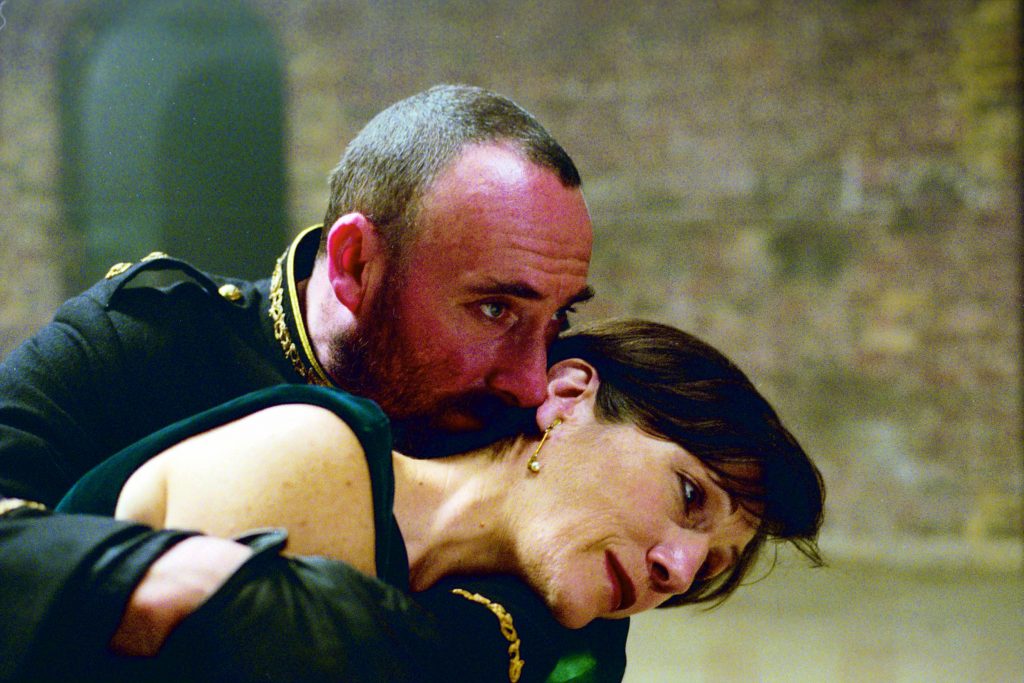
I hope it will not seem immodest if I enthuse here about a screening in Stratford-upon-Avon last Sunday of the Illuminations/Royal Shakespeare Company Macbeth that we made in 2000. This is a film version produced for Channel 4 of the stage show that began in 1999 on the stage of The Swan Theatre, travelled to the States and Japan, and then in the summer of 2000 came to the Young Vic in London.
Sunday’s event at The Other Place was organised for RSC Patrons and was to remember and celebrate the extraordinary talent of the late Sir Antony Sher, who plays Macbeth. Before the screening I chaired a Q&A with Harriet Walter, who is Lady Macbeth, and Gregory Doran, the stage and screen director of this Macbeth, RSC Artistic Director Emeritus, and also Tony Sher’s husband.
Harriet and Greg were on scintillating form, funny and moving as they thought back to the rehearsal process, remembered the filming and spoke about something of what it was like to work with Tony. Together we recalled that Chris Smith, then Culture Secretary in the Labour Government, came to see the show at the Young Vic (and oh did we long on Sunday for a Culture Secretary who actually went to the theatre!). He rang Michael Jackson, then Chief Executive at Channel 4, and suggested that the channel might consider filming the highly-praised staging. Michael somehow found a budget of £450,000, Greg and Tony found co-producer Seb Grant and myself at Illuminations, and we pulled the film together in just a few weeks.
Before this I had produced a television version of Richard II, which Deborah Warner directed, and with Seb a film by Phyllida Lloyd of her staging of Benjamin Britten’s Gloriana. With Greg, who had not made a film before, we all knew that we did not want to attempt a multi-camera version shot in the theatre. Instead for the single-camera style we envisaged we sought a single location (to keep the costs down) that had what Greg called “a vivid neutrality”.
We found all the qualities we were looking for in the Roundhouse in Camden, a former locomotive shed and later arts centre which in the autumn of 2000 had recently been refurbished. Both the glorious high main space and the warren of low caverns underneath were empty, and we made full use of them throughout the 12 days of filming.
The key thing I want to mark here about the screening is how astonishingly good the film revealed itself to be. First, it looked absolutely glorious projected on a really big screen (and it sounded great too). (Credit here to Todd MacDonald who a while back made a new digital transfer from a tape master, resulting in a 60-plusGB file, which is a triumph.) We shot it with a Digibeta tape camera, but from the quality of the images you would honestly not be able to tell. It was pin-sharp on the screen (thanks to Oli Quintrell and the projection team), with deep blacks, and with images, both in the close-ups and the big, high wides, of striking beauty.
The key creative on the film team was DOP Ernie Vincze. The production is set in a world that might be the aftermath of the conflict in former Yugoslavia, and Greg wanted the edgy immediacy of a verité documentary. Ernie had worked in war zones for Granada documentaries, and with his son Chris as assistant he filmed much of Macbeth with the heavy Digibeta camera on his shoulder. Astonishingly, we managed to shoot ten minutes of screen time on each day.
Scenes were done with only the most minimal prep and with Ernie following the action employing all the skills of the brilliant documentary cameraman that he was. There are long sequences shot in single takes where the camera finds exactly the right face at the right moment. And the subtleties, the precision, the intelligence, the understanding and the detail of the performances shine through, with the camera catching the tiniest of side glances and sceptical expressions.
The cast is remarkable, with not only Tony and Harriet at the very top of their respective games, but also Ken Bones as Banquo, the great Joseph O’Conor as Duncan, and Noma Dumezweni and Richard Armitage in small roles. One key to making it all happen against the ridiculous schedule was that they had all lived inside these parts for a year immediately before stepping on to the set.
Fundamental to the lighting was a helium balloon, illuminated from the inside, that Ernie floated into the ceiling of the Roundhouse. He supplemented this enveloping soft light with only a few lamps on stands (as I recall we worked with only a single electrician, Benny Harper, although that can’t actually have been the case.). Much of the time this delivers absolutely gorgeous images, often picking out the edge of an actor’s profile, although there are a few occasions when I wished for a bit more fill on a face to supplement the top light.
With truly brilliant, fast-paced editing, on occasion using jump cuts (as for Stephen Noonan’s dazzling Porter, shot by a row of filthy toilet bowls and complete with uncanny Tony Blair impersonation) the film has a propulsive energy that makes it feel, even 22 years on, remarkably contemporary. From being pitched instantly into the breathless opening of the weird sisters rushing headlong away from a night-vision camera, watching its 120 tight minutes felt extraordinarily exciting, on occasion truly scary, and also just a tiny bit exhausting.
Having not viewed the film properly (apart from choosing the occasional clip) for two decades I was unsure what to expect, and a touch apprehensive, but I think it’s fair to say that all of us in the audience were thrilled. Which is further support for the argument of both the RSC and Illuminations cherishing their moving image archives, and carefully looking after – and making accessible – theatres and digital files that preserve such treasures.
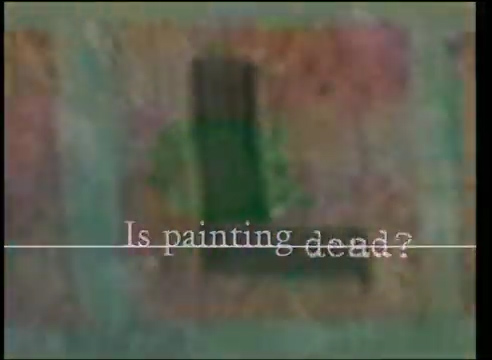
As part of our 40th-anniversary celebrations a few months ago, we delved into our archive to highlight some of the famous and, in some cases, infamous moments we’ve brought to the small screen. Chief amongst these was a clip taken from our programme, Is Painting Dead? in which an inebriated Tracey Emin stormed off the set after disagreeing with the other panel members. This clip has proved popular and after a YouTube commentator asked for the full show and we happily obliged. For the first time since the original broadcast, we present to you Is Painting Dead?
Read the full story of the clip here. You can purchase our documentary on Tracey Emin, which is part of our theEYE series.
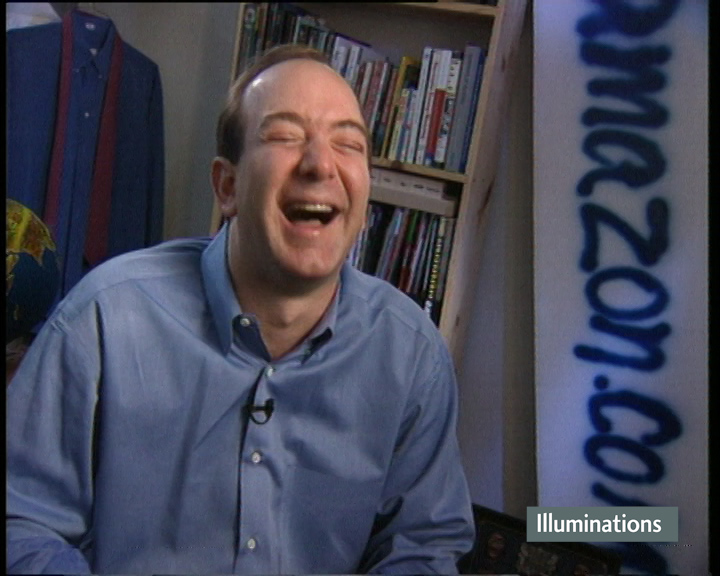
The final blog post for our 40th anniversary is an interview with Jeff Bezos circa 1998. This is the first time we’ve made this clip available and it’s a fascinating glimpse of when Amazon was ‘just’ a bookshop but also shows how much Amazon’s outlook remains relevant even now in 2022.
This clip is from The Net (1994-98), which was comprised of four series and which dealt with many aspects of digital communications and pioneered innovative link-ups between television and the internet. The Net was the first series to feature an e-mail address in its closing credits and the first to have an accompanying website.